How Much Does a Billboard Cost?

They’ve been around for centuries and have proved valuable, but what is that worth? It’s the question we all want answers to – how much does a billboard cost? Well, that depends on a few things. Let us explain.

How Much Does a Billboard Cost

What is a Billboard?

At the risk of stating the obvious, the Miriam Webster Dictionary defines a billboard as a flat surface, panel, wall, or fence on which information is posted, specifically outdoors. They can be on giant sides of the road, on buses, in airports, or pretty much any other surface you can imagine. Also, there are now many great digital options to allow for ever-changing and interactive billboards.

How Prevalent are Billboards?

Some estimate that there are between 425,000 and 450,000 billboards dotting the landscape along American highways.

The effectiveness of billboards is not limited to the United States. bMedia Group contends that billboard advertising is an ideal way to promote products and services and build brand awareness in Puerto Rico.

Effectiveness of Billboard Advertising

In a Forbes study, almost twenty-five percent of those surveyed stated that they visited a store the same day that they saw a billboard advertising their products. And even when they didn’t, the brand often lodges in their mind to return next time they find themself considering that product or service.

Financial experts have calculated that the return on investment for billboard advertising is almost six dollars for every dollar spent.

It is little wonder that companies like Cracker Barrel spend almost half of their advertising dollars on outdoor advertising.

How Much Do Billboards Cost?

Exactly how much does it cost for billboard advertising? The answer to this question is not as simple as it sounds. Several factors determine the cost of a billboard. However, here is one example:

If you print an advertisement on a fourteen-foot by forty-eight-foot billboard, you will need seven hundred square feet of vinyl. The cost of the materials will run anywhere from three hundred to five hundred dollars.

Renting the advertising space for your ad will cost between five and eight hundred dollars a day. Prices vary with location, as well as how many days you want the ad space.

How Much Do Billboards Cost

How Much Does It Cost to Get a Billboard?

The question of how much do billboards cost has multiple factors that go into the answer.

Location

As with real estate, the location of your billboard is crucial. Your aim is maximum viewing by your niche market.

How much does a billboard ad cost in cities around the US? In New York City, renting a billboard for a month will cost between $1800o and $12,000. In Los Angeles, the same space would cost between $1500 and $9,000. Chicago billboard space rents for between $1200 and $6,000. Philadelphia billboards cost between $1200 and $6,000 while in San Francisco, you can rent space for the same costs.

Size

It is not surprising that billboard costs increase with size. Studies show that the larger the advertisement, the more impressions it will make and the bigger the impact on the consumer. Larger billboards require more material and higher labor costs to erect them.

Rental Time/Campaign Duration

Writer Kelly Main points out that size, location, and duration all play a part in billboard costs. For example, billboard costs average between $750 and $1,500 per month in rural areas. In small to midsize cities, the costs rise to between $1, and $2,000. In larger cities where many more people will see them, the cost of billboards rises to between $14,000 and $15,000.

Billboard Type

Costs also vary with the type of billboard. There are three types:

  • Classic or print billboards are typically vinyl.  They usually cost less than the other types.
  • Digital billboards are more dynamic advertisements than static billboards. They incorporate elements like a moving image. Digital billboards can be easily switched, based on your market and the time you want the bulletin board to appear each day. This can benefit you if you are targeting an off time, but raise costs if you want prime time.
  • Billboard advertisements on busses, cars, and other moving vehicles are called mobile billboards. They are more likely to be seen by your target audience because vehicles move while they showcase your brand, products, or special event.

Market or Demographics

Demographics consider the people who pass by the billboard. Your niche market considers the age, gender, socioeconomic level, education, and occupation of the people you are trying to attract with your advertising. If you are trying to attract a larger audience, higher-income individuals, or those with higher education, the cost will likely be higher.

Market Population

Generally speaking, the larger your target market, the higher the cost of billboard advertising.
How Much Does It Cost For Billboard Advertising

How Much Does it Cost to Put a Billboard Up?

Aside from the costs associated with the physical structure of the billboard, there are also other costs relating to the creation and setup of a billboard. So, how much does a billboard cost?

Designing the Billboard

When it comes to the actual design of the billboard, it’s not something you want to take shortcuts on. You can pay premium fees for a billboard in a prime location, but if it looks low quality, it can actually hurt your brand.

There are essentially three aspects to a billboard ad: the concept or idea, the copy (the words), and the visual design.

Definitely consider hiring a specialist for all three of those areas. Many people think they can come up with an idea, write it, and then pay a graphic designer to whip up a beautiful image. That can work, but creating ads is a skilled craft (especially considering the strategy involved in outdoor media), so you may be surprised at the quality (and return on investment) you’ll get from expert help.

For any stage of the process, you essentially have three options:

  • Create it in-house: If you or someone at your company is creative, good with words, and skilled with visual design, this method keeps the most control. The downside is time, costs of doing it yourself, and it’s sometimes a disadvantage to not have an outside perspective.
  • Hire a freelancer: With the prevalence of sites like Upwork and Fiverr, this has never been easier. It can be fast and cost-effective, but the downside is it can take time to find a quality freelancer, and they aren’t always available when you need them.
  • Working with an agency: Many billboard companies keep the necessary staff to be able to design quality outdoor advertising. And considering it’s their business, they can be pretty good at it! There isn’t a huge downside here, just make sure you understand the pricing structure before getting started, as well as who has ownership over the designs they create.

The prices for these different options can vary significantly depending on your location and who you hire. A rough estimate is everything from $30 to hundreds per hour. In many cases, it will take striking a balance between quality and affordability.

Physical Cost of the Billboard

An obvious, but sometimes overlooked, cost with billboards are the actual materials. This really will only come into play if you’re building your own sign because any outdoor advertising agency should already have this factored into their cost structure (but, double-check!).

If you are building your own, you will have to consider the cost of the real estate, the building materials for the structure, the vinyl for the sign, the printing on the vinyl, and the construction and maintenance costs.

Maintenance and Other Recurring Costs

The costs don’t necessarily stop once the sign is installed. Depending on the local climate, you have to maintain the billboard to keep it looking fresh. Most billboard companies will have any fees built in the initial contract, and they usually cover the agreed-upon time period. Keep in mind that you may again have these costs if you decide to extend.

Billboard Variations

Rapidly changing technology has made it easier for billboard advertisers to capture the attention of those who drive or walk past. Interactive technology has transformed billboards from static images painted vinyl frames, walls, and vehicles. The Internet has made billboards increasingly smarter. These electronic billboards appear next to bus benches, shopping centers, or on walls in high traffic areas.

Once popular, digital billboards proved easy to ignore. On the other hand, new interactive billboards speak—literally and figuratively—to your niche market. “Smart” advertisements can dynamically react to their environment. They can send and receive data. These billboards can adapt to demographics, weather, and time of day. Billboards of the future will react to their environment and audience by changing the content based on information collected about those who view them.

How Much Does a Billboard Cost to Rent

Why Invest in Billboards?

If you want to get higher brand recognition, you have an event to publicize, or you want to drive more traffic to your website, billboards are an economical and effective tool.

Billboard advertising broadcasts your business, products, services, or an upcoming campaign to a wide audience.

People spend an average of 70% of their time outside their homes. Compared to other types of marketing, billboards give you maximum exposure.

How to Get Started

  • Whether you want to advertise your brand on billboards or you want to start a billboard advertising business, you have some decisions to make first.
  • What are your advertising goals?
  • Where is the best place to locate your billboard?
  • What is your market audience?
  • What message do you want to give them?
  • What types of billboards do you want to utilize?
  • What skills/information do you need?

Why Choose bMedia Group?

Now that you have the answer to the question how much does a billboard cost, you may be wondering about next steps or other additional information. Advertising experts like bMedia can break down billboards according to price, type, format, and message.

They can help you achieve your advertising goals using their experience in outdoor advertising and their technical skills. bMedia Group offers a wide variety of out-of-home media choices. They have one that will fit your goals and your budget. They have proven success at targeting any audience.

To discuss how bMedia Group can help you achieve your advertising goals, learn more about our billboard advertising.
Reach vs Frequency

Gone are the days of swing-in-the-dark-with-a-dull-blade advertising — in this modern world, marketing strategies are highly refined, surgical operations, sharpened by the power of data sciences.

By assessing vital metrics, we can accurately measure the impact a marketing strategy is likely to have or is having, allowing us to streamline our approach, reach more of our target audience, and, ultimately, stimulate growth and profit.

Yep, there’s no doubt about it – the path to success is paved with metrics, the most important of which (at least in terms of Out-of-Home advertising) are reach and frequency, two intrinsic measurements.

But these metrics aren’t just linked – they’re actually antagonistic, leaving many business owners questioning which should be prioritized to optimize the efficacy of a marketing campaign. So, in this article, we’ll be discussing what these metrics are, how they differ, and how and when you should use them to measure OOH advertising.

reach vs frequency

Reach vs Frequency: Definitions and Differences

We’ve heard both types of metrics probably quite a bit, but would you be able to explain how they differ? Understanding the difference between reach vs frequency is understanding the difference in how you measure the effectiveness of your billboards or out-of-home advertising.

What Is Reach?

Reach refers to the number of people that will potentially be exposed to an aspect of your marketing campaign at least once in a set period of time.

For example, if you pay for one of your ads to be placed on a billboard on a main road, the potential reach of that ad would be at least 1 person per car driving towards the billboard.

Reach can be measured in a number of ways, including…

  • Demographics
  • Census Data
  • Traffic Counts and Vehicle Analytics
  • Daily Effective Circulation
  • Eye Tracking

measuring reach

What Is Frequency?

Frequency, on the other hand, is how many times each person will be exposed to the same marketing aspect of a marketing strategy more than once within a given time frame.

So, borrowing our billboard example from a moment ago, if we assume that the cars driving past from Monday to Friday are commuting to work, that would mean they’re potentially exposed to your ad 5 times a week.

Frequency can be measured by…

  • Estimates —  You can get a very quick estimate of potential frequency by dividing impressions by reach.
  • Demographics
  • Census Data
  • Data Modeling
  • GPS Tracking Data

What Are Effective Reach vs Effective Frequency?

You can think of effective reach as a kind of hybrid metric that combines both standard reach and frequency measurements — Effective reach is the percentage of individuals exposed to your ads enough times that they’re likely to have taken notice.

This baseline amount of exposure is known as effective reach.

Effective reach can also be measured using…

  • Census Data
  • Data Modeling
  • GPS Tracking Data
  • Digital Statistics, e.g. Comparisons between pre- and post-campaign sales figures, online traffic, use of unique promo codes, etc.

What Are Impressions?

Whereas reach refers to how many individuals see an advertisement in a set time frame, and frequency refers to how many times an individual is exposed to an advert in a set time frame, impressions refer to how many times your ad was served.

For example, let’s say you’ve invested in a spot on a digital billboard that cycles through ads from 4 other businesses throughout the day perpetually. Your impressions metric would show the number of times your ad was displayed in a given time period.

On traditional billboards, impressions would refer to how many show your ad in a certain area. This is important as other businesses may have a more saturated presence in the area than yours, which would pull focus from your ads.

As they’re a simple count of ad servings, impressions are one of the easiest metrics to keep track of.

Wouldn’t it be great if we could just maximize both reach and frequency and be done with it? You’d be pulling in customers left and right, and, quite frankly, you wouldn’t care to learn more about either one in this article.

As we’re sure you’re aware, implementing marketing campaigns costs money, and you’ll be splitting your budget between the campaign’s reach and frequency.

If you pump more capital into one, then you have less to allocate to the other. In the world of OOH marketing, finding the right balance between reach and frequency is critical to effective billboard advertising.

Reach vs Frequency: Which Should You Prioritize?

It’s common for businesses to prioritize reach over frequency, as they think the more people that see the ad the better, but this is commonly overlooked in marketing.

While it’s true that you want lots of people to see your advertisement, in the absence of frequency, reach can be a complete waste of money.

Modern life is incredibly cutthroat and fast-paced, and people’s attentions are constantly split between a number of things. To claim some valuable real estate in someone’s mind, you need them to see your ad multiple times — you need to establish an effective frequency!

Effective frequency usually sits around the 3+ exposures mark, and once you have that on lock, you can utilize the effective reach metric and gain a more accurate picture of how your campaign is panning out.

Prioritizing frequency at the expense of reach can also be a critical error, as your ad simply won’t engage with enough members of your target audience. The trick is to learn when it’s strategic to back one metric horse over the other, so to speak.

When Should You Prioritize Reach?

Reach is most important when you’re introducing a new product or service.

Statistically speaking, reach works best when introducing something new to the public. So if you’ve got something fresh to contribute to established markets or, better yet, something groundbreaking to offer in emerging markets, reach should get the lion’s share of your budget.

Reach is most important with an established brand advertising seasonal promotions.

If your brand is already a household name in the area, and you want to entice people with a seasonal sale of some kind, you don’t need to worry so much about frequency, as this foreknowledge of your company does a lot of the heavy lifting.

Reach is most important when there is a lack of competition.

The more saturated a space is with the marketing campaigns of competing businesses, the more you need to lean into frequency and bolster impressions to draw attention, but if the area is largely uncontested, you can win the attention war with a reach-laden campaign.

measuring reach vs frequency

When Should You Prioritize Frequency?

Frequency is most important when establishing your brand.

When you’re trying to break your brand name into the public consciousness, whether locally or nationally, repetition is your best friend, so it’s important to shift a certain amount of your budget over to frequency and impressions.

Frequency is most important when establishing trust.

If your campaigns are executed artfully, with just the right amount of repeat exposure, you can inspire feelings of comfort and familiarity in your audience, thereby establishing trust. Without investing in frequency, this trust will not develop in the mind of your target audience.

Frequency is the most important when there is a wealth of competition.

We’ve all been in a situation where two or more people are trying to speak to us at the same time.

How much of this tangled talk do you actually hear and comprehend?

None of it, right?

Unless, that is, one of the voices is shouting.

The same is true of OOH advertising.

In a heavily contested zone, your brand needs to rise above the rest and dominate the scene. It needs to stand up and shout (visually speaking), and the way to imbue your ads with a voice is maximizing frequency and impressions — it’s like giving them a microphone!

Advertising Metrics Can Change

The above suggestions aren’t exactly golden rules, as there are a number of variables to consider before maximizing one metric over the other. Nothing is set in stone.

Every marketing strategy has its own flavor, its own nuances, and creative approach, and no impression is exactly analogous to another. As such, there is no standard format for implementing and monitoring campaigns.

We know this can sound pretty daunting, but you’re not in this alone!

bMedia and Advertising Metrics

Here at bMedia, we don’t just provide you the physical space to exhibit your OOH advertisements; our dedicated team of marketing experts help you build your campaign from the ground up to suit your goals.

As a business owner, it’s important to understand the synergy between reach vs frequency and impressions, but if you’re not quite sure how to optimize metric balance, we’ll ease the burden with sound advice on measuring advertising effectiveness.

Our OOH advertising network spans the entire nation of Puerto Rico, so you can rest assured we have the sites available to maximize any metric in almost any location.

We can help you start telling your story, but more importantly, we can guarantee people see it!

Go To Market Strategy for Startups

We don’t mean to intimidate you (and maybe you were already aware), but there’s something you need to know: Studies show that 90% of all startups fail within five years of formation — not a very reassuring statistic, right? But what’s the story behind this damning figure?

It all comes down to obscurity. Simply put, nobody knows about your business or what products/services you offer. In an ideal world, you could pour endless amounts of cash into a marketing push that announces your presence to the world with gusto, but, as we’re sure we’re both painfully aware, this is no ideal world.

Not only are advertising budgets rather meager for startups, you’re up against other businesses with established product-market-fit, which is daunting, to say the least… but there is a way to cut through the competition and get your voice heard – an effective go-to-market strategy for startups.

marketing strategy for startups

What Exactly Is A Go-To-Market Strategy, And Why Is It Important For Startups?

A go-to-market strategy for startups is precisely what it sounds like – an advertising game-plan that breaks an unknown product or service into a target market; it’s your key to the locked door of commerce!

Your go-to-market strategy is a blueprint that illustrates how you will reach the people you want to reach with the message you want them to hear. It’s considered a separate entity to standard marketing stratagems, as they imply an established market position, whereas GTM is a way of reaching an initial audience from nothing.

It’s the foundation on which all your future marketing campaigns will be based, and a strong foundation inspires confidence, not just within your target audience, but among your investors, too. Creating a GTM strategy is the ultimate way to position your business for success moving forward. Other GTM benefits include…

  • Weeding out potential risks
  • Generating profit quickly
  • Developing your business and product/service
  • Attaining you a competitive edge over other startups

Creating a Go-To-Market Strategy For Your Startup

The three pillars you’ll need to know for a go-to-market strategy for startups are the What, Who, and How

  • What are you trying to sell?
  • Who needs what you’re trying to sell?
  • How are you going to introduce your offering to those who need it?

If you can answer these questions, you’ll have laid the foundation for a successful entrance into your particular niche of the market, so let’s consider how this can be done.

Step 1. Know Your Audience

You may well have come up with the concept of your product or service through finding gaps or weaknesses in the market yourself, and that’s great; it means whatever you come up with has some form of real-world appeal, but now you have to find others like yourself and figure out what makes them tick.

Hone in on your target audience, and try to map out their behaviors and general way of thinking. Forget about trying to sell something to the world; focus on this very finite group of people and figure out exactly what they’re looking for.

Modern consumers expect businesses to know all about their wants and needs, but we’re not mind readers, so instead, we can build up a customer persona by… This applies to all types of businesses. It doesn’t matter if you are a digital service providing with a nationwide audience, like providing legal wills online, or a brick and mortar business creating tangible products to specific locations, like a vodka distillery, knowing your audience is crucial.

Scheduling Interviews with Potential Users

Interviewing people takes time, but you won’t find more rich, accurate, and enlightening results via any other means, so it pays to talk to prospective customers face-to-face.

Far more fluid and personal than standardized surveys, interviews give you a real insight into the lives of people who your product/service could help, which is a great way to gather data you can use at a later date to refine your offering.

Be wary of time constraints and ask effective questions, such as…

  1. What are their preferred channels of communication (e.g. email, Facebook, Instagram, TikTok, billboards, etc)?
  2. What are they disappointed by or lacking?
  3. In their eyes, what makes a product or business effective and valuable?

survey your audience

Questionnaires

Interviews are fantastic sources of information, but they’re almost too focused. Although you’re narrowing your research to drum up a customer persona, you still need to venture further afield to ascertain splits in that persona in terms of age, profession, location, etc, and questionnaires are a great way to do so.

The wider net you cast will give you more of an insight into what pain points are simply individual woes and which are felt universally, ripe for capitalization.

However, do bear in mind that you’ll need to provide some form of incentive to encourage people to complete your questionnaire, and try to keep it short and sweet, too — we’re all busy people.

Purchase Pre-Existing Data

There are countless other companies that have had to study their target audience before you founded your startup, and you can use this to your advantage.

Paying for research carried out by similar companies gives you effort-free results. Now, they’re not going to be quite as accurate as the results you’ll get from your own studies, but they can certainly help to create a more substantive customer persona in a short amount of time.

Due to its immediacy, this method is often employed first as a sort of scattershot data drive. It gives you a rough estimate of things like target consumer age, location, profession, income, pain points, and purchase triggers.

Step 2. Know Your Competitor

If you’re going to offer something new, you need to know what your competitor is already bringing to the table. If an established entity has beaten you to the punch, your chances of gaining traction with a GTM strategy are slim-to-none. Find ways around it.

Step 3. Coming Up With a Value Proposition

In a nutshell, a value proposition is a snappy headline followed by 2–3 sentences that divulge why your product/service:

  • Is relevant to the user
  • Solves the user’s problem
  • Is unique and cannot be found elsewhere

For example, let’s say you’ve invented an automatic garlic clove peeler. Your value proposition should establish that garlic is one of the most common ingredients in cuisine around the globe (relevance), it makes the tough job of peeling cloves effortless (problem solved), and it’s a patented design (unique).

It’s important not to get caught up in mentioning features alone. To entice customers, you need to tell them in no uncertain words how it will make their life easier or more enjoyable.

Step 4. Establish The Best Lines Of Communication For Reaching Your Target Audience

With your target audience in sight, it’s time to find out how to reach them. People of different age groups and professions communicate and are exposed to things in unique ways.

For example, younger people will consume a lot of adverts on social media platforms like TikTok and Instagram, while older generations may only use Facebook or perhaps even just email.

Another example is that people working from home will engage with mostly digital adverts, but for those who commute to an office, billboard advertising will be highly effective.

Don’t feel you have to settle for just one mode of communication per faction of your target audience. Research has shown that omnichannel approaches to customer communication have a much higher retention rate than single-channel approaches.

go to market strategy

Step 5. Zeroing In On Marketing Tactics

People don’t just use different channels of communication, they also have preferences in regard to how they’re engaged with.

For instance, certain demographics may respond well to the personal/celebrity touch of paid partnerships, while others will be distrustful of this tactic as the pecuniary aspect of the agreement makes the brand representative seem disingenuous and the product seem weak.

Step 6. Don’t Stop Testing

Even if you think you’ve got everything figured out, you need to keep on testing your theories by measuring advertising effectiveness. Test different styles of ad copy, test the efficacy of different images, test different marketing tactics… test everything!

Marketing is a trial and error process, so the more mistakes you get out of your system early on by putting plans through their paces, the fewer you’ll be paying for later with a poor campaign.

Step 7. Budget Planning

Once your research has provided all the answers you need to shape your GTM strategy, it’s time to map out what your budget may look like and how it will be split across different marketing tactics.

Step 8. Implementation

At this stage, you’ve done most of the heavy lifting, and now it’s time to use what you’ve learned to implement your marketing strategy!

bMedia and Developing a Go-To-Market Strategy

As mentioned earlier, omnichannel marketing tactics in GTM strategies are far more effective than single-channel plans, which is why you should seriously consider incorporating a robust OOH line of communication with your target audience as part of your strategy, either as the primary or supporting mode of contact.

Granted, digital marketing has great reach potential, but as a fatally saturated facet of the advertising industry, it tends to inspire a lot of fatigue in the viewer. Billboards and OOH adverts, on the other hand, still grab attention, cinching valuable real estate in the consciousness of the viewer.

But providing the physical space for your ads is just the tip of the bMedia Group’s iceberg. Our dedicated team of marketing experts can help you build a custom, go-to-market strategy for startups from the ground up, ensuring you and your business can generate customers, and start changing people’s lives with your product/service.

Contact us today, and we’ll talk you through how we measure the efficacy of OOH advertising with state-of-the-art analytics to optimize the potential of your campaigns and stimulate rapid business growth.

Your startup may be small, but with bMedia in your corner, you’ll cast a much larger shadow, giving you the confidence and market position to hold your own against giants of any given industry, giants that, with our help, you will soon tower over.

Types of Humor in Advertising

In this digital world, we’re reaching the point where companies are expected to provide more than just a great service or product. Of course, this is where you should start, but more and more, companies are noticing the benefits of being authentic and creating a true bond with their audience. Being able to make your customers feel an emotion when engaging with your products or advertisements can allow your business to stand out. 

Humor can be a very effective advertising tool for taking your product, brand, or service to the next level.

Humor is a great way to trigger emotions in your audience, and triggering emotion will take your brand much further than using the basic, plain, cut and dry advertising techniques that so many companies rely on.

funny billboard advertising

Types of Humor in Advertising

There are many different types of humor in advertising that can be effective. These include:

  • Surprises
  • Personification
  • Exaggeration
  • Puns
  • Comparison

Read more about each method below!

Surprises

One of the best types of humor in advertising is using surprises. Can you remember a time that someone did something completely unexpected? As we know from the real world, surprise triggers a comic response. The initial reaction of shock and surprise quickly gets replaced by a feeling of “wow, that was hilarious”. In advertising, using surprise can be a little trickier, since it definitely needs to be done tastefully. We recommend that if you’re going to implement surprise into advertising, it’s a good idea to workshop your ideas with a team to ultimately create a funny yet appropriate advertisement. 

Advertising messages can use surprises in a bunch of different ways, across many different mediums. For example, you could choose a bold headline or billboard that shocks people, even just for a split second. You could send emails with big, animated surprises, or create videos with dialogue that can startle viewers. Of course, just like with any other advertisement, you need to be able to incorporate your product or service in there. However, surprises can help generate attention, as it is random, ridiculous, and if done right, will leave an impression. 

Personification

Personification is one of the most used, and best, types of humor in advertising. It’s one of the most classic tricks in the book, but there’s a reason for that. The use of personification in advertising is truly endless. Think of the Geico gecko or Tony the frosted flakes tiger. These well-known brand mascots help bring an additional sense of humor, and therefore memorability, to advertisements, cereal boxes, and entire brands. 

Personification helps messages be more entertaining and memorable. Of course, personification doesn’t always make sense to use, but when done properly, people will both understand and appreciate the humor. We’re naturally drawn to people that make us laugh, and there’s no reason to think that this doesn’t apply to brands and advertisements as well. One of the great things about advertising is that it is a great platform for making unrealistic possibilities come to life.

types of humor in advertising

Exaggeration

Exaggeration, or blowing things way out of proportion, is another one of the best types of humor in advertising. It is often used to really emphasize a point or attribute, or to simply poke fun at a real-life issue or common scenario. A word of caution- exaggeration definitely helps make you emphasize a point, it doesn’t necessarily make people much more receptive to that point you’re trying to make. Exaggeration, however, is one of the best tools you can use to make your ad more unique, expressive, and memorable- nine times out of ten, these attributes are a big plus.

This type of humor blows things way out of proportion, to a level that makes people appreciate just how unbelievably extra it is. It can be used to really hammer out a point or to make fun of a common scenario or real-life issue. While it makes people understand that you’re trying to make a point, it doesn’t necessarily make them more receptive to the point you’re making. But, It does help your message be more unique and expressive, which is almost always a plus.

Puns

Puns are a really double-edged sword, so it’s definitely important to tread lightly with these. They’re the easiest types of humor to go wrong, but a cleverly delivered pun can be an effective way of advertising. A lot of people and companies avoid puns altogether, mainly because it’s pretty easy to underdeliver if there isn’t much of a bang. 

It doesn’t make sense to use a full pun in a full joke format, but a pun could be used in a shorter phrase on a billboard. It’s definitely a great way to make people chuckle, and the ah-ha moment associated with understanding a pun can help drive brand recall. It definitely takes a lot of time, workshopping, and exterior feedback to make sure your pun is clever enough and a good fit for your target audience.

Comparison

Lastly, one of the final types of humor you commonly see in advertising is comparison. Comparison is pretty straightforward: it puts two or more things beside each other to create a contrast. Many big brands use this before, like fast food companies showing their delicious, juicy burger versus the old, drab, crusty version of the competitors. Many of these comparisons also include exaggeration, which additionally helps appeal to our sense of humor. When it comes down to it, product A isn’t necessarily this much better than product B, but weaving a sense of humor into the comparison can help persuade a customer better. Customers could appreciate the boldness and humor of your message.

how to make a funny billboard

bMedia: Puerto Rico’s Leaders in Outdoor Advertising

Humor is a great method to employ on many different advertising mediums, billboards included. A humorous billboard can be eye-catching, memorable, and provide your company with a great return on that advertisement. 

If you’re advertising in Puerto Rico, there’s no better billboard company than bMedia. At bMedia, we have decades of experience designing eye-catching and high-performing billboards in Puerto Rico. We use high-level advanced analytics to create and subsequently monitor your business’s ideal billboard advertising campaign, and we have hundreds of advertising locations to choose from.

bMedia are Puerto Rico’s leaders in OOH media and advertising. We will work with you to ensure your advertisements are seen and remembered. Contact us today!

Restaurant Billboard Ideas

No matter what industry you are in, you certainly know the importance of marketing and advertising. Effective advertising can help you stand out from the competition. There is perhaps no industry where this is more important than in the restaurant industry. With quite literally millions of options to choose from, people will be drawn to restaurants with good advertising. Thus, it’s crucial that your restaurant’s advertising stands out. Need some restaurant billboard ideas and tips? We’re here to help!

The most effective and successful restaurant billboards contain striking images, plays on words and humor, or details that make onlookers do a double-take. With a clever and out-of-the-box billboard design, people are sure to take notice and flock to your restaurant. Here are some of our favorite designs to help generate some restaurant billboard ideas.

Restaurant Billboard Ideas and Tips

While there are many different directions you can take your restaurant billboard design in, there are some standard guidelines you should follow. These include, but are not limited to:

  • Using contrasting colors and elements
  • Highlighting a new product/dish
  • Play with angles and perspectives for a clever touch
  • Partner with local and seasonal events
  • Experiment with sizing
  • Get creative with fonts

With this in mind, here are some great examples of effective restaurant billboards that have done some of these things.

Compare and Contrast

restaurant billboard ideas

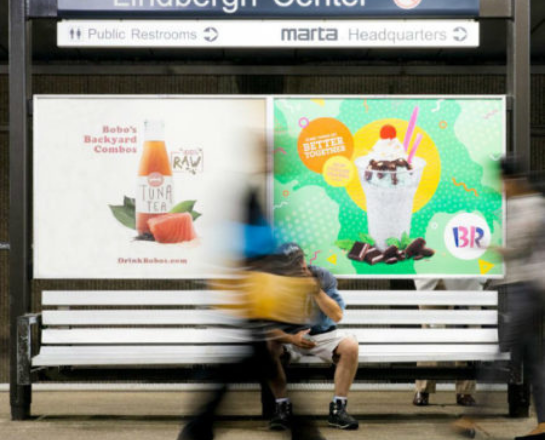
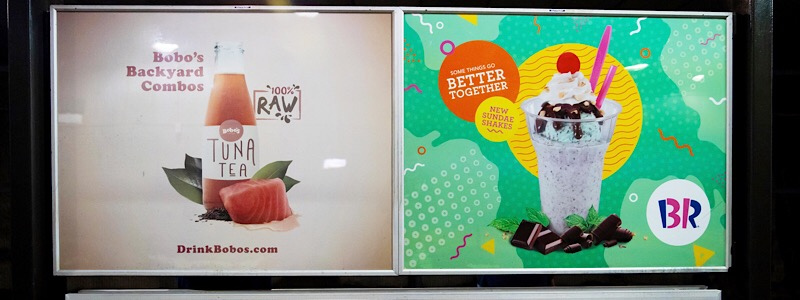
As part of an intricate advertising campaign from Outfront Studios, Baskin Robbins created billboards, posters, and even web landing pages with the theme of: “some things go better together.” The agency created a fictitious company called Bobo’s Fish Juice that featured some eyebrow-raising flavor combinations. These faux-healthy advertisements were then placed side by side with delicious images of Baskin Robbins shakes.

Though Baskin Robbins is not known to be a healthy choice, the advertising campaign managed to make healthy ingredients look less desirable using an artful compare and contrast. Color schemes, images, and even tone are subtle ways to compare and contrast products to highlight your restaurant. As seen in this example, conceptual contrast and color contrast can work together in a very effective way.

Highlight a Product

how to design a restaurant billboard

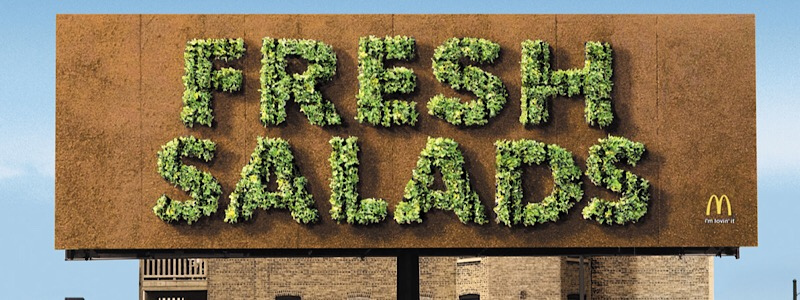
McDonald’s created an ambitious campaign to promote the quality and freshness of its salads. The hamburger chain planted thousands of heads of lettuce on a billboard made of soil. Over three weeks, the bare billboard sprouted full blooms of fresh green lettuce spelling out “FRESH SALADS.” The innovative advertisement boosted sales by 30%, and 500,000 salads were sold during the campaign period.

McDonald’s also ran similar campaigns with a carrot bus stop advertisement and a giant hatching egg outside another store location. This was a great example of creating hype around a specific dish or ingredient by highlighting it.

One great thing about the restaurant industry is that you have a universally-appealing product to advertise to people: food. High-quality food photography can make all the difference with your restaurant’s out-of-home advertising. Imagine you are driving home from work and can’t wait to eat. If you see a huge billboard depicting a delicious-looking pizza, you’ll be much more inclined to read where that pizza comes from and go and purchase it.

Play with Perspectives

restaurant billboard design ideas

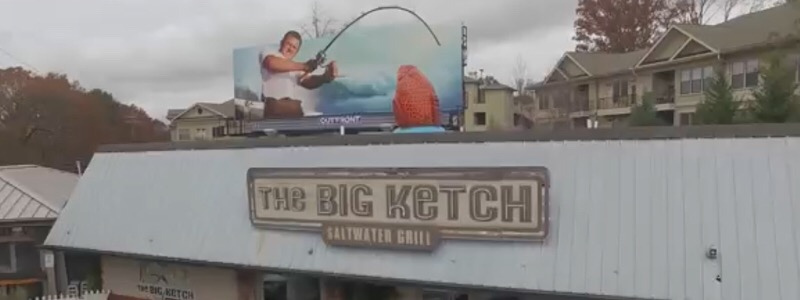
This restaurant billboard idea for a seafood restaurant caught a lot of eyes. The actual advertisement is comprised of two parts: The billboard in the background, and the plastic fish emerging from the top of the actual restaurant building. From this angle, both elements of the advertisement look like they are all one piece. However, the billboard is a few yards away behind the building that the fish rests on.

This billboard uses perspective and optical illusion to make the fisherman on the billboard look like he’s reeling in an extremely large fish. This is an interesting way to capture and keep the attention of viewers, as the fish and fisherman will appear to move depending on where the viewer approaches from.

Partner with Local Events

restaurant ooh advertising

This upscale restaurant in downtown Toronto participated in the annual Winterlicious event by offering a special prix fixe meal. Though many restaurants in the area participate in the event, Far Niente took it one step further. The concept art is simple, depicting salt, flour, and cheese being sprinkled against a black space. However, the simple images use restaurant ingredients to invoke the image of snow falling on a winter’s night. This ties directly into the event it is participating in.

This ad run shows us a creative way to incorporate local events in restaurant advertisements, and how seasonal advertisement can be impactful. Seasonal advertising is quite effective with billboard advertising, as you can keep a seasonal billboard up for short or long periods of time, depending on the time of year you’re appealing to. Plus, you can run similar campaigns while appealing to different seasons, and your audience will be excited to see what you’ve come up with next.

An Excellent Use of Cutouts

what should i put on a restaurant billboard

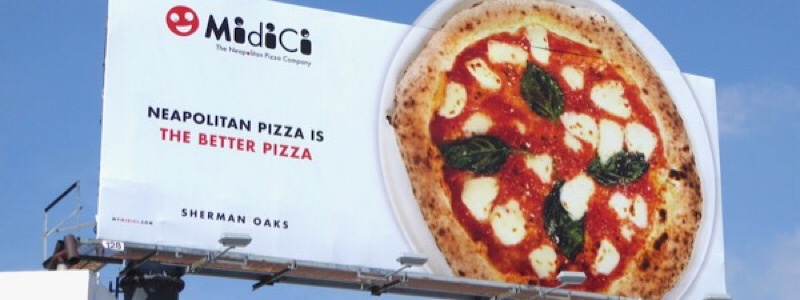
MidiCi pizza used a three-dimensional cutout to make the shape of an otherwise typical billboard irregular and eye-catching. The plate seems to hang off of the billboard. Furthermore, the bold green and red tones of the pizza advertised pop against the otherwise pristine white plate and background.

The use of three-dimensional cutouts and color is an easy way to showcase specific products or dishes on your restaurant billboards. Playing with sizing, including making certain elements of your billboard larger than the others, or playing with shapes as this one does, is a great way to make your billboard stand out from the rest.

Contrasting Text

restaurant billboard how to

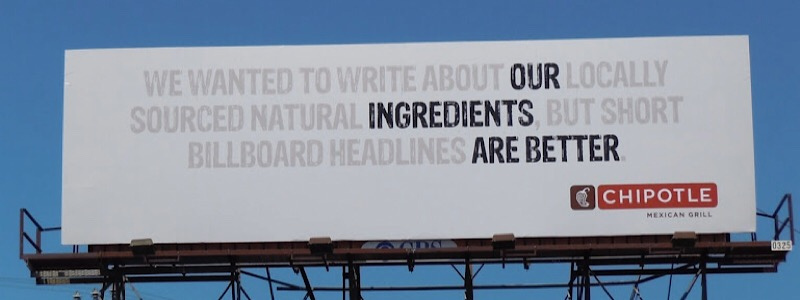
Chipotle ran this billboard advertisement that also invites another look. Onlookers immediately see the target message in bold black text: our ingredients are better. However, a second look reveals another message about locally sourced natural ingredients, and even includes a dose of humor.

This artful use of contrast text and a message-within-a-message is deceptively simple, but Chipotle has accomplished not one but two important marketing messages about its ingredients in just a few seconds. Consider playing with bold contrast to deliver two messages for the price of one in your own restaurant billboard.

How bMedia Can Help

The advertising experts at bMedia are the leaders in out-of-home advertising in Puerto Rico. No matter what industry you find yourself in — including the restaurant industry — bMedia can help you find the right audience at the right time in the right place.

With hundreds of billboards in locations island-wide, you are sure to find the spot that’s right for you and your business. Here at bMedia, we use tried-and-true best practices and strategies to optimize your advertising budget and produce a spectacular return on investment. To learn more about how bMedia can help your business reach its maximum advertising potential, contact us today!

Billboard Design Best Practices

Designing a billboard can be hard work, especially if you don’t know what your goal is. You need to be able to strike a balance between adhering to universally understood billboard design best practices, and being creative, eye-catching, and authentic to your brand. 

At bMedia, we have decades of experience designing eye-catching and high-performing billboards in Puerto Rico. We use high-level advanced analytics to create and subsequently monitor your business’s ideal billboard advertising campaign. Because of our proven results, we are often regarded as Puerto Rico’s top billboard advertising company.

billboard design tips

Why Advertise with Billboards?

Before we take you through our tried and true billboard design tips, you’re probably wondering if billboards and other OOH advertising mediums are still worth it. In this age, practically everyone is glued to their smartphone, tv, or laptop 24/7. Does this mean that online ads are the best? 

There are a few different reasons why billboards, and outdoor advertising in general, are still an effective advertising medium in 2021.

Outdoor advertising is more noticeable.

Online advertising can be frustrating since so many consumers have ad-blockers in place. Those that don’t are bombarded with so many ads that none really stand out. However, billboard ads don’t have these problems, as they’re basically unblockable.

Outdoor advertising is more accepted by consumers.

Consumers are generally pretty wary of social media ads, especially after educating themselves on the manipulative tricks that many online advertisers use on them. Billboards, on the other hand, are a long-standing accepted form of advertising that isn’t subject to any ethical issues, like social media and other online ads can be.

Outdoor advertising can benefit other advertising campaigns.

People tend to be more perceptive of their surroundings outside of the home. They can take in your advertisements, even if they’re not consciously aware of it. This effect can boost your other advertising campaigns.

According to research from Ocean Neuroscience, consumers were 48% more likely to engage with a mobile ad when exposed to the same out-of-home advertisement first.

Billboards help with brand building and recall.

Outdoor advertising has shown to be very effective in building brand awareness and brand image. Researchers think that this has to do with the fact that people tend to be more perceptive of their surroundings outside of the home.

This type of advertising can be very cost-effective.

Another key advantage of outdoor advertising, especially for companies with limited marketing budgets, is its cost-effectiveness. In the current marketing environment, outdoor advertising is often cheaper than print or digital advertising. Additionally, outdoor advertising is more long-term than print or digital ads, which often require repeated payments to carry out campaigns. Paying to have an advertisement on a billboard for a month can be a much better use of funds than repeatedly paying for a commercial campaign.
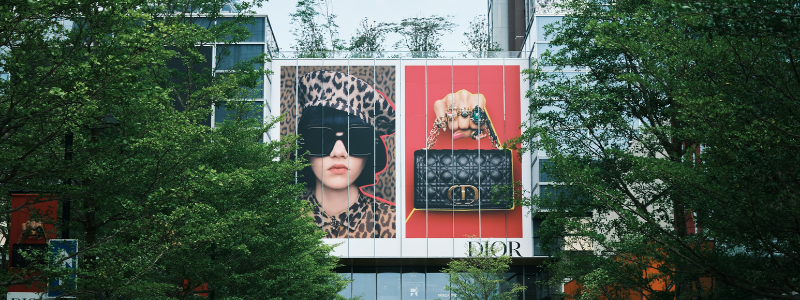
how to design a billboard

Billboard Design Best Practices

With our decades of experience at bMedia, we’ve compiled a list of billboard design best practices that hold true across all businesses and industries. Note how all of our billboard design tips allow for a lot of flexibility, which is critical to enabling your brand to share its own unique vision.

1. Keep it simple.

Use fewer than 7 words and fewer than 3 visual elements. Billboards are made to be quick bursts of essential information. Making it more complicated than above will dilute the message your brand is trying to send.

2. Use borders and cropping properly.

Making an object larger than life will turn heads. Leverage size, cropping, and borders to help make your billboard eye-catching.

3. Be intentional with colors and contrast.

Bright colors and sharp contrasts make for an easily digestible billboard that’s also eye-catching.

4. Leverage key locations and seasons.

You wouldn’t want to advertise your new holiday line of sweaters in the middle of April. At the same time, you also want to make sure the location of your advertisement matches your target demographic. You’ll want to advertise in different places if you sell luxury goods vs if you sell more affordable, discounted goods. Ensure that you’re getting the right information to the right people at the right time.

5. Be careful with fonts.

The most critical part of proper use of fonts is to ensure your billboard is readable from various distances. You don’t want your font size too big or too small, and you definitely want to stick to simple, easily discernible fonts. Don’t overly condense text, unevenly weight fonts, or make the font too thick or thin! Simplicity and readability are key.

billboard design best practices

Examples of Effective Billboards

As you may have picked up by now, there’s no one-size-fits-all billboard design. Even when following our billboard design tips, you will see that there’s plenty of room to be creative and unique. As such, there are many different examples of effective billboards that can turn heads and attract customers.

One company that’s done a great job with its billboard advertising is Apple. Even though it’s one of the world’s leading technology companies, Apple frequently uses billboards and other traditional forms of advertising. In 2015, Apple launched its “Shot on iPhone” campaign. The campaign offered iPhone users the opportunity to capture images on their phones that would then be used on billboards, commercials, and other ads. Apple’s Shot on iPhone campaign displays the importance of engaging consumers and being thoughtful with image selection. These billboards were remarkably simple, yet remarkably effective.

Another fantastic billboard example was a Formula Toothpaste billboard in Indonesia. This remarkably creative advertisement shows a man whose teeth are so strong that he is literally ripping the billboard off of its supporting structure. This billboard is a wonderful example of using creativity to stand out. Once again, it’s a clean, simple image that effectively communicates Formula’s product and value while simultaneously being creative. 

bMedia: Puerto Rico’s Premier Outdoor Advertising Firm

If you are advertising on the island of Puerto Rico, there is no better company to work with than bMedia. We have hundreds of billboards in strategic locations island-wide to ensure that you can connect your billboard to your consumers. We utilize advanced analytics to measure and optimize billboard engagement, providing your business with maximum value.

bMedia are Puerto Rico’s leaders in OOH media and advertising. We will work with you to ensure your advertisements are seen and remembered. Contact us today!
Outdoor Activities in Puerto Rico

The small Caribbean island of Puerto Rico boasts picture-perfect beaches, lively nightlife, and vibrant local culture. The people are friendly, the beaches are beautiful, and the list of outdoor activities in Puerto Rico is endless. You can decide to dwell in nature or choose to explore the island’s urban centers. Either way, there is a guaranteed adventure for everyone.

Puerto Rico offers a diverse list of unique destinations and activities, so it’s no surprise that it’s considered one of the best vacation spots in the Caribbean. From the deep rainforests to San Juan’s urban gems, you’ll never run out of things to see and do on the island. Here are some outdoor activities in Puerto Rico for you to enjoy.

outdoor activities in puerto rico

Some of the types of places you can explore in Puerto Rico include, but are not limited to:

  • Tropical rainforests and jungles
  • Pristine beaches
  • Open water
  • Mountains
  • Caves
  • Historic urban sites

Tropical Rainforests and Jungles

Puerto Rico is not just white sand and blue waters. In fact, the island is covered by tropical wilderness that offers some of the most exquisite trails and views. 

El Yunque National Rain Forest, which is managed by the U.S. Forest Service, is approximately 45 minutes outside of San Juan. This rainforest is the perfect destination for a hike. You might even encounter some of the rainforests’ wild inhabitants such as tropical birds, green lizards, and slimy frogs during your adventure. The island’s jungles also host beautiful bike trails, with lots of single tracks, downhill trails, and of course, some of the best views Puerto Rico has to offer.

If you’re looking for something more daring, try ziplining through various parks across the island. “The Monster,” one of the longest ziplines in the world at Toro Verde Adventure Park, is 2.5 kilometers long and 843 feet high. There’s nothing more thrilling than flying superman style above the tropical jungle. 

Beach and Water Activities

Puerto Rico has over 270 miles of sandy beaches. These beaches welcome visitors all year round. The gorgeous beaches in Puerto Rico offer picture-perfect views and exciting water adventures.

The island’s beaches are consistently selected as some of the best beaches in the world, and you’ll know why the moment you step afoot the island.

The coral coastline is home to some of the best water experiences in the Caribbean. Whether it’s swimming or surfing, sailing or scuba diving, Puerto Rico offers an impressive list of watersports and activities. You can scuba dive in Isla de Mona or surf the waves at Aguadilla Beach. Either way, all of Puerto Rico’s beaches are ready for you to kick back and relax. 

puerto-rico-adventures

Caves and Mountains

The natural mountainscapes and caves of Puerto Rico offer visitors the chance to partake in outdoor activities such as spelunking, rock climbing, or rafting. Canon de Tanama, a picturesque network of waterfalls, caverns, canyons, and limestone cliffs is one of the most recognizable caves on the island. It’s also a great place for rock-climbing, caving, and tubing

You can also overlook the Rio Grande de Arecibo and the beautiful green mountains at Cueva Ventana (Window Cave). The window-like opening gives this cave its name, and the views are nothing short of spectacular. It’s arguably the most “Instagrammable” location in Puerto Rico. 

During your adventure, make sure to keep an eye out for authentic Taino petroglyphs that have been preserved for centuries. You can even choose to pay a visit to some of the cave’s animal residents, like bats! 

Explore Old San Juan

A great way to spend time outdoors is to explore old San Juan and feel the historic charm. In this part of San Juan, visitors will find some of the oldest and most carefully preserved architectural structures in the world. Walk the cobblestone streets and eat some of the best street food Puerto Rico has to offer. Not only will you get some great food, you will also be supporting local businesses.

You can even choose to stop at some of the area’s famous colonial landmarks, including Castillo San Felipe del Morro, known as ‘El Morro’ to locals. This citadel was built by the Spaniards in the 16th century and was designed to protect the island’s coast. Another notable landmark is the Castillo San Cristobal which covers over 27 acres and is the setting of many Puerto Rican cultural and historical stories.

City Life

San Juan, the capital of Puerto Rico, is where many visitors stay on the island. The city provides an abundance of activities, dining, and entertainment. However, it’s the locals that make the city so vibrant and exciting. So make sure you spend some time in some of San Juan’s coolest neighborhoods.

The Santurce barrio is the place to be if you want to immerse yourself in local art and culture. The neighborhood showcases the island’s vibrant culture through hip dining spots, colorful street art, museums, and art galleries. Later in the day, you’ll also find crowds at La Placita de Santurce for drinks and dancing in the streets, so don’t forget your dancing shoes!

The Condado barrio is considered the most cosmopolitan area of San Juan and gives off a Miami vibe. This area is perfect for shopping, dining, or relaxing on the oceanfront. A popular activity in Condado is to kayak or paddleboard through the Condado Lagoon while on a clear-bottom kayak decorated with LED lights.

things to do in puerto rico

Be Where The People Are

Because there are so many outdoor activities in Puerto Rico, this presents the opportunity for your brand to present itself where the people are. People are spending more and more time outside their homes and we’re seeing the island welcome back visitors and tourists. Being visible through outdoor advertising will ensure your brand becomes visible and familiar to a large audience.

The business opportunities are rapidly growing in Puerto Rico, and American businesses are taking note. The island draws global visitors and in 2019 earned about give and a half billion US dollars. OOH (Out-of-home) Advertising is one of the best ways to promote your business in Puerto Rico, not only are the locals moving around and about, the visitors are too!

bMedia Advertising Experts

No matter what industry your business is in, bMedia can help you reach your target audience and increase the ROI of your marketing campaign. We are the island’s leader in outdoor media. Our advertising professionals are ready to maximize the effectiveness of your next OOH advertising campaign. 

With bMedia, the possibilities are endless. Contact us today.

Outdoor Advertising Strategy

Consumers are exposed to around 4,000 to 10,000 advertisements each day. How can you make sure your ad stands out from the rest? bMedia, Puerto Rico’s local leaders in outdoor media, has successfully executed marketing campaigns all over North America. There are many reasons we stand so strongly behind effective outdoor advertising strategy.

Outdoor advertising has been a staple of marketing strategy for businesses and brands everywhere. These types of marketing campaigns continuously prove higher ROI for companies who take advantage of this marketing opportunity.

Outdoor advertising or OOH (out-of-home) advertising refers to any advertising medium that targets the consumer outside of their homes. This includes billboards, street posters, retail signage, and more. Why does outdoor advertising work?

Digital advertisements have bombarded consumers so often that most go unnoticed or are ignored. How often do you find yourself skipping over ads when you scroll social media? You can’t skip over a billboard on the highway or a poster at the subway station. 

In fact, another reason why billboards are so effective is simply because they stand out and better capture the consumer’s attention.

outdoor advertising strategy

Outdoor Advertising vs. Online Advertising

Online and digital ads have become somewhat of a nuisance, which is why we’re seeing more people download ad-blocking software. Ads you see online also collect extensive amounts of data which allows businesses to directly target individual consumers. This can trigger privacy and security concerns which may lead to distrust between the brand and the consumer.

Outdoor advertising works because it is a real-life experience. It is a physical encounter with the advertisement. Many people spend significant amounts of time outside of their homes where they have no option but to see advertisements such as billboards and posters as they move about. Additionally, because OOH ads don’t require extensive consumer data monitoring, it is generally one of the more accepted forms of advertising.
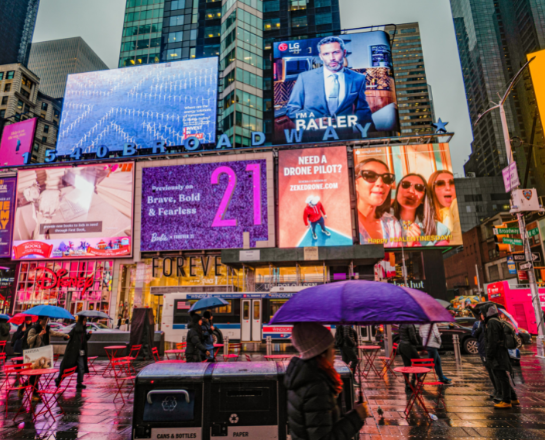
Another reason why companies opt for OOH advertising is because it is cost-effective. Outdoor advertising is typically less expensive than print or digital marketing. It is also more long-term. On the contrary, in order to run a digital commercial ad, companies often have to pay a repeated fee just so their ad is visible more than once. 

Types of Outdoor Advertising

The advantages of your outdoor advertising strategy depend on which medium you use. Here are the most popular forms of outdoor advertising:

Billboards

If you’re looking to make a strong impact, creative billboard advertising should be a the top of your strategy list. Billboards, one of the original forms of advertising remains one of the most reliable marketing strategies and has stood the test of time. 

According to an Arbitron National In-Car study, 71 percent of drivers “often look at the messages on roadside billboards.”

Additionally, billboards don’t just have to be static words and images anymore. Technological advancements and the digital shift have given room for billboards to be more creative in terms of design and content. We’re now seeing digital and interactive billboards that continue to turn heads on streets and highways.

Digital billboards are typically made from LED screens that allow animated advertisements to be displayed. They also have the ability to showcase more than one ad. There are also interactive billboards, which allow consumers to directly engage with the advertisement. Movement is great at grabbing the attention of consumers, stimulates the viewer, and creates a new element of creativity. 

Billboards allow flexibility for marketing campaigns. The creative opportunities are endless. Billboards come in different shapes, sizes, mediums and can be put up virtually anywhere. It’s safe to say that this advertising medium shows no signs of slowing down.

Transit Advertising

This type of advertising includes posters and signage seen on buses, cabs, subways, or train and subway waiting platforms. During commutes, consumers encounter thousands of advertisements. That makes this marketing strategy very opportunistic for your business. This marketing strategy is especially great for densely populated cities and urban areas. If an ad gains more exposure, it results in higher levels of engagement.

Transit advertising continues to stay popular due to the simple fact that the need for transit is not going anywhere. Increased ride time and frequency give your ad the opportunity to connect and with the viewer, also allowing them to fully absorb the message of your ad.

ooh ad strategy

Outdoor Events

Outdoor Events such as product demos, mini-concerts, and integrated free product trials are effective ways of marketing a new product or launch. Events allow the consumer to become a part of the marketing strategy and provide them with a memorable experience that they’ll most likely share on social media or with friends.

Point-of-Sale Advertising

Point of sale advertising, or POS, triggers an impulse for the buyer. This marketing strategy intends to promote and showcase a product right before the customer is about to make a purchase. If a customer is going to make a purchase anyway, they’re more open to the suggestion of adding an extra item. This form of advertising includes simple posters or branded display stands that can be placed outdoors.

Construction Advertising

Construction sites are present in both rural and urban areas and require protective barriers like scaffolding and hoardings. These protective barriers present themselves as a unique opportunity for advertising. 
Examples of construction advertising include scaffold wraps and posters on temporary fences.

Successful Outdoor Advertising Strategy

Here are some tips for developing and executing a successful outdoor advertising strategy.

1. Target High-Traffic Areas

Targeting high-traffic areas gives your advertisement more exposure. A good billboard will be nothing but a wasted opportunity if it is exposed to a small audience.

how to advertise outdoors

2. Be Visible

Visibility nurtures familiarity which results in trust. 

Many consumers travel the same route daily. If they see your outdoor advertisement repeatedly, they develop a sense of familiarity with your brand. The more familiar your brand is, the stronger the trust is between the brand and consumer.

3. Understand your consumer 

Before designing your ad, you must consider the audience who will come into contact with it. Think about how you want them to respond to your advertisement. A good advertisement is memorable and motivates the consumer to take action. If you want to get the most out of your advertisement, these elements must be carefully considered.

How bMedia can help you

Outdoor advertising can be extremely beneficial and profitable for your brand. bMedia can help your business by coming up with the ultimate outdoor advertising strategy for your product. 

No detail is overlooked when creating digital and traditional outdoor media and our advertising professionals can guarantee an effective outdoor advertising campaign. Together, we can maximize the effectiveness of your next marketing campaign. Contact us today.

Why Use Billboards to Advertise?

Billboards have been around for ages. In fact, archaeologists have even found evidence of what they believe to be “ancient billboards” dating back thousands of years. Regardless of your age or where you live, billboards have likely been a part of your life for as long as you can remember. They’ve become such a common part of life that we probably don’t even think much of them when we see them. However, for advertisers, billboards can be an integral part of any campaign or advertising strategy.

Billboards aren’t still used today just because they’ve been around forever. Advertisers still use them today because they get results. The effectiveness of a billboard is measured by its return on investment (ROI), how many people see it on a regular basis based on location, how memorable it is, and how likely it is to create a conversion or a sale.

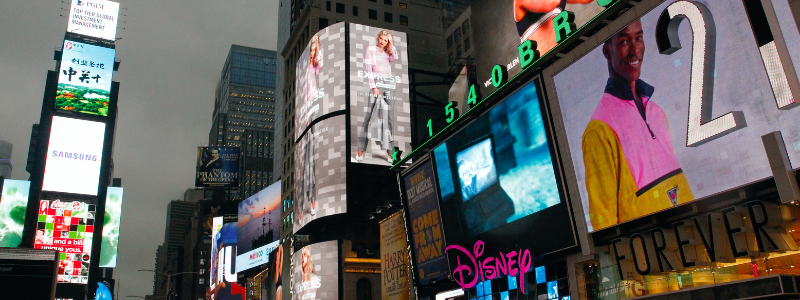
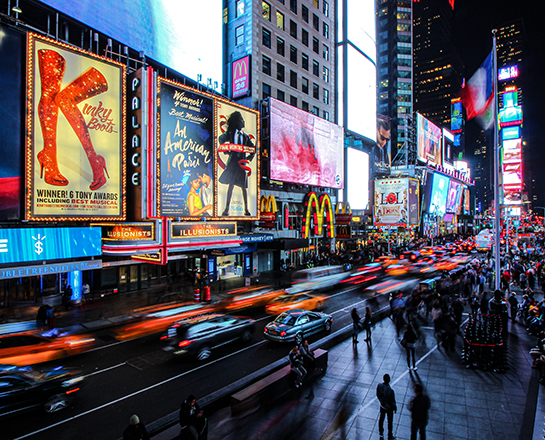
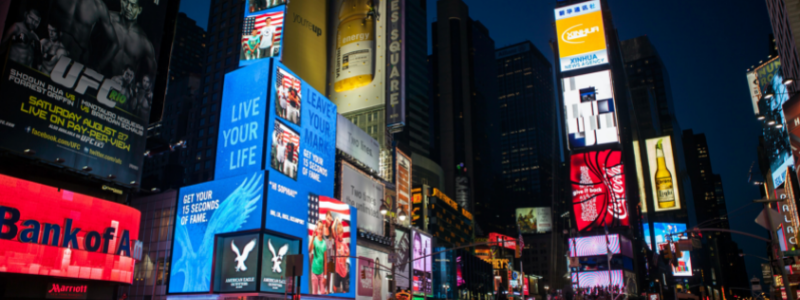
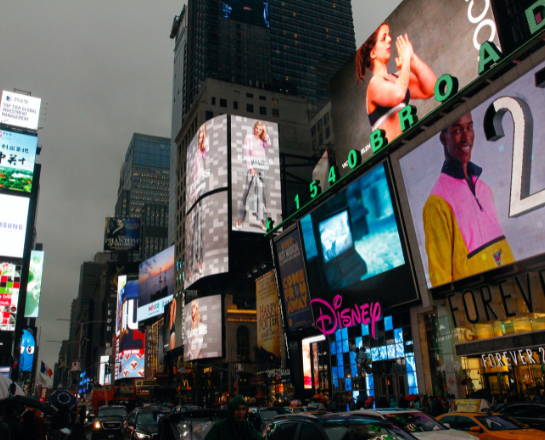
Although billboards have been around for a very long time, they have certainly changed over the years. Many companies today are choosing to use digital billboards. A great example of the power and prevalence of digital billboards in Times Square in New York City. Many, if not most, of the billboards there are now digital billboards.

Are you still wondering, “Why use billboards to advertise?” Read more to find out why this tried-and-true medium of advertising is still just as prevalent as ever!

why use billboards to advertise

Why use billboards to advertise?

The answer to this question should be obvious. It is, however, also very multi-faceted and probably more nuanced than you might think. Billboard advertising is great for targeting specific audiences, causing repeated exposure, capture attention from people who might not want to be advertised to, and so much more.

Billboards allow geographically targeted marketing.

One of the most important things to consider when crafting a marketing strategy is your target audience. You want to make sure that you’re getting your message in front of the right people. If you have brick and mortar location or a relatively limited service area, then you don’t want to waste money on ads that target people outside your area. You also want to make sure that the people in your service area hear your message. Billboards allow you to succeed on both counts.

When you put your message on a billboard, you know where people will be when they see your message. You can look at the road the billboard is on and get a good idea of where people will be coming from and going when they see your message.

The location aspect of billboards also allows you to be strategic about your budget. Billboards in more rural areas will obviously be less expensive than those in high-traffic, urban areas. However, you’ll still be able to reach a relatively large audience for a lower cost.

why billboard advertising

Repetition drills in certain messages.

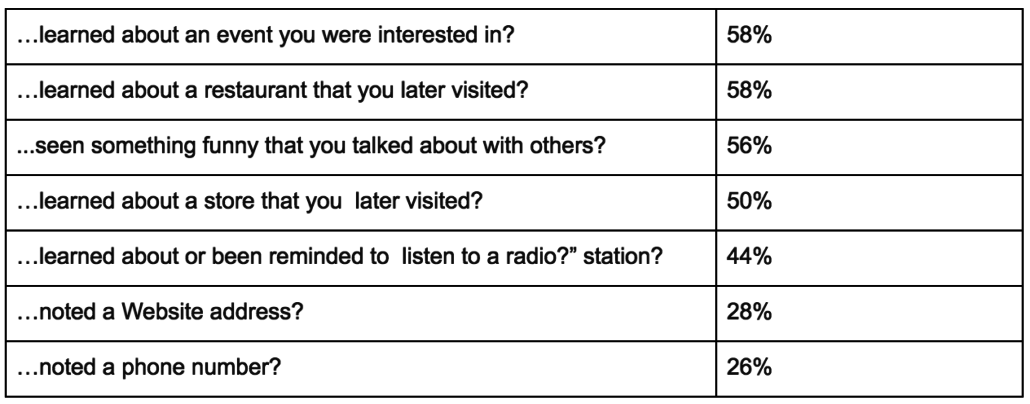
Some messages are better for billboards than others. People drive by billboards regularly, but they tend to go by them quickly unless the area is known for especially heavy traffic. Messages that are easy to digest and actionable are especially effective. A study asked people to discuss their engagement with billboards. Let’s look at their answers.

On a roadside billboard, have you ever…

Billboard Advertising Stats
Notice that simple, clear, and actionable information had the biggest impact. Billboards work on an almost subconscious level, their message sinking in as people drive past them day after day. Messages that are witty, time-sensitive, or related to immediate needs all have an especially big impact on drivers.

Billboards capture one of the few captive audiences left.

Today people are inundated with advertising from the moment they wake up until their head hits the pillow at night. But people also have more ways to avoid engaging with ads, when ads come on TV they look at their phone, and they can use programs to block ads from their phone. In this sort of environment, how do you make sure that people actually pay attention to your ads?

There is one place where people have to keep their eyes on the world around them, and that’s when they’re in their car. If you really want people to pay attention to your ad you need to catch them when they are in traffic. Strategically placed billboards with the right outdoor advertising ideas allow you to do just this.

importance of billboards

Time the average American spends driving:

  • 17,600 minutes per year
  • 48 minutes per day

That’s 48 minutes a day where people are staring out the front window of their vehicle. Beyond that, it’s time when they might be thinking about your message. After drivers see your message, they will have the rest of their drive to process it. And this can happen every time they drive past your billboard!

Digital billboards have opened new avenues.

Many people underestimate the power of billboards because they have outdated perceptions in terms of their perception of billboards. Digital billboards have brought this advertising tool into the 21st century, allowing billboards to take full advantage of the latest technology.

Instead of using one permanent image, digital billboards are essentially large computer screens that can be programmed to display messages in a range of innovative ways. Things can be as simple as switching between images periodically so that multiple advertisers can cut costs by sharing a single billboard, or they can get more complex by utilizing animation and real-time updates.

People who can recall seeing a digital ad in the last month:

  • Place-based: 70%
  • Online: 43%

These figures were taken from a study based on self-reporting, but there is still a clear takeaway. When people see a message in person, they’re more likely to recall it than when they see it online. As digital advertisements become more prevalent and invasive in our everyday lives, many people have begun to not notice these ads as much. If a consumer is exposed to the same ad consistently and frequently, they may begin to experience ad fatigue. Ad fatigue is the event in which one ad appears to a consumer so many times that the CTR (click-through rate) of that ad begins to go down.

Compared to digital and online ads, billboards are clearly much more memorable and don’t contribute to ad fatigue in the same way that online ads do. People are more likely to pay attention to place-based ads and billboards because they are much more noticeable but much less invasive.

how to use billboards effectively

Billboard advertising stands above the rest.

Billboards occupy a unique place in the advertising landscape because of their physical presence. They aren’t ephemeral like radio, TV, and internet advertising. They stand on the side of the road, their message emblazoned across a giant canvas. There is a power in the billboard that other advertising tools just cannot recreate.
Billboard advertising isn’t a magic solution to every marketing need, but when used correctly it can do things that no other method can. If you have a clear and actionable message that you want to convey to a captive audience, then a billboard might be just the thing you need.

As we’ve said multiple times, billboard advertising can also be an incredibly cost-effective method of advertising. For not that much money, you can get way more eyes on your ad than virtually any other medium for the same amount of money. You can also customize the location, design, size, and type of your billboard to match your business’ specific budget and needs.
How bMedia Can Help

Why use billboards to advertise? bMedia is here to answer that question! The professionals at bMedia are the leading experts in outdoor and billboard advertising in Puerto Rico. Whether you have an idea for a billboard already and need help executing your campaign, or you haven’t even started, bMedia is here to help.

Advertising professionals at bMedia have extensive industry experience that will guarantee the effectiveness of your billboard advertising campaign. With the execution of their tried-and-true best practices, bMedia is your best bet in maximizing the effectiveness and ROI of your advertising campaign. Contact bMedia today!

Advantages of Outdoor Advertising

.Advertising can be broken up into two main categories: outdoor advertising, also known as out-of-home (OOH) advertising, and in-home advertising. The two different types of advertising have drastically different media forms, such as billboards vs. commercials, and as a result, there are benefits and disadvantages to both. In this article, we’d like to introduce you to what outdoor advertising is before discussing some key advantages of outdoor advertising. 

What is Outdoor Advertising?

OOH, or out-of-home advertising refers to any advertising media that targets consumers outside of their homes. This is obviously an extremely broad category and covers many different types of advertisements. Therefore, it’s much easier to break OOH advertising up into 4 key categories: billboards, street furniture, transit, and place-based OOH. Many of the advantages of outdoor advertising depend on which kind you use. 
advantages of outdoor advertising

Billboard-type advertising can include:

  • Billboards
  • Posters
  • Wall murals 

Examples of street furniture advertising include advertisements on:

  • Bus stops
  • Public benches
  • Payphone kiosks

Transit advertising includes advertising in or on:

  • Airports
  • Buses
  • Trains
  • Taxis

Place-based advertising includes advertisements in:

  • Stadiums
  • Movie theaters
  • Shopping malls

Globally, a lot of money is spent on OOH advertising every year. In 2019, more than $39 billion was spent on OOH ads. Many large worldwide companies such as Apple and McDonald’s, and even tech companies like Facebook and Google, still spend heavily on different types of OOH advertisements, even with the rise of other forms of advertising, such as ads on social media. 

Each different type of OOH ad serves a specific purpose. For instance, a hotel company will probably benefit from having more advertisements in airports and taxis than on billboards. As such, although outdoor advertising is a broad umbrella, individual companies and products can inform the specifics of outdoor advertising campaigns.

benefits of outdoor advertising

Advantages of Outdoor Advertising

You may wonder why companies still decide to spend money on OOH campaigns like billboards or advertisements in subways in today’s global age. There are a few key benefits that OOH ads have compared to other forms of advertising. 

1) More Noticable

One of the key advantages of outdoor advertising is that it is significantly more noticeable. Online advertising can be frustrating since so many consumers have ad-blockers in place and the ones that don’t are bombarded with so many ads, none really stand out. However, OOH ads don’t have these problems, so they’re basically “unblockable.”

In addition, it should come as no surprise that larger advertisements tend to be more noticeable. If you compare the size of a typical billboard ad vs. a Facebook ad, it’s pretty obvious which one is bigger, and therefore, is more noticeable.

2) More Accepted by Consumers

Recently, online advertising has been receiving large amounts of criticism from various regulatory parties and frustrated individuals. Online advertising is a relatively new form of advertising, and thanks to companies like Facebook & Google, is able to be extremely targeted to individual consumers. The reason why these big companies can be so effective with their advertising is due to the immense amount of data they collect on each user, something that many consumers have issues with.

On the other hand, outdoor advertising is definitely a more acceptable form of advertising to the individual consumer. For one, it has been around much longer than online ads. Consumers of all different generations have seen billboards, posters, or advertisements on the subway. Additionally, outdoor ads don’t coincide with intensive data monitoring of an individual’s online activity, something that privacy-minded consumers are extremely concerned about.

3) Helps to Benefit Other Advertising Campaigns

This benefit comes from the fact that people tend to be more perceptive of their surroundings outside of the home. Humans are made to be more alert, aware, and perceptive in both unfamiliar locations and louder, busier locations. This increased alertness means that consumers can take in your advertisements, even if they’re not consciously aware of them. This effect can boost your other advertising campaigns.

According to research from Ocean Neuroscience, consumers were 48% more likely to engage with a mobile ad when exposed to the same out-of-home advertisement first.

5) Helps with Brand Building and Recall

Outdoor advertising has shown to be very effective in building brand awareness and brand image. Since customers can’t “ignore” outdoor ads the way they can with online ads, they have very little control over what ads they see outside of the home. In addition, many consumers will travel by and frequent the same locations and the same advertisements every day, which helps to build a level of familiarity with those advertisements. Well-placed and nice-looking outdoor advertisements can make this benefit even stronger.

Therefore, working with a company that can help you intelligently design ads and properly locate them where your desired consumers will see them. In Puerto Rico, there’s no better outdoor advertising company than bMedia. bMedia will work with each individual business to design and plan outdoor advertisements, before ensuring they’ll be placed in the best possible location for your specific company.

outdoor advertising advantages

6) Cost Effectiveness

Another key advantage of outdoor advertising, especially for companies with limited marketing budgets, is its cost-effectiveness. In this current environment, outdoor advertising is often cheaper than print or digital advertising. Additionally, outdoor advertising is more long-term than print or digital ads. Companies often have to repeat payments to carry out campaigns. Paying to have an advertisement on a billboard for a month can be a much better use of funds than repeatedly paying for a commercial campaign.

Outdoor Advertising with bMedia

Ultimately, OOH advertising can be extremely profitable for your company. In order for this to occur, you must develop a creative and memorable campaign. The benefits of working with an established, reputable advertising agency are numerous. They can help with devising content, doing market research to determine optimal advertising locations, and will help you analyze the effectiveness of your outdoor ad campaigns.

If you are advertising on the island of Puerto Rico, there is no better company to work with than bMedia. bMedia is Puerto Rico’s leader in OOH media and advertising and will work with you to ensure your advertisements are seen and remembered. They are true experts in the outdoor advertising world and employ a variety of sophisticated solutions to ensure maximum advertisement exposure and effectiveness. Contact us today!