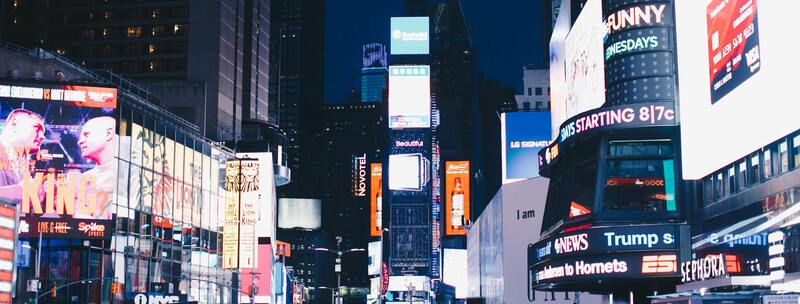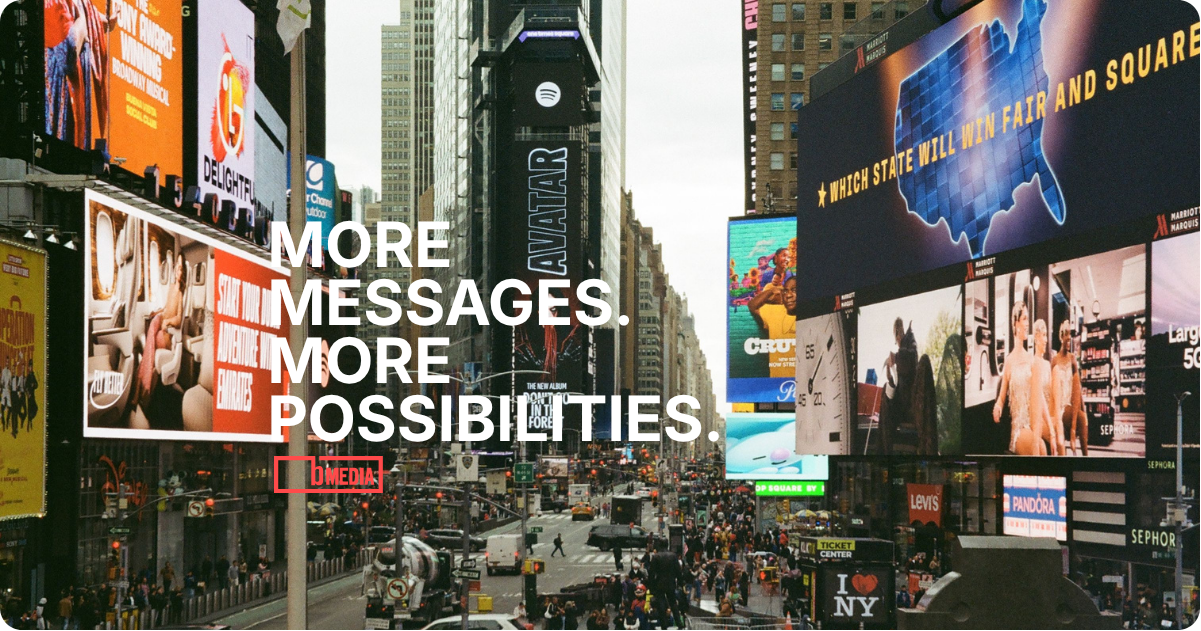
Digital billboard advertising uses electronic displays instead of printed billboard artwork, giving advertisers the flexibility to change or rotate creative without physically replacing the ad.
For Puerto Rico businesses, that makes digital billboards useful when a campaign has multiple messages, changing promotions, or creative that needs to stay current. As part of outdoor advertising in Puerto Rico, digital displays combine the physical visibility of a billboard with more creative flexibility than a single static message.
What Digital Billboard Advertising Is
A digital billboard is an electronic outdoor display that presents advertising creative on a screen rather than on printed vinyl. Multiple advertisements or creative versions can appear on the same display according to the campaign setup.
That ability to change creative is the main difference between digital and traditional static billboards. According to the Out of Home Advertising Association of America, digital billboard creative can be changed on a weekly, daily, or even hourly basis, and digital displays can support multiple layouts and dynamic content.
The format is becoming a larger part of the broader out-of-home industry. OAAA reported that digital out-of-home represented 38.4% of total U.S. OOH revenue in the second quarter of 2026, with digital OOH revenue growing 18.5% compared with the same quarter in 2025. OAAA’s Q2 2026 industry report shows how quickly advertisers are adopting digital formats alongside traditional outdoor media.
For an advertiser, though, the value is less about the technology itself and more about what that flexibility makes possible.
What Businesses Can Do With Digital Billboard Advertising
Digital billboard advertising gives businesses more options for planning creative campaigns. Instead of committing to one visual for the entire run, advertisers can develop different messages around products, promotions, audiences, or timing.
Promote More Than One Product or Service
A business with several important services does not necessarily have to choose one message for every impression. Digital creative can be built around multiple products or offers and rotated as part of a larger campaign.
Keep Promotions Current
Digital billboards also make sense for campaigns where the message may change.
A business promoting an event can adjust creatively as the event gets closer. A retailer can change promotional messaging when an offer ends. A brand launching something new can transition from teaser creative to launch messaging without replacing a physical print.
Connect Outdoor Creative With a Bigger Campaign
Digital outdoor can also become part of a broader brand idea.
Spotify provides a useful example. Its 2025 Wrapped campaign extended the company’s digital experience into real-world outdoor installations across more than 30 markets. The campaign shows how outdoor media can carry a larger creative concept beyond a phone or computer screen.
A Puerto Rico business does not need a global campaign to apply the same principle. A digital billboard can reinforce the same promotion, product launch, branding, or message people encounter through other channels.
Digital Billboards vs. Static Billboards
Digital and static billboards perform different jobs. Choosing between them should start with what the campaign needs to communicate, not an assumption that one format is automatically better.
| Factor | Static Billboard | Digital Billboard |
| Creative | One consistent physical design | Can support multiple digital creatives |
| Creative Changes | Requires replacement of printed material | Creative can be updated digitally |
| Message Strategy | Strong for one simple, consistent message | Useful for multiple messages or changing promotions |
| Timing | Same creative remains visible throughout the campaign | Can support scheduled creative changes depending on campaign setup |
| Campaign Fit | Brand awareness and consistent messaging | Promotions, multiple offers, launches, and flexible creative |
bMedia offers both digital and static billboard formats, along with Spectaculars, Zoom Media and Fuel Ads. Businesses can compare available outdoor advertising formats across Puerto Rico based on what the campaign needs to accomplish rather than choosing a format simply because it is newer.
Where Location Fits Into a Digital Billboard Campaign
Digital flexibility does not eliminate the importance of placement. The screen still needs to reach people who matter to the advertiser.
A useful location should be evaluated according to the audience, visibility, traffic pattern and campaign objective. Creative should also match the viewing environment.
Location is one part of the decision, not the whole digital strategy. The campaign still needs the right combination of message, format, audience and timing.
How to Plan a Digital Billboard Campaign in Puerto Rico
Before choosing a digital screen, businesses should know what they want the billboard to accomplish. A campaign built around one long-term branding message has different needs from a campaign promoting several products over a shorter period.
A useful planning process considers:
- Campaign objective: Decide whether the priority is brand visibility, a promotion, an event, a launch, or multiple messages.
- Audience: Identify who needs to see the campaign and where outdoor media can realistically reach them.
- Creative strategy: Determine whether one message is enough or whether multiple creative versions add value.
- Format and placement: Match the billboard type and location to the viewing environment and campaign goal.
- Budget: Compare the value of available formats, locations, reach and campaign duration rather than treating billboard media as one fixed price.
Founded in 2000, bMedia serves all of Puerto Rico with more than 500 high-impact locations. Its media strategists use technology, data and analytics to help businesses evaluate outdoor opportunities, including reach, ROI and CPM considerations.
Ready to See What Digital Billboard Advertising Could Do for Your Campaign?
Digital billboard advertising makes the most sense when its flexibility solves a real campaign need. The goal is not simply to put an advertisement on a digital screen, but to choose the message, format and media plan that fit the people your business needs to reach.
bMedia has served Puerto Rico since 2000 and provides more than 500 high-impact locations across multiple formats. Businesses considering outdoor advertising in Puerto Rico can work with bMedia’s media strategists to compare options using local market experience, technology, data and analytics.
Frequently Asked Questions
Digital billboard advertising uses an electronic screen rather than printed billboard artwork. The format allows advertisers to use digital creative and potentially rotate or update messages during a campaign. This makes it particularly useful for businesses promoting multiple products, changing offers, events, launches, or campaigns that benefit from more creative flexibility.
There is no single price for digital billboard advertising. Cost can vary according to factors such as the location, billboard format, campaign duration, visibility, traffic and audience reach. Businesses should compare individual placements and campaign goals rather than assuming all digital billboards have the same rate or that digital is automatically more expensive than static.
Digital billboards are not automatically better than static billboards. Digital is useful when a campaign benefits from multiple creatives or changing messages, while static billboards can work well when one strong message needs consistent visibility. The better choice depends on the campaign objective, creative strategy, location, audience and budget.
A good digital billboard location should reach the advertiser’s intended audience while providing strong visibility for the message. Traffic patterns, viewing conditions, geographic market and campaign goals all matter. The busiest road is not automatically the strongest option if its audience does not match the customers the business actually wants to reach.