Programmatic DOOH (Digital Out of Home Advertising): The Future of Automated Outdoor Advertising

In today’s fast-paced digital landscape, advertising continues to evolve, blending traditional methods with cutting-edge technology. Programmatic DOOH (Digital Out of Home Advertising) is one of the most significant advancements in outdoor advertising, transforming how brands reach and engage audiences in public spaces. Unlike traditional out-of-home (OOH) advertising, programmatic DOOH leverages automation, data-driven insights, and real-time bidding to deliver highly targeted and dynamic ad experiences.

As a leader in digital advertising, bMedia Group specializes in innovative programmatic DOOH solutions, helping brands maximize their advertising potential with precision-targeted campaigns. In this article, we’ll explore programmatic DOOH, how it works, its benefits, challenges, and promising future.
programmatic-dooh

What is Programmatic DOOH?

Programmatic DOOH (Digital Out of Home Advertising) refers to the automated buying, selling, and placement of digital ads on outdoor screens and billboards. It applies real-time bidding (RTB) and AI-driven data analytics to optimize ad delivery, ensuring messages reach the right audience at the right time.

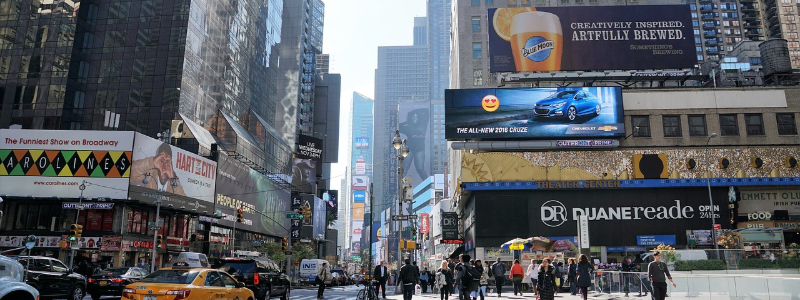
Unlike traditional static billboards, programmatic DOOH enables dynamic content updates, audience segmentation, and contextual ad delivery based on external factors such as weather, traffic conditions, and demographics. This means brands can display different ads depending on the time of day, foot traffic, or even the emotional sentiment of passersby, making campaigns far more impactful and relevant.

How Programmatic DOOH Works

Programmatic DOOH operates through an automated process that connects advertisers with digital signage networks. Here’s a breakdown of how it works:

Demand-Side Platforms (DSPs)

  • Advertisers use DSPs to buy digital ad space on various DOOH screens.
  • These platforms allow brands to define target audience parameters, including location, demographics, and behavioral data.

Supply-Side Platforms (SSPs)

  • SSPs manage ad inventory from digital billboard owners and display networks.
  • They connect with DSPs to facilitate real-time bidding (RTB), ensuring competitive and efficient ad placements.

Data-Driven Targeting

  • Programmatic DOOH incorporates real-time data analytics to determine when and where an ad should be displayed.
  • Factors like weather conditions, audience foot traffic, and time of day influence which ads appear at any given moment.

Ad Delivery & Measurement

  • Once an ad is placed, advanced tracking tools measure impressions, engagement, and effectiveness.
  • Metrics such as dwell time and interaction rates help advertisers optimize real-time campaigns.

By utilizing this automated ecosystem, brands can enhance the efficiency, effectiveness, and flexibility of their DOOH advertising strategies.

what-is-programmatic-dooh

Benefits of Programmatic DOOH for Advertisers

There are many immediate benefits of programmatic DOOH can have for a business. Here are some of the most widely recognized benefits:

Real-Time Campaign Optimization

Unlike traditional OOH advertising that requires static placements, programmatic DOOH enables real-time adjustments. Advertisers can tweak their messaging based on live data, ensuring maximum relevance and impact.

Enhanced Audience Targeting

Programmatic DOOH ensures ads are displayed to highly relevant audiences by leveraging demographic, behavioral, and geolocation data. This results in greater engagement and higher ROI (Return on Investment).

Cost Efficiency & Automated Bidding

Programmatic buying eliminates wasted ad spend by ensuring that brands only pay for valuable impressions. Automated bidding through RTB makes the process more cost-effective than traditional OOH advertising.

Increased Engagement & Dynamic Content

Unlike static billboards, programmatic DOOH allows for interactive and contextual ads. Brands can utilize features like QR codes, real-time updates, and augmented reality (AR) to create engaging ad experiences.

Seamless Omnichannel Integration

Programmatic DOOH campaigns can be integrated with other digital marketing channels, such as mobile ads, social media, and in-app promotions. This ensures a consistent brand experience across multiple touchpoints.
programmatic-digital-out-of-home-advertising

Key Trends in Programmatic DOOH

As technology continues to advance, several key trends are shaping the future of programmatic DOOH. At bMedia Group, we’re dedicated to staying ahead of the coming trends in the industry. Here are some we’ve identified:

AI-Powered Creative Optimization

  • AI and machine learning algorithms are now optimizing DOOH ads in real-time.
  • Advertisers can test multiple creatives and let AI determine the best-performing version.

Interactive & Immersive Ad Formats

  • More brands use interactive billboards with elements like touchscreens, AR, and live data feeds.
  • Personalized ad experiences are becoming more common in high-traffic urban areas.

Expansion of 5G and Smart Cities

  • The adoption of 5G technology enables faster data transfer and improved ad targeting.
  • Smart cities are incorporating programmatic DOOH into their digital infrastructure, offering more ad opportunities.

Sustainability & Eco-Friendly DOOH

  • More digital signage providers are investing in energy-efficient LED displays.
  • Programmatic DOOH allows for optimized ad scheduling, reducing unnecessary power consumption.

Challenges & Considerations in Programmatic DOOH

Despite its many advantages, programmatic DOOH presents a few challenges that advertisers must navigate:

Data Privacy & Compliance

  • Advertisers must adhere to strict privacy regulations (GDPR, CCPA) when using location and behavioral data.

Standardization Issues

  • The lack of universal standards in programmatic DOOH measurement can make comparing performance across different platforms challenging.

Ad Fraud & Viewability

  • Ensuring human audiences rather than bots see ads remains a priority in the industry.

Inventory Availability

  • While digital billboards are growing in popularity, some regions still have limited programmatic DOOH inventory, making scalability a concern.

Future of Programmatic DOOH

Looking ahead, programmatic DOOH will continue to revolutionize outdoor advertising with:

  • Greater AI integration for predictive ad placement and personalization.
  • More omnichannel advertising opportunities, connecting DOOH with social media, mobile, and TV campaigns.
  • Advanced targeting capabilities using real-time facial recognition (privacy-compliant) and geofencing.
  • Improved measurement standards for better ROI analysis and reporting.

As smart cities and 5G networks expand, programmatic DOOH will become essential to the advertising ecosystem, delivering hyper-targeted and engaging ad experiences.

How bMedia Group Helps Brands Leverage Programmatic DOOH

At bMedia Group, we specialize in cutting-edge DOOH solutions that help brands maximize their digital outdoor advertising potential. Our expert team ensures businesses benefit from targeted, data-driven, and highly engaging programmatic campaigns.

With our state-of-the-art technology and extensive digital signage network, we offer:

  • Tailored ad solutions to reach your ideal audience.
  • Real-time campaign optimization for maximum performance.
  • Seamless omnichannel integration for cohesive brand messaging.

future-of-programmatic-dooh

Start Programmatic DOOH Advertising With bMedia Group Today!

Programmatic DOOH (Digital Out-of-Home Advertising) is revolutionizing the way brands engage audiences in outdoor spaces. With real-time bidding, data-driven targeting, and dynamic content capabilities, programmatic DOOH offers advertisers unmatched flexibility and efficiency.

As the industry evolves, businesses that leverage programmatic DOOH will gain a significant competitive edge.

Ready to take your outdoor advertising to the next level? Contact bMedia Group today and discover how our programmatic DOOH solutions can help you reach your audience with precision and impact.


Out-of-the-Box Marketing Ideas

When it comes to marketing, most people think that you need an army of promoters, designers, and developers to launch a successful marketing campaign. But that’s not true.

All marketing is, is about creating a strategy, identifying your target audience and then executing it in a way that resonates with them, and that is no different than with out-of-home advertising such as billboards.

It can be a difficult process to get right but one of the best things about it is the opportunity for creativity and innovation along the way.

So, if you’re looking for some inspiration on how to do just that, we can help! We have put together this list of our favorite out-of-the-box marketing ideas that will help you stand out from the crowd and win customers over before they even know what hit them.

marketing ideas

What is An Out-of-Box Marketing Strategy?

Out of the box marketing comes down to one thing – data-driven marketing with emerging strategies.

For instance, if you choose to buy a placement on a billboard, using data technologies that measure traffic and the prospective reach is one thing, but merging that with custom URLs, hashtags, or QR codes creates an ecosystem that propels brand awareness and experience.

Below are ten out of the box marketing ideas that can help benefit you and your business.

Offer a Trade

If you have a product that has value and your customers don’t want it, they’ll probably be willing to trade something else instead. This is a great way to get rid of products that are too expensive to distribute or not selling well.

There are many ways you can offer trades:

  • Trade-in credit: Offer customers the option of trading in their old product for store credit toward future purchases. This can be especially useful when selling electronics or other expensive items that require replacement parts or repairs regularly.
  • Gift card swap: You could give out gift cards at the checkout counter when someone makes a purchase, but then offer them the option of also receiving an extra gift card for every item they trade in as well! This could double or triple your return on investment (ROI) from these discounted sales because people will actually buy another item with their first credit rather than just leaving empty handed—which happens more often than not when companies only offer one type of payment option during checkout processes like this one does.

digital marketing ideas

Use Digital Signage

Digital signage is the use of digital technology to promote products, services, events and brand messages on large displays in public locations – such as stadiums, shopping malls and terminals.

Digital signage serves a number of purposes including:

  • Promoting your business
  • Providing information to customers on where they can find what they’re looking for or what is happening in the area

Create a Scavenger Hunt

This is a great way to get your team or clients involved and increase brand awareness/loyalty.

Create a list of items, then take pictures or video of them in your office and store it online or across social media so your participants can see them.

On the day that you launch your scavenger hunt, send out an email with instructions for how to participate (you can also post on social media if you have room for more exposure). The instructions should include what image(s) are needed from each location, how participants will know when they’ve found the item(s) needed and other details like this one: “The first person who finds [an item] at [location] wins!”.

Make sure the prizes are worth winning! It’s always good to give away something that has value because it shows appreciation towards those who took time out of their busy days in order to participate. The prize doesn’t have to be big though; it just needs something special about it so people feel good about themselves after receiving one as opposed to feeling like they’re just some dumb loser who couldn’t find anything cool enough.

Use the Mail

  • Use the mail to send coupons, information about your business or products, and thank you cards.
  • Send holiday cards to customers, friends, and family that have expressed interest in your business.
  • Send birthday cards for every employee, including yourself! It’s important for employees to feel connected to the company beyond just working together on projects.

Go Mobile With Mobile Coupons or QR Codes

Using billboards or fuel pump advertising allows the use of QR codes.

QR codes saw a resurgence during the 2020 COVID lockdowns, and the momentum has not stopped.

QR codes can offer mobile coupons that are a great way to reach your audience and get them into your store. They can also be used in many ways. For example, you could offer free shipping on a certain day or time period, or coupons for discounts on items in your store. Mobile coupons are also helpful for getting people to try new things, like offering free samples at checkout counters.

Create a Viral Marketing Campaign

When you think of your content, don’t limit yourself to what’s on the paper in front of you.

Think about how you can add value to that content. For example, in a recent film “Smile”, the marketing team sent paid actors to baseball games to ‘Smile’ for the duration. The goal was to raise awareness but also to creatively expand the audience in a viral marketing effort.

Viral marketing combines out of home marketing with digital marketing and PR to produce word of mouth awareness.

Host an Event at Your Place of Business

Hosting an event at your business is a great way to get your brand in front of your customers. For example, if you’re a barber shop or salon, you can host an event where people come in for discounted haircuts. This is also a great way to build brand loyalty and engage with customers on a deeper level.

You don’t have to hold the event at your place of business either! You could host it off site and encourage people from all over town or even around the world to attend. This gives them something fun and entertaining while also bringing more traffic into your store or office space.

Give Away Swag

Gifting swag is a great way to get your name out there. The trick is to give away something that’s relevant to your business, useful for the customer, and not too expensive. A good example of this is offering an in-store coupon when people bring their pets in for grooming.

You should also try gifting things that will get people talking about your brand and put you at the forefront of their minds — like branded water bottles or reusable totes!

Go ‘Live’ on Social Media Platforms

Live video is a great way to connect with your audience. It’s a great way to show off your products, new or old. You can use live video to promote a new product or service, share information about your company, and even answer questions from people who are interested in what you have to offer.

Get Local Businesses Involved in a Larger Campaign

  • Think about how you can work with other businesses in your area.
  • Get them involved in a larger campaign, and ask them to promote your business for free.
  • Offer them a free service in return for their support.
  • Offer them a discount on one of your services or products if they agree to help promote it through their own channels (e.g., website, social media).
  • Give away free gifts to people who attend events at another business’s location (e.g., restaurant) as part of an event of yours that’s happening nearby—this could be tickets or gift certificates that they can use on their next visit!

marketing strategy session

Think Outside the Box for Creative Marketing Ideas

The best way to get creative marketing ideas is to think outside the box. If you are getting stuck on a project and need some inspiration, here are some ways to help you come up with unique ideas for your business:

  • Get on the internet! There are so many websites out there that provide excellent resources when it comes to searching for creative marketing ideas. There are also plenty of blogs and articles written by successful entrepreneurs who have used these techniques before.
  • Use what works! If an idea worked well in the past, there’s no reason why it won’t work again! Don’t be afraid of trying something again if enough time has passed since its initial success; after all, nothing beats experience when it comes down to figuring out how effective certain techniques can be at generating interest among potential customers.
  • Survey your audience! Go right to the source and ask what they want to see more of from your business or brand.

bMedia and Out-of-the-Box Marketing Ideas

Out of the box marketing ideas come in many shapes and sizes. While viral marketing worked for the team promoting a film, it’s best to consider your options, keep an open mind, and find a partner that can help you achieve your KPIs.

As a local leading media promotion company, our goal is to provide advertising avenues that make your message get through to your target market in order to solidify your brand image and / or increase your sales through impact, quality, innovation, and distinct services. We’re

Contact bMedia and learn more about our services and how we can help promote your business.

Street Advertising

Today’s world of technology has made avoiding advertisements very easy. With DVRS and personal music devices, the old ways of reaching an audience through advertisements are changing. When marketing in the current media climate, you’ve got to present your advertisements in creative, out-of-the-box ways.

The good news: street advertising is a great way to reach your audience and has a great success story.

Did you know that at least 68% of consumers make purchasing decisions while in a car?

Street advertising will help you capitalize on reaching your ever-moving customer base.

Let’s dive into this and what it can do for your business.

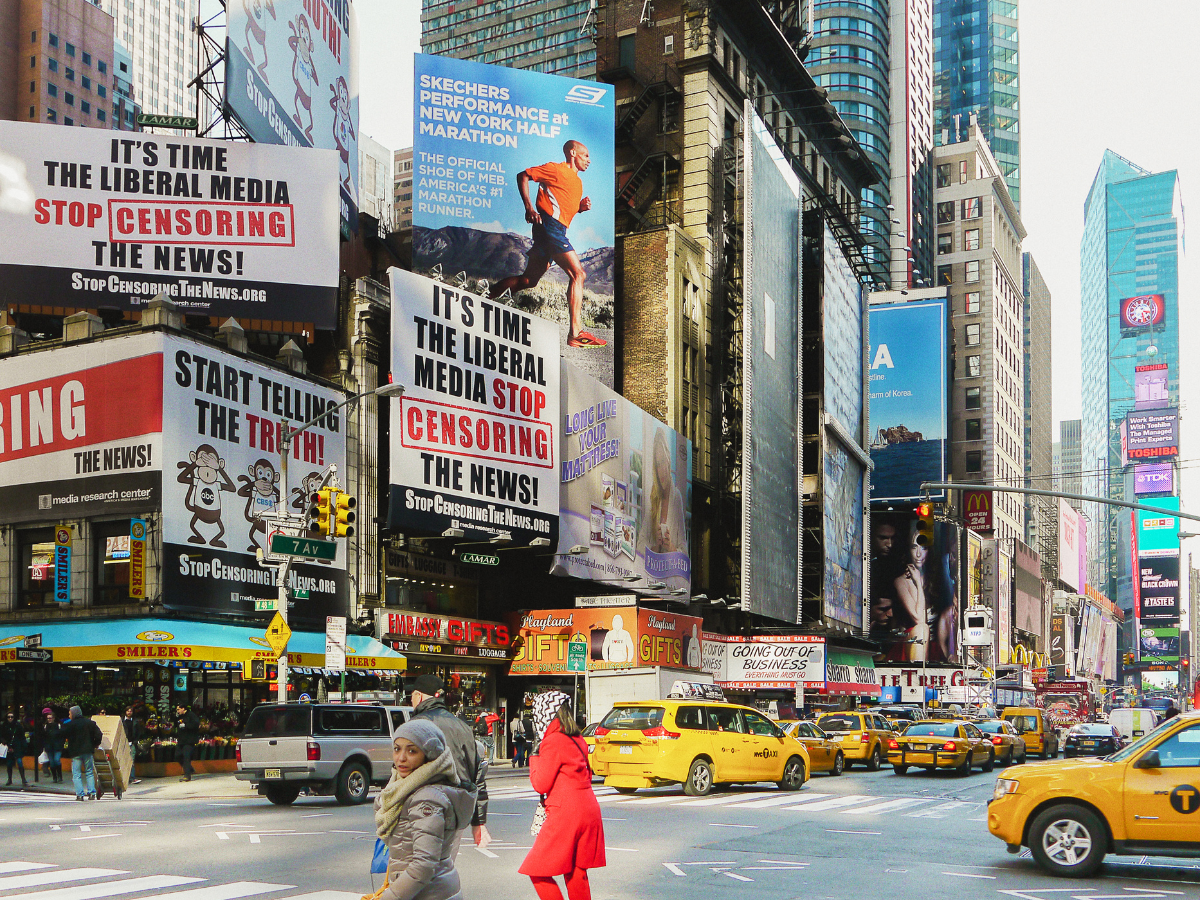
crowded streets and street advertising

What is Street Advertising?

Street advertising refers to the practice of using outdoor advertising methods such as billboards, posters, stickers, and murals to promote products, services, or events.

This type of advertising takes many forms; from large-scale billboards to posters and stickers.

These kinds of ads are typically placed in high-traffic areas: intersections, busy streets, and public transportation areas. They can also target specific demographics.

Believe it or not, street advertising has been around for centuries.

Examples of street advertising can even be dated back to ancient Rome and the middle ages.

These messages were carved into stone and plastered on walls to promote events and public announcements. Signs were painted on the fronts of buildings to indicate the type of business being conducted inside.

In recent years, street advertising has experienced a resurgence.

Many businesses are looking for ways to reach their customers in an incredibly jumbled and cluttered media landscape.

Modern street advertising takes many forms, from traditional billboards and posters to more innovative approaches like guerrilla marketing, which relies on unconventional and often eye-catching tactics to grab people’s attention.

Advantages of Street Advertising

There are a lot of reasons why you should consider using street advertising or outdoor advertising.

One of the main advantages is that it has the potential to reach a large and diverse audience.

Street advertising can be strategically placed in high-traffic areas, such as busy streets or public transportation hubs, where it can be seen by a large number of people. This makes it an effective way to raise awareness about a brand, product, or service.

Another advantage of street advertising is its flexibility. It can be created in a variety of formats and sizes, from billboards to posters to street art, allowing for creativity and customization.

Cost-Effectiveness

Street advertising can be a cost-effective way to reach potential customers, especially compared to other forms of advertising such as television or radio ads.

Wide in Reach

Street advertising can reach a large number of people, especially in high-traffic areas. This allows businesses to promote their products or services to a wider audience.

Targets Your Audience

Street advertising can be targeted to specific neighborhoods or demographics, allowing businesses to reach the right audience with their message.

Shows Business Creativity

Street advertising offers advertisers a great deal of creative freedom, allowing them to use eye-catching graphics and slogans to capture people’s attention.

Brand Amplification

Street advertising can help build brand awareness and recognition, as people see the same message repeatedly over time.

street advertising thailand

Examples of Street Advertising

These are just a few examples of some of the successful campaigns over the past couple of decades.

Each of these campaigns used a combination of bold visuals, catchy slogans, and clever marketing strategies to capture people’s attention and build brand awareness.

  • Apple’s iPod Silhouette Ads:
    • The silhouette ads were featured against brightly colored backgrounds. These were successful in the early 2000s. The ads helped to boost sales of the popular music player and helped to establish the iPod as a cultural icon.
  • Nike’s “Just Do It” Campaign:
    • The campaign launched in 1988, is one of the most successful advertising campaigns of all time. The campaign featured bold, simple slogans and striking images of athletes in action, and helped to establish Nike as a leading brand in the athletic footwear market.
  • McDonald’s Billboards:
    • McDonald’s has had lots of success over the years with its billboard ads. These billboards have featured iconic imagery such as the Golden Arches and slogans like, “I’m Lovin’ It.” These ads have helped to establish McDonald’s as one of the most recognizable brands in the world.
  • Coca-Cola’s “Share a Coke” Campaign:
    • This Coca-Cola campaign was launched in 2011. It featured cans/bottles of Coke with people’s names printed on them. The campaign was a huge hit on social media, with people sharing photos of their personalized Coke bottles and cans.
  • Red Bull’s “Gives You Wings” Campaign:
    • Red Bull’s campaign launched in 1997 and featured extreme sports and other high-energy activities. This helped to establish Red Bull as a leading brand in the energy drink market.

Innovations in Street Advertising

These are just a few examples of the many innovations. As technology continues to evolve, we can expect to see even more exciting and creative approaches to outdoor advertising in the years to come.

  1. Digital Billboards: Digital billboards are becoming increasingly popular, allowing advertisers to display multiple ads on the same billboard and to update the content quickly and easily.
  2. Augmented Reality (AR): AR technology allows advertisers to create smart billboards – interactive and immersive experiences for consumers. For example, an ad might use AR to superimpose a virtual image over a real-world location, creating a unique and memorable experience for viewers.
  3. Guerilla Marketing: Guerilla marketing is a type of street advertising that uses unconventional and often unexpected tactics to grab people’s attention. Examples might include using chalk art on the sidewalk or placing a statue in a public space.
  4. 3-D Printing: 3-D printing technology is allowing advertisers to create unique and innovative billboards and installations that would have been impossible in the past. For example, a billboard might feature a 3D sculpture or structure that extends out from the surface of the billboard.

Street Advertising Cost vs. Other Advertising Methods

Like everything, the cost-effectiveness of street advertising will depend on different factors including the location, format, and duration of the campaign.

  • Allows Targeted Advertising: Street advertising can be targeted to specific neighborhoods or demographics, allowing businesses to reach the right audience with their message. This can help to ensure that advertising dollars are being spent effectively.
  • Lower Cost Per Impression: Street advertising can often be more cost-effective than other forms of advertising when you consider the cost per impression (the number of people who see the ad). For example, a billboard might cost a few thousand dollars per month, but it can generate hundreds of thousands of impressions during that time.
  • Has Flexibility: Street advertising can be adapted to different sizes and formats, allowing businesses to choose the most effective approach for their needs. For example, a business might start with a small-scale street art campaign and then scale up to a larger billboard campaign as the business grows.
  • Has Longevity: Street advertising can often have a longer lifespan than other forms of advertising, such as television or radio ads, which have a limited shelf life. Street ads can remain in place for months or even years, generating ongoing exposure for the business.
  • Has Buzz: Street advertising can also generate social media buzz and word-of-mouth marketing, amplifying the impact of the campaign and increasing the return on investment.

Ways of Creating An Effective Street Advertising Campaign

So you’re looking to create a street advertising campaign? Here are some things to consider. Remember, bMedia can always help with the creative process. Check out these best practices.

Define Your Business Objectives

What do you and your business want out of the campaign? Do you want to raise awareness of your brand, promote a new product, or drive sales? Knowing your objectives will help you to create a campaign that is focused and effective.

Know Your Audience

Understand your target audience and what motivates them exactly. What are their needs, interests, or desires? By using this information, you can craft a message that will really resonate with them.

Show Some Creativity

It’s all about standing out from the crowd, so be creative with your message and design. Use bold, eye-catching visuals and messages that are memorable and engaging.

Use the Right Medium

Choose the right medium for your message.

Different types of street advertising are better suited for different objectives and target audiences. Consider using a combination of mediums to maximize your impact.

Be Strategic with Placement

Placement is key here.

Choose locations that will generate high foot traffic and exposure to your target audience. You can also consider partnering with other businesses or organizations to leverage their customer base and increase exposure.

Measure The Results

Track key metrics such as foot traffic, social media engagement, and sales to determine the impact of your campaign and make adjustments as needed.

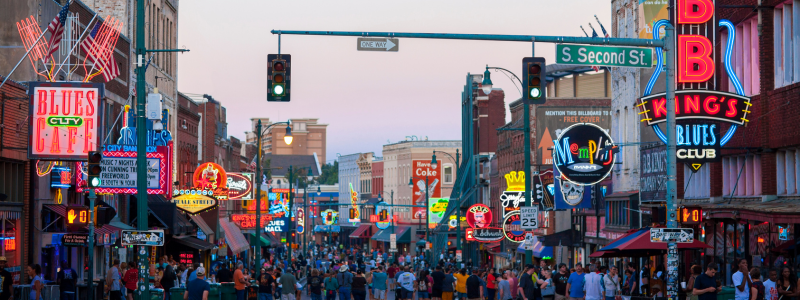
street advertising memphis

The Future of Street Advertising and Its Potential

The potential for street advertising is enormous. With the right approach, advertisers can create campaigns that are engaging, effective, and targeted. As technology continues to evolve, the possibilities for street advertising are limitless.

The future of street advertising is likely to be shaped by technological advancements and changing consumer behavior. Here are some potential trends to watch for:

  • Greater Use of Augmented Reality: Augmented reality (AR) is likely to play an increasingly important role in street advertising. AR technology can create immersive and interactive experiences for consumers, enhancing the impact of the campaign.
  • Increased Use of AI: As AI continues to evolve, street advertising campaigns will become more targeted and personalized. Advertisers will be able to use real-time data to optimize their campaigns and reach the right audience at the right time.
  • More Sustainable and Eco-Friendly Ads: As sustainability becomes a bigger concern, campaigns will become more eco-friendly. Advertisers will look for ways to minimize waste and reduce the environmental impact of their campaigns.
  • Integration with Smart Cities: As cities become smarter and more connected, street advertising will be integrated into the urban infrastructure. Advertisers will be able to leverage data from smart devices and sensors to deliver more targeted and effective campaigns.

How bMedia Can Help You In Your Street Advertising Endeavors

As a leading media business in Puerto Rico, bMedia has a mission to provide you with the best services for your street advertisements. We want to set your brand image in stone and ultimately, increase your business’s sales.

bMedia Group will provide you with innovation and quality as our strategists work hand-in-hand with you and your business through measurable and effective business solutions.

Importance of Marketing Analytics

When it comes to marketing and advertising, everything boils down to the data. Marketing analytics transform raw data into business intelligence that helps companies maximize their marketing initiatives return on investment (ROI).

If businesses want to boost financial return on their marketing, analytics will help them know where to make adjustments to optimize business performance. With data pulled from marketing analytics, companies will have insight into their marketing efforts. This makes it much easier for businesses to identify successes or gaps in their strategy. The importance of marketing analytics should not be overlooked, as they can show just how effective your campaigns can be – and, ultimately, how

importance of marketing analytics

What Are Marketing Analytics?

Marketing analytics provide companies with insights from consumer data through methods and technologies such as math, predictive modeling, machine learning and more. Marketing analytics collects accurate and timely consumer data, which is then analyzed to identify market trends and patterns. With this information, companies can better strategize how to achieve business goals.

With measurable consumer data or relevant key performance indicators (KPIs), businesses can monitor current and past performance, making it easier to identify gaps or successes in their marketing strategies.

Companies can evaluate their marketing efforts across multiple channels through established business metrics such as impression, reach, and frequency. Here are the primary metrics used in marketing analytics:

  • Impressions: Impressions refer to the number of views your advertisement receives, regardless of their engagement (or lack of) with the ad. Impressions represent how many people are seeing your ad within a particular channel. Impressions also help marketing teams gauge the performance of each advertising channel and make changes accordingly.
  • Reach: Reach is the estimated number of potential customers exposed to your advertisement within a given period. Measuring reach will provide insight into how to use your resources more effectively. Knowing how many people you might reach through specific channels will help you decide which channels deserve more funding.
  • Frequency: Frequency in marketing is defined as the number of times a person is exposed to your ad or the number of times your ad is displayed on a specific channel within a particular time frame. Higher frequency increases the likelihood of a consumer engaging with the ad or having multiple interactions. A general rule of thumb is that ads must be seen between five to twenty times to be as effective as possible.

discussing the importance of marketing analytics

Why Are Marketing Analytics Important?

Marketing analytics and consumer data give companies a greater understanding of their targeted consumers’ thoughts and behaviors.

Consistently monitoring analytics helps companies make data-driven decisions that allow them to optimize campaign results and adjust according to their customer’s needs and market demand in general.

Understanding target customers will help businesses know how to serve them better.

Are Marketing Analytics and Advertising Worth the Investment?

Advertising is not just a way of promoting your product, service or brand. Good marketing will help your business stay competitive in its industry and generate leads. A good advertising campaign can attract customers, inform them about your product or service and help you build trust with consumers. Therefore, it’s worth investing in.

High-quality and creative ads with proper placement will bring a considerable ROI in the long run through successful branding and delivery of your marketing messages. Additionally, having a marketing analytics strategy will ensure you have the data you need to maximize the return on your ad campaign.

Expand Your Reach With Out-Of-Home Advertising

If you’re looking to reach a large population in a short time, consider a billboard campaign or out-of-home (OOH) advertising. Billboards come in various formats, including spectaculars, digitals and statics. Other forms of out-of-home advertisements include street furniture, transit and place-based OOH.

Outdoor ads like billboards are more noticeable than modern digital ads. Consumers are bombarded with ads on social media and the internet, making it difficult for ads to stand out and hold a place in the consumer’s memory, also known as brand recall, especially if they pass by it repeatedly.

Billboards aren’t large, blown-up posters anymore. We’re now seeing digital billboards line streets and highways, giving marketers and advertisers more creative room in how to brand themselves. Digital billboards also utilize the latest technology to deliver your message at the time most beneficial to your business.

OOH ads, such as billboards, are also more cost-effective. Since OOH ads are more long-term than digital ads, you can avoid repeated payments to carry out your campaign. For example, if you decide to go with a commercial campaign, you would have to invest for those commercials to run repeatedly.

importance of marketing

bMedia: Puerto Rico’s Outdoor Advertising Experts

If you want to grow your business in Puerto Rico, let bMedia help you get your name out there. With over 500 high-impact locations of billboard real estate, we guarantee thousands will see your ad!

Our expert team continuously gathers the marketing analytics you need to make data-driven business decisions. Thanks to Vehicle Analytics, the team at bMedia can collect information on all the vehicles that pass by our billboard. With all this data at our fingertips, we can quantify campaign impact and grow your brand accordingly.

With intelligently designed OOH ads with unbeatable locations, bMedia is Puerto Rico’s leader in OOH media and advertising.

Contact us today!

Brand Amplification

The post-COVID landscape is fraught with competition between brands. Businesses with compelling messaging and impactful marketing can identify with their audience and stand head and shoulders above their competition – so long as they know which strengths and goals to amplify, of course. Brand amplification lets you attract more customers and bring together your existing ones, and it’s the key to building long-lasting brand loyalty and customer relationships.

Brand amplification done right makes lasting first impressions on your customers and keeps people thinking about your brand long after you make that great first impression.

Sounds great, right? We think so, too.

To that end, let’s cover what brand amplification is, why it’s so important, how to amplify your brand with billboards, and how to measure your brand amplification.

amplification

Brand Amplification: What It Means and Why You Need It

Let’s face it: these days, people who engage with a brand are looking for more than just industry-leading services and products. They’re looking for brands that share similar values and promote those values genuinely.

Why? Because it’s easier for a prospective customer to connect with (and trust) an organization that lives out its values authentically. Brand amplification communicates the heart of your brand by highlighting its values, stories, and core message.

Think about what makes your brand stand out from its competitors, what makes it unique, and why what it does is meaningful. These insights are the stepping stones to successfully amplifying your brand. The more insights you have into the core of your brand, the easier you can convey authentic, compelling stories to your audience.

By now you may be wondering, “Do I really need brand amplification to be competitive?” If you want to build an experience that’s consistent across your customer touch-points, then the answer is a resounding “Yes!”

A well-thought-out, articulated strategy for your brand benefits more than just your audience. The most effective brand strategies give your staff members and third-party agencies a brand hierarchy that lets them establish consistency across customer touch-points. From the typeface on your website’s landing page to the logo you use on all your products, articulated brand strategies impact all your key assets.

Above all, though, brand amplification defines the type of business you want to build. It identifies the type of people you want to employ, the values you stand behind, and, of course, the values you adamantly oppose.

Now that you know a little bit more about brand amplification and why it’s so important to have, it’s time to dig into the nitty-gritty of actually amplifying your brand: let’s dive into some ways you can amplify your brand using billboards.

brand amplification billboard

How to Amplify Your Brand with Billboards

In today’s hyperconnected world, it’s true that ads on social media tend to dominate the marketing landscape. The popularity that social media ads enjoy may lead some to believe that billboards are no longer a viable form of marketing – this couldn’t be farther from the truth!

Whereas social media ads are often complex and sometimes vague and ambiguous, billboards are reliably straightforward and simple. There are plenty of ways to build a billboard campaign that’s effective and impactful, but we’ve picked a few tips that you simply can’t go without when using billboards for brand amplification.

1. Keep things simple

When designing a billboard, it can be tempting to cram as much info as possible onto your billboard. After all, you’ve got a lot to say about your brand, right? As great as it is to be passionate about your messages and values, though, too much content on one billboard can make it tough to distill your brand down into a single image.

Rather than include as much content as possible, it’s best for your billboard to concisely convey what your brand can do for its customers. What do you have that your target audience may be searching for? Is there info you think may intrigue someone to find out more about what you offer? These are the questions to keep in mind when building out your first billboards – just remember to keep everything as simple as possible.

2. Use geography to your advantage

When it comes to getting your billboards in front of more interested eyes, geography is your best friend. You’ll want to determine your target audience’s most common locations and habits so that you can get more eyes on it quickly.

If your target audience is mostly in a smaller geographical area, you may also want to consider using locally relevant billboards to get impactful results. Thinking of running a billboard campaign to target an audience in San Juan, for example? Try weaving in something unique to the city that may not resonate as well with the rest of Puerto Rico.

3. Use digital billboards for more dynamic marketing

As much as we love the simplicity and reliability that traditional billboards offer, there’s something to be said about the flexibility that digital billboards provide. Digital billboards let your marketers make things more dynamic since they can run different designs during different times of the day. Want to display one design during the early morning and another after the sun sets? Digital billboards have you covered.

Digital boards are particularly handy if you’re still tinkering with brand logos and product images. You can take a couple of risks using different designs without having to double down on a single board design that’s tied to your marketing budget.

billboard brand amplification

Measuring Your Brand Amplification

Don’t forget that once you’ve taken the above tips to heart, you’ll want to start measuring how successful your brand amplification is. We recommend that you keep an eye on spikes and dips in your website traffic, the number of shares and comments you get on your social channels, and increases in customer phone calls. You can use tools like Google Analytics to monitor the bounce rates on your website’s pages and Facebook to monitor your audience engagement and tie that engagement to recent posts you’ve shared.

Successful brand amplification doesn’t happen overnight; realistically, you can expect to spend at least a couple of months settling into a rhythm and locking down a brand voice you like. Once you find your groove, however, we guarantee that you’ll begin building trust and recognition among your target audience!

Analyze Marketing Data

As a business owner, you are always looking for new ways to reach your target market and get your product or service in front of them. Outdoor advertising, such as billboards, is one effective way to do that. In building your billboard strategy, you want to ensure that your marketing dollars are well-spent. After all, there’s no point in shelling out big bucks for a billboard campaign if it isn’t going to result in more customers or sales.

But how do you know if your billboard campaign is actually reaching people and driving sales? The answer lies in being able to analyze your marketing data.

digital marketing analytics

Why Marketing Data Analysis is Essential

Data analysis is important for any marketing campaign, but it is especially important for channels like billboards where you are trying to reach a large number of people in a specific geographic area.

As you analyze your marketing data, you can see which sites your billboard campaign is reaching the most people and whether or not those people are taking action (such as visiting your website or making a purchase).

Moreover, you can adjust your marketing strategy by understanding what works and what doesn’t.

What to Consider When Launching Marketing Campaigns

There are a few things you need to keep in mind when analyzing marketing data, particularly from outdoor/digital outdoor billboard campaigns.

First, you need to determine your marketing goals.

What are you trying to achieve with your billboard campaign?

Are you looking to enhance brand recognition?

Drive traffic to your website or brick-and-mortar store?

Once you know your objectives, you can begin to gather data that will help you determine whether or not your campaign is successful.

After understanding your aspirations, it’s important to define your target audience.

Who do you want to make an impression with on your billboard campaign?

Once you know who your target audience is, you can begin to gather data that will help you determine whether or not they’re seeing your billboards and, more importantly, whether or not they’re taking action as a result of seeing them.

marketing data

How to Evaluate the Success of Your Marketing Campaigns

When most people think of billboards, they think of huge signs advertising products or services along highways.

However, billboards can be placed in various locations, including near high-traffic areas, public transit stops, or even in front of businesses.

No matter where you place your billboards, you want to ensure that they effectively drive sales and generate customer leads by measuring a few key indicators of success (KPIs – Key Performance Indicators).

Sales Revenue

One of the most important metrics to track when evaluating the success of your billboard campaign is sales revenue.

To evaluate this metric, you can compare your total sales during the period when your billboard was active to your total sales from the same period the previous year.

If you see an increase in sales after launching your billboard campaign, that’s a good sign that your investment is paying off.

If you don’t see an increase, however, that doesn’t necessarily mean that your campaign was a failure; there could be other factors at play, such as changes in the overall economy or seasonality. Nonetheless, tracking sales revenue is a relatively straightforward way to get a rough idea of whether or not your billboard campaign has the desired effect.

ROI With Advertising Spend

Of course, no matter how well a marketing campaign performs in terms of metrics like social media engagement or web traffic, it won’t be worth it if it doesn’t generate a positive Return On Investment (ROI).

To calculate ROI for a billboard campaign (or any other advertising spend), divide the revenue generated by the billboard campaign by its total cost. The higher the ROI for a given advertising spend, the more successful the campaign is considered to be.

Incremental Website Traffic

In addition to looking at social media engagement and CPC, another metric you can use to evaluate the success of a digital billboard campaign is traffic—specifically, web traffic.

To track this metric, you can look at how many visitors came to your website from clicking on one of your ads during the period when they were active. If you see an incremental increase in web traffic (usually through “Direct” traffic in Google Analytics) after launching a digital billboard campaign, that’s a promising sign people are interested in what you’re offering and are taking action by visiting your website — an early step in their customer journey.

Social Media Engagement and Impressions

Another metric you can use to evaluate the success of your billboard campaign is social media engagement.

One way to track this metric is to look at the number of mentions or shares your brand received on social media when your billboard was active. You can also look at the “sentiment” of these mentions and see if they were generally positive or negative. If you see an uptick in social media activity and content impressions after launching your billboard campaign, that’s a good sign that people are thinking and talking about your brand.

Customer Retention

Last but not least, don’t forget to evaluate customer retention rates following your billboard marketing campaign.

If you acquired new customers through your billboard or outdoor marketing efforts, are they sticking around? Or did they make a one-time purchase and never come back? Customer retention rates can give you valuable insights into your campaign’s overall success and sales strategy.

google marketing analytics

How bMedia Can Help Analyze Marketing Analytics

Billboards are a notable way to reach potential customers. However, designing a successful billboard campaign can be difficult.

bMedia can help you with your billboard marketing strategy by providing best-in-class analytics and expert advice from our team of marketing strategists. We analyze marketing and advertising data and develop a strategy according to those insights.

There are a few key ways in which we can help propel your marketing strategy forward, including:

Expanded Reach

Our billboards provide 24/7 exposure, reaching over 90% of the Puerto Rican population.

That means that no matter what time of day or night, your billboard will be seen by the vast majority of people on the island.

State-of-the-Art Technology

Our team also uses cutting-edge vehicle analytics to gather data on cars passing by billboards. This data is then used to calculate your CPM (cost per thousand impressions) and ROI (return on investment). In other words, you’ll know exactly how effective your billboard campaign is in real time.

Access to Expert Professionals

We also give you access to working hand in hand with marketing strategists to help seamlessly craft your billboard strategy. Not only will you have access to insightful analytics, but you’ll also have a team of experts working behind the scenes to make sure that your campaigns are as successful as possible.

Why You Should Invest in the Right Marketing Data for Your Billboards

Being able to analyze marketing data is important for business owners who want to ensure their marketing campaigns are influential.

For outdoor advertising campaigns like billboards, data analysis can help you understand which areas are being reached and whether or not those people are taking action.

There are a few different ways to collect and analyze data, but one of the most important things to remember is to plan what you want to do with the data before you start collecting it. Otherwise, making sense of all the information you gather will be an uphill battle. By taking the time to understand your objectives, target audience, and budget, you can ensure that your billboard marketing campaign is successful and that you’re reaching the right people with your messaging.

Our team at bMedia can help you streamline your marketing billboard analytics without the headache. Contact us today to learn more about our services and how we can help you with your billboard marketing goals!

Creative Outdoor Advertising

Creative outdoor advertising is something almost everyone is subjected to seeing on a daily basis. There’s advertising on billboards, bus stop benches, etc. – it’s hard to miss. There’s a reason so many companies choose out-of-home advertising – it works. It’s been reported that about 29 billion dollars are spent on outdoor advertising each year.

Everyone has seen an outdoor advertisement, whether they recognize it or not. Think about some particular ones that stuck with you. Is it the McDonald’s billboards with the slogan, “I’m lovin’ it” on them? Or maybe the local law firm ad you’ve caught on the back of a bus?

Whatever the product or service is, the content of the advertisement becomes more memorable when you use creative ideas to grab the consumers’ attention. That’s why we feel it’s important to discuss creative outdoor advertising ideas.

Everything you present in an outdoor advertisement, from font to background to color, all affect the consumers’ reaction to your ad. Make the most out of your creative outdoor advertising campaign by using innovative ideas to maximize consumer engagement.

Creative Outdoor Advertising

Different Types of Creative Outdoors Advertising

One of the main objectives of Outdoor advertising is to promote your product in specific geographic areas. Types of outdoor advertising include:

  • Billboard
  • Lamp Post
  • Bridge
  • Guerilla Advertising
  • Point of Sale
  • Transit
  • Retail
  • Stunt Advertising

Creativity in designing and developing an outdoor advertising campaign is essential to create an impression on the public.

The more attention and identification people feel with your advertising, the more effect it will have on them, bringing you closer to achieving your campaign objectives.

How to Be Creative With Outdoor Advertising

So you’ve recently purchased some time to showcase your product on a billboard. There are millions of ways to go about advertising your product/service, but you want to get through to the largest audience possible.

A multitude of things need to be taken into consideration when deciding what exactly to put on your billboard, including:

  • Font
  • Background
  • Content
  • Color

By considering all these factors, you can create the optimal billboard to engage the consumer.

Here are some of our top tips for you to keep in mind when creating your campaign.

How to Be Creative With Outdoor Advertising

Using the Right Font

Font, or typography, is the style, appearance, or arrangement of typeset matter. There are key factors examined when studying typography, some being:

  • Size
  • Spacing
  • Construction of individual letters

There have been numerous studies on people’s reactions to the font. Some, like Comic Sans, are often completely ignored by consumers. Others, like Baskerville or Georgia, are known to be more aesthetically pleasing to people, and therefore lead to a more positive reaction. The consensus is that Baskerville, Times New Roman, or Georgia are some of the best fonts to use in an advertisement. The reason these are used heavily is that they are easy to read and pleasing to the eye.  But that doesn’t mean your ad has to use these fonts.

Grabbing the consumers’ attention is the driving idea behind a billboard. Consider using other, more bodacious fonts that capture the consumer’s eye. Be mindful of the readability and overall pleasantness of your font, but don’t be afraid to switch it up. Perfecting your font can help convey a powerful message. 

Picking a Background

As stated above, you ultimately want your billboard to be noticed. Several words on a white background can work, but they won’t be as noticeable or memorable as other advertisements.

Contemplate using things like a picture of your product or staff to form a bond with the consumer. If advertising for a restaurant, display a picture of the food. When advertising for a hospital, consider using a picture of the staff.

 You could also try using an aesthetically pleasing image that relates to your product. Consumers will then associate that pleasantness with your company. Examples could be:

  • An image of an open road for a motorcycle manufacturer.
  • A picture of a snow-capped mountaintop for a ski resort.

The background of your billboard should be able to capture the audience’s attention while also maintaining a friendly look. Make it too visceral, and people will look away; make it too boring, and people will never look in the first place. Consumers are more likely to notice a billboard with a captivating image.

Choosing the Right Color

Color plays an enormous part in advertising. Some colors are associated with harshness; others are soothing. Picking the right color for your font and background is instrumental in coordinating a successful ad campaign.

Colors can convey emotion without people realizing it. The science of color, or color psychology, is the study of how color affects the human brain. Marketing companies across the globe use color psychology to create the most effective advertisements.

It’s been reported that 93 percent of consumers center their attention on visual appearance when considering buying a product. The same goes for creative outdoor advertisements. Making a billboard visually appealing leads to higher consumer engagement.

Each color imparts a different emotional response from people.

  • Red: Elicits strong emotions and reactions. Associated with love, but also with danger.
  • Orange: Energetic and lively color. Good for bringing attention to an advertisement.
  • Yellow: Evokes feelings of happiness and energy.
  • Green: Associated with health and nature. Can have a calming, honest effect on an ad.
  • Blue: Promotes seriousness and trustworthiness.
  • Purple: The color of royalty. Consumers often associate with luxury and elegance.

Notice how almost all McDonald’s billboards use the color red. Yes, it is one of the company colors, but red captures eyes better than other colors.

Curating the Content

Using the techniques above to perfect color, font, and the background will help you to get and keep your audience’s attention. But if the content underneath isn’t up to par, people will forget it.  In order to craft the right message, you have to consider what your product or service is. If you have a serious message you want to get out, don’t use jokes. Adversely, if your product is not too serious, think about keeping it light-hearted and playful.

Many companies use jokes or puns to convey a feeling of friendliness with the consumer. This can lead to brand loyalty. Other companies will try to tug at the heartstrings and elicit an emotional connection. Ads like these can often increase response from consumers. 

The amount of content needs to be treated with the same veracity as the quality. A billboard should be a quick read. Too long and you run the risk of consumers simply not having the time to read it. Keep your message to about seven words or lower, and don’t use lengthy, hard-to-read terms.


Go To Market Strategy for Startups

We don’t mean to intimidate you (and maybe you were already aware), but there’s something you need to know: Studies show that 90% of all startups fail within five years of formation — not a very reassuring statistic, right? But what’s the story behind this damning figure?

It all comes down to obscurity. Simply put, nobody knows about your business or what products/services you offer. In an ideal world, you could pour endless amounts of cash into a marketing push that announces your presence to the world with gusto, but, as we’re sure we’re both painfully aware, this is no ideal world.

Not only are advertising budgets rather meager for startups, you’re up against other businesses with established product-market-fit, which is daunting, to say the least… but there is a way to cut through the competition and get your voice heard – an effective go-to-market strategy for startups.

marketing strategy for startups

What Exactly Is A Go-To-Market Strategy, And Why Is It Important For Startups?

A go-to-market strategy for startups is precisely what it sounds like – an advertising game-plan that breaks an unknown product or service into a target market; it’s your key to the locked door of commerce!

Your go-to-market strategy is a blueprint that illustrates how you will reach the people you want to reach with the message you want them to hear. It’s considered a separate entity to standard marketing stratagems, as they imply an established market position, whereas GTM is a way of reaching an initial audience from nothing.

It’s the foundation on which all your future marketing campaigns will be based, and a strong foundation inspires confidence, not just within your target audience, but among your investors, too. Creating a GTM strategy is the ultimate way to position your business for success moving forward. Other GTM benefits include…

  • Weeding out potential risks
  • Generating profit quickly
  • Developing your business and product/service
  • Attaining you a competitive edge over other startups

Creating a Go-To-Market Strategy For Your Startup

The three pillars you’ll need to know for a go-to-market strategy for startups are the What, Who, and How

  • What are you trying to sell?
  • Who needs what you’re trying to sell?
  • How are you going to introduce your offering to those who need it?

If you can answer these questions, you’ll have laid the foundation for a successful entrance into your particular niche of the market, so let’s consider how this can be done.

Step 1. Know Your Audience

You may well have come up with the concept of your product or service through finding gaps or weaknesses in the market yourself, and that’s great; it means whatever you come up with has some form of real-world appeal, but now you have to find others like yourself and figure out what makes them tick.

Hone in on your target audience, and try to map out their behaviors and general way of thinking. Forget about trying to sell something to the world; focus on this very finite group of people and figure out exactly what they’re looking for.

Modern consumers expect businesses to know all about their wants and needs, but we’re not mind readers, so instead, we can build up a customer persona by… This applies to all types of businesses. It doesn’t matter if you are a digital service providing with a nationwide audience, like providing legal wills online, or a brick and mortar business creating tangible products to specific locations, like a vodka distillery, knowing your audience is crucial.

Scheduling Interviews with Potential Users

Interviewing people takes time, but you won’t find more rich, accurate, and enlightening results via any other means, so it pays to talk to prospective customers face-to-face.

Far more fluid and personal than standardized surveys, interviews give you a real insight into the lives of people who your product/service could help, which is a great way to gather data you can use at a later date to refine your offering.

Be wary of time constraints and ask effective questions, such as…

  1. What are their preferred channels of communication (e.g. email, Facebook, Instagram, TikTok, billboards, etc)?
  2. What are they disappointed by or lacking?
  3. In their eyes, what makes a product or business effective and valuable?

survey your audience

Questionnaires

Interviews are fantastic sources of information, but they’re almost too focused. Although you’re narrowing your research to drum up a customer persona, you still need to venture further afield to ascertain splits in that persona in terms of age, profession, location, etc, and questionnaires are a great way to do so.

The wider net you cast will give you more of an insight into what pain points are simply individual woes and which are felt universally, ripe for capitalization.

However, do bear in mind that you’ll need to provide some form of incentive to encourage people to complete your questionnaire, and try to keep it short and sweet, too — we’re all busy people.

Purchase Pre-Existing Data

There are countless other companies that have had to study their target audience before you founded your startup, and you can use this to your advantage.

Paying for research carried out by similar companies gives you effort-free results. Now, they’re not going to be quite as accurate as the results you’ll get from your own studies, but they can certainly help to create a more substantive customer persona in a short amount of time.

Due to its immediacy, this method is often employed first as a sort of scattershot data drive. It gives you a rough estimate of things like target consumer age, location, profession, income, pain points, and purchase triggers.

Step 2. Know Your Competitor

If you’re going to offer something new, you need to know what your competitor is already bringing to the table. If an established entity has beaten you to the punch, your chances of gaining traction with a GTM strategy are slim-to-none. Find ways around it.

Step 3. Coming Up With a Value Proposition

In a nutshell, a value proposition is a snappy headline followed by 2–3 sentences that divulge why your product/service:

  • Is relevant to the user
  • Solves the user’s problem
  • Is unique and cannot be found elsewhere

For example, let’s say you’ve invented an automatic garlic clove peeler. Your value proposition should establish that garlic is one of the most common ingredients in cuisine around the globe (relevance), it makes the tough job of peeling cloves effortless (problem solved), and it’s a patented design (unique).

It’s important not to get caught up in mentioning features alone. To entice customers, you need to tell them in no uncertain words how it will make their life easier or more enjoyable.

Step 4. Establish The Best Lines Of Communication For Reaching Your Target Audience

With your target audience in sight, it’s time to find out how to reach them. People of different age groups and professions communicate and are exposed to things in unique ways.

For example, younger people will consume a lot of adverts on social media platforms like TikTok and Instagram, while older generations may only use Facebook or perhaps even just email.

Another example is that people working from home will engage with mostly digital adverts, but for those who commute to an office, billboard advertising will be highly effective.

Don’t feel you have to settle for just one mode of communication per faction of your target audience. Research has shown that omnichannel approaches to customer communication have a much higher retention rate than single-channel approaches.

go to market strategy

Step 5. Zeroing In On Marketing Tactics

People don’t just use different channels of communication, they also have preferences in regard to how they’re engaged with.

For instance, certain demographics may respond well to the personal/celebrity touch of paid partnerships, while others will be distrustful of this tactic as the pecuniary aspect of the agreement makes the brand representative seem disingenuous and the product seem weak.

Step 6. Don’t Stop Testing

Even if you think you’ve got everything figured out, you need to keep on testing your theories by measuring advertising effectiveness. Test different styles of ad copy, test the efficacy of different images, test different marketing tactics… test everything!

Marketing is a trial and error process, so the more mistakes you get out of your system early on by putting plans through their paces, the fewer you’ll be paying for later with a poor campaign.

Step 7. Budget Planning

Once your research has provided all the answers you need to shape your GTM strategy, it’s time to map out what your budget may look like and how it will be split across different marketing tactics.

Step 8. Implementation

At this stage, you’ve done most of the heavy lifting, and now it’s time to use what you’ve learned to implement your marketing strategy!

bMedia and Developing a Go-To-Market Strategy

As mentioned earlier, omnichannel marketing tactics in GTM strategies are far more effective than single-channel plans, which is why you should seriously consider incorporating a robust OOH line of communication with your target audience as part of your strategy, either as the primary or supporting mode of contact.

Granted, digital marketing has great reach potential, but as a fatally saturated facet of the advertising industry, it tends to inspire a lot of fatigue in the viewer. Billboards and OOH adverts, on the other hand, still grab attention, cinching valuable real estate in the consciousness of the viewer.

But providing the physical space for your ads is just the tip of the bMedia Group’s iceberg. Our dedicated team of marketing experts can help you build a custom, go-to-market strategy for startups from the ground up, ensuring you and your business can generate customers, and start changing people’s lives with your product/service.

Contact us today, and we’ll talk you through how we measure the efficacy of OOH advertising with state-of-the-art analytics to optimize the potential of your campaigns and stimulate rapid business growth.

Your startup may be small, but with bMedia in your corner, you’ll cast a much larger shadow, giving you the confidence and market position to hold your own against giants of any given industry, giants that, with our help, you will soon tower over.

Outdoor Advertising Trends

Today, billboards are one of the most popular and effective advertising mediums. While the rise of new advertising technologies has transformed the advertising market, billboards remain both popular and incredibly effective, due to the fact that they can adapt to new advertising trends with ease.

In Puerto Rico, there’s an average of six-hundred-and-fourteen automobiles for every one-thousand people. That’s a lot of traffic! Moving across highways and roads, drivers are usually looking to pass the time. For this reason, advertisers strategically place billboards where drivers can easily see and take note of them, even if subconsciously.

Each billboard, if designed properly, conveys an engaging and unique message. Each message has the potential to turn the driver, who may not have even heard about that particular company or product, into a customer. Or, at the very least, into someone who is interested in considering what the billboard is offering.

Outdoor Advertising Trends 2022: How Did We Get Here?

If you want to fully understand the outdoor advertising trends 2022 marketers are focusing on, it’s best to take a step back and think about our history with outdoor advertising.

As an advertising medium, billboards are quite old. In fact, they’ve been around since the late 19th century. As years progress, billboards continue to grow and transform. This allows them to remain both relevant and effective, especially as a source of true guerilla marketing.

In order to make a truly excellent billboard advertisement, it’s important to understand the history of outdoor advertising trends, as well as where outdoor advertising stands today.

Outdoor Advertising Trends

How Did Billboards Begin?

In 1867, the first billboard advertisement was leased. As time passed, billboards became more popular, and the advertisements became far more elaborate and unique. With the rise of the automobile, roads and highways were created. On these roads and highways, billboards could be placed on the sides. It was this development that lead to billboard advertising becoming one of the primary advertising mediums of the 20th Century.

If you go back to the year 1867, that was when the first billboard advertisement was leased. Just twenty-four-years after that, in 1891, the Associated Bill Posters’ Association was formed. This association was designed to expand people’s understanding of the billboard medium and to organize and coordinate efforts that had to do with designing and setting up billboards.

With the rise of the Associated Bill Posters’ Association, billboards became far more popular. People began to understand the medium and the advertising potential that lay within it.

Outdoor Advertising Current Trends

When the first mass-market automobile was released – the Ford Model T – everything changed. The Model T became one of the first affordable automobiles. Instead of relying on more archaic forms of transport, people drove automobiles.

As automobiles became more popular, cities realized a need for efficient networks of roads and highways. This led to the creation of what we know today as roadways.

Advertisers quickly flocked to empty spaces along these roads and found a true potential for different forms of advertising. Since then, billboards have become an important aspect of the advertising landscape. In fact, they’re one of the more evolving forms of marketing that continues to adapt to newer forms of technology.

Quick Facts of Historical Outdoor Advertising Trends

  • In the mid-to-late nineteenth century, billboards became an advertising medium
  • When the Associated Bill Posters’ Association was formed, people became aware of the medium and its potential for advertising
  • The Ford Model T led to roads and highways, which changed the advertising industry
  • Billboard were placed across roadway networks and became one of the most popular advertising mediums

Outdoor Advertising Future Trends

What Is The Current Billboard Advertisement Design Philosophy?

In today’s outdoor advertising trends, there are several design choices that almost every billboard makes, in one way or another. Each one of these design choices began as trends before morphing into a set standard.

Billboard advertisements are, first and foremost, a visual medium. Words are often used, but sparingly, because the images are designed to speak for themselves. Effectively, outdoor advertisements should be clear and succinct, primarily because viewers don’t have longer than a few seconds to digest it. If there are too many words, there’s a good chance the billboard won’t be read or understood.

In the earlier days of billboard advertisements, visuals were often used alongside words. Billboards were still a visual medium, but words were given more weight. An example of this was advertisements for circus shows and theater acts.

Today, that is no longer the case. Billboards now use striking visuals as an incentive that immediately captivates the essence of what is being sold. While words are still important, they are used sparingly.

Digital Outdoor Advertising Trends

To go along with the striking visuals, viewers may find the use of strong colors that are both engaging and visually appealing. Today, many billboards use colors like blue, yellow, black, white, and red. These colors are complementary. Their contrast also makes it easier to read and to emphasize certain aspects of the advertisement.

The most important aspect of designing a billboard advertisement is simplicity.

Today, people are bombarded with the flow of information. The internet is responsible for most of this. In fact, online advertisers are hard-pressed to truly identify and convert the right customers. Billboards often follow a different goal. Billboards, first and foremost, are seen by a wider public audience. This gives advertisers the chance to get in front of larger crowds. However, it means, also, that outdoor advertisements must be as simple, engaging, and captivating. For this reason, it’s important to work with outdoor advertisers that are as experienced in design as they are in formatting language for marketing purposes.

What Are The Current Outdoor Advertising Trends?

Digital billboards were undeniably a game-changer in the outdoor advertising industry. So much so, in fact, that there was a time that this list of current trends could focus on that alone. The exciting news is we’ve evolved past that, and here are the outdoor advertising future trends that we think you should keep your eyes on:

Innovative Out Of Home Advertising

Digital Outdoor Advertising Trends

One of the primary outdoor advertising current trends is to make use of digital billboards. A digital billboard is a canvas that boasts endless advertising potential. For one, using a digital billboard, allows you to use animation, distinct (and dynamic) color choices, unique typography, among other creative choices.

With a digital billboard, the set-up process is much easier and much shorter. This usually reflects longevity, as well. Setting up a digital billboard consists of making the advertisement, and renting the digital space for a specific period of time. That’s it. The advertisement is displayed until another takes its place.

As digital billboards continue to become more and more popular, a variety of unique and creative advertising choices and trends directly related to the medium will catch on. Right now, interactivity is very popular, and many advertisers are experimenting with it.

Outdoor Advertising Trends 2022

Dynamic Messaging is Taking Over Innovative Out-of-Home Advertising

Carrying on with the theme of using digital billboards, they can be changed instantly and on-demand. That means that the days are finished in which you had to put up one sign for a certain amount of time.

It’s now possible to have your ad displayed at the most ideal time for your target market.

This is beneficial in two ways:

  1. You can get your ad in the eyes of your specific target market. If you’re targeting early birds, you don’t need to bother displaying your message late at night when they’re at home tucked in bed.
  2. The pricing rates can vary. If you’re looking for a high-traffic time (such as rush hour), then this won’t really impact you much. But if you have a lower budget and think that an off time is better for your strategy overall, you won’t necessarily have to pay peak prices.

Interactive Messaging is One of the Main Outdoor Advertising Future Trends

We touched on this earlier, but we are very confident that the future of innovative out-of-home advertising involves interactive messaging. As futuristic as this sounds, it can take many forms. As a matter of fact, using reflections or interactive physical elements have been successfully done in the past (especially in urban environments, such as at bus stops).

Many current forms of this strategy involve some kind of camera on the billboard itself to capture the viewer, but there are also increasingly easier ways involving smartphone integrations.

When thinking about mobile interaction and billboards, most people assume this involves the type of tracking methods used in online advertising, but that’s not necessarily the case. For a fun example of what’s possible, imagine creating a video game on a billboard. Viewers could scan a QR code and then use their phones as a game controller.

More Focused Ads Are a Major Strategy in Outdoor Advertising Current Trends

This is probably the most significant way to sum up current outdoor advertising trends. They can be updated easily because they’re digital. They can be displayed at specific times, and they can even be interactive and customized for individual viewers. Put all that together, and the game has changed significantly since the days when you put a generic headline up with a product photo to keep your brand in viewers’ minds.

In our world where print publications are going extinct and online browsers are loaded with ad blockers, outdoor advertising is one of the most effective ways to reach your customers. As always, it’s important to keep up to date on the trends, as well as focus on best practices.

Digital Outdoor Advertising Effectiveness

Using an interactive digital billboard, you are able to directly have the user directly engage with the advertisement. This leads to a far more memorable and enjoyable experience, while also serving as a wonderful way of highlighting what you are offering.

Soon enough, there will be other trends related to the medium. These trends will transform digital billboards, and digital billboards will continue to transform the billboard advertising medium.

Interested in learning more about outdoor advertising? Contact bMedia, a leading provider of billboard advertisements in Puerto Rico.

Unique Billboard Designs

With the dawn of the internet, it’s amazing watching some of the most unique shares go viral. This has to be one of our favorite picks because it involves billboard advertising! Check out these truly unique billboard designs made out of snow! Some are dubbing it snow graffiti.

Have you ever been stuck in a snowstorm and started dreaming of warmer climates?  You surely have if you’ve ever spent any significant amount of time in a colder area, as it’s a common problem that everyone complains about.  Even though many people seek out tanning beds and other temporary solutions, they always daydream of warm sun and sandy beaches. But, have you ever considered that this might just be a great way to get the attention of your customers?  You might not have the budget to send them to an exclusive beach, but what about planting the idea in their head? When images fail, nature speaks!

Billboard Design Best Practices

If you’re looking to create unique billboard designs, there are a few traits that you shouldn’t forget:

  • Keep it simple. Stick to one goal for your billboard and don’t distract from that. It’s easy to get carried away when thinking about innovative billboard designs, but too much going on will just confuse people.
  • Make it fast. Most viewers take in billboards quickly and look away. The most successful either cause a double take so the potential customer will look back, or stick in the back of their minds so they will think about it later on.
  • Have a main takeaway. You ideally want there to be one key message from your billboard. A new product you have, an upcoming sale, or even just a reminder that your business is around. Instead of combining messages, an alternative would be to have multiple billboards with the same theme but different messaging.

This isn’t an exhaustive list of billboard design best practices, but these points are key to successful campaigns.

Unique Billboard Designs

A Whole New Meaning of “Cool Billboard Designs”

Mexico’s Board of Tourism was trying to attract cold people from their urban homes, and they wanted to motivate them to hop on a plane and come to support the Mexican economy.  They took the concept of cool billboard designs to a whole new level when they found the perfect opportunity in the third most populated city in the US. They took advantage of the fact that citizens of Chicago hate the long and cold winters.

During a spring snowstorm, some artists took to the streets of the city with the goal of using frozen water to spread warm thoughts.  They either packed the snow onto surfaces, or they shoveled it off.  In both cases, they made it into a message of words that were easily read by viewers.  They all discussed how warm it is in Mexico to try and inspire people to book a beach vacation to warm up their bones.

Four Noticeable Slogans

It was mostly text (not images), and the words weren’t random.  They used four specific slogans that made these unique billboard designs amazing!

1) “Take your clothes off.”

2) “Beaches with sand this white.”

3) “Mexico: Always a warm Welcome.”

4) “Come melt under the sun.”

Snow Graffiti for Attention

One thing that makes this campaign stand out is how simple these unique billboard designs were when compared to many of the high-tech ads that have been turning heads lately.  All it really took was a few guys with snow, shovels, and ladders.  They needed something to put it on (or take it off of) and plenty of creativity.  It didn’t need virtual reality, artificial intelligence, or any other technology that seems to belong in a science fiction story.

Unique Billboard Design Ideas

Playing to What People Want

Chicago is famous as being a place with cold and bitter winters, and that fact was absolutely necessary for this campaign.  There are many cities that occasionally see snow, but a lot of them generally have temperatures that are much more comfortable.  This could have physically been done in warmer places, but it wouldn’t have been as noticeable to the residents because they wouldn’t be bordering on the feelings of desperation for anything hot.

The Results Were Hot

This whole stunt was put on by Lapiz, which is a branch of the Leo Burnett Group.  They were working with an area artist, NosE Lanariz, to actually create the messages, and this helped them connect with the local scene.

It’s been viewed as a great use of outdoor media in an innovative fashion, and it’s a nice example of how a low-budget campaign can still have very successful results.

Taking Advantage of Other Ads

There have been plenty of ads talking about the nice weather of Mexico.  For example, just think about any commercial for Corona that you’ve ever seen.  That means this campaign was benefitting from all of those.  The image that the tourism board wanted to convey was already in the minds of customers, so it wasn’t really necessary to show it to them.  All they had to do was trigger those thoughts, and once they were pulled out of the depths of frozen minds, they were now associated with the idea of taking a trip to Mexico.

Not Just Snow: Other Unique Billboard Designs

While we’ve been focused on this icy example, there are plenty of other cool billboard designs that take advantage of their surroundings.

Show Your Product With Innovative Billboard Designs

It’s hard to find a more iconic brand than Coca-Cola, but you would think there are only so many ways to put a drink on a billboard. Think again. They ran this clever campaign where giant straws left the top of the sign and interacted with the surrounding environment.

Simple Billboard Designs
Source: Ads of the World

Everyone knows what a cold Coke tastes like, and seeing this automatically makes you taste the bubbles.

Nature Works With Simple Billboard Designs

There are situations where people think that billboards distract from the surrounding environment – whether that’s urban or deep in nature. An artist named Brian Kane decided to show how innovative yet simple billboard designs can actually highlight their surroundings. These digital billboards display different images depending on the time of day, but they always show a beautiful scene behind them. Sometimes trees, sometimes celestial bodies.

Cool Billboard Designs
Source: Today.com

This isn’t really a billboard you’d want your company to create since it doesn’t advertise anything, but it’s a great example of how to get noticed.

Taking Advantage of Digital Billboards

Now for an example where a digital billboard showcases a specific product. A lot of people use digital billboards the same way they would an ad online, but that can miss out on a huge opportunity!

Billboard Design Best Practices
Source: The One Club Awards

McDonald’s used this billboard where an Egg McMuffin mimicked the rising sun, and that really helps it stand out from other digital ads that don’t take advantage of its surroundings.

Breaking Out of Standard Media

Trying to get away from using standard media channels can be very challenging, but it can sometimes be far more successful than sticking to the same methods being used by everyone else – so it’s always worth thinking about.  This strategy can have amazing results when you have such an opportunity as the Mexican Board of Tourism did in Chicago.

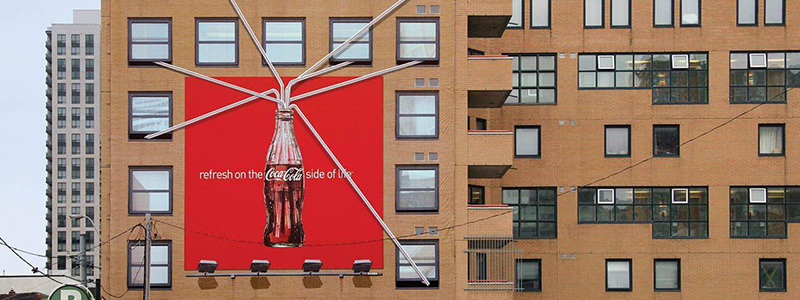
Even if you don’t have an idea this great, you can still think of innovative ways to use established forms of media.  For example, billboards can take advantage of 3D solutions, or they can integrate some sort of technology.

Have You Made It Snow on Your Customers?

Being different and unique is a great way to get a customer’s attention.  It’s made even better when it plays upon their desires to solve a problem, as it did in this case.  However, don’t make it snow just because you can.  If all you are doing is trying to be creative, you might attract attention, but it won’t necessarily increase your sales.  So make sure that when you bring the snow, you drop it on the people who are actually ready to book a flight.  If you want some feedback on your ideas, reach out to us.  We love hearing your creative plans for unique billboard designs, and we’re happy to give advice!