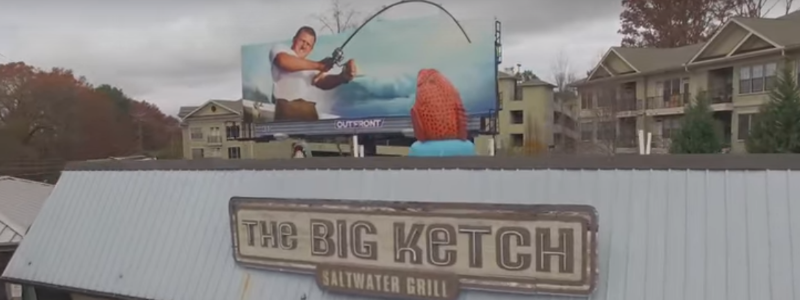
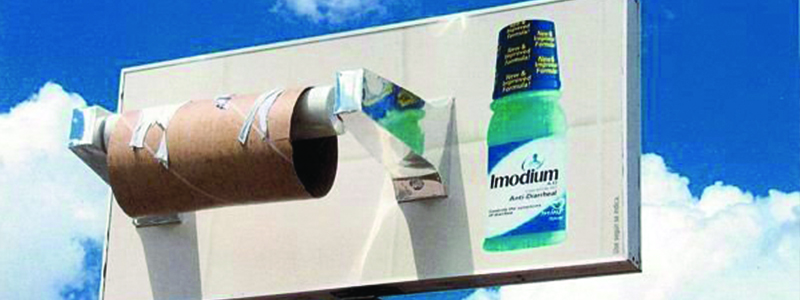
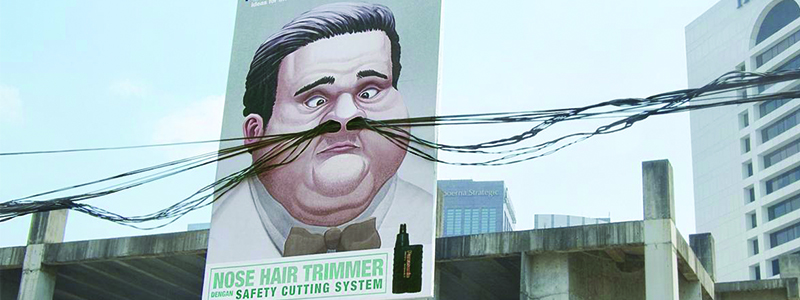
If one hasn’t experienced this situation at least once in their lives, then it is for the best that they never do. No words are even needed for the message in this billboard. It presents a problem and a solution side by side, relying on the imagery of the problem to be strong enough to make the solution look attractive.
What Did You Just Say?
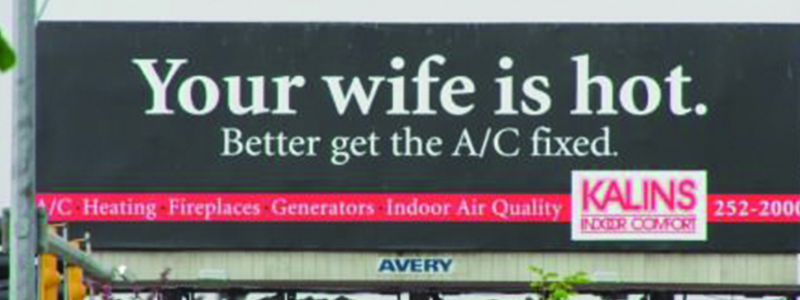
The classic bait and switch. Catch someone’s attention with an alarming out of context statement, then clarify the usage. The result is most likely a hearty chuckle and some more eyes on your billboard. While it might seem that this billboard would lose its effectiveness if the viewer isn’t married, the resulting confusion would only make the statement more perplexing.
Puns Are Hanoi-ing
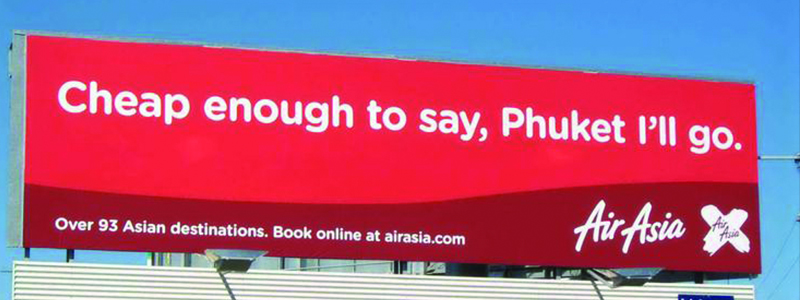
For those not in the know, Phuket is a popular beach resort destination found in Thailand. As far as location themed puns go, the jokes write themselves. Still, it’s refreshing to see an airline company have a sense of humor. There’s some tact to the implementation of the pun as it doesn’t come off too tasteless or brash.
Camera Shy
Beautifully elegant and creative- this is simply a non-rectangular billboard with a tarp covered over part of it. However, the message and visual effect is clear and effectively gets its point across. Most everyone can relate to being embarrassed by pimples so the humor in this billboard comes from the how relatable and human the message is.
Personal Hygiene
When advertisements interact with the surrounding world in a creative and unique way, it can catch oneself off guard. While this ad seems like a potential safety and fire hazard in the making, it catches the eye and makes creative use of something we usually ignore. It’s gross enough to create a sense of discomfort in the viewer which it then offers a solution to.
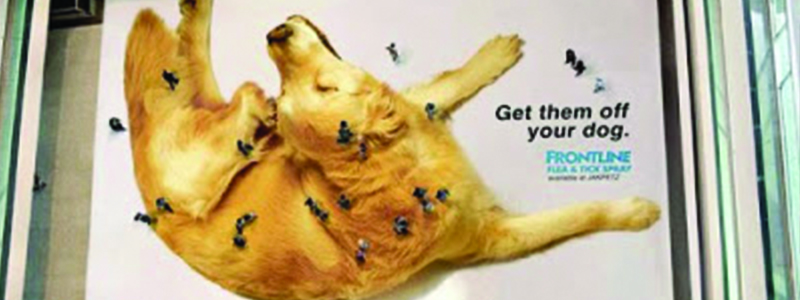
Your Dog Has A Case Of Humans
Ever heard someone say something along the likes of, “those people look like ants from up here?” Someone at Frontline ran with the concept, except with fleas instead of ants. The imagery of the obviously uncomfortable and itchy dog goes a long ways towards providing the framing required to interpret the people as fleas.
Happy Little Trees
No matter what’s troubling you, hearing Bob Ross say his signature line, “let’s paint some happy little trees” has a mysterious soothing effect. The tribute offered by this sign is sure to bring a warm smile to the face of just about anyone. Sure, there’s no joke per se, but it’s cute and playful- traits not normally found in road signs.
Calling You Out
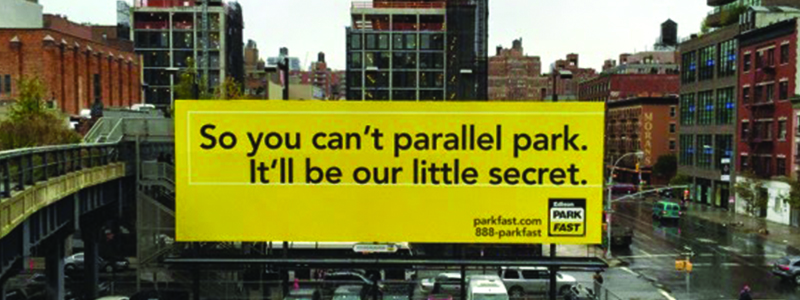
Despite being placed in public spaces, the communication that happens between a billboard and the viewer is actually quite a personal and private one. The one-way direction of the message allows this billboard to call out passing drivers and personalize its message without actually adapting to each individual. Sure, it won’t hold true for everyone passing by, but it will be more effective for those that fit the message.
Worst Possible Spokesperson
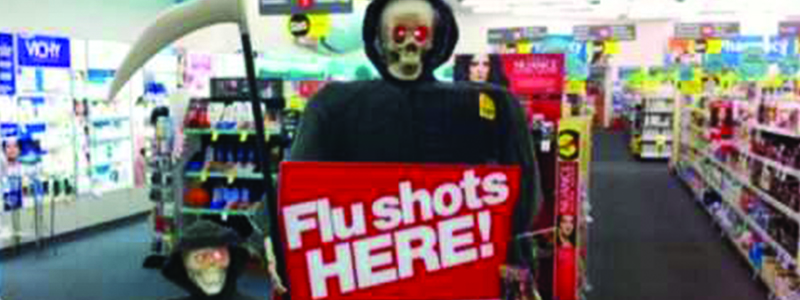
Context is key when it comes to delivering a joke. In this case, the signs themselves are what you would expect. Instead it is their creative placement by employees that brings forth humor from the created implication.
WAIT? Look again. Confusing the viewers a little is not bad. Also, in this way, besides sending a funny message, you are getting people to pay more attention to your billboard and spend more time watching it.
Play and Improvise With the Elements You Have
It’s an old trick in billboard ads, but it doesn’t mean it’s not effective just because it’s old. People love to see things that are out of the ordinary, and this way, your message gets noticed and gets a smile on someone’s face.
BMedia: Puerto Rico’s Advertising Experts
If you’re looking for ways to promote your business within your community, bMedia takes charge. We can help you develop a creative strategy for your business.
We are Puerto Rico’s leading experts in outdoor and billboard advertising. Our professionals can help you strategize, execute and maximize the effectiveness of your promotional campaign and market research.
Puerto Rico ofrece más que un destino turístico. Hay muchos beneficios, especialmente para los ciudadanos y las empresas de los Estados Unidos.
Entre el costo de vida, las tasas impositivas y otros incentivos, hay muchas buenas razones para tener billboards en Puerto Rico.
¿Por Qué Puerto Rico es un Buen Lugar Para la Publicidad en Vallas Publicatarias?
Existe un gran mercado potencial para sus bienes y servicios. La ubicación del noreste del Caribe de Puerto Rico atrae a los viajeros a la isla. Sus playas de arena y su clima tropical durante todo el año lo convierten en un destino atractivo. Con pocas tormentas y temperaturas agradables durante todo el año, Puerto Rico está cerca de la parte continental de los Estados Unidos de América, América Central y América del Sur.
Los turistas regresan para disfrutar de las excursiones, las actividades de la selva tropical de la región, las cuevas y los activos clubes nocturnos y bares caribeños.
El turismo genera miles de millones de dólares en ingresos anuales. En 2010, más de diez millones de personas volaron a los aeropuertos de Puerto Rico. Aquellos que visitan gastan dinero para apoyar los muchos negocios estadounidenses de la isla.
Para 2019, el consumo turístico había generado más de cinco mil quinientos millones de dólares estadounidenses en Puerto Rico.
Viajeros de todo el mundo vienen a experimentar la selva tropical única de Puerto Rico, las numerosas actividades turísticas, las cuevas, las excursiones y la activa vida nocturna caribeña. El clima tropical, los alimentos locales y las compras y actividades orientadas al turismo lo convierten en un atractivo turístico natural. Mientras están allí, los turistas disfrutan de los bajos impuestos a las ventas que ofrece la economía de Puerto Rico.
Puerto Rico es un territorio protegido de los Estados Unidos. Por lo tanto, ofrece atractivos incentivos a las corporaciones estadounidenses. Estos beneficios los animan a ubicar un negocio en Puerto Rico. La mayoría de los demás países del Caribe no brindan este estímulo financiero.
Puerto Rico también ofrece a las empresas importaciones libres de impuestos. Los impuestos a la propiedad son bajos. Los bienes raíces son relativamente baratos y las tasas de impuestos corporativos son atractivas. Además, durante su primer año de hacer negocios en Puerto Rico, tanto los impuestos sobre bienes raíces como sobre la propiedad personal están exentos. Esto anima a las empresas a establecer sus empresas allí. otros incentivos se proponen para los estatutos 20 y 22. Estos proporcionan ahorros notables para los estadounidenses que se trasladan a Puerto Rico.
La educación superior es muy barata en Puerto Rico. En consecuencia, muchos de los residentes de la isla tienen títulos universitarios. Al establecer una empresa, American puede contratar empleados bien educados. A pesar de que la fuerza laboral tiene un alto nivel de educación, la tarifa por hora sigue estando por debajo de los estándares de la parte continental de Estados Unidos.
Ansiosa por que los empresarios se trasladen a Puerto Rico, la isla ofrece algunas oportunidades interesantes.
Sus muchas cualidades atractivas hacen de Puerto Rico un lugar ideal para que las empresas lancen nuevos productos y servicios. Los visitantes conocen bien las marcas establecidas y están ansiosos por gastar su dinero en estas marcas que son una parte tan importante de la cultura estadounidense.
La economía de Puerto Rico no es tan estable como antes. La isla está sumida en la incertidumbre económica. Continúa reconstruyéndose.
Los impuestos han aumentado. Esto puede ser catastrófico para las pequeñas y medianas empresas.
En julio pasado, el impuesto sobre las ventas de Puerto Rico se incrementó de siete a once y medio por ciento en un esfuerzo por aumentar los ingresos de Puerto Rico. Esto ha hecho que las compras turísticas no sean tan atractivas. Como resultado, el gasto turístico se ha reducido significativamente.
CNBC también señala que el costo de vida en Puerto Rico ha aumentado considerablemente. Los empleados ahora exigen salarios más altos para llegar a fin de mes.
La mano de obra de Puerto Rico no es el negocio que alguna vez fue. Ahora está sujeto a las mismas leyes federales de salario mínimo que Estados Unidos continental. Por lo tanto, la mano de obra ha aumentado en la mayoría de las demás islas del Caribe.
Por Qué las Billboards Son Efectivas en Puerto Rico
Tanto en formato tradicional como digital, la publicidad en vallas publicitarias ha sido muy efectiva en Puerto Rico.
Las vallas publicitarias son tan atractivas en esta isla paradisíaca debido a la alta densidad de tráfico de vehículos y peatones.
Puerto Rico tiene un nuevo y sofisticado sistema de carreteras. La isla también tiene un amor por los autos no muy diferente a la parte continental de EE. UU.
La densidad del tráfico en las carreteras de Puerto Rico es de casi 750 autos por cada mil habitantes. No es de extrañar que las empresas, grandes y pequeñas, hagan uso de la publicidad exterior. Estas vallas publicitarias son vistas por miles de lugareños y turistas todos los días.
En una encuesta, uno de cada cuatro viajeros puertorriqueños dijo que estaba motivado para visitar un negocio el día que vio su cartelera.
Cuando se trata de publicidad exterior, Puerto Rico es un imán natural del Caribe. Es el hogar de grandes anunciantes como Coca-Cola, Wal-Mart, Sears y Macy ‘s. Además, cadenas hoteleras como Hilton, Marriott y Holiday Inn utilizan vallas publicitarias para atraer la atención tanto de los lugareños como de los turistas.
Imagínese a miles de turistas tomando el sol durante todo el año en las playas de Puerto Rico. Son un mercado listo para cadenas minoristas internacionales, compañías farmacéuticas, restaurantes e instalaciones para la vida nocturna.
Las vallas publicitarias son una forma eficaz de aumentar el reconocimiento de la marca, lanzar un nuevo producto o destacar un evento especial.
Desafíos de la Publicidad en Vallas Publicitarias
Al igual que en el sector inmobiliario, el éxito de las billboards depende de la ubicación.
Si su empresa no hace su investigación de antemano, puede colocar una valla publicitaria donde su mercado objetivo no la verá.
La ubicación es fundamental para el éxito de la publicidad exterior.
El mensaje debe verse y leerse en los pocos segundos que lleva pasar por su valla publicitaria. Entonces, lo que tienes que decir debe ser atractivo, atractivo y memorable.
Los gráficos y el diseño de su valla publicitaria deben reflejar la imagen de su marca. Debe ser lo suficientemente único como para proporcionar un reconocimiento de marca duradero.
En la publicidad exterior, el color, el tamaño y los efectos especiales hacen que una valla publicitaria sea eficaz.
Si bien las vallas publicitarias son una forma relativamente económica de publicitar, aún debe considerar cómo aprovechar al máximo el dinero publicitario de su marca.
¿Por Qué Contratar a un Especialista?
Un especialista en billboards exterior puede enviar un mensaje eficaz a su mercado objetivo. Los especialistas en medios capacitados son expertos en encontrar la mejor ubicación. Saben cómo crear un mensaje que sea memorable y que se pueda interiorizar en el poco tiempo que lleva pasar por la valla publicitaria. Los especialistas en medios ofrecen un medio publicitario que genera reconocimiento de marca, claridad de marca y alienta a los espectadores a convertirse en consumidores.
Hable con un especialista en billboards exterior sobre cómo hacer el uso más eficaz de su dinero publicitario. Para obtener más información sobre cómo hacer que su presupuesto publicitario sea más efectivo, comuníquese con bMedia Group. bMedia somos expertos en billboards en Puerto Rico.
It’s a common problem among young entrepreneurs. You’ve got this great product/service, everyone should be using it – but you just can’t seem to get the word out there. However, you’re probably wondering, “where should I advertise my business?”
Don’t worry, you’re not alone. There’s no shortage of small businesses that have trouble staying afloat because they’re not advertising – or at least not advertising correctly.
Where Should I Advertise My Business?
Advertising is a huge part of running a successful business. Think of McDonald’s – how many advertisements would you say you see a day? Five? Ten?
McDonald’s – and other large, successful businesses – invest so much into advertising for a reason: it works. If it didn’t, that’s not where they would spend their money.
In fact, Statista reported that in 2019 over 240 billion dollars were spent on advertising in the United States. The previous year roughly 223 billion dollars were spent. The United States commands the largest advertising expense and revenue in the world.
But even if your budget is smaller and your company isn’t some giant conglomeration, you still need to be advertising. If no one knows your product exists, it will be hard to sell.
If you’re a smart entrepreneur, you already knew this and are working on advertising your business. Learning about how advertising works best is a great start. You can also contact trusted professionals like bMedia Group to help get started on your advertising campaign.
How, where, and through which medium you advertise will all have a giant effect on sales.
Though each type of advertising has its pros and cons, there are many forms of advertising you might want to consider, as well as location.
Let’s start with types of advertising mediums.
Types of Advertising Media
There is a large collection of ways to advertise your product – the hard part is picking the right ones. Read through this list and think about which will work best for your business.
Broadcast Advertising
By far the most easily recognizable, broadcasted advertisements reach a humungous audience. If you’ve got a TV, you’re aware of the number of commercials. Statista reported that 69.6 billion dollars were spent on television ads in North America in 2019. The number dropped slightly in 2020 due to the pandemic.
Another form of broadcast advertising is through radio ads. Though the times of the radio being the main source of entertainment and information are long gone, radio ads still have their place in the advertising world. Radio ad spending is expected to pass 18 billion dollars by 2023.
Depending on the audience you want and the product you have, broadcast advertising can be a great way to advertise – but there are some downsides.
Television commercials are generally short and often require the complete attention of the viewer. It’s also quite costly when compared to other advertising mediums and runs the risk of being too repetitive.
As for radio advertisements, the issue is that fewer and fewer people are listening to the radio.
Reasons for this include the multitude of audio options in modern vehicles, music streaming services, podcasts, and – you guessed it – the number of advertisements on radio stations.
Print Advertising
One of the oldest forms of advertisements, print advertising has been an option for entrepreneurs for centuries. In fact, one of the first print advertisements can be dated back to 1477.
The print ads back then were certainly different than what we have now – generally speaking, print advertisements are those in newspapers and magazines. Other examples include flyers and brochures.
Print advertisements have been the most popular form of advertising for some time – though that trend seems to be changing. Still, though, print ads have their place.
For example, ads in the local paper can really help drive local business. Conversely, advertisements of your product in a magazine with a specific target audience can help drive business as well.
The main issue in advertising through print is this – fewer people are reading the printed word.
Through advancements in technology, newspaper and magazine subscriptions have been in a steady decline, and it doesn’t seem as though that will change.
Online Advertising
This type of advertising has just recently exploded. As the Internet is now integral in the lives of most citizens, businesses and advertising agencies have seen the market for online ads. There are several different types of online ads, including:
Banner advertisements
E-mail marketing
Social media ads
Playable video advertisements
These are just some examples of online advertising.
The pros – it’s relatively cheap and very easy to track.
The cons – some people fear sharing their data on the Internet and people have become less susceptible to online ads.
Online advertising is a market that will continue to grow exponentially as new technological advancements come into play.
Outdoor Advertising
Outdoor advertisements are all around us. You’ll find them on bus stops, cabs, and – most notably – billboards.
The budget for outdoor advertising reached over 39 billion dollars worldwide in 2019. Though there are some that worry about the decline of out-of-home (OOH) advertisements, their efficacy still remains.
Outdoor ads are on 24/7.They are always working, always seen, help create a captive audience. They can’t be turned off by the consumer.
The Outdoor Advertising Association of America reported that people spend nearly70 percent of their day away from home. This makes outdoor advertising a great way to reach people where other ads won’t.
Take a look at some of the pros of advertising on a billboard:
OOH advertising is generally cheaper than other forms.
Billboards help drive local business – the location of the billboard is key.
Consumers can’t turn off a billboard as they can a television or radio.
Billboards don’t need any other form of action – the consumer doesn’t have to watch television or buy a magazine – the ad is always there.
The Return-On-Investment (ROI) is generally very high for billboard advertisements.
OOH advertising is a great way to showcase your business. It allows for creativity in the message, location, and appearance.
Why Should I Advertise In Puerto Rico?
For those who don’t know, Puerto Rico is an unincorporated territory of the United States.
It’s a great market to introduce your product where others likely aren’t.
There are over three million citizens living in Puerto Rico, so the market is there. With a smart, successful advertising campaign, a business could have the lion’s share of sales in Puerto Rico.
Contact bMedia group to get started on your new advertising campaign.
With COVID-19 keeping us all indoors and separated for the greater part of 2020, it was assumed that Out-of-Home Advertising (OOH) would fall short in terms of Return on Investment (ROI) for businesses everywhere. However, with vaccination programs in place, and a better understanding of safety protocols and social distancing — people are eager to return outdoors. What does that mean for OOH advertising and what trends can we expect to come from this?
What is OOH Advertising?
Out-of-home advertising refers to any type of communications medium that a consumer encounters when they are outside of their homes.
Despite the pandemic putting a screeching halt on what would’ve been a breakthrough year for out-of-home advertising, it hasn’t tampered with its longevity in being one of the most effective and popular forms of marketing.
OOH ads can communicate to the masses faster and more effectively. It also allows brands to be flexible and creative with their marketing and outreach without limits.
As the world slowly returns to “normal,” more people will be exposed to out-of-home advertisements—meaning it’s going to be a good year for OOH advertising and the businesses that take advantage of it.
Brands have the opportunity to be innovative with their approach and design when it comes to out-of-home advertising. New ideas, concepts, and advertising trends continuously emerge that engage and entertain potential customers who come across these mediums. Here are some trends we can expect from the OOH sector in 2021.
New Media Types
Today, virtually any outside space can be transformed into some sort of OOH advertisement.
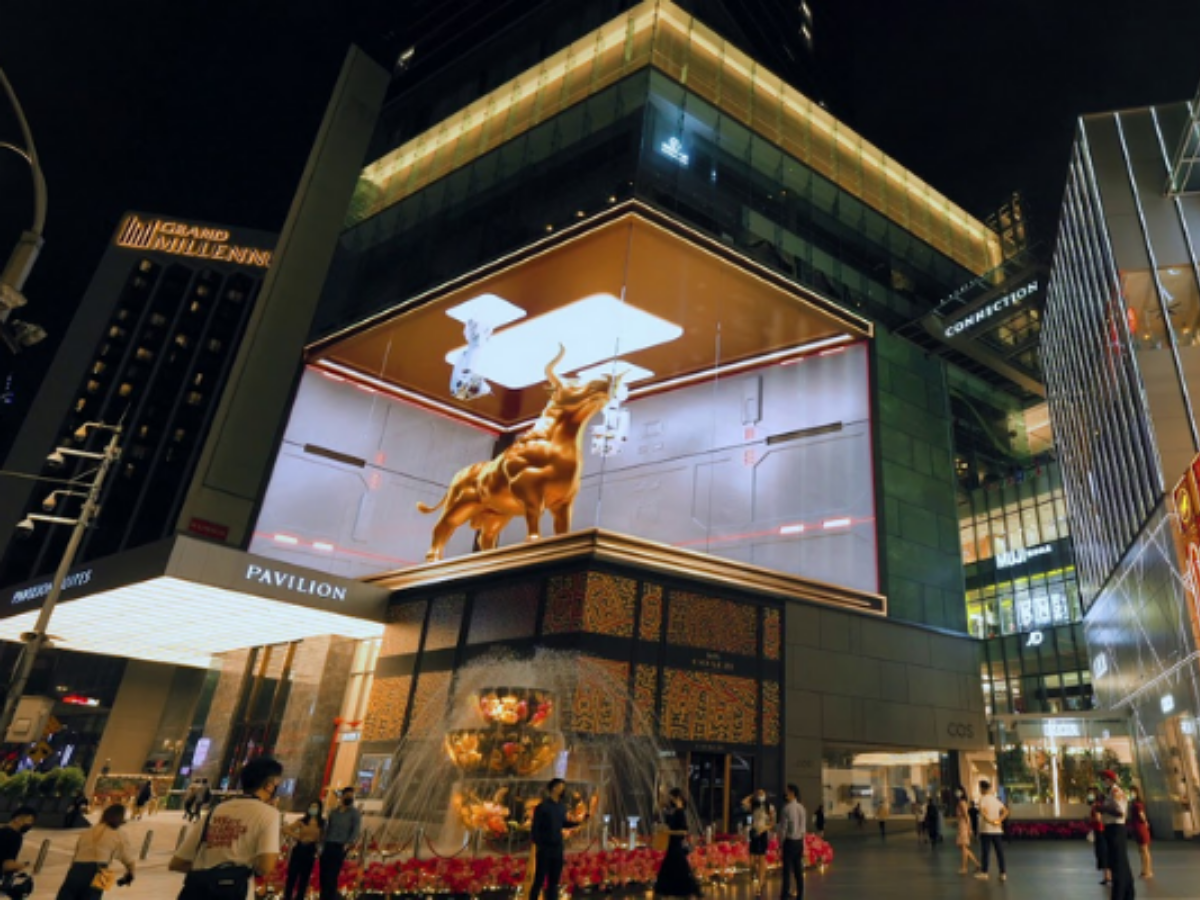
We are now seeing new media types such as car wraps, murals, art installations, and digital signage emerging all around us. It’s assumed that out-of-home advertising ends with static billboards and transit posters, but that is far from the truth.
The digital shift has made out-of-home advertisements incredibly innovative.
We now see digital billboards, street furniture, light shows, and transit signage that light up metropolitan areas all around the world.
Digital-Out-of-Home advertising (DOOH), is becoming incredibly popular with some of the world’s largest companies. You can find digital ads at shopping malls, medical waiting rooms, transit hubs, and alongside major roadways and highways.
Unlike static billboards, digital signage allows for moving images and interactivity. Movement is great at grabbing the attention of passerby-ers, resulting in greater impact. Digital signage also allows for a variety of content to be displayed on the same medium, some ads are programmed to change at specific time intervals. The variety will keep viewers interested and more receptive to your ad’s message.
Geotargeting and Mobile Integration
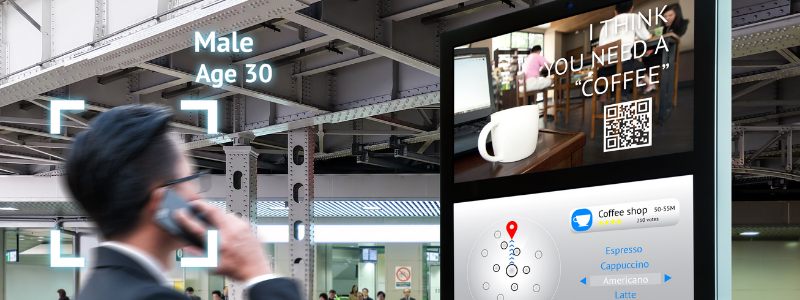
Mobile integration paired with an out-of-home advertisement is known to bring impressive results for any business strategy. Billboards are now using geotargeting technologies that allow companies to generate data that points them to the right demographic, the right location, and the right times to display their advertisement. By targeting the right audience, there is a better chance of a conversion.
Geotargeting delivers content and advertisements to consumers based on their geographic locations. This could include geographical proximity to a mobile billboard or proximity to a store, and etc.
Analytics and data surrounding your marketing campaign ensure adequate media planning. Another benefit to geo-targeted ads is that it allows companies to track and monitor their campaign’s performance.
Interactive Brand Communication
Interactive advertising can be experienced through store displays, kiosks, and digital signage everywhere. Interactive advertising encourages consumer participation, allowing them to provide feedback and become part of your ad’s dialogue.
Because these types of out-of-home advertisements are incredibly innovative, consumers are excited to engage with the ad, increasing their conversion and ROIs. These types of advertisements are eye-catching and can become an experience in itself for the consumer.
Through the use of hashtags and interactive games, the consumer becomes involved in the ad, making the branding process more compelling and effective.
Brand Storytelling
Storytelling is a way for brands to create a human connection with their audience. An advertising campaign with a capturing narrative can impact the subconscious, ultimately creating a relationship between the brand and consumer. A consumer-brand relationship is important because you want to have dedicated consumers who’ll remain loyal to your product or service.
When storytelling with OOH ads, brands can design billboards or digital displays that tell only a part of the story, leaving consumers wanting and waiting around for the next saga of your campaign. This creates excitement and hype around your campaign, which later translates into increased ROI and brand awareness.
Increased Budget and Investment for OOH Advertising
The arrival of smartphones saw companies turn more to mobile and web advertising, thinking out-of-home advertising was a thing of the past when in fact, OOH advertising has seen steady growth since 2012.
Many companies are catching on to the reliability and growth that OOH ads can bring and are increasing their budgets for this form of advertising. Out-of-home advertising represents a large portion of advertising spending. In 2017, OOH advertisements represented $29 billion across key markets globally — some of the companies spending the most on OOH advertisements include Apple, Google, and Amazon.
Additionally, major companies such as Netflix and Alibaba are investing big in outdoor ad companies as out-of-home advertising formats are becoming increasingly valuable forms of commercial real estate.
SMART Advertising
Consumers are becoming more and more tech-savvy every day, resulting in more of us relying on our smart devices more and more. There are smartphones, smart TVs, smartwatches, and beyond. It’s no question that almost every technological device is transitioning to SMART technology, and it’s the same for billboards and other outdoor signage.
We are now seeing the integration of billboards and SMART technology, known as SMART billboards, which can further increase the visibility of your brand.
Some features of SMART billboards are:
Built-in cameras and computer databases.
Analytical tools that can pull information from databases and social media to change visuals on the billboard in real-time.
Using social media apps like Instagram, Facebook, and Twitter to provide relevant content that engages the consumer.
Providing live updates on weather and traffic.
Built-in sensors to trigger ads.
Personalized content based on consumers’ reactions and activities.
High-tech LED lights and sound systems.
Ultimately, the driving factor for steady out-of-home advertising growth is its ability to keep up with change and global digitalization. This ever-evolving advertising strategy proves this “traditional” means of advertising is here to stay. If you’re seeking to maximize your marketing strategy, it’s best to include billboards and other forms of out-of-home advertising.
At bMedia, we provide our expertise to ensure your brand gets the most out of your OOH advertisement. With proper insights and strategies, bMedia can help your advert resonate and capture the attention of your targeted audience, resulting in increased revenue and visibility for your brand.
Billboard advertising, while an old medium, is a constantly evolving channel that businesses are continuing to use for effectively reaching their audience. The use of computer screens as advertisements has been around for a while but in recent years billboard-size digital displays have reached a new level of affordability. Digital billboards aren’t just for high-end brands with big pockets; it’s time for everyone to consider whether or not digital billboards are right for their marketing campaign. Digital billboards offer a range of benefits over their traditional counterparts and in this article, we’ll look at specific advantages of digital billboard advertising with some examples that show the power of this cutting-edge advertising tool.
Digital billboards can update in real time
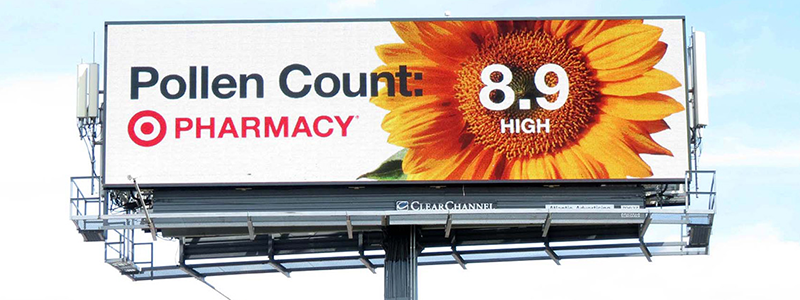
Thanks to the internet people have different expectations about how advertising works. They spend hours staring at screens that display advertisements tailored to them. Ads today know our names, our locations, and what we’ve been looking for. Digital billboards might not be able to reach this level of customization, but they can still utilize the latest technology to deliver a timely message. This is one of the major advantages of digital billboard advertising.
Look at this digital billboard advertisement from Target. It’s a powerful reminder of allergy season that utilizes the latest pollen count. It’s a brilliant combination of useful information and powerful marketing that is sure to stand out in a world flooded with advertisements.
Digital billboards can display time-sensitive messages
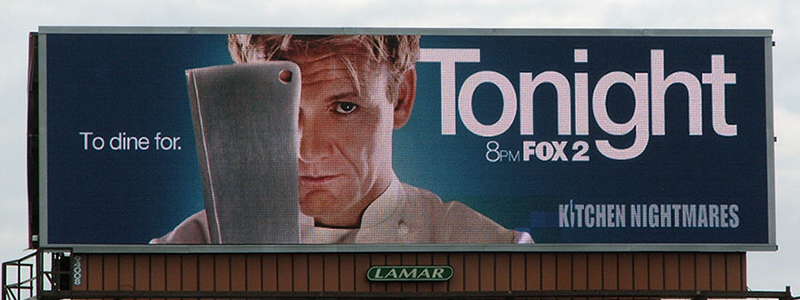
Have you ever gotten excited by an ad for an event only to realize that its time had already come and passed? Many companies waste money paying for advertisements that will outlive the events they are advertising. Digital ads can cut down on waste by automatically switching over at certain times.
Take this advertisement for the TV show “Hell’s Kitchen” as an example. Traditionally advertisements for a weekly TV show would have to run all week long, even though the show wouldn’t be on six out of the seven days. One of the advantages of digital billboard advertising is that a TV channel advertising on a billboard can make sure that it always advertises the shows that viewers can watch immediately after they see the ad. It’s a great way to increase the ad’s return on investment.
The same digital billboard can display two entirely different advertisements just minutes apart from one another
A traditional billboard can only display one advertisement at a time, and it can take hours of work to transition from an old ad to a new message. This isn’t the case with digital billboards. A digital billboard can be loaded up with multiple messages that it cycles between on a set schedule. Companies that advertise on digital billboards can buy the perfect amount of advertising for their needs and budgets. This means that there’s no reason to pay extra to monopolize an entire billboard if you think you can do just as well sharing the space. Say goodbye to one-size-fits-all ad buys!
Digital billboards can convey a sense of urgency
Most people are procrastinators by nature. If they can put something off, they will. Companies lose sales all the time because of this. Customers might plan on making a purchase, but they decide to wait until later and end up never spending a dime. To overcome this tendency it’s important to create a sense of urgency, and digital billboards are uniquely equipped for this task.
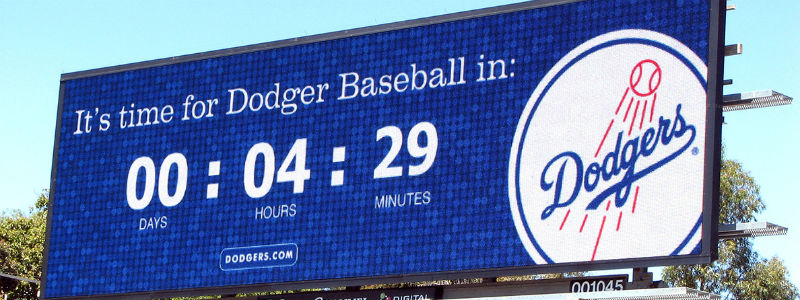
Just look at this advertisement for Dodgers Baseball. It has a timer ticking down, which can have a big psychological impact on those who pass. It reminds them that time isn’t unlimited, that they need to act quickly if they don’t want to miss their chance to see a game. A traditional billboard might be updated every day, but a digital billboard has the advantage of ratcheting up the urgency with updates by the hour, minute, or even second.
Digital billboards can engage with customers on a grand scale
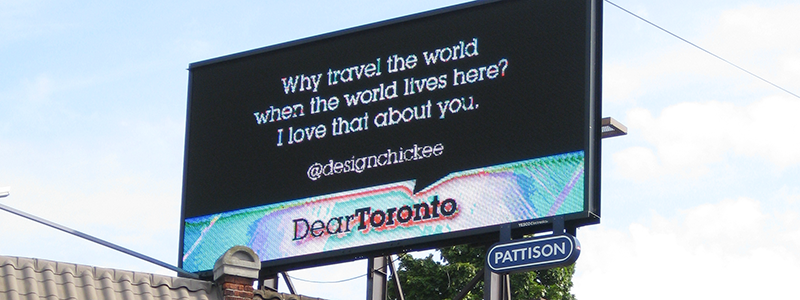
One of the best ways to ensure repeat business is by building a deeper connection with your customers. In the past billboards used to be a highly impersonal type of advertising but digital billboards can facilitate interaction between you and your customers. Just check out this campaign by Pattison Onestop and Spacing Magazine. They asked for people to tweet out love letters to Canadian cities and then broadcast those letters across the cities. Traditional billboards might have been able to display a single message, but digital billboards can display hundreds of messages a day.
People got to see their own words on billboards across the country, news outlets got a patriotic story to tell, and Pattison’s shopping centers gained plenty of fantastic PR. It’s the sort of marketing-win that digital billboards enable.
The world is moving quickly and billboards need to keep up with the change of pace
Information travels faster than ever in the age of smartphones. Traditional static billboards were invented in a world where news traveled at the speed of the newspaper. Today even 24/7 cable news channels are too slow for media consumers who are hooked into a constant stream of social media messaging. If you want to keep up in this environment, then you need the sort of flexibility that digital billboards can offer.
Advertising indefinitely surrounds us everywhere – it’s on our mobile phones, the radio, park benches, the television, and beyond. Companies now have endless channels to reach target consumers, the next step is determining which type of advertising is best for your business. So, what is the best type of advertising?
To properly determine which advertising route your brand should go with, businesses need to decide where they’ll be able to reach a large number of their target audience, what the costs are for each platform, and how to reach consumers at every sales level.
Advertising in the digital age is an innovative and creative way for companies to reach large audiences. However, ‘traditional’ advertising mediums, such as billboards also prove to be effective in increasing sales and brand awareness.
Billboard advertising is doing particularly well in keeping up with technological advancements and rapid urbanization. Billboards now showcase digital signage and 3-D images – doing a better job at capturing the consumer’s attention in high traffic areas. Because billboards are located in busier areas, they gather the highest number of reactions which result in a proven high return on investment (ROI) for businesses.
There are also endless billboard opportunities for brands and businesses. The USA alone has between 425,000 and 450,000 billboards spread throughout the country. Businesses can choose to place a billboard in a specific location that better serves their niche market and gives them access to a large percentage of their target audience.
Additionally, billboards and other types of OOH advertising can cost-effectively result in higher brand recognition and exposure. The broad reach, sheer visibility, and creative impact of OOH advertising can provide results in large-scale growth for companies.
Other types of OOH advertising Include:
Transit Advertising
Street Furniture
Interactive Signage
Posters
Stunt Advertising
Social Media Advertising
Social media advertising is an obvious route for any brand or business. Social media is being used by everyone, and constantly. Social media marketing strategies use major social platforms such as Instagram, Twitter, Facebook, LinkedIn, Youtube, Snapchat, and even Tik Tok to connect your brand with an audience. This can help build your brand, increase sales and boost website traffic.
Another benefit of social media advertising is that it’s a cost-effective way to build brand recognition. However, this type of advertising doesn’t just end at running an ad online. It involves consistently and strategically publishing compelling content, engaging with followers, and analyzing trends.
Pay-Per-Click Advertising
Pay-per-click or PPC advertising is a type of online advertising structure where advertisers pay each time users click on one of their online ads. This advertising model allows for the businesses running ads to be charged only when someone clicks on their link or ad.
A common type of PPC is the paid search ad. These are the ads that appear when people use online search engines like Google to help them make purchases. For ads to appear on the Search Engine Results Page or SERP, they are subjected to an automated process used by Google and other major search engines called Ad Auction. This software helps determine if an advertisement is relevant and trustworthy to the user’s search.
Other types of PPC include display advertising through banner ads and remarketing.
Mobile Advertising
A well-placed mobile advertisement will give a business a reach up to half the world’s population at any given time. People always have their phones on hand which is why mobile advertising has become a billion-dollar industry. This advertising route can reach people in real-time and creates data that can be instantly tracked, giving your company insights and metrics to specific advertising campaigns.
Although mobile advertising is innovative and efficient, it can interrupt the consumer’s mobile experience, resulting in some frustration. According to a report by HubSpot, 70% of people who use cellphones dislike receiving mobile advertising.
Companies considering mobile advertising campaigns must analyze their target demographic, their specific wants and needs, and determine if carrier costs are worth the investment.
Print Advertising
Similar to billboard advertising, one might assume print advertising isn’t as effective as other digital advertising routes.
However, this is simply false.
The print and publishing industry is continuing to thrive amidst the global digital transformation.
Print advertisements are known to leverage credibility through the ‘halo effect’. Brands that strategically place ads in respected publications are viewed as trustworthy because the reader already has a trust associated with the publication itself.
If your brand is seen as reliable, it can quickly generate leads and increase revenue for your business.
Broadcast Advertising
Television ads are the most prevalent advertising platforms in America. Despite switching to subscription services such as Netflix, fifty-nine percent of American adults still turn to cable broadcast channels for their primary TV consumption.
This advertising medium continues to win audiences across the globe, there’s a reason why we still love and look forward to Superbowl commercials every year. Concise and memorable commercials leave a lasting impression on the consumer’s mind. A good commercial can result in an emotional response from the viewer — whether it’s shock, laughter, or sadness, the emotional factor can help your message sink in more effectively.
Despite its effectiveness in capturing an audience, TV advertising can be costly as they are the most expensive to produce. From creating content to airing the commercial, the costs can quickly add up.
Time is also a factor to consider when choosing broadcast advertising as production may result in longer hours.
Direct Mail Advertising
Direct mail gets noticed, opened, and read. It is also more tangible and personal, which can be beneficial for your marketing strategy. Through direct mail advertising, companies can also target and personalize their marketing message to increase their effectiveness. A recipient is more likely to open mail personally addressed to them.
Direct mail results in better response rates, increased visibility, and creative opportunities. It is also a familiar form of advertising for consumers and can build trust for less tech-savvy recipients.
Knowing the pros and cons of each advertising platform will result in the best and most cost-effective decision for your business. bMedia Group is here to support you in choosing the most suitable form of advertising for your company. Together, we can increase brand growth and reach unlimited success.
Don’t hesitate to contact bMedia Group for more information on the right type of advertising for your business.
They are, on average, thirty seconds long. But every year, companies vie for those coveted spots. Over time, the cost of a Super Bowl advertisement has skyrocketed.
In 2018, businesses paid $5 million for a thirty-second ad. In 2020, AdAge.com pegged the cost of a single Super Bowl ad at $5.6 million.
Why are they prepared to shell out this money? Over a hundred and eleven million Americans watched the big game in 2018. The year was not unique. The Super Bowl represents 19 of the 20 most-watched TV broadcasts in American viewing history.
Do Super Bowl viewers even watch the ads?
Although DVR has made it possible to flash by ads, most fans watch the Super Bowl live. With live TV, most game watchers use commercial breaks to load up on Super Bowl snacks. However, according to an SI Wire survey almost 18% tune in to the glitzy advertisements.
It’s also been proven that Super Bowl commercials are viewed and shared via YouTube for quite some time after the actual game.
Super Bowl ads are a unique form of entertainment.
While most businesses cannot afford Super Bowl ads, they can learn valuable marketing lessons from the best super bowl advertisements.
Forbes magazine notes Super Bowl broadcasting is the time when businesses get the most extensive viewership. Compare other highly-watched events like game seven of the World Series where commercials cost half a million and the 2016 Oscars where advertisements could be bought for $2 million.
A cardinal rule of a Super Bowl ad is that it convinces viewers to buy their product or increases brand recognition. Other traits that make an ad effective are its entertainment value and its likeability.
The Most Memorable Super Bowl Ads
In 2011, Chrysler paid $12.4 million for an advertisement that saw famed rapper Eminem driving a Chrysler 200 around Detroit. This ad is the most expensive in Super Bowl history. However, it increased the brand of the automobile manufacturer and the city of Detroit. Car sales grew by half and the Motor City became a renewed tourist destination.
Other memorable ads include Budweiser’s “Joust” commercial featuring Bud Knight and his medieval royal subjects who shout, “Dilly Dilly” when offered beer.
Microsoft’s “We All Win” highlights the story of their efforts to help mobility challenged individuals by launching an adaptive video game controller. The ad that shows the challenged children using Microsoft’s new adaptive video game controller gets high marks for both emotion and civic responsibility. The ad encourages clients to buy from a company that proves it cares about its customers.
Awards go to the Tide ad of 2018. The storyline has nothing to do with the detergent. However, the actors sport very clean clothes. At the end of the plot, the voice-over says, “It’s just another Tide Ad.”
Newcastle, a popular beer, launched a call to encourage brands to pool resources for one big ad. It tells the tale of a couple celebrating their new home with Newcastle beer. Their walk through the new house features other brand logos among paintings and family photos. Featured in their unpacking are appliances and entertainment devices.
The 2010 ad, “Keep Your Hands off My Doritos” tells the funny story of a narcissistic man meeting his new girlfriend’s son. The kid warns his mother’s suitor: “Keep your hands off of my momma. Keep your hands off of my Doritos!” The ad is hilarious and relatable. The catchphrase is repeatable.
In 1999, Budweiser’s award-winning commercial focuses on a man answering the phone while watching a big game. His friend asks, “Wassup?” The man responds, “Nothing. Just watchin’ the game and drinkin’ a Bud.” The man’s roommate walks in and yells, “WASSSSUPPPPP?” The phrase echoed among game-watching beer drinkers for a decade.
Pepsi’s 1996 commercial to the tune of Hank Williams’ “Your Cheatin’ Heart” depicts a Coke delivery guy helping himself to a Pepsi. The moral: Even Coca-Cola employees love Pepsi.
Apple’s 1984 ad pays tribute to Orwell’s 1984. Men are marching in straight lines. On a giant screen, the leader tells them, “We are one people, with one whim, one resolve, and one cause.” A woman wearing bright clothing and wielding a hammer explodes the screen. The ad concludes with an announcement of the Macintosh computer. The ad is a tip of the hat to Apple’s innovative ideas.
Apple’s ability to think outside the box is mirrored in Volvo’s 2015 Super Bowl ad that one-upped its competitor by giving away a car.
One of our all-time favorites is Coca Cola’s 1971 ad that features Italian hills as the backdrop of the young adults from several countries singing, “I’d Like to Buy the World a Coke.” The ad demonstrated the relatability of millions of people around the globe who enjoy Coca-Cola. The ad embraces both diversity and world peace.
Slated to be a crowd-pleaser in the 2021 Super Bowl, the Doritos ad features Old Town Road rapper Lil Nas X.
How Can Your Company Create a Memorable Advertisement?
If you check out the best Super Bowl advertisements through the decades, you will discover that they have some common features.
These advertisements tug at your heartstrings. They leave you feeling happy, sad, proud, optimistic, or hopeful. Their storylines build a lasting emotion. They make you laugh or cry. They create nostalgia.
Some of the most memorable ads acknowledged popular literature, music, or culture. Their story weaves through the life and times of America. Using the most effective technology available at the time, memorable ads help viewers relate to what is going on in the world around them.
The ads with the most appeal are ones to which viewers can relate. People celebrate family occasions. Children conquer a handicap. A boy protects his mom. People reach out to their aging relatives. Viewers know what it feels like to walk in their shoes.
We can’t all afford multimillion-dollar ads.
However, the best Super Bowl advertisements have valuable lessons.
Whether you choose to build brand recognition through TV ads, radio spots, magazine ads, or outdoor advertising, you can learn effective marketing strategies from Super Bowl ads.
Advertising surrounds us everywhere we go, whether it’s in our homes, cars, or even outdoors. With the advancement of technology, advertising has become even more effective, as it is easier to measure the results. We can collect data on the number of viewers, impressions, clicks, and so on. However, how do we measure outdoor advertising, such as billboards? Out-of-home advertising has survived centuries of advertising methods and is still evolving. In this article, we will explain how to measure OOH advertising and why it is worth investing in it.
What is Out-of-Home Advertising?
Out-of-home (OOH) advertising refers to any advertising that people come across while they are outside of their homes. It includes advertisements on billboards, in transit stations, on public transport, and at other outdoor locations. According to the Cambridge Dictionary, OOH advertising is a form of advertising that people see or hear while they are out and about. It is worth noting that this form of advertising is a significant contributor to the advertising industry, with approximately 29 billion dollars being spent on out-of-home advertising each year.
Types of Out-of-Home Advertising
The Out of Home Advertising Association of America (OAAA) has identified several types of outdoor advertising. This category is quite broad and encompasses numerous types of advertisements. There are many excellent examples of OOH advertising from around the world. As a result, it is easier to divide OOH advertising into four primary categories:
Billboard-Type Advertising
Street Furniture
Transit
Place-Based OOH
These advertising methods are widely used by businesses to reach out to their target audience and enhance their brand visibility.
Why Use It?
Almost everyone encounters out-of-home advertising, whether it’s during their commute, while running, or shopping for groceries. According to the OAAA, individuals spend around seventy percent of their day outside of their homes, which makes them highly susceptible to outdoor advertising during a significant portion of their day.
According to a study conducted in 1975 by the Institute of Outdoor Advertising, which was later changed to the OAAA, the name recognition of the current Miss America increased by an astounding 940 percent when it was advertised on a billboard. This demonstrates the significant impact that out-of-home advertising can have on the average consumer. Billboards currently dominate the landscape of outdoor advertising, accounting for approximately 65 percent of all examples.
Another important facet is that out-of-home advertising has the advantage of holding a captive audience, since unlike many digital ads, billboards and other outdoor ads cannot be closed.
Measuring the Effectiveness of OOH Advertising
Measuring the effectiveness of out-of-home (OOH) advertising has been a difficult task for many years, just like with other types of advertisements. Nonetheless, several techniques have been devised by companies to assess the success of outdoor advertising, demonstrating that it is a highly effective way to promote their business.
Traffic Data
Out-of-home advertising is typically placed in areas with high traffic, which guarantees a large audience for any advertisement. According to the American Driving Survey conducted by the AAA Foundation for Traffic Safety, the average American driver spends approximately fifty minutes behind the wheel each day. The survey also revealed that drivers collectively traveled over 2.6 trillion miles in 2016 and 2017, with these numbers representing an increase from previous years. This suggests that more people are driving longer distances, indicating that out-of-home advertising will only become more prevalent over time.
In 2009, the Arbitron National In-Car Study found that 98 percent of U.S. residents aged 18 or older traveled in a car over the previous month. It was also found that 71 percent of drivers looked at billboards they passed along the road. This shows that an enormous amount of eyes glance over billboards each day. Another finding was that viewers retained the information from billboards, including going to a restaurant or watching a show because of one.
Return On Investment
Another way businesses are measuring the effectiveness of billboards is by checking the Return On Investment (ROI). ROI is defined as a performance measure used to evaluate the efficiency of an investment. The research found that for every dollar spent on billboard advertising, nearly six dollars were generated in profit.
Giant companies like Amazon and McDonald’s have found that an overall increase in sales often follows advertising through billboards in a particular region. A company in Phoenix, AZ found that after campaigning using billboards, 64 percent of consumers reported learning of them through their OOH advertising, leading them to keep investing in outdoor marketing.
Unique Advertisements
Companies have also started to use specific phone numbers, QR codes, and custom landing pages to evaluate how well their advertising is working. By placing a phone number only found on the out-of-home advertisement, a business can gauge exactly how many people have found them because of that exact ad.
The same can also be done with a unique QR code and digital tracking. A custom landing page for a company website found only on an outdoor advertisement also helps a company calculate an ad’s performance. Another example of this is displaying a distinct slogan only found on an out-of-home advertisement and analyzing how often those words pop up in a company’s analytics.
Case Studies
Over the years, many case studies have been conducted to show that out-of-home advertising is a viable way to grow a business and increase sales. In 2019, the Nielsen Out of Home Advertising Study found that 33 percent of their interviewees looked up a website because of an out-of-home advertisement. It was also found that close to a quarter of the interviewees talked about an advertisement that they had seen away from home with a friend.
At bMedia, we understand that measuring the success of OOH advertising campaigns can be complex. However, we are confident in our ability to demonstrate the lasting impact of our campaigns on the marketing industry. Let us show you tangible results that speak to our expertise and enthusiasm for this field.
OOH Advertising Trends
Today, virtually any outside space can be transformed into some sort of OOH advertisement.
There are new forms of media emerging all around us, such as car wraps, murals, art installations, and digital signage. Out-of-home advertising no longer ends with static billboards and transit posters. Thanks to the digital shift, it has become incredibly innovative. Digital billboards, street furniture, light shows, and transit signage are now lighting up metropolitan areas all around the world.
Digital signage offers more flexibility than traditional static billboards. It can display moving images and interactive content, which is great for catching the attention of passerby-ers and making a greater impact. Additionally, digital signage allows for multiple ads to be displayed on the same medium, with some ads programmed to change at specific time intervals. This variety keeps viewers engaged and receptive to your ad’s message.
Geotargeting and Mobile Integration
Mobile integration paired with an out-of-home advertisement is known to bring impressive results for any business strategy. Billboards are now using geotargeting technologies that allow companies to generate data that points them to the right demographic, the right location, and the right times to display their advertisement. By targeting the right audience, there is a better chance of a conversion.
Geotargeting delivers content and advertisements to consumers based on their geographic locations. This could include geographical proximity to a mobile billboard or proximity to a store, and etc.
Analytics and data surrounding your marketing campaign ensure adequate media planning. Another benefit to geo-targeted ads is that it allows companies to track and monitor their campaign’s performance.
Interactive Brand Communication
Interactive advertising can be experienced through store displays, kiosks, and digital signage everywhere. It encourages consumer participation, allowing them to provide feedback and become part of your ad’s dialogue.
Because these types of out-of-home advertisements are incredibly innovative, consumers are excited to engage with the ad, increasing their conversion and ROIs. These types of advertisements are eye-catching and can become an experience in itself for the consumer.
Through the use of hashtags and interactive games, the consumer becomes involved in the ad, making the branding process more compelling and effective.
Brand Storytelling
Storytelling is a way for brands to create a human connection with their audience. An advertising campaign with a capturing narrative can impact the subconscious, ultimately creating a relationship between the brand and consumer. A consumer-brand relationship is important because you want to have dedicated consumers who’ll remain loyal to your product or service.
When storytelling with OOH ads, brands can design billboards or digital displays that tell only a part of the story, leaving consumers wanting and waiting around for the next saga of your campaign. This creates excitement and hype around your campaign, which later translates into increased ROI and brand awareness.
Increased Budget and Investment for OOH Advertising
The arrival of smartphones saw companies turn more to mobile and web advertising, thinking out-of-home advertising was a thing of the past when in fact, OOH advertising has seen steady growth since 2012.
Many companies are catching on to the reliability and growth that OOH ads can bring and are increasing their budgets for this form of advertising. Out-of-home advertising represents a large portion of advertising spending. In 2017, OOH advertisements represented $29 billion across key markets globally — some of the companies spending the most on OOH advertisements include Apple, Google, and Amazon.
Additionally, major companies such as Netflix and Alibaba are investing big in outdoor ad companies as out-of-home advertising formats are becoming increasingly valuable forms of commercial real estate.
SMART Advertising
Consumers are becoming more and more tech-savvy every day, resulting in more of us relying on our smart devices more and more. There are smartphones, smart TVs, smartwatches, and beyond. It’s no question that almost every technological device is transitioning to SMART technology, and it’s the same for billboards and other outdoor signage.
We are now seeing the integration of billboards and SMART technology, known as SMART billboards, which can further increase the visibility of your brand.
Some features of SMART billboards are:
Built-in cameras and computer databases.
Analytical tools that can pull information from databases and social media to change visuals on the billboard in real-time.
Using social media apps like Instagram, Facebook, and Twitter to provide relevant content that engages the consumer.
Providing live updates on weather and traffic.
Built-in sensors to trigger ads.
Personalized content based on consumers’ reactions and activities.
High-tech LED lights and sound systems.
The steady growth of out-of-home advertising is driven by its adaptability to change and global digitalization. This dynamic advertising strategy demonstrates that “traditional” advertising methods are still relevant in today’s market. If you want to maximize your marketing strategy, it’s wise to include billboards and other forms of out-of-home advertising.
OOH Advertising Examples
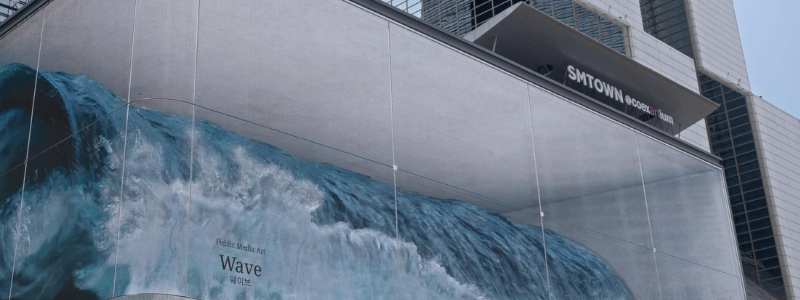
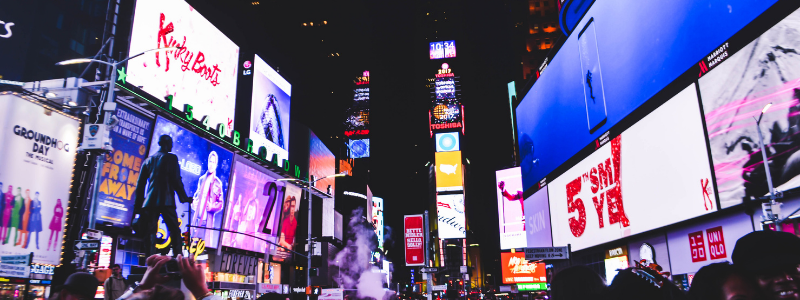
A key innovation in the OOH advertising space has been digital OOH advertising. While there are many digital billboards that could be considered effective OOH advertising examples, the best comes out of New York City. Times Square is saturated with digital billboards that play video advertisements nonstop. Digital OOH ads manage to combine the bright colors, movement, and sound of ads like TV commercials with the size and unblockability of traditional OOH ads. The result of this is a new, hybrid advertisement that blends the benefits of multiple forms of advertising.
Billboards
Billboards are one of the most common forms of OOH ads. Because of how many billboards there are worldwide, it can be difficult to make a billboard ad that stands out. You aren’t sure if drivers passing by will notice it. To solve this, effective billboard advertising should be creative and memorable.
One company that’s done a great job with its billboard advertising is Apple. In 2015, Apple launched its “Shot on iPhone” campaign. The campaign offered iPhone users the opportunity to capture images on their phones that would then be used on billboards, commercials, and other ads. Apple’s Shot on iPhone campaign displays the importance of engaging consumers and being thoughtful with image selection.
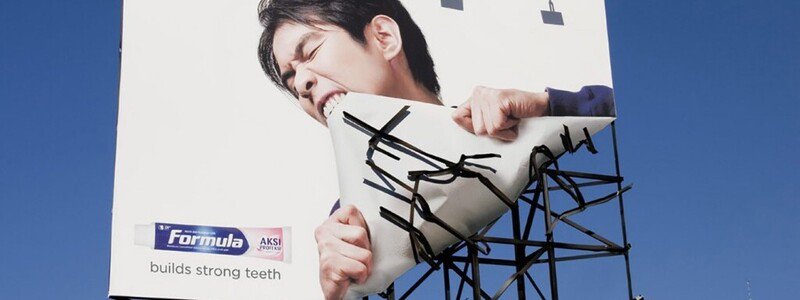
Another fantastic billboard example was a Formula toothpaste billboard in Indonesia. This remarkably creative advertisement shows a man whose teeth are so strong that he is literally ripping the billboard off of its supporting structure. This billboard is a wonderful example of using creativity to stand out.
Posters
Posters are another extremely common form of OOH advertisements. Because of their small size and widespread use, it’s extremely important to design a poster that will immediately stand out. Eye-popping colors and creative images will help ensure that your ad will be noticed.
Some tips for effective poster advertising include:
Create the poster to cater to a specific audience
Use your brand’s color scheme
Include a call to action
Pick high-quality images
Use text sparingly; include only the information that consumers really need
Airports
Airport advertisements are a subset of place-based advertising. Many companies consider airports a gold mine for ads. They are a fantastic place to either stick with traditional billboards or posters. You can also utilize other aspects of airports, such as conveyor belts, to create incredibly unique advertisements.
One example of creative airport advertising is at the Venice Marco Polo Airport. The Casino de Venezia decided to turn a baggage collection belt into a life-sized roulette wheel. This fun, unique advertisement did a fantastic job at keeping people engaged during an otherwise mundane activity of waiting for your luggage. In addition, the Casino reported that visits increased by 60% after installing this advertisement.
Another interactive airport advertisement was installed in the Tokyo Airport in anticipation of the 2020 Summer Olympics. The Tokyo airport turned an entire airport terminal into a running track. This incredibly creative advertisement is a great example of utilizing the entire airport to promote an event.
Street Furniture
Street furniture advertising is most commonly seen at bus stops or on benches. Advertising on street furniture can be a great way to engage those walking by. Nike is well-known for its creative and thought-provoking advertisements, and its ads on street furniture are no exception. In one example, Nike placed its iconic swoosh logo along with the word “RUN” on a bench in Madison Square Park in New York. They then removed the seat of the bench. This simple yet eye-catching ad, combined with the action of removing the seat, is memorable and perfectly aligned with Nike’s message that everyone is an athlete.
Transportation
Advertising on public transportation, such as buses or subways, is also extremely common. Many people on public transportation tend to be bored. They are looking for some form of entertainment while they travel.
Startup mattress company Casper realized this, and developed a riddle campaign in the NYC subway system that simultaneously entertained riders while advertising their product.
The riddles they put up engaged subway riders, which helped ensure that their advertisement and company would be remembered.
These are just some of the most effective OOH advertising examples, but there are plenty more!
OOH Advertising with bMedia
Looking to increase your company’s profits? Consider investing in OOH advertising. With a creative and memorable campaign, you can attract more customers and increase your bottom line. And if you’re advertising in Puerto Rico, there’s no better partner than bMedia, the island’s top OOH media and advertising company.
We’re passionate about helping your business succeed, and we’ll work closely with you to ensure your ads are effective and memorable. So why wait? Contact us today and let’s get started.
Billboard advertising effectiveness has never been in question. That’s one main reason we still see billboards even today, after being around for so long.
With the emergence of social media advertising and other digital marketing trends, some may consider that outdoor advertising is past its hay-day. But that misconception is largely unfounded.
In fact, with the rise of the digital age, billboard marketing may even be more relevant and effective today. Not to mention, the measurables and key performance indicators alike are easier than ever to track, like impressions, reach, etc.
With ever-developing effects, such as digital screens, 3-D figures, or different structures, the concept of the billboard and why it works remains the same. Companies should instead consider the billboard as a key (if not main) method of advertising and a staple across all industries.
Any way you look at it, billboard advertising works, and its effectiveness has proven itself for decades. Here are some of the top reasons for billboards advertising effectiveness:
The World is On the Move
Over time, countries all over the world have become more mobile. People spend less time at home. Whether enjoying a road trip or travel, commuting to work, or simply seeking a new experience, the citizens of the globe are on the move. There’s always somewhere to go. Are you in their path?
All that time in our cars adds up, and advertisements placed roadside where travelers and commuters can see them are sure to be noticed.
Drivers are a Captive Audience
Drivers’ eyes are on the road, but their eyes can also fall upon the large, visually appealing billboards by the roadside.
It has always been true that drivers are a captive audience and it is becoming even more true with harsh legislation banning texting and driving, as well as driving while distracted tickets rolling out every year.
While drivers can turn down the radio or subscribe to a completely ad-free channel, they jeopardize their very safety by taking their eyes off the road. With very little else to safely distract them, chances are they will spend a few moments peering at that billboard.
And, unlike other advertising mediums, outdoor ads cannot be turned off, hidden, or thrown away.
Billboards Inspire New Ideas
An effective billboard for a restaurant, attraction, or even a unique shop can generate instant sales for travelers who are looking to explore a new area. Some billboards for certain products can be seen actually right outside the storefront!
With a growing culture of exploring off-the-beaten-path and seeking unique experiences, a well-placed billboard that provides directions to an unusual spot can generate instant sales.
This makes a billboard a surprisingly cost-effective method of advertising, as well. Although the original billboard itself can be pretty costly to design and erect, if placed effectively, it will more than make back its cost in sales.
Advancements in billboard technology have also added a new dimension to billboard advertising effectiveness, with the ability to display multiple ads throughout the day.
Brand Repetition & Exposure
High brand awareness lies in repetition and exposure. While a tried-and-true marketing strategy, may help your brand awareness efforts, doing so is not only expensive but also increasingly difficult to get noticed (unless you dish out some major cash on ad platforms).
Billboard advertising is the only marketing media where the advertiser has full control of the ad space. The ad has constant exposure – no other media allows your message to be displayed 24 hours a day, 7 days a week. It’s is a powerful marketing tool.
If what audiences see in your billboard makes them laugh, inspires them, reminds them of a positive memory or any other avenue of emotional connection…you’ve probably secured a loyal customer.
Let’s face it– today’s consumers are constantly barraged with advertisements in print (maybe not as much these days), online, over the radio (again, starting to see less of this too), commercials on television, and even on social media. And because you probably typed in something like, “Billboard advertising effectiveness” into Google, you’ll probably get some more ads (not from us) delivered to you with that message.
With a constant stream of sellers courting each consumer, a very particular method of selection based on an emotional connection has emerged. Think about it: if an advertisement can charm you or make you laugh in the few seconds it takes to view it, don’t you think more positively about that company?
The same concept applies to billboards and works in Out Of Home (OOH) advertising better than many other advertising avenues. You have a captive audience guaranteed to glance over your billboard for at least a few seconds, think about it while they drive, remember the visual, and engage in their mind.
Impact & Creativity
Billboard marketing is big, bold, colorful, and creative.
With all the technological advancements and swirls of advertisers globally, companies are encouraged to top one another in creativity and thinking outside the box. Consumers have come to expect this and celebrate it.
For example, Chick-Fil-A is just another fast-food sandwich stop, isn’t it? Wrong.
Chick-Fil-A is a globally recognized brand for a myriad of reasons, including their top-notch customer service, good works, and their famous billboards.
The second you glimpse a familiar black and white billboard in the distance with hand-painted splashes of red, you know what you’re looking at. That’s even before you see the 3D cows posed in a variety of amusing positions, or the humble red Chick-Fil-A logo. The cows “vandalizing” the billboard has become an expected and creative part of their advertising strategy, and to look at their earnings, we think its’ working. You know exactly what their message is and the creative aspect of cows delivering that message is the difference – “Eat More Chikin.”
So if you are looking to stand out from the crowd, reach people faster and more effectively, consider billboard marketing in your arsenal and budget.
If you’re interested in outdoor advertisement opportunities in the Puerto Rico area, there are plenty of options and areas from which to choose. Contact bMedia to learn more.
Billboards have stood the test of time. While they have evolved and adapted to an ever-changing ad climate, it is still considered one of the most traditional and classic ways of advertising. However, as technology, ad placement, and digital media continue to advance, what does the future hold for billboards? Here’s our prediction on the future of billboard advertising:
Why Choose Billboard Advertising?
Billboard advertising has always been an effective medium for building brand awareness. Located in busy areas, billboards get a lot of foot and vehicular traffic. They offer businesses opportunities to broadcast their products and services. They are a good means of launching new products and advertising special events.
Compared to other advertising techniques, return on investment in billboard advertising is by far the best marketing investment for your business’ advertising dollars. Billboards generate nearly six dollars for every dollar spent on them.
Americans spend almost nine hours a day engaged in outdoor activities. They are a ready market for outdoor advertising. For them, outdoor marketing is inevitable. They can’t turn it off. They see it consciously and subconsciously. Logos, slogans, and images stick with them.
Studies show that almost forty percent of drivers consciously look out their windows at billboards as they are driving. Nearly sixty percent say they learned about a brand, a new product, or an event from a billboard ad.
One in four people go to a restaurant, explore a new business, or purchase a product on the same day that they saw it advertised on a billboard.
The Evolution of the Billboard
Billboards are not a new form of advertising. The first American billboard is believed to have been erected in the 1830s. It was created by Jared Bell to advertise circus acts.
By the 1860s, businesses purchased outdoor space for billboard displays. These billboards were often huge colorful hand-drawn and hand-painted creations.
Major Milestones
First Billboard
The first twenty-four sheet billboard appeared at the Paris Expo. After that, twenty-four sheet billboards became the usual size.
Increased Traffic
With the introduction of the Model T Ford, owning a car became affordable. Roads and highways to accommodate drivers’ cars quickly became the chief means of transportation in America. It naturally followed that billboards sprang up along these well-traveled thoroughfares.
During the twentieth century, 49,000 miles of The Interstate Highway System connected states on safe and efficient roads. This made billboard advertising even more appealing.
Characteristics of Successful Billboards
Less is more. Because the target market of billboards is drivers and walkers, billboards have ten seconds to get their message across. So, they have to keep their words to a minimum.
Catchy slogans and memorable graphics are vital. Using only a few words, billboard advertisers need to explain their product and how it is going to impact the potential customer. Further, they need to convince the viewer that their product is better than its competitors.
Like real estate, the location of billboards is crucial. Brands need to be where thousands will see them each day.Billboards should be visible from a distance. The message must be neat and legible font enough to be read from a long distance. Billboard should be where they can connect with their target market.
Color choice is also important. Catchy, bright, vivid colors get billboards noticed. Color also stimulates various viewer’s emotions. It carries with the subconscious association to various things and characteristics. Billboard colors should be eye-catching, bright, and vivid to grab the attention of its audience.
The Future of Billboard Advertising
Today, billboards cost only 7% of advertising dollars. Yet they have the highest return on investment of any advertising medium.
Even though times have changed, there is still a future for the billboard.
Ten years ago, billboards were seen as outdated. However, the online marketing boom has changed all that.
Billboards have become, once again, the hottest marketing medium. Look around you. You will see ads for Apple and Google on huge fourteen-foot-by-forty-eight-foot vinyl sheets. Companies like Netflix, Everlane, Airbnb, Asana, and Twilio occupy building walls, subway cars, bus shelters, and park benches.
They are owned by over a thousand advertising businesses that rent them out on a weekly or a monthly basis.
More companies are focusing on feelings and emotions they want their brands to elicit. Today’s advertisers want an emotional reaction from their viewers.
Technology is changing rapidly. This will change the look of billboards.
Technological advances are also becoming cheaper. Ideas that were cost-prohibitive a year or two ago are now affordable.
Smart Billboards
Digital billboards are now being replaced by smart boards. These smaller digital screens are starting to appear in bus shelters, shopping centers, and other high-traffic areas. Smart billboards can be placed on any flat surface anywhere.
Where digital boards could be ignored, smart boards are reactive.
They change the content on the screen based on information about the viewers.
In the future, billboards and digital screens will make use of such technologies as cameras, radar, infrared, and antennae. These will provide the data to see and react to their environment.
How can bMedia Help?
There are a lot of reasons for choosing bMedia billboard advertising.
Our company, stationed in Washington state, is an international provider of outdoor advertising.
The company provides traditional, digital, and trivision marketing alternatives.
Our outdoor marketing specialists use the latest technology to design a billboard that is unique to the needs and wants of each client. Our experienced professionals will help you create a billboard that will attract your target market. Together, you will decide on a format and location that will make your brand recognizable and desirable.
Using today’s technological advancement, our billboards are highly individual in both form and content. We’ll help you customize your billboard to deliver an appealing message to your niche market.
Give us an opportunity to demonstrate why the interest in outdoor ads increased by almost 5% last year.
We’re so sure you will be delighted by our compelling billboards that we’re offering a free trial.
For more information on how to make outdoor advertising an effective part of your brand recognition or to inquire about a free trial.









 Print Advertising

 erienced through store displays, kiosks, and digital signage everywhere. Interactive advertising encourages consumer participation, allowing them to provide feedback and become part of your ad’s dialogue.