Types of Digital Advertising: What To Use, When To Use It, And How To Plan It In Puerto Rico

When you search for types of digital advertising, you are usually trying to make a real decision: where to spend, what to run first, and how to measure impact without guessing.

This guide keeps it practical. You will learn the most common types of digital advertising, what each one is best for, and how to build a mix that fits Puerto Rico’s market, timeline, and creative constraints. You will also see why Digital Out of Home (DOOH) belongs on the list, not as an afterthought.

bMedia supports island-wide outdoor media in Puerto Rico with a technology-forward approach, including data and analytics, and a network positioned as able to reach 90% of the population in minutes with 500+ high-impact locations across formats. 

Quick Details For Choosing The Right Mix

Use this sequence to avoid building a plan that looks complete but misses the goal.

  • Goal first: awareness, store traffic, leads, or retention
  • Audience next: who you need, where they are, when they move
  • Format fit: message length, creative flexibility, and context
  • Timeline: production, approvals, launch, and optimization cadence
  • Measurement: decide what you will report before you launch

If you want a deeper look at OOH measurement language and expectations, bMedia’s guide on how to measure OOH advertising is a useful reference.
Types of digital advertising

What “Digital Advertising” Means Today

Many people think digital only means ads on phones and laptops. In modern planning, it includes any ad delivered through digital systems, including digital screens in the physical world.

The IAB defines DOOH as digital media used for marketing outside the home using digital screens in public and commercial spaces that deliver dynamic content and ads. 

That is why DOOH is part of the conversation when you compare types of digital advertising, especially in Puerto Rico where movement patterns and high-traffic corridors can drive reach and frequency quickly.

The Most Important Types Of Digital Advertising And What They Do Best

1) Paid Search Ads (Search Engine Marketing)

Paid search puts your message in front of people actively looking for a product or service. Search Engine Land describes SEM as combining SEO and PPC strategies to drive traffic and visibility through search queries. 

Best for

  • High-intent lead generation
  • Capturing demand that already exists

What to measure

  • Clicks, cost per click, conversion rate, cost per lead

2) Paid Social Ads

Social ads are strong when you want interest-based targeting, fast creative testing, and scalable reach.

Best for

  • Awareness and consideration
  • Retargeting engaged users
  • Promotions and launches

What to measure

  • Reach, frequency, video views, cost per result

3) Display Ads

Display ads run across websites and apps. They are often used for broad awareness and retargeting coverage.

Best for

  • Top-of-funnel visibility
  • Supporting larger launches

What to measure

  • Impressions, CPM, click-through rate, assisted conversions

4) Retargeting (Remarketing)

Retargeting follows up with people who already visited your site or engaged with your brand. It works best as a system, not as a standalone strategy.

Best for

  • Bringing back undecided buyers
  • Reinforcing a time-sensitive message

What to measure

  • Frequency, cost per acquisition, incremental lift where available

5) Video And Streaming Ads

Video works when you need attention, recall, and clearer explanation. This includes online video placements and streaming environments.

Best for

  • Brand building at scale
  • Product education and story

What to measure

  • Completed views, cost per view, reach, lift signals where available

6) Native Ads (Sponsored Content Style)

Native ads match the surrounding editorial experience while staying labeled as sponsored. They can support longer-form education.

Best for

  • Consideration-stage audiences
  • Complex offers that need context

What to measure

  • Time on page, scroll depth, assisted conversions

7) Audio Ads (Streaming And Podcasts)

Audio reaches people while commuting, working, and multitasking. It is often used to build frequency and recall.

Best for

  • Repetition and recall
  • Local promotions when you want consistent exposure

What to measure

  • Reach and frequency, completion rate when reported

8) Email Sponsorships And Newsletter Ads

Newsletter placements can be efficient for curated audiences. They are simple and easy to track.

Best for

  • Niche audiences and local communities
  • Events and limited-time offers

What to measure

  • Clicks, conversion rate, cost per acquisition

9) DOOH (Digital Out Of Home)

DOOH includes digital billboards and other digital screens outside the home. It is designed for high-visibility reach in real-world environments, with creative flexibility and measurable delivery.

Best for

  • Rapid awareness in high-traffic areas
  • Building frequency and trust across a region
  • Campaigns that benefit from contextual placement

What to measure

  • Impressions, reach estimates, frequency, CPM-style efficiency

bMedia positions its island-wide network as able to reach 90% of the population in minutes, supported by 500+ high-impact locations and multiple formats across Puerto Rico. 

If you want to understand how bMedia thinks about placement strategy, see the importance of billboard placement.

bus-stop-advertisementPlanning Rules That Make These Types Of Digital Advertising Work Better

This is where most “list” articles fall short. The channel matters, but planning decisions decide performance.

Choose Formats Based On Your Goal

Awareness

  • DOOH, video, display, social reach campaigns

Leads and bookings

  • Paid search, retargeting, high-intent social, landing page alignment

Store traffic

  • DOOH plus geo-aware social and mobile support

Match Message Length To The Format

  • Short, bold message works best for DOOH and quick-scroll social
  • Longer explanation works best for video and native

bMedia emphasizes outdoor creative best practices such as readability, contrast, and legibility at distance. Keep the copy short and the layout clean so the message lands fast.

Build A Simple Timeline

  • Creative development and approvals
  • Launch window
  • Optimization cadence
  • Reporting schedule

Puerto Rico campaigns often involve movement across metro corridors and regional routes. If you are planning around areas like San Juan, Bayamón, Carolina, Caguas, Ponce, or Mayagüez, it helps to think in terms of where your audience is most consistently exposed, not only where you want them to buy.

Measurement Basics You Should Use In Any Digital Plan

If you want reporting that builds confidence, use shared definitions that translate across channels.

CPM (Cost Per Thousand Impressions)

CPM is the price advertisers pay for 1,000 impressions and is used both as a pricing model and as an efficiency metric. 

Reach Vs Frequency

  • Reach: how many unique people saw your ad
  • Frequency: how often they saw it

For bMedia’s perspective on how these metrics differ in outdoor advertising, see impressions vs reach and reach vs frequency. 

Programmatic DOOH (If You Need Flexibility)

If your plan needs faster adjustments and data-driven delivery controls, programmatic DOOH can be part of the buying approach. bMedia’s overview of programmatic DOOH explains the concept in plain language. 

How bMedia Fits In A Modern Mix

A strong plan rarely uses only one channel. The best approach is usually a mix of demand capture and reach.

Here are three simple examples that map to common business goals:

Example 1: New Location Launch

  • DOOH for fast island visibility and repeated exposure
  • Paid social for audience targeting and creative testing
  • Retargeting to re-engage site visitors

Example 2: Local Service Business

  • Paid search to capture high-intent demand
  • Retargeting to reduce drop-off
  • DOOH to build trust and reinforce your presence in the service area

Example 3: Seasonal Promotion

  • DOOH with creative versions that match the season and location context
  • Social for distribution and retargeting
  • Email sponsorships for local bursts if the audience fit is right

This is the practical reason why types of digital advertising matters. You are not choosing a list. You are building a system that supports measurable outcomes.
what-does-ooh-stand-for

FAQ: Types Of Digital Advertising

How many types of digital advertising are there?

There is no single official list, but most planning frameworks include search, social, display, video, retargeting, and DOOH. Add native, audio, and newsletter sponsorships when they match your audience and timeline.

Is DOOH part of digital advertising?

Yes. The IAB’s definition describes DOOH as digital media used for marketing outside the home delivered through digital screens in public and commercial spaces. 

What is the best mix for Puerto Rico?

The best mix depends on your goal and audience. Many Puerto Rico campaigns combine DOOH for reach and frequency with paid search and retargeting for demand capture, especially when you need both visibility and measurable response.

Final Takeaway

If your goal is to rank for types of digital advertising, you need to cover the full landscape. If your goal is to plan smarter in Puerto Rico, you also need real-world context: where your audience moves, how fast you need to reach, what creative can be read quickly, and what metrics you will report.

bMedia’s outdoor media network is positioned for island-wide reach, technology-forward planning, and measurable outcomes across Puerto Rico. 
The Purpose Of Billboards

Billboards have been a staple of the advertising industry for decades and for good reason. They offer unique advantages and stand tall as an iconic form of advertising. We will explore the purpose of billboards and how they can effectively boost your brand’s visibility and reach.

There are many reasons why billboards are worth considering for your marketing campaigns. Remember, billboards are not just advertising; they are powerful canvases that allow your brand to connect with people in a meaningful and unforgettable way.

By harnessing the power of billboards, you can effectively raise brand awareness, engage with your target audience, and drive successful marketing campaigns.

corner billboard

Why Choose Billboards?

You may be wondering “Why should I choose billboard advertising?” Billboard marketing offers numerous benefits that can significantly impact your brand’s visibility, reach, and overall marketing success. This type of marketing provides an excellent opportunity to reach a wide audience, make a lasting visual impact, and reinforce your brand’s presence in a non-intrusive manner.

  1. Put Your Ads In Front Of Eyes: Billboards are impossible to miss. Placed in high-traffic areas, they capture the attention of both pedestrians and drivers, making a lasting impression on your target audience.
  2. Broad Reach: Our extensive network of billboards ensures that your message reaches a wide audience across Puerto Rico. From bustling city centers to scenic highways, our billboards are strategically located to maximize exposure.
  3. Constant Presence: Unlike other forms of advertising that come and go, billboards are always there. Rain or shine, day or night, they work around the clock to showcase your brand and message.
  4. Creativity Unleashed: With billboards, you can unleash your creativity. From stunning visuals to catchy slogans, you can craft a captivating message that sticks in the minds of passersby.

Billboard Advertising: The Big Impact

The purpose of billboards is to amplify your brand. Billboards offer a platform to showcase your brand’s personality, engage your audience, and leave a lasting impression. Here’s why billboard advertising is a game-changer for businesses in Puerto Rico.
  • Unparalleled Visibility: In a world of constant digital noise, billboards provide a refreshing break. They offer a physical presence that cannot be blocked, skipped, or ignored. Your message stands tall, capturing attention and creating brand awareness.
  • Targeted Advertising: With our wide selection of billboard formats, you can target specific locations and demographics. Whether you want to reach urban commuters, vacationers along the coast, or locals in residential areas, we have the perfect billboard for your needs.
  • Digital Billboard Advertising: Our digital billboards take advertising to the next level. With vibrant displays, dynamic content, and eye-catching animations, you can showcase your brand in a captivating way that demands attention.
  • Billboard Advertising Effectiveness: Studies have shown that billboards consistently generate brand awareness and drive action. According to the Outdoor Advertising Association of America, 71% of people often look at billboards, and 26% have noted a phone number or website address from an outdoor ad.

Unleash Your Advertising Potential with bMedia

At bMedia, we go beyond traditional billboards. Our spectaculars, strategically placed in landmark locations, create unforgettable brand experiences. We also offer unique advertising opportunities, including medical office advertisements, restroom advertisements, and gas station advertisements.

Medical Office Advertisements

  • Reach a captive audience: Target patients and visitors in medical offices, clinics, and hospitals.
  • Enhance brand reputation: Position your brand alongside trusted healthcare providers.
  • Drive targeted leads: Connect with potential customers in a contextually relevant environment.

Restroom Advertisements

  • Engage a captive audience: Advertise to a highly engaged audience in a relaxed and attentive state.
  • Maximize ad exposure: With limited distractions, your message will be front and center.
  • Amplify brand visibility: Create a memorable experience that resonates with restroom visitors.

Gas Station Advertisements

  • Capture a captive audience: Connect with drivers during their fueling stops.
  • Boost local visibility: Target consumers in specific geographic areas.
  • Drive immediate action: Encourage impulse purchases and promote special offers.

why billboards

The bMedia Advantage: Your Partner in Outdoor Advertising

In the vibrant world of outdoor advertising, bMedia is your trusted partner.

We understand the unique challenges and opportunities that Puerto Rico presents, and we are committed to helping your brand make a significant impact. With over 500 billboard locations strategically positioned across the island, we offer unparalleled reach and exposure. We offer multiple high-impact advertising options from dynamic digital billboards to spectaculars in iconic locations, we provide a range of formats that make a lasting impact.

Whether you’re aiming for a specific demographic or geographic area, our diverse options allow you to tailor your message to the right audience, and our team of experienced professionals will guide you through the entire process, from campaign planning to execution, ensuring maximum effectiveness. With billboards as your canvas, you can let your creativity shine. We’ll help you craft eye-catching visuals and compelling messages that resonate with your target audience.

Measuring Success: Tracking the Impact of Your Billboard Campaigns

At bMedia, we believe in the power of data-driven decision-making. That’s why we offer comprehensive tracking and reporting services to measure the success of your billboard campaigns. By analyzing key performance indicators such as impressions, reach, and engagement, we provide valuable insights that help you refine your strategies and optimize your advertising efforts.

Our advanced analytics tools enable you to understand the effectiveness of your campaigns, identify trends, and make informed decisions for future marketing initiatives. With bMedia, you’ll have the data you need to evaluate the ROI of your billboard advertising and drive continuous improvement.

Ready to Make Waves in Puerto Rico?

If you’re ready to make a splash in Puerto Rico’s advertising landscape, bMedia is here to help.

Our extensive network of billboards, spectaculars, and specialized advertising avenues will ensure that your brand gets noticed. Reach out to us today and let’s embark on an exciting journey together. Don’t miss the chance to elevate your brand with our dynamic billboards and innovative advertising solutions. Let us take your outdoor advertising campaigns to new heights and watch your brand shine in the hearts and minds of the Puerto Rican audience.

Contact us today and let’s create magic together!

Types of Advertising Media

What types of advertising media are available to business owners with a message or brand to share with the world?

That is a question almost every company must ask if they want to gain market share, social proof, client testimonials, or other positive outcomes. Why are these essential to success? Once business operators understand the various types of advertising media and how each format can drive clients to their company, they will be able to spur growth in ways they had only once dreamed of.

types of media

6 Types of Advertising Media for Every Business

Selecting the types of advertising media is an art and a science. Most companies benefit from a combination of two or more means of spreading the word about their services or products.

That thought can seem overwhelming; however, the expert team at bMedia can help guide you through the process. We can ensure that you are spending every penny in a way that will maximize your return.

Here are six types of advertising media to consider and the pros and cons of each:

#1 – Video advertising (television and digital)

Modern-era video advertising comes in two primary formats: traditional television via cable, satellite, or over-the-air broadcast or digital. Digital includes YouTube and other online video providers. You generally reach people inside their homes.

Television is compelling for many people who find themselves wrapped up in the plots of dramatic and comedy series or the battle on a sports field as they cheer for their favorite teams. During the paid commercial breaks, television advertising reaches a captive audience waiting to continue their favorite programming.

Most homes today have at least one television – many have two or more! Some households keep their televisions on for several hours per day.

However, the number of hours traditional television viewers watch is on the decline due to increased subscriptions to streaming services and internet media like YouTube.

Unlike your national television channels, YouTube enjoys a global audience – meaning that you can sell your service or product worldwide. Their audience is engaged and includes over 2.6 billion monthly users.

What does this mean for companies interested in these types of advertising media?

It could suggest the need to balance the pros and cons of traditional versus digital offerings.

For example, a local eatery would not benefit from a global audience. Conversely, a retailer who can ship worldwide must remember that not all households in Puerto Rico have internet access if they hope to capture local audiences.

#2 – Mass print media publications

Mass print media publications are printed materials, specifically:

  • Newspapers
  • Printed magazines
  • Catalogs
  • Professional journals
  • Mass mailings, such as postcards, flyers, circulars

People are visual creatures, and a beautiful print ad can be a powerful statement.

Furthermore, print media publications can target the particular demographics who might be the most interested in your offerings. Local newspapers can help you reach people within a single city or region, while magazines and journals leave an impression on people who share interests or careers. They also have a longer shelf life than digital offerings, with people saving them to refer back to or re-read later.

Mailed-out printed materials are excellent for promoting your brand, targeting leads within a specific geographic area, and creating local visibility.

However, some print media, especially newspapers, are currently experiencing declines in readership. Although many news organizations are remaking themselves to compete digitally, they have been slow to meet this demand and face steep online competition.

What does this mean to those interested in these types of advertising media?

Similar to the conversion from television to internet viewing, a balanced approach, or careful consideration of the goals of your campaign, is necessary when investing in the different types of print advertising media.

#3 – Digital publications

Digital publications are the next incarnation of print media. As homes in Puerto Rico gain internet access, this trend continues to gain steam. Many of your favorite traditional print magazines and journals now offer the digital format for subscribers to carry on their phones or tablets. This method is very convenient for many people.

However, the impressions made on digital media are fleeting; images disappear as users scroll quickly and hop from one platform or website to the next.

What does this mean to brands interested in these types of advertising media?

A blend of digital publications and other media is usually the best option.

social media advertising

#4 – Social media

Almost everyone who has internet access enjoys engaging on social media. It offers an excellent means of reconnecting with family and friends and sharing updates about life.

As one of the fastest-growing types of advertising media, it offers many benefits: affordability, the ability to target prospects based on interests, location, age, or other categories, and rolling out a promotion or making changes to an existing offer with a few swipes and clicks.

However, its affordability means that it is a highly competitive environment, so advertisers must invest in creating the best, most compelling content to captivate users and hold their interest.

What does that mean for businesses interested in these types of advertising?

For your social media marketing to be successful, you must differentiate yourself from the pack – no easy task. It is worth a try, but you should probably also invest in other media. (Don’t worry, bMedia professionals can help you with this!)

#5 – Audio advertising (radio, digital subscriptions, and podcasts)

Audio advertising includes over-the-airwave radio, digital radio channel subscribers, and, most recently, podcasts. Audio formats are accessible to almost everyone – even those who might not have a television or internet. Also, hearing an advertising message several times creates a lasting impression.

However, audio audiences often engage in more than one task at a time. They might be in a car, at the gym, or in their office with a primary focus on other tasks. To make an impression, you need a musical, lyrical, catchy jingle or strong voice to compel listeners to remember your message.

What does that mean for people interested in these types of advertising media?

You have the opportunity to reach people who might not have internet or television; however, you must carefully balance this option with other media.

#6 – Out-of-home advertising

Out-of-home refers to several types of advertising media that reach people as they travel from place to place. They can include banners, blimps, stationary billboards, digital billboards, lawn signs, bumper stickers, videos on fuel pumps, or even skywriting.

These media formats can be affordable and reach a mass and diverse audience. They can be beautiful, visually appealing, and make an excellent and memorable impression.

However, they are less targeted – you cannot segment who will view the message. Therefore, creating an emotional connection that will compel a consumer response is more challenging. That does not mean it is ineffective. For instance, a billboard for a surf shop a block from the beach will catch the eye of thousands of people in the neighborhood.

What does that mean for those interested in these types of advertising media?

If you want to reach large numbers of people, carefully plan the kind of out-of-home advertising – what it will look like and where you will place it – with the bMedia team.

billboard advertising

The Types of Advertising Media You Choose Take Careful Planning

Before you invest your dollars in any advertising media in Puerto Rico, connect with bMedia.

Our strategists can guide you in outdoor advertising and help you craft the most effective advertising campaigns to exceed your wildest dreams.

OOH Advertising Examples

OOH, or Out-of-Home advertising, refers to any advertising media that targets consumers outside of their homes. This is obviously an extremely broad category, and covers many different types of advertisements. Also, there are many great OOH advertising examples from around the world. Therefore, it’s much easier to break OOH advertising up into 4 key categories:

  • Billboard-Type Advertising
  • Street Furniture
  • Transit
  • Place-Based OOH

ooh advertising examples

Globally, a lot of money is spent on OOH advertising every year. In 2019, more than $39 billion was spent on OOH ads. Many large worldwide companies such as Apple and McDonald’s, and even tech companies like Facebook and Google, still spend heavily on different types of OOH advertisements, even with the rise of other forms of advertising, such as ads on social media. 

Benefits of OOH Advertising 

You may wonder why companies still decide to spend money on OOH campaigns like billboards or advertisements in subways in today’s global age. There are a few key benefits that OOH ads have compared to other forms of advertising. Firstly, online advertising can be frustrating, since so many consumers have ad-blockers in place and the ones that don’t are bombarded with so many ads, none really stand out. However, OOH ads don’t have these problems, as they’re basically unblockable.

Additionally, people tend to be more perceptive of their surroundings outside of the home, and can take in your advertisements, even if they’re not consciously aware of it. This effect can boost your other advertising campaigns.

According to research from Ocean Neuroscience, consumers were 48% more likely to engage with a mobile ad when exposed to the same out-of-home advertisement first.

Read on for some effective OOH advertising examples.

Examples of OOH Advertising

Digital OOH Advertising

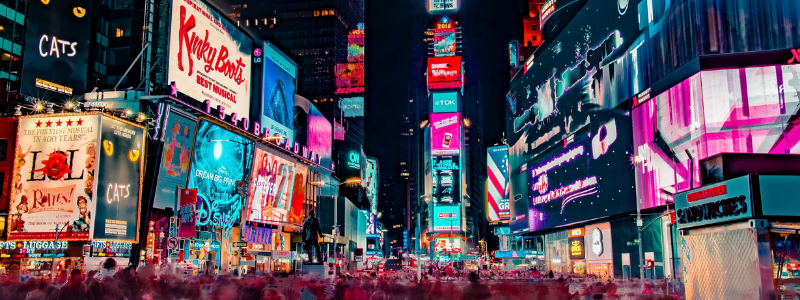
A key innovation in the OOH advertising space has been digital OOH advertising. While there are many digital billboards that could be considered effective OOH advertising examples, the best comes out of New York City. Times Square is saturated with digital billboards that play video advertisements nonstop. Digital OOH ads manage to combine the bright colors, movement, and sound of ads like TV commercials with the size and unblockability of traditional OOH ads. The result of this is a new, hybrid advertisement that blends the benefits of multiple forms of advertising.

ooh advertising billboards

Billboards

Billboards are one of the most common forms of OOH ads. Because of how many billboards there are worldwide, it can be difficult to make a billboard ad that stands out. You aren’t sure if drivers passing by will notice it. To solve this, effective billboard advertising should be creative and memorable. 

One company that’s done a great job with its billboard advertising is Apple. In 2015, Apple launched its “Shot on iPhone” campaign. The campaign offered iPhone users the opportunity to capture images on their phones that would then be used on billboards, commercials, and other ads. Apple’s Shot on iPhone campaign displays the importance of engaging consumers and being thoughtful with image selection.

Another fantastic billboard example was a Formula toothpaste billboard in Indonesia. This remarkably creative advertisement shows a man whose teeth are so strong that he is literally ripping the billboard off of its supporting structure. This billboard is a wonderful example of using creativity to stand out. 

Posters

Posters are another extremely common form of OOH advertisements. Because of their small size and widespread use, it’s extremely important to design a poster that will immediately stand out. Eye-popping colors and creative images will help ensure that your ad will be noticed.

Some tips for effective poster advertising include:

  • Create the poster to cater to a specific audience
  • Use your brand’s color scheme
  • Include a call to action
  • Pick high-quality images
  • Use text sparingly; include only the information that consumers really need

Airports

Airport advertisements are a subset of place-based advertising. Many companies consider airports a gold mine for ads. They are a fantastic place to either stick with traditional billboards or posters, but you can also utilize other aspects of airports, such as conveyor belts, to create incredibly unique advertisements. 

One example of creative airport advertising is at the Venice Marco Polo Airport. The Casino de Venezia decided to turn a baggage collection belt into a life-sized roulette wheel. This fun, unique advertisement did a fantastic job at keeping people engaged during an otherwise mundane activity of waiting for your luggage. In addition, the Casino reported that visits increased by 60% after installing this advertisement. 

Another interactive airport advertisement was installed in the Tokyo Airport in anticipation of the 2020 Summer Olympics. The Tokyo airport turned an entire airport terminal into a running track. This incredibly creative advertisement is a great example of utilizing the entire airport to promote an event.

best examples of ooh advertising

Street Furniture 

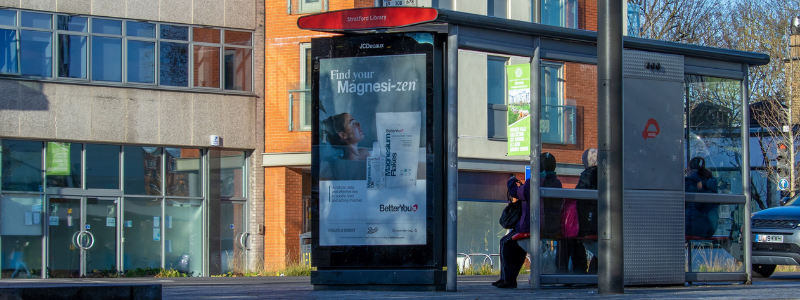
The most common use of street furniture advertising is at bus stops or on benches. Advertising on street furniture is a great way to not just engage people waiting for buses, but also gets your ad on the eye-level of everybody walking by. 

Nike is no stranger to creative, thought-provoking advertisements, and its ads on street furniture are no different. Nike added its famous, simple logo — the Nike swoosh — along with the word “RUN” to a bench in New York’s Madison Square Park. They then removed the seat of the bench. This simple ad, paired with the action of taking away the seat of the bench, is eye-catching, memorable, and perfectly aligned with Nike’s vision that everybody is an athlete.

Transportation 

Advertising on public transportation, such as buses or subways, is also extremely common. Many people on public transportation tend to be bored. They are looking for some form of entertainment while they travel.

Startup mattress company Casper realized this, and developed a riddle campaign in the NYC subway system that simultaneously entertained riders while advertising their product.

The riddles they put up engaged subway riders, which helped ensure that their advertisement and company would be remembered.

These are just some of the most effective OOH advertising examples, but there are plenty more!

OOH Advertising with bMedia

Ultimately, OOH advertising can be extremely profitable for your company if you are able to develop a creative and memorable campaign. If you are advertising on the island of Puerto Rico, there is no better company to work with than bMedia.

bMedia is Puerto Rico’s leader in OOH media and advertising, and will work with you to ensure your advertisements are seen and remembered. Contact us today!

Clever Billboards

They say that a picture is worth a thousand words, but what about action? It is one thing to say you are capable of doing something, but an entirely different thing to actually demonstrate it. This logic governs the concept of resumes and portfolios in the working world. Unlike day-to-day life, billboard advertising usually relies more on telling than showing due to the restrictions imposed upon by the medium. Clever billboards are catching the attention of passersby, as well as curious insects.

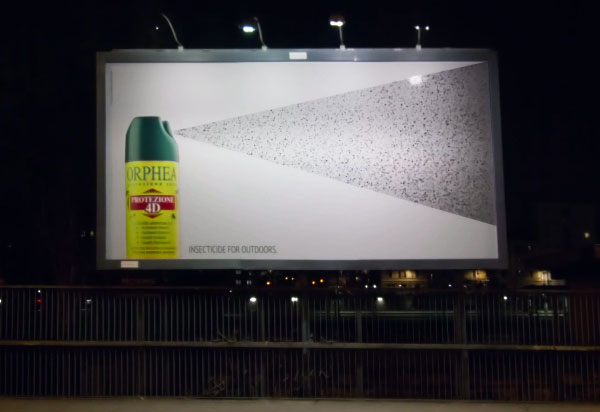
Enter Publicis and their innovative, clever billboard for the insecticide company, Orphea, which has found a creative way of getting around the limitations of physical ads.

Orphea Billboard Bug Killer

Location, Location, Location

First, in order to add a little bit more context to this ad, we must understand its location. While easy to overlook if one isn’t careful, the location of an ad is crucial to reaching your target audience. This very same billboard would not be nearly as effective in say, Antarctica, for instance. Even though it is not present for long, the video does a good job of establishing the climate and conditions of Milan, Italy, with a shot of a nearby cloud of bugs. This communicates the idea that to the locals insects are a constant and troublesome issue during the spring.

Even though most everyone can relate to bugs being annoying, the location for this specific ad caters to an audience with a real and prevalent need.

Orphea Insecticide Billboard

Idea Through Action

In order for Orphea to sell their bug spray they must convey to their audience, “our insecticide is effective at killing insects.” If one were to just look at the original graphics of the billboard though, only the name of the company and the product are displayed. The billboard informs the consumer that the product exists but ultimately fails to get across how effective said product is. Technically, this would mean that a violation of the basic guidelines has occurred.

“Rules are what the artist breaks; the memorable never emerged from a formula” – Bill Bernbach

Compare the live performance of a speech versus the transcription of said speech. Elements such as body language and eye contact are lost when only one form of presentation is utilized. In order to fully analyze the strategy of this campaign, one must look past any individual medium of information and must take in the piece as a whole. In this case, the ad uses action instead of using static images and text to convey the efficacy of the product. This ad doesn’t need to say anything because it directly shows the purpose and result of the product. This creates a wordless and automatic association of action and product within the minds of the audience.

Orphea Bug Trap Billboard

Clever Billboards

Things normally become less interesting the more we experience them. Even someone’s favorite song runs the risk of becoming dull if heard often enough. Billboards are much the same way. A creative and unique billboard might grab your attention the first time, but what if you had to drive past that same billboard on your way to work every day for a month? The novelty wears thin eventually.

Most shopping decisions are made on the move. Drivers stuck in traffic or on a long commute have time to think about their wants and needs. -SmartDataCollective

The temporal aspect of this ad makes it even more effective over time, however. The true nature of this ad isn’t stuck at any one point in time. From the original posting to the final result, none of these are really the “completed” ad. The billboard continues to change and grow in an organic way which adds something new for the consumer every time they may pass it. If this was a part of someone’s morning commute, tracking the progress of the ad would no doubt become a staple of their morning routine while it was around. Simply said, the most clever billboards stand out.

This keeps the ad, and likewise the product, at the forefront of the consumer’s mind. If one secures that very precious spot in the consciousness of the consumer, it becomes much more likely that they will be remembered when a purchasing decision is about to be made.

How Are Billboards Put Up?

They dot the landscape along America’s busiest highways. Statista.com estimates that there were over three hundred and forty-three thousand billboards in the USA in 2020. Nearly ten thousand of them were digital. This number has been increasing by ten percent a year. But how are billboards put up?

Drivers and pedestrians pay more attention consciously and unconsciously than you might think. An Arbitron study notes that over seventy percent of American drivers surveyed stated that they consciously look at billboard messages. Almost sixty percent learned of an event or restaurant by viewing billboards. Up to 15% shopped at a place they saw advertised on a billboard the same day they read the ad.

While many read billboards, most give little thought to how billboards are put up.

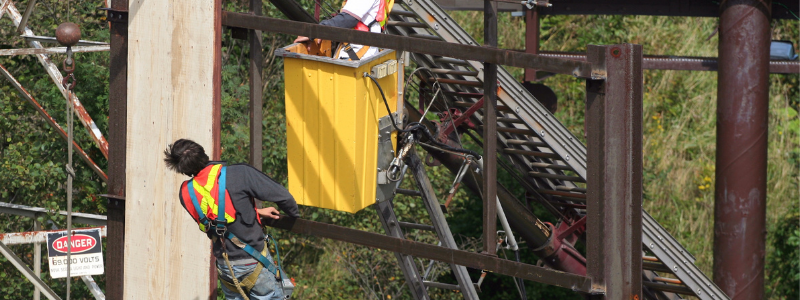
setting up billboards

Choosing a Location

As with real estate, the three most important things about billboards: location, location, location. Location often determines the size or type of design. The best locations have high-density traffic—either pedestrian or vehicle. Billboards can also be found in shopping malls and neighborhoods.

In choosing where to put that billboard, you should consider things like:

  • Sign face alignment: Your sign must be read within three seconds and placed at a readable height. The location must have no visible interference from trees, tall buildings, bushes, or fences.
  • High Traffic Count: Check with the Department of Transportation or do an informal assessment of traffic in proposed billboard areas.
  • Audience Demographics: Who is your ideal consumer? Consider gender, education, profession, income, age, and other factors. Is the location the best place to reach them? For example: If you want to reach young adults consider a location near a college or university.
  • Residential or Commercial? Is your business geared to residential or business audiences? Consider whether to locate your billboard within a commercial area or one located in a residential area.
  • Local ad placement: If your business is reliant on local customers, place it in a spot where local foot traffic will see it.
  • Consider the intent: If you sell surfer sportswear, it makes sense to locate your billboard near the water. Place your sportswear billboard near major sports facilities. Whose eye are you trying to catch? Where are they likely to travel?
  • Busy traffic areas: Where is high traffic in your area? Look for areas that get traffic congestion during rush hour. Also, consider locating near traffic circles, city centers, and areas like pedestrian crossings where there is a natural slowing of traffic.

Billboard Design

Sarah Firle suggests these design considerations:

Keep the message simple. Drivers who pass may be going fast. You have seconds to make an impact with a single photograph or short colorful text. Use seven words or less.

Put a premium on typography. Consider which font and size will offer the quickest read.

Focus on a single idea. Billboards aren’t meant to give facts about your brand. What is the one lasting impression you want your audience to grasp?

Aim for a visually memorable billboard. Try to incorporate surprising—even shocking—visual elements.

Aim for a call to action. Entice audiences to act like Chick-fil-A’s cow signs.

Include product demonstration. Think about your product’s function and how you can illustrate it.

Make your billboard design fit your overall marketing strategy. There should be continuity in your logo, brand, and your other advertising.

Color is important. It both attracts attention and leaves a lasting visual impression. Penneco.com advises that choosing the right colors can make the difference between standing out and fading into the background. They suggest picking no more than three colors and making them vibrant. Good choices are high-intensity shades that stand out against the background.

billboard construction

Billboard Construction

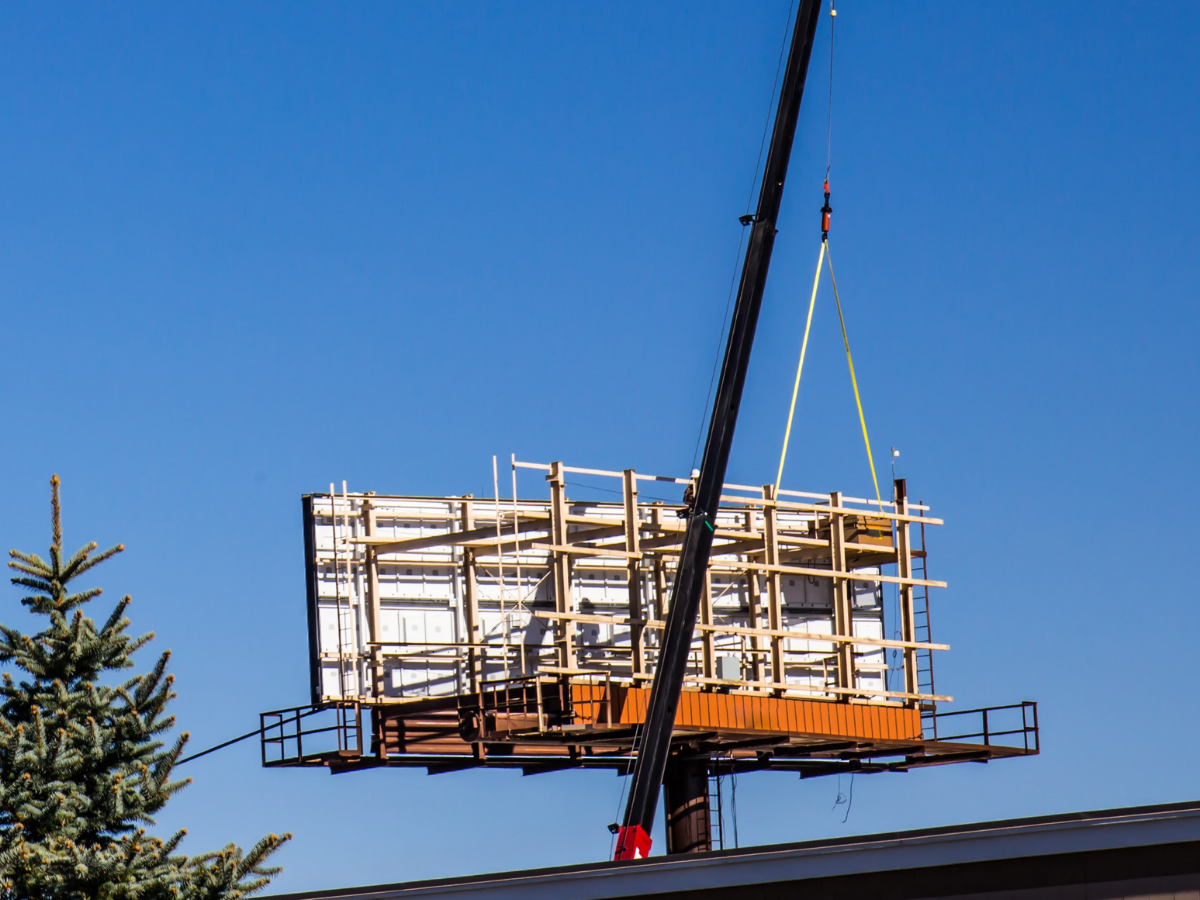
How are billboards put up physically?

When it comes to building a billboard, size, cost, materials, and design are all important considerations. A typical billboard is twelve feet high with an upper height twenty-five feet off the ground. Billboards may be anywhere from twenty-five to forty-eight feet wide. Billboards may take the form of bulletins or poster panels. Bulletin-sized ads which we normally think of as billboards may be as large as twenty feet by sixty feet.

The cost of the bulletin board is based on size and materials. Billboard costs range anywhere from ten to twenty thousand dollars.

The most commonly used material for traditional billboards is polyvinyl chloride. Polyethylene has taken the lead in recent billboard construction because it offers an attractive recyclable option.

Some billboards use computer-aided or hand-drawn messages. Thirty-sheet poster panels measure up to twelve by twenty-five feet. These are lithographed or silk-screen-printed.

Billboards often appear for thirty days. Advertising space may be rented for only a week or two before a special event and replaced the day after the event. Billboard space may also be purchased for multi-month contracts.

Technological Influences on Billboard Design

According to business2community.com technological advances have changed billboard design. Digital out-of-home advertising now accounts for over $35 billion in revenue.

Billboard advertising is increasingly smarter. Today’s billboards may show information and react to their viewers through sensors and facial recognition software.

Modern digital ads use augmented reality and other interactive technology to increase viewer engagement.

Billboards do more than show information, Bluetooth energy beacons send information based on demographics to interact with the reader. Advertisers can tweak details to appeal to specific demographics.

Integration between billboards and mobile technology allows interaction, data sharing, and customized experiences.

Thanks to technology, advertising placement is almost limitless. Digital ads can be placed on building walls, passenger shelters, buses, taxis, trains, and inside airports.

posting new billboard

Why Invest in Billboards?

There are many advantages to using your advertising budget to buy billboard space. Large and eye-catching, billboards target a huge, diverse market.

Even for those whose first language is not English, billboards offer important information about a product or service. The largely pictorial information has a strong visual effect.

People in America spend a significant amount of time in their cars. Billboard advertising has a captive audience. It isn’t dependent on their buying a newspaper, a magazine, or a tablet to view the product or service. Billboard advertising lets businesses reach more people faster and cheaper than any other form of marketing.

  • For middle and upper-class target audiences, billboards allow companies to build and strengthen their brand recognition, reputation, and product image.

Running TV and radio spot ads is very pricey. These run, at best, only a few times a day. Magazine and newspaper ads are also expensive. They cost both the business and the potential buyer and are dependent upon the customers purchasing that paper or magazine. On the other hand, the message on billboards is always working.

With other forms of advertising, potential buyers might be exposed to a brand or service just once or twice. With billboards, drivers and pedestrians have repeat exposure day after day.

A billboard’s brief message has the potential to remain in the viewer’s mind. Because it is succinct and repeated, the message is long-lasting.

How Can bMedia Group Help?

With over three hundred attention-generating locations in Puerto Rico, bMedia Group offers its valued clients a wide variety of effective billboard formats. Our skilled designers and construction staff members are masters of taking your design wants and creating effective billboards.

There is a good reason why bMedia Group has the highest consumer traffic in the area.

For more information regarding how we can increase your brand recognition contact us.

Advantages of Digital Billboard Advertising

Billboard advertising, while an old medium, is a constantly evolving channel that businesses are continuing to use for effectively reaching their audience. The use of computer screens as advertisements has been around for a while but in recent years billboard-size digital displays have reached a new level of affordability. Digital billboards aren’t just for high-end brands with big pockets; it’s time for everyone to consider whether or not digital billboards are right for their marketing campaign. Digital billboards offer a range of benefits over their traditional counterparts and in this article, we’ll look at specific advantages of digital billboard advertising with some examples that show the power of this cutting-edge advertising tool.

Target Pollen Billboard

Digital billboards can update in real time

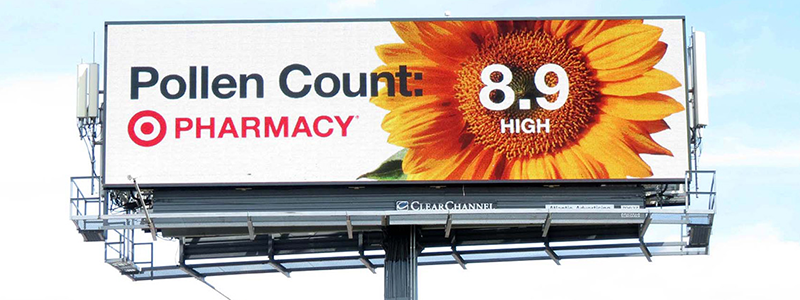
Thanks to the internet people have different expectations about how advertising works. They spend hours staring at screens that display advertisements tailored to them. Ads today know our names, our locations, and what we’ve been looking for. Digital billboards might not be able to reach this level of customization, but they can still utilize the latest technology to deliver a timely message. This is one of the major advantages of digital billboard advertising.

Look at this digital billboard advertisement from Target. It’s a powerful reminder of allergy season that utilizes the latest pollen count. It’s a brilliant combination of useful information and powerful marketing that is sure to stand out in a world flooded with advertisements.

Fox Time Sensitive Billboard

Digital billboards can display time-sensitive messages

Have you ever gotten excited by an ad for an event only to realize that its time had already come and passed? Many companies waste money paying for advertisements that will outlive the events they are advertising. Digital ads can cut down on waste by automatically switching over at certain times.

Take this advertisement for the TV show “Hell’s Kitchen” as an example. Traditionally advertisements for a weekly TV show would have to run all week long, even though the show wouldn’t be on six out of the seven days. One of the advantages of digital billboard advertising is that a TV channel advertising on a billboard can make sure that it always advertises the shows that viewers can watch immediately after they see the ad. It’s a great way to increase the ad’s return on investment.

Digital Billboard Strategy

The same digital billboard can display two entirely different advertisements just minutes apart from one another

A traditional billboard can only display one advertisement at a time, and it can take hours of work to transition from an old ad to a new message. This isn’t the case with digital billboards. A digital billboard can be loaded up with multiple messages that it cycles between on a set schedule. Companies that advertise on digital billboards can buy the perfect amount of advertising for their needs and budgets. This means that there’s no reason to pay extra to monopolize an entire billboard if you think you can do just as well sharing the space. Say goodbye to one-size-fits-all ad buys!

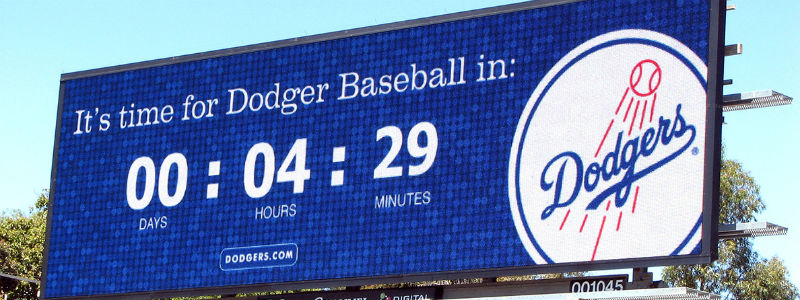
Dogers Digital Billboard

Digital billboards can convey a sense of urgency

Most people are procrastinators by nature. If they can put something off, they will. Companies lose sales all the time because of this. Customers might plan on making a purchase, but they decide to wait until later and end up never spending a dime. To overcome this tendency it’s important to create a sense of urgency, and digital billboards are uniquely equipped for this task.

Just look at this advertisement for Dodgers Baseball. It has a timer ticking down, which can have a big psychological impact on those who pass. It reminds them that time isn’t unlimited, that they need to act quickly if they don’t want to miss their chance to see a game. A traditional billboard might be updated every day, but a digital billboard has the advantage of ratcheting up the urgency with updates by the hour, minute, or even second.

Digital Billboard Advantages

Digital billboards can engage with customers on a grand scale

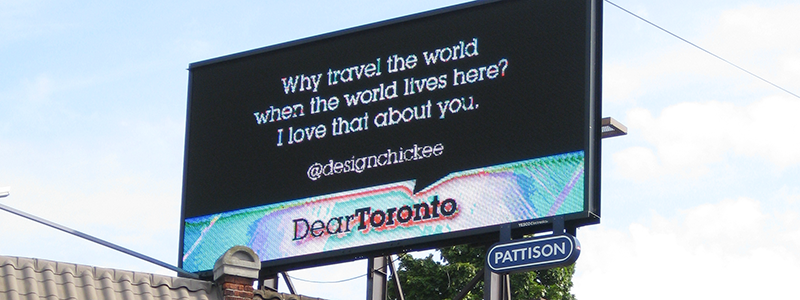
One of the best ways to ensure repeat business is by building a deeper connection with your customers. In the past billboards used to be a highly impersonal type of advertising but digital billboards can facilitate interaction between you and your customers. Just check out this campaign by Pattison Onestop and Spacing Magazine. They asked for people to tweet out love letters to Canadian cities and then broadcast those letters across the cities. Traditional billboards might have been able to display a single message, but digital billboards can display hundreds of messages a day.

People got to see their own words on billboards across the country, news outlets got a patriotic story to tell, and Pattison’s shopping centers gained plenty of fantastic PR. It’s the sort of marketing-win that digital billboards enable.

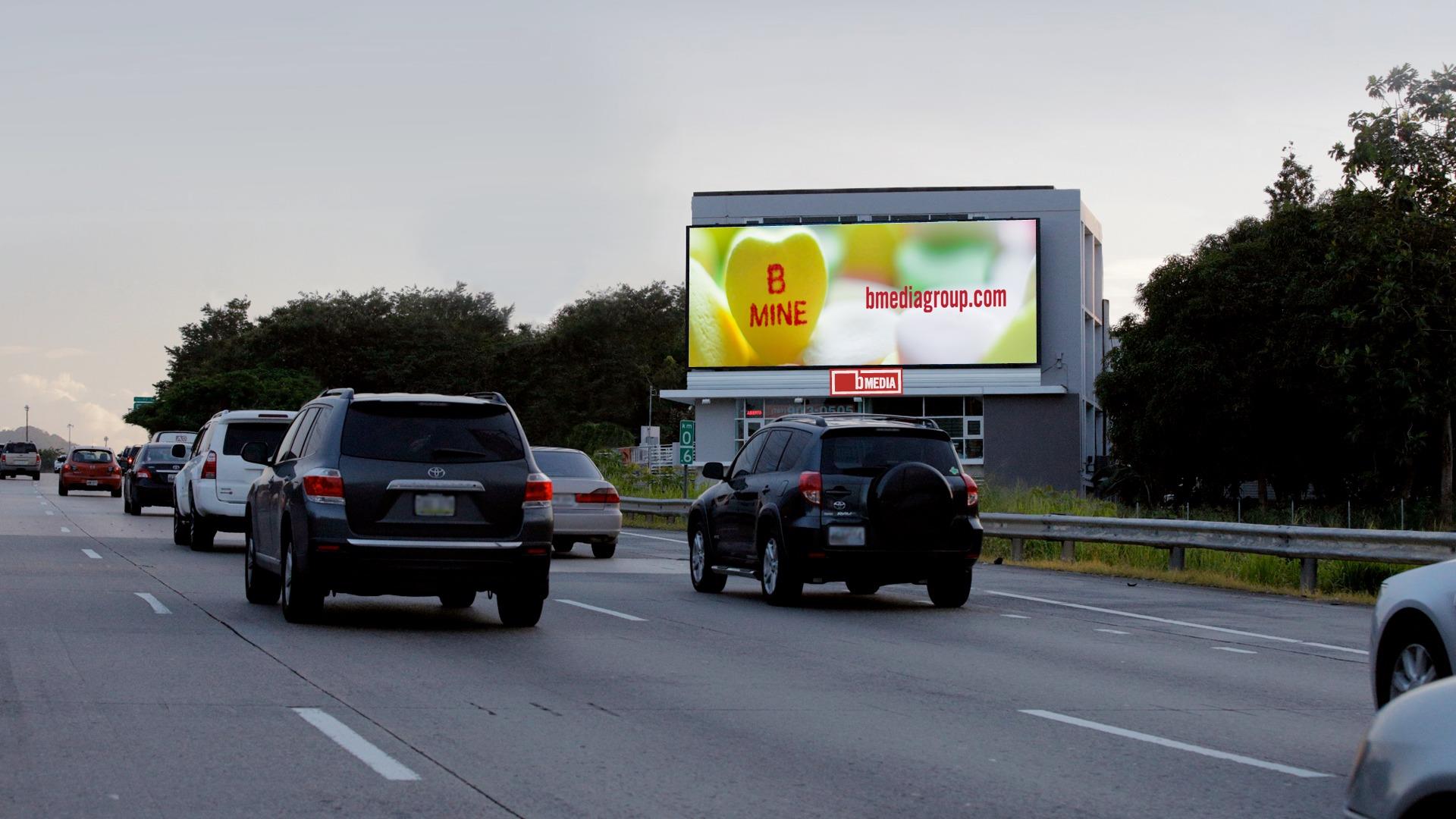
bMedia Digital Billboard

The world is moving quickly and billboards need to keep up with the change of pace

Information travels faster than ever in the age of smartphones. Traditional static billboards were invented in a world where news traveled at the speed of the newspaper. Today even 24/7 cable news channels are too slow for media consumers who are hooked into a constant stream of social media messaging. If you want to keep up in this environment, then you need the sort of flexibility that digital billboards can offer.

What is the Best Type of Advertising?

Advertising indefinitely surrounds us everywhere – it’s on our mobile phones, the radio, park benches, the television, and beyond. Companies now have endless channels to reach target consumers, the next step is determining which type of advertising is best for your business. So, what is the best type of advertising?

To properly determine which advertising route your brand should go with, businesses need to decide where they’ll be able to reach a large number of their target audience, what the costs are for each platform, and how to reach consumers at every sales level. 

Advertising in the digital age is an innovative and creative way for companies to reach large audiences. However, ‘traditional’ advertising mediums, such as billboards also prove to be effective in increasing sales and brand awareness.

types of advertising

Out-of-Home Advertising (OOH)

Billboards have been around since the birth of advertising. This well-established form of advertising works 24/7 and its effectiveness remains unquestioned. Although some might consider this traditional form of advertising as ‘old school’, billboard advertising continues to creatively thrive amidst the global digital shift.

Billboard advertising is doing particularly well in keeping up with technological advancements and rapid urbanization. Billboards now showcase digital signage and 3-D images – doing a better job at capturing the consumer’s attention in high traffic areas. Because billboards are located in busier areas, they gather the highest number of reactions which result in a proven high return on investment (ROI) for businesses.

There are also endless billboard opportunities for brands and businesses. The USA alone has between 425,000 and 450,000 billboards spread throughout the country. Businesses can choose to place a billboard in a specific location that better serves their niche market and gives them access to a large percentage of their target audience.

Additionally, billboards and other types of OOH advertising can cost-effectively result in higher brand recognition and exposure. The broad reach, sheer visibility, and creative impact of OOH advertising can provide results in large-scale growth for companies.

Other types of OOH advertising Include:

  • Transit Advertising
  • Street Furniture
  • Interactive Signage
  • Posters
  • Stunt Advertising

social media advertising

Social Media Advertising

Social media advertising is an obvious route for any brand or business. Social media is being used by everyone, and constantly. Social media marketing strategies use major social platforms such as Instagram, Twitter, Facebook, LinkedIn, Youtube, Snapchat, and even Tik Tok to connect your brand with an audience. This can help build your brand, increase sales and boost website traffic. 

Another benefit of social media advertising is that it’s a cost-effective way to build brand recognition. However, this type of advertising doesn’t just end at running an ad online. It involves consistently and strategically publishing compelling content, engaging with followers, and analyzing trends.

paid search advertising

Pay-Per-Click Advertising

Pay-per-click or PPC advertising is a type of online advertising structure where advertisers pay each time users click on one of their online ads. This advertising model allows for the businesses running ads to be charged only when someone clicks on their link or ad.

A common type of PPC is the paid search ad. These are the ads that appear when people use online search engines like Google to help them make purchases. For ads to appear on the Search Engine Results Page or SERP, they are subjected to an automated process used by Google and other major search engines called Ad Auction. This software helps determine if an advertisement is relevant and trustworthy to the user’s search.

Other types of PPC include display advertising through banner ads and remarketing.

mobile advertising

Mobile Advertising

A well-placed mobile advertisement will give a business a reach up to half the world’s population at any given time. People always have their phones on hand which is why mobile advertising has become a billion-dollar industry. This advertising route can reach people in real-time and creates data that can be instantly tracked, giving your company insights and metrics to specific advertising campaigns.

Although mobile advertising is innovative and efficient, it can interrupt the consumer’s mobile experience, resulting in some frustration. According to a report by HubSpot, 70% of people who use cellphones dislike receiving mobile advertising.

Companies considering mobile advertising campaigns must analyze their target demographic, their specific wants and needs, and determine if carrier costs are worth the investment. 

Print Advertising

Similar to billboard advertising, one might assume print advertising isn’t as effective as other digital advertising routes.

However, this is simply false.

The print and publishing industry is continuing to thrive amidst the global digital transformation.

Print advertisements are known to leverage credibility through the ‘halo effect’. Brands that strategically place ads in respected publications are viewed as trustworthy because the reader already has a trust associated with the publication itself.

If your brand is seen as reliable, it can quickly generate leads and increase revenue for your business. 

Broadcast Advertising

Television ads are the most prevalent advertising platforms in America. Despite switching to subscription services such as Netflix, fifty-nine percent of American adults still turn to cable broadcast channels for their primary TV consumption.

This advertising medium continues to win audiences across the globe, there’s a reason why we still love and look forward to Superbowl commercials every year. Concise and memorable commercials leave a lasting impression on the consumer’s mind. A good commercial can result in an emotional response from the viewer — whether it’s shock, laughter, or sadness, the emotional factor can help your message sink in more effectively.

Despite its effectiveness in capturing an audience, TV advertising can be costly as they are the most expensive to produce. From creating content to airing the commercial, the costs can quickly add up.

Time is also a factor to consider when choosing broadcast advertising as production may result in longer hours.

print advertising

Direct Mail Advertising

Direct mail gets noticed, opened, and read. It is also more tangible and personal, which can be beneficial for your marketing strategy. Through direct mail advertising, companies can also target and personalize their marketing message to increase their effectiveness. A recipient is more likely to open mail personally addressed to them.

Direct mail results in better response rates, increased visibility, and creative opportunities. It is also a familiar form of advertising for consumers and can build trust for less tech-savvy recipients.

Knowing the pros and cons of each advertising platform will result in the best and most cost-effective decision for your business. bMedia Group is here to support you in choosing the most suitable form of advertising for your company. Together, we can increase brand growth and reach unlimited success.

Don’t hesitate to contact bMedia Group for more information on the right type of advertising for your business. 

How Long Does a Billboard Stay Up?

Billboard advertising uses a large print advertisement to market a company, a brand, a product, a service, or a campaign. Billboards usually appear in high traffic areas in cities, along highways, on buses, or on building walls where they are seen by large numbers of riders, drivers, or walkers.

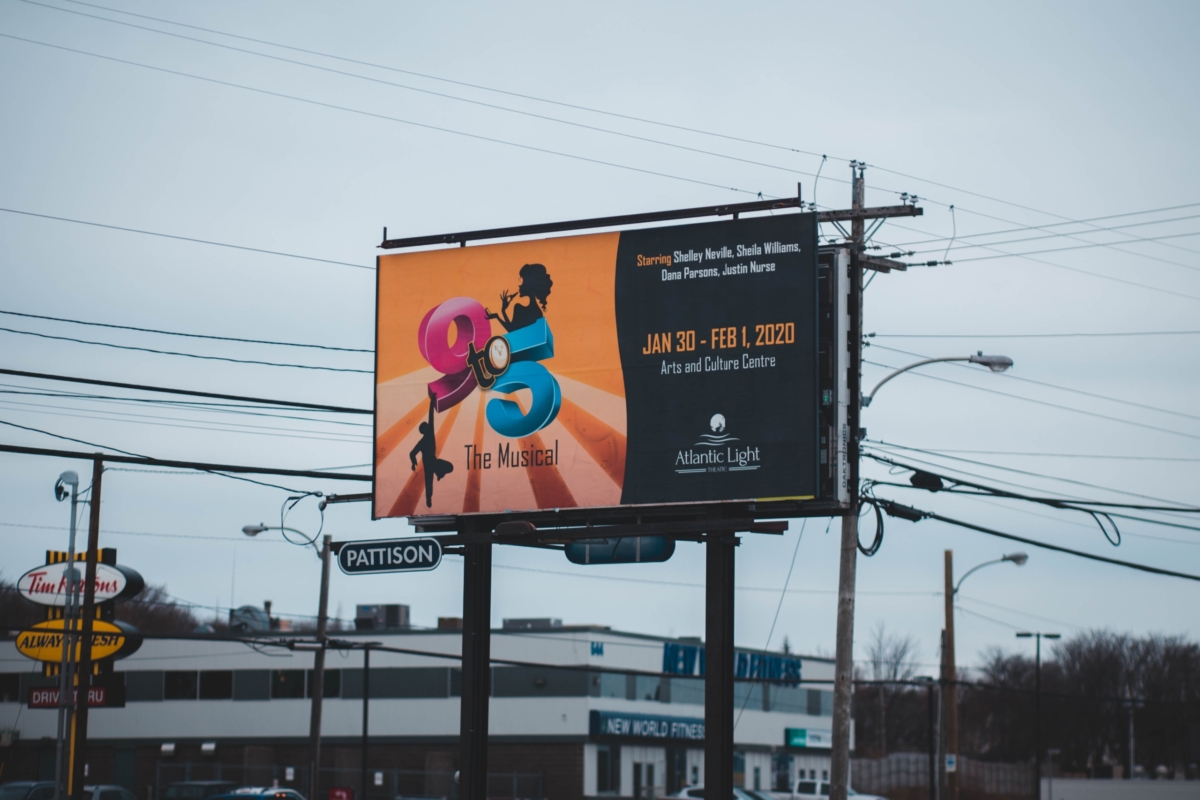
billboard of musical overlooking city highway

All About Billboard Advertising

We see them everywhere in every size and color. Technology has changed them but they are still an in-your-face type of advertising that not even social media can surpass. Here are some things you might not know about billboards.

They’ve been around for thousands of years—even before newspapers. An obelisk advertising a runaway slave was set up in Thebes, Egypt.

Electronic billboards are not as new as we might think, either. They’ve been around for a century. In 1904, a billboard pioneer, Oscar Gude installed the first electric sign in New York City. It advertised whiskey.

The largest billboard is in Madrid. At 5,265 square meters, it is the size of twenty tennis courts or an American football field. It weighs as much as a male hippopotamus.

New scented billboards appeal to sight and smell. A North Carolina grocery store billboard erected a “smellvertising” billboard with a grilled steak aroma.

Research shows that we may be exposed to as many as four thousand ads each day. An Arbitron study found that nearly three in four viewers notice ads and read them

blank digital billboard

The Power of Billboard Advertising

Advertising on Billboards: How Much does it Cost?

Many factors determine the cost of billboard advertising. These include the size of the billboard, its location, traffic volume in the area, and estimated viewership Billboard advertising costs are usually monthly. They may range from $250 on a rural highway to $22,000 in New York’s Times Square.

The world’s most expensive billboard is in Times Square. Google paid $2.5 million to rent the billboard for its debut. The cost was $625,000 a week. That’s 125 times the average NYC billboard rental. Times Square’s daily traffic is 300,000 people. Google’s billboard was viewed by nine million tourists and New Yorkers that month.

Along with the cost of the space rental, you need to consider the cost of ad design, the creation of the billboard-size advertisement, and the cost of installation.

A successful billboard can be read and appreciated as you pass by. Moreover, it takes viewers on a four-second journey. Since drivers can read only a few words in passing, the message must be the essence of an idea. Text-less messages can be powerful.

Effective billboards interact with their surroundings. Their bright colors and eye-catching graphics build brand recognition and elicit an emotion from the viewers. This is emotional marketing. The best ones for 2019 were selected by Edina

New Trends in Billboard Advertising

Urbanization continues to grow. Thus, billboards will expand, enlarge, and become more technically attention-getting.

More billboards will be digital.

There is a trend toward more interactive billboards. Advertising spaces will be increasingly responsive and flexible towards audiences. These new interactive billboards will present the niche market with personal, engaging messages based on information about their habits, interests, and consumer preferences.

New trends will focus on the consumer—what he wants; what he needs; his shopping times; product appeal.

fashion billboard next to old building

What Goes into a Billboard Advertising Decision?

Thanks to digitalization, billboards have become effective advertising tools of the twenty-first century.

Billboards provide multiple “touches”. The number of exposures is important when attempting to convert viewers to buyers.

With billboards, you have a captive audience of riders and walkers in high traffic areas. TV viewers can speed past commercials. Those slick, costly magazine and Internet ads often go unnoticed.

When an individual decides to advertise on billboards, many things determine this decision. Companies have specific goals for their advertising. They want to get the most exposure for their limited advertising budget. They weigh the odds of how many in their niche market will see a billboard, remember its message, and want to find out more about the product or service. 

Biggest takeaways from billboards

  • Billboards are huge. Thus, by their very size, they command attention.
  • For small businesses with limited advertising dollars, billboards are effective.
  • Billboards reach a widely diverse viewership.
  • Billboards can deliver results—if the conditions are right circumstances.
  • The average American spends almost an hour a day driving or riding.
  • Three in five Americans learned about an event, a restaurant, a product, or service on a billboard. Of those, three in five later visited the location.
  • Even expensive billboards deliver a lower cost per impression when you calculate how many people see them.

How Long Does a Billboard Stay up?

There is no one right answer to this question. It depends on several things. Is the billboard still generating new customers? What are your campaign goals? Do you have the budget to continue paying for this ad? Have you measured your return on investment? Are you getting your money’s worth?

If you are advertising an event, the billboard is time-sensitive. After the event, you are wasting your advertising dollars leaving it up.

Is it time to make a change to another location where more of your target market will see your ad? Have you considered switching to a larger ad? Is it time to go digital?

Have you thought about a building wall ad, a bus side ad, or a bench ad?

A general rule is that billboards stay up at least one month. Many campaigns are up for several months.

If you have decided that billboards are right for your company, check out the outdoor advertising information.

Why Are Billboards Effective?

They’ve been around for so long and continue to be something we see frequently. So why are billboards so effective? Even though many consider billboards to be antiquated, they still comprise a significant amount of advertiser spending.

Billboards may be antiquated, but they are undeniably effective. Due to their effectiveness, a good billboard is an invaluable piece of advertising that can easily lead to greater brand awareness, greater sales, and greater profit.

People Spend A Lot Of Time On The Road

The total population of Puerto Rico is 3.2-million people. For every 1,000 people, in Puerto Rico, 614 people own and drive a car. There are a lot of drivers in Puerto Rico, and people in Puerto Rico spend a lot of time on the road. Since there are so many drivers in Puerto Rico, it’s very easy for billboards to be noticed and seen.

You Can Place A Billboard In Areas With Heavy Traffic

The San Juan area, in Puerto Rico, is exceptionally busy. The busiest highway in San Juan sees an average of 286,600 people driving across it every single day. That is a lot of people, many of whom are spending large amounts of time on the road, waiting for the traffic to lessen so they can get to wherever they need to be.

Since billboards are, more often than not, large advertising displays that are placed along roads, they can be set up in areas like San Juan. By being set up within those areas, you are able to convey what you offer to many, many people. So consider the number of eyes on billboards when you ask yourself, “Why are billboards so effective?”

empty billboard in san juan, puerto rico

A Good Billboard Is Very Memorable

A billboard, if it is well-designed, can be extremely memorable.

So memorable, in fact, that it not only spreads awareness of your brand and what you are offering but inspires the person who noticed the billboard to follow up and see what you offer.

A Good Billboard Conveys What You Offer In A Compelling Manner

A billboard, if it is well-designed, conveys exactly what you offer in a manner that is genuinely memorable and compelling.

Through the use of images and words – among others, if you’re using a digital billboard – you are able to create unique advertisements that capture people’s attention, showing them what you offer while also entertaining them with the advertisement’s design.

People Will See Your Billboard More Than Once

Just about everyone has a familiar series of routes that they take. Each one of these routes makes it easy for people to get to work, school, home; and anywhere else that they need to go. By placing a billboard on a popular route, it is very likely that those same people will see and engage with your billboard many, many times.

As science has shown, if someone sees a particular advertisement over and over, it will become internalized and associated with a particular service or idea. Billboards allow your brand and services to be noticed and internalized by the people driving by them, allowing more and more people to know what you do and to follow up on what it is that you offer.

People Enjoy Looking At Billboards

Just over a decade ago, a study known as the “Arbitron National In-Car Study” was conducted. One of the most interesting pieces of information this study uncovered was that around 71% of drivers actively look at and engage with the billboards that they see while driving. Billboards break up the monotony of driving – especially long drives – and give people something nice to see and think about.

You Can Use A Billboard To Advertise Anything

As a form of advertising, billboards are extremely versatile. Much of this versatility comes down to the medium itself, which can make use of unique colors, drawings, words, shapes, and figures; among a plethora of other elements.

Since billboards can make use of those elements, billboards can be used to advertise just about anything. This means that no matter what you offer, you can use a billboard to reach large numbers of people with ease. But, of course, for this billboard to be successful, it must be well-designed and it must make use of an effective billboard marketing strategy.

digital billboard in Turkey

You Can Place A Billboard Just About Anywhere

Most people, when they think of billboards, think of large, colorful boards that are on the side of a road. That is, generally speaking, quite accurate. But, the billboard medium is so varied and diverse that you are able to not only advertise anything, but you can place a billboard just about anywhere.

Moving billboards and digital billboards are two examples of the versatility that billboards offer.

Billboards Can Be Very Dynamic

Why are billboards so effective? Because they’re ever-changing.

Digital billboards are only becoming more and more popular. It isn’t difficult to see why this is the case, since digital billboards allow for incredibly versatile and dynamic advertisements to be created with the kind of ease and efficiency that traditional billboards simply don’t allow for.

For many advertisers, one of the most unique benefits that digital billboards offer is their inherently dynamic nature. Digital billboards can be set up to display jall kinds of unique and dynamic advertisements that make use of videos, various sounds and musical compositions, animations; and a wide variety of other extremely unique elements. Each one of these elements allows for dynamic advertisements that are genuinely distinctive and incredibly memorable.

You Can Change A Billboard Quickly And Easily

A traditional billboard is, essentially, completely static. You can change a traditional billboard, but doing so is expensive and labor-intensive. Because of this, when you set up a billboard with a particular advertisement, it’s likely that advertisement will remain there for as long as you are using the billboard.

Traditional billboards aren’t the only billboards that you can use, though. More and more advertisers are using digital billboards, which can be changed very quickly. If a particular message isn’t working, you can change the message that’s being displayed with the click of a few buttons.

Because of this, digital billboards make it easy for you to respond to what isn’t working, and what is, with the same ease that internet advertising – to name one example – allows for.

Why are billboards so effective? Simply put, they’re large and attractive, they’re in high-traffic areas, and they’re effective.