¡Bienvenidos a bMedia Group! Nuestra nueva campaña llamada “Look Up” te invita a mirar hacia arriba y prestar atención a la naturaleza, el cielo, el mar y la belleza que nos rodea. Está comprobado que al mirar hacia arriba y desconectarnos de la tecnología nos llenamos de energía y empezamos a disfrutar más la vida.
Hemos desarrollado este eBook en conjunto con la Fundación Fields of Joy como parte de nuestro compromiso con la comunidad para promover prácticas que mejoren la salud mental y nuestra perspectiva de vida.
El eBook explora el papel vital del uso consciente de la tecnología para promover el bienestar emocional dada la sobreexposición digital que enfrentamos.
Este recurso destaca los riesgos asociados con el mal uso de la tecnología, incluyendo amenazas a la ciberseguridad y los impactos en la salud mental por la sobreexposición. En su interior, descubrirás la definición de higiene digital y su importancia para proteger la privacidad y la seguridad, al tiempo que mejora el bienestar mental general.
Cada capítulo ofrece valiosas ideas sobre cómo el uso excesivo de la tecnología afecta la salud mental y proporciona estrategias prácticas para lograr un equilibrio saludable tanto en entornos personales como profesionales.
Desde enfrentar los desafíos del trabajo remoto y establecer reglas tecnológicas en la familia, hasta adoptar desintoxicaciones digitales y ejercicios de atención plena, este eBook te brinda las herramientas necesarias para fomentar una relación más saludable con la tecnología.
Únete a nosotros en este viaje para “Mirar Hacia Arriba (Look Up)”, desconectar de las distracciones digitales y reconectar contigo mismo y con tus seres queridos.
¡Descarga ahora para dar el primer paso hacia una mejor higiene digital y una salud mental mejorada!
Welcome to bMedia Group! Our new “Look Up!” campaign invites you to look up to enjoy nature, our sky, and the beauty that surrounds us. Research has proven the value of looking up and disconnecting from technology to enhance life enjoyment.
Together with the Fields of Joy Foundation, we have created this eBook as part of our commitment to promoting actions that improve our outlook on life and mental health.
The eBook explores the vital role of using technology consciously to promote emotional well-being given today’s overwhelming digital environment.
This resource highlights the risks associated with technology misuse, including cybersecurity threats and the mental health impacts of overexposure.
Inside, you’ll discover the definition of digital hygiene and its significance in safeguarding privacy and security while enhancing overall mental wellness. Each chapter offers valuable insights into how excessive technology use affects mental health and provides practical strategies for achieving a healthy balance in both personal and professional environments.
From tackling the challenges of remote work and setting family technology rules to embracing digital detoxes and mindfulness exercises, this eBook equips you with the necessary tools to foster a healthier relationship with technology.
Join us on this journey to “Look Up,” disconnect from the digital distractions, and reconnect with yourself and your loved ones. Download nowto take the first step toward better digital hygiene and improved mental health!
Expanding or starting a business in Puerto Rico offers unique growth opportunities, especially with the right strategies. The island’s vibrant economy, tax incentives, and strategic location make it an appealing destination for businesses seeking a foothold. One of the most effective ways to accelerate your business growth in Puerto Rico is innovative advertising, particularly out-of-home (OOH) advertising like billboards. Leveraging these marketing tools can significantly boost your visibility and help you connect with local audiences.
We’ll explore how to grow your business in Puerto Rico, focusing on OOH advertising strategies and the unique benefits of billboard marketing.
Why Puerto Rico is a Prime Location for Business Growth
Puerto Rico offers a blend of economic advantages, making it a favorable business environment. The island’s strategic location in the Caribbean is a gateway between the U.S. and Latin American markets. Additionally, Puerto Rico offers a bilingual workforce, a key asset for companies looking to tap into English- and Spanish-speaking consumers.
Puerto Rico is also known for its favorable tax incentives, providing significant tax breaks for businesses in industries like manufacturing, tourism, and finance. These factors, combined with a growing tourism sector and a strong push for economic revitalization, make Puerto Rico an attractive destination for businesses seeking growth.
Key Steps to Grow Your Business in Puerto Rico
Understand the Local Market: To succeed in Puerto Rico, it’s essential to understand the local market. Consumer behavior, cultural nuances, and buying patterns may differ from other regions. Conduct thorough market research to tailor your products or services to the needs and preferences of Puerto Rican consumers.
Leverage Puerto Rico’s Tax Incentives: Puerto Rico offers substantial tax incentives for businesses, including the well-known Act 20 (Export Services Act) and Act 22 (Individual Investors Act). These incentives reduce corporate tax rates, making reinvesting in growth initiatives like advertising and expanding operations easier.
Build a Local Network: Establishing solid connections within the local business community can help you grow faster. Join chambers of commerce, attend networking events, and build partnerships with local vendors. A local presence can also help navigate the island’s unique regulatory environment.
Invest in Billboard Advertising and Out-of-Home (OOH) Marketing:One of the most effective ways to grow your business in Puerto Rico is by investing in billboards and OOH advertising. Puerto Ricans spend significant time outside their homes, making billboards and other outdoor advertising formats highly effective. With bMedia Group’s expertise in OOH advertising, your business can reach a broad audience with strategically placed billboard campaigns that drive awareness and engagement.
Advertising Strategies to Grow Your Business in Puerto Rico
To grow your business in Puerto Rico, focus on targeted advertising strategies like OOH (Out-of-Home) ads in high-traffic areas and social media marketing to engage the local community. Collaborating with local influencers can also enhance brand visibility and drive customer loyalty.
Out-of-Home (OOH) Advertising: Billboards as a Growth Driver
Out-of-home advertising is a powerful tool in Puerto Rico, particularly with the use of billboards. The island’s high-traffic areas, urban centers, and highways are ideal for billboard placement. Billboards capture attention in a nonintrusive way and are highly visible to both locals and tourists.
At bMedia Group, we specialize in creating impactful OOH campaigns that ensure your brand is seen by the right audience at the right time. With targeted placements across key areas, you can amplify your business’s visibility and drive foot traffic to your stores or online conversions.
Benefits of Billboard Advertising in Puerto Rico:
High Visibility: Billboards are impossible to ignore, making them an effective way to maintain top-of-mind awareness.
Broad Reach: Strategically placed billboards, including residents and tourists, can reach thousands daily.
Targeted Locations: With bMedia Group’s expertise, your ads can be placed in high-traffic areas to maximize impact, whether in busy urban areas or along major highways.
Social Media and Digital Campaigns
While billboard advertising is an excellent tool for brand visibility, combining it with digital advertising strategies such as social media campaigns can enhance your reach. Targeting Puerto Rican audiences through Facebook, Instagram, and Google Ads will provide comprehensive coverage, ensuring your message reaches consumers on multiple platforms.
Traditional Media: Radio and TV Advertising
Puerto Rico still has a strong market for traditional media like radio and television. These platforms can complement your OOH advertising efforts, reaching a broad demographic and reinforcing your brand message across different touchpoints.
Challenges of Growing a Business in Puerto Rico and How to Overcome Them
Navigating Local Regulations: Understanding local regulations and ensuring compliance is critical to smoothly operating a business in Puerto Rico. While the business environment is favorable, navigating bureaucracy can sometimes be challenging. Partnering with local experts and joining business organizations can help you comply with local laws.
Cultural Considerations: Puerto Rico has a rich culture, and your marketing messages must align with local customs and values. Whether through language, imagery, or cultural references, ensuring your advertising resonates with Puerto Rican consumers will strengthen your brand’s connection with the local audience.
Infrastructure and Logistics: While Puerto Rico’s infrastructure is improving, there are still challenges related to supply chains and transportation, especially for businesses that rely on imports. By planning logistics carefully and working with local partners, you can overcome these challenges and ensure smooth operations.
How bMedia Group Can Help Your Business Grow
bMedia Group is Puerto Rico’s leader in out-of-home advertising, specializing in billboard campaigns that deliver results. We provide a range of services designed to help your business grow, including:
Media Buying and Planning: Our media buying services ensure your advertising dollars are spent wisely. With an in-depth understanding of the Puerto Rican market, we place your ads in the most effective locations to maximize exposure and engagement.
Creative Branding and Advertising: bMedia Group works closely with your team to develop creative, impactful billboard designs and campaigns. Our team knows what resonates with Puerto Rican consumers, and we ensure your message is clear, memorable, and aligned with your brand’s goals.
Tracking and Analytics: We don’t just place your ads and leave them there. At bMedia Group, we provide tracking and analytics to measure the success of your billboard campaigns. This data helps refine your strategy, ensuring continuous improvement and maximizing your return on investment (ROI).
Frequently Asked Questions
Q: What Tax Incentives Are Available For Businesses In Puerto Rico?
A: Puerto Rico offers significant tax incentives, including Act 20 (Export Services Act) and Act 22 (Individual Investors Act), which reduce corporate tax rates and provide other benefits to qualifying businesses. Q: How Can bMedia Group Help My Business With Advertising?
A: bMedia Group specializes in out-of-home advertising, particularly billboards. It helps businesses reach broad audiences across Puerto Rico through strategic placement and creative campaign management. Q: What Industries Are Thriving In Puerto Rico?
A: Industries such as tourism, manufacturing, and finance are currently seeing strong growth in Puerto Rico, making them ideal for businesses looking to expand. Q: What Makes Billboard Advertising Effective In Puerto Rico?
A: Puerto Rico’s high-traffic areas and busy urban centers make billboards an evident and effective form of advertising, reaching both local consumers and tourists. Q: How Do I Start With bMedia Group For My Advertising Needs?
A: Contact bMedia Group through our website or give us a call to discuss your goals, and we’ll help you design a custom out-of-home advertising campaign tailored to your business.
Get Started With bMedia Today
Growing your business in Puerto Rico requires local market knowledge, strategic planning, and effective advertising. Leveraging out-of-home advertising, particularly billboard campaigns, can significantly boost your brand’s visibility and reach. Combine this with local networking, tax incentives, and a solid digital presence, and your business will be well-positioned for success.
Partnering with bMedia Group gives you access to industry-leading expertise in billboard advertising, helping your brand stand out in Puerto Rico’s competitive marketplace. Contact us today to start planning your growth strategy and see how our OOH advertising services can help your business thrive.
Welcome to the world of entrepreneurship in Puerto Rico. You are about to embark on a journey that combines the island’s rich cultural heritage with a thriving business environment. Puerto Rico offers a unique landscape for both local and international entrepreneurs. Whether you’re attracted by the tropical climate, strategic location, or growing economic opportunities, this region has much to offer.
Starting a business in Puerto Rico requires a deep understanding of the local market dynamics, regulatory environment, and cultural nuances. To help you with this, we have created a comprehensive guide titled “How to Start a Business in Puerto Rico.” It is designed to walk you through the essential steps, from initial research and legal procedures to effective marketing strategies, including the powerful realm of billboard advertising. With each step, you will gain insights and practical advice to navigate the complexities of setting up your business in this promising region.
Our goal is to provide you with a friendly yet expert guide that makes the business setup process as smooth and successful as possible. Whether you’re looking to open a quaint café in the heart of San Juan, a boutique resort along the coastline, or a tech startup that leverages local innovations, this guide will equip you with the knowledge you need to start your business journey with confidence. Let’s dive into the details.
Step 1: Conduct Market Research
Embarking on a business venture in Puerto Rico begins with one critical step: market research. Understanding the local consumer behavior, economic trends, and competitive landscape can dramatically increase your chances of success. Here’s how you can start your market research effectively:
Identify Your Target Market: Define who your customers are. Are they local residents, tourists, or perhaps businesses in a specific sector? Understanding your target audience’s preferences, buying habits, and needs will help tailor your products and services.
Analyze Industry Trends: Look into the broader industry trends within Puerto Rico. How has the economic climate affected this industry? Are there emerging sectors that might offer opportunities? Resources like the Puerto Rico Trade and Export Company provide insights and statistics that are invaluable.
Competitive Analysis: Identify your main competitors. What are they doing well? Where could they improve? By analyzing your competition, you can find a niche or service not currently offered that could differentiate your business.
Customer Surveys and Feedback: If possible, gather feedback directly from potential customers. This can be through online surveys, focus groups, or informal conversations. Their insights will provide a direct line to what your target market desires.
Utilize Local Resources: Make use of local market research firms and online databases to gather data about your industry. The Puerto Rico Chamber of Commerce and the United States Census Bureau are excellent starting points for demographic and economic data.
By meticulously analyzing the market, you will not only understand where your business fits within the local ecosystem but also gauge potential challenges and opportunities. This foundational knowledge is essential as you move forward with setting up your business in Puerto Rico.
Step 2: Choose the Right Business Structure
Choosing the appropriate business structure is pivotal as it influences everything from your day-to-day operations to tax obligations, and even your personal liability. In Puerto Rico, you have several options to consider, each with its own set of advantages and disadvantages:
Sole Proprietorship: This is the simplest form of business structure, easy to set up and manage. Ideal for small, low-risk businesses, a sole proprietorship means that the business liabilities are treated as your personal liabilities.
Partnership: If you’re considering a business with one or more partners, this might be the way to go. There are two types in Puerto Rico: limited partnerships (LP) and general partnerships (GP). While partnerships offer the benefit of shared responsibility, they also require clear agreements to manage risk.
Corporation (Corp.): A corporation is a more complex structure but provides significant advantages in terms of liability protection and potential tax benefits. In Puerto Rico, corporations are subject to the corporate tax rate and must adhere to stringent regulatory requirements.
Limited Liability Company (LLC): Combining the benefits of a corporation and a partnership, an LLC in Puerto Rico offers flexibility and protects its members from personal liability. This structure is popular among foreign investors and entrepreneurs due to its protective features and simplicity.
Register for Permits and Licenses: Depending on your business type, you may need specific permits and licenses to operate legally in Puerto Rico.
Tax Registrations: Register for the necessary state and federal taxes. You will need an Employer Identification Number (EIN), which can be obtained from the IRS.
Selecting the right business structure is crucial for your long-term success and legal compliance. Each type has specific implications for your liability, tax obligations, and operational flexibility. Carefully consider which structure aligns best with your business goals and consult with a legal expert to navigate the complexities of Puerto Rican law. This careful planning will lay a solid foundation for your business and help avoid significant hurdles in the future.
Register Your Business Name: Before you can register your business, you must ensure that your business name is not already in use. Check with the Puerto Rico State Department’s Commercial Registry to see if your desired name is available.
Obtain an Employer Identification Number (EIN): Essential for all businesses, the EIN is your federal tax ID. You can apply for it through the IRS website. This number is required for tax filings, opening a bank account, and hiring employees.
File Organization Documents: Depending on your business structure, you will need to file different documents:
Corporations must file articles of incorporation.
LLCs file articles of organization.
Partnerships require a partnership agreement.
Where to File
Documents can be filed online via the Puerto Rico State Department’s portal or in person at their office. It’s important to ensure that all information is accurate to avoid delays.
Cost and Time
Fees: The cost to register a business in Puerto Rico varies depending on the business structure and the type of filings required. Typically, fees range from $150 to $500.
Timeframe: The registration process usually takes between 4 to 6 weeks. However, this can vary based on the complexity of your business structure and the completeness of your submitted documents.
Other Legal Considerations
Licenses and Permits: Identify any specific licenses or permits your business may require based on its activities. Common examples include health department permits for restaurants or environmental permits for construction companies.
Local Zoning Laws: Check local zoning regulations to ensure that your business location is in an area zoned for your type of business. This is crucial for avoiding future legal complications.
Annual Reports: Most businesses in Puerto Rico are required to file annual reports with the Puerto Rico State Department. These reports keep your business in good standing and update the state on any significant changes to your business.
Completing these registration steps is not just a legal formality; it also provides your business with credibility and legitimacy in the eyes of customers, suppliers, and financial institutions. Make sure to follow through meticulously to set a strong foundation for your business operations in Puerto Rico.
Puerto Rico Sales and Use Tax (IVU): Similar to sales tax, IVU is applicable to most goods and services sold within Puerto Rico. The current standard rate is 11.5%, with a reduced rate for certain items such as unprocessed foods.
Corporate Income Tax: Companies operating in Puerto Rico are subject to corporate income tax on their earnings. The rate varies depending on your business’s income level but generally ranges from 20% to 30%.
Municipal Taxes: In addition to state taxes, businesses may also be subject to taxes imposed by the local municipalities. These can include property taxes, business license taxes, and more.
Federal Taxes
U.S. Federal Income Tax: Despite being a territory, residents and businesses in Puerto Rico generally do not pay U.S. federal income taxes on income sourced within Puerto Rico; however, any income sourced from the U.S. must be declared and could be subject to taxation.
FICA and Medicare: Businesses are required to contribute to Social Security and Medicare, just as in the mainland United States. This involves withholding the appropriate amounts from employee wages and matching those contributions.
Staying Compliant
Regular Updates: Tax laws can change, so it’s important to stay informed. Consulting with a tax advisor who is familiar with both Puerto Rican and U.S. tax laws is advisable.
Filing Deadlines: Be aware of and comply with all filing deadlines to avoid penalties and fines. This includes monthly, quarterly, and annual tax filings, depending on your business activities.
Record Keeping: Maintain meticulous records of all financial transactions, tax filings, and relevant business activities. Good record keeping not only helps in staying compliant but also in managing your business effectively and preparing for audits.
Understanding and managing your tax obligations is essential for operating a successful business in Puerto Rico. By ensuring compliance with both local and federal tax laws, you protect your business from legal complications and build its reputation as a trustworthy entity.
Bank Loans: One of the most traditional forms of financing, bank loans can provide significant amounts of capital. You’ll need to present a solid business plan and good credit history to qualify. Local banks in Puerto Rico, such as Banco Popular de Puerto Rico and FirstBank, offer various business loans with competitive terms.
Government Grants and Subsidies: The Puerto Rican government offers various grants and subsidies through agencies like the Economic Development Bank for Puerto Rico. These are especially targeted at sectors such as technology, agriculture, and tourism.
Venture Capital: For businesses with high growth potential, particularly in industries like tech, venture capital could be a viable option. Local venture capital firms provide funding in exchange for equity in your company.
Angel Investors: Angel investors are typically high-net-worth individuals looking to invest in promising business ventures in exchange for equity. Networking in local business events and conferences can be a good way to meet potential investors.
Tips for Successful Financing
Prepare a Comprehensive Business Plan: This should detail your business idea, market analysis, management structure, and financial projections. A well-prepared business plan is crucial to convince lenders and investors of the viability of your business.
Understand the Terms of Financing: Whether it’s a loan or an equity investment, understanding the terms of your financing agreement is critical. Pay special attention to interest rates, repayment schedules, equity stakes, and any other obligations.
Build and Maintain Good Credit: Good personal and business credit scores can significantly increase your chances of securing a loan with favorable terms. Regularly check your credit report and work on improving any negative factors.
Explore Multiple Options: Don’t limit yourself to one type of financing. Explore various sources to determine which one best suits your business needs and offers the most favorable terms.
Finalizing Your Financial Plan
Once you have identified potential sources of funding, prioritize those that align best with your business goals and financial needs. It might also be beneficial to combine different types of financing to cover various aspects of your business expenses.
Securing the right financing involves careful planning and negotiation but is essential for the health and growth of your business. By exploring all available options and preparing thoroughly, you will significantly increase your chances of securing the necessary funding to launch and expand your business in Puerto Rico successfully.
Step 6: Set Up Your Business Location
Choosing the right location is crucial for the success of your business in Puerto Rico. This decision impacts your operational efficiency, branding, customer traffic, and overall business growth. Here are key considerations when setting up your business location:
Factors to Consider
Target Market Proximity: Your location should be easily accessible to your target market. Consider the demographics and buying behaviors of the area to ensure alignment with your business offerings.
Visibility and Accessibility: A location that is visible and easily accessible to foot or vehicle traffic can significantly increase customer visits. Look for areas with good infrastructure, public transportation access, and ample parking.
Zoning Laws: Ensure the chosen location complies with local zoning laws. These laws determine what types of businesses can operate in certain areas. Check with the local municipality to avoid any legal issues that might arise from non-compliance.
Competition: Evaluate the competitive landscape of the area. Being too close to competitors can be challenging unless you have a clear differentiation strategy.
Cost of Real Estate: The cost of leasing or buying a property varies widely across Puerto Rico. Consider your budget and financial forecasts to ensure the location cost is sustainable for your business model.
Steps to Set Up Your Business Location
Research Potential Locations: Identify several potential locations based on the factors mentioned above. Conduct thorough research, including site visits and discussions with other local business owners.
Evaluate Lease Agreements or Purchase Terms: Carefully review all terms in lease agreements or purchase contracts. Consider seeking legal advice to understand all obligations and rights.
Infrastructure Needs: Assess the infrastructure of the potential location. This includes utilities, internet availability, logistics needs, and any modifications required to suit your business operations.
Obtain Necessary Permits and Licenses: Depending on the location and nature of your business, you may need additional permits and licenses specific to that area. This can include signage permits, health department approvals, or special state licenses.
Plan Your Layout and Design: The layout and design of your business should not only reflect your brand but also optimize operational efficiency. Plan for customer flow, employee workspaces, and storage needs.
Finalizing Your Location
Once you have finalized your location, take the time to announce your arrival in the community. This can involve an opening ceremony, special promotions, or community events to generate buzz and build relationships with local residents and other businesses.
Choosing the right location is a strategic decision that requires careful planning and consideration. By taking into account these key factors and following the steps outlined, you can establish a business location in Puerto Rico that supports your company’s growth and market penetration objectives.
Step 7: Marketing Your Business
Effective marketing is crucial for any business aiming to succeed, especially in the competitive landscape of Puerto Rico. While various marketing strategies can elevate your brand, incorporating billboard advertising into your marketing mix can significantly enhance your visibility and customer engagement. Here, we emphasize the unparalleled benefits of billboard advertising, specifically through a leading company in the sector, bMedia.
General Marketing Strategies
Develop a Strong Brand Identity: Establish a recognizable brand identity that reflects your business ethos and appeals to your target audience. This includes having a compelling logo, consistent themes, and a coherent message that resonates with your customers.
Leverage Digital Marketing: Use digital platforms effectively—optimize your website for SEO, engage on social media, and send out targeted emails. These methods help broaden your reach and interact directly with potential customers.
Local Media Engagement: Gain local media exposure by featuring in Puerto Rican newspapers, radio, and TV channels. This traditional form of media still holds significant sway and can boost your reputation within local communities.
Community Involvement: Increase your local presence by participating in or sponsoring community events. This not only enhances visibility but also helps in fostering community relationships, crucial for business growth.
Advertising with bMedia: Benefits
Strategic High-Traffic Locations: bMedia offers premium billboard placements in some of the most frequented areas across Puerto Rico, ensuring your advertisements get maximum exposure to your target demographic.
Consistent Brand Exposure: Billboards capture the attention of a wide audience repeatedly, which is vital for brand recall. With bMedia’s strategically located billboards, your business gains continuous exposure, helping to keep you top-of-mind among potential customers.
Tailored Advertising Solutions: bMedia specializes in creating tailored advertising solutions that resonate with specific audiences. This personalized approach ensures that your marketing message is not only seen but also impactful.
Tips for Effective Billboard Advertising
Choosing the Right Locations: With bMedia’s extensive network, select locations that best meet your demographic needs for optimal visibility and impact.
Designing Impactful Billboards: Collaborate with bMedia’s experienced designers to create visually striking and memorable billboards. An effective billboard is visually appealing and delivers its message clearly and quickly to those on the move.
Regular Campaign Evaluations: bMedia provides valuable analytics on the performance of your billboards, allowing you to measure effectiveness and make informed adjustments to your marketing strategy.
Cost-Effective Advertising
Transparent Pricing: bMedia offers competitive pricing models that cater to various budget sizes, ensuring that you can benefit from high-quality billboard advertising without compromising other marketing initiatives.
Measurable Returns: Track the success of your billboard campaigns with bMedia’s advanced tracking tools. This data helps you understand your return on investment and refine your strategies for even better results.
A Final Word
Integrating billboard advertising into your marketing strategy can significantly increase your business’s market presence in Puerto Rico. By partnering with bMedia, you leverage their expertise, strategic placement, and customized advertising solutions to not only reach but also resonate with your target audience. Remember, successful marketing is about making lasting impressions and building relationships—bMedia’s billboard advertising can help you achieve just that. Let your brand be seen and remembered with bMedia.
Amidst the busy world of modern marketing, billboard advertising stands out as a potential tool for increasing a brand’s visibility. While digital marketing continues to grow, the physical presence of billboard advertising offers a unique combination of reach and impact that digital channels often struggle to achieve. However, before investing in billboard advertising, it is important to consider the return on investment (ROI) and how to use it effectively.
Understanding the ROI of billboard advertising is essential for any business owner contemplating this traditional yet powerful marketing channel. ROI, or Return on Investment, serves as a vital metric, helping businesses gauge the effectiveness of their advertising efforts in generating revenue compared to the cost incurred. In the context of billboard advertising, assessing ROI involves looking beyond the immediate visibility, delving into the influence on consumer behavior, brand recall, and ultimately, sales.
At bMedia, we have created this article to serve as a comprehensive guide for business owners who are considering billboard advertising as a strategy to promote their products or services. Our aim is to discuss the different types of billboards, their advantages, and how to measure and maximize your returns. Whether you are new to outdoor advertising or looking to improve your existing strategies, this guide aims to provide you with the necessary knowledge to make informed decisions, ensuring that your billboard advertising efforts are both effective and economically viable.
The Basics of Billboard Advertising
In the fast-paced world of today, getting the attention of potential customers is more difficult than ever. However, despite the rise of digital marketing, billboard advertising still plays a vital role in increasing brand visibility. To understand the ROI of billboard advertising, it’s essential to first understand what it is, why it matters, and how it can be a game-changer for businesses looking to make a significant impact in the marketplace.
What is Billboard Advertising? Billboard advertising is a form of outdoor advertising that uses large-scale print or digital displays to promote a product, service, or brand to the public. There are primarily three types of billboard advertising, each with its unique advantages:
Digital Billboards: These are electronic displays that can change messages every few seconds, allowing for multiple advertisers on one billboard and dynamic content that can be updated in real-time.
Traditional Billboards: Often referred to as static billboards, these are the standard billboards that display a single, non-changing advertisement printed on a large vinyl, fabric, or paper sheet.
Mobile Billboards: These billboards are mounted on vehicles, allowing your advertisement to move around and reach different locations and audiences throughout the day.
Key Components of Effective Billboard Advertising
For billboard advertising to be effective, it must excel in several key areas. Understanding these components can help business owners maximize the impact of their billboard campaigns:
Location: The placement of your billboard is crucial. High-traffic areas, major highways, and intersections with long wait times can increase visibility significantly.
Visibility: A great location won’t matter if your billboard isn’t easily visible. Ensure there are no obstructions and that it’s placed at an angle conducive to oncoming traffic’s line of sight.
Message Clarity: With only a few seconds to capture a viewer’s attention, your message needs to be concise and impactful. A clear, compelling call to action (CTA) alongside memorable visuals can make all the difference.
When used strategically, billboard advertising provides a unique opportunity for businesses to reach a large audience with their message. Effective billboard advertising is not just about raising awareness – it involves designing and placing billboards in a way that aligns with the business’s overall marketing goals and generates a positive ROI.
By keeping these fundamentals in mind, business owners can successfully navigate the complex world of billboard advertising and increase their brand visibility and customer engagement. With the right approach, billboards can be a powerful tool in a business’s marketing strategy, resulting in increased sales and brand recognition.
Measuring the ROI of Billboard Advertising
As businesses try to grasp the concept of understanding the ROI of billboard advertising, it’s important for owners to learn about the metrics and methods that contribute to effective measurement. Unlike digital advertising, where clicks and impressions can be easily tracked, calculating ROI on billboard advertising is not so straightforward. However, by adopting the right approach, you can assess the effectiveness of your billboard campaigns and make informed decisions to optimize your marketing budget.
Key Metrics for Billboard Advertising ROI
To measure the ROI of billboard advertising, we focus on both direct and indirect metrics, which together offer a comprehensive view of campaign performance:
Impressions: The total number of times your billboard is seen. This is estimated based on the location’s traffic data and billboard visibility.
Reach: The number of unique individuals who see your billboard. This differs from impressions, which may count the same individual multiple times.
Brand Lift: An increase in brand awareness, consideration, or preference. This is often measured through market research before and after the billboard campaign.
Engagement: Any measurable interaction that your billboard inspires, such as social media mentions, website visits, or an uptick in search queries related to your business.
Sales Lift: The most direct measure of ROI, reflecting the increase in sales attributed to the billboard campaign. This requires tracking sales data before, during, and after the advertisement’s run.
Methods for Calculating ROI
Calculating the ROI of billboard advertising involves correlating the cost of your billboard campaign with the business outcomes it generates. Here are foundational steps to guide this calculation:
Determine the Total Campaign Cost: This includes the cost of renting the billboard space, designing the advertisement, and any other associated expenses.
Estimate the Campaign’s Impact: Utilize the above metrics to gauge the campaign’s effectiveness. For instance, use traffic data to estimate impressions and conduct pre- and post-campaign surveys to measure brand lift.
Attribute Sales to the Campaign: Analyze sales data to identify any increases during and after the campaign. While attributing sales directly to billboards can be challenging, looking for correlations in time frames and geographic areas covered by the billboards can provide valuable insights.
Calculate ROI: The formula for ROI is [(Return from Investment – Cost of Investment) / Cost of Investment] x 100. In this context, ‘Return from Investment’ refers to the monetary value of the outcomes attributed to the billboard campaign.
Implementing a mix of these metrics and methods offers a balanced approach to understanding the ROI of your billboard advertising efforts. While some metrics, like impressions and reach, provide immediate feedback on visibility, others, such as sales lift and brand lift, reveal the long-term value and impact of your campaign.
Effective ROI measurement empowers business owners to refine their billboard advertising strategies, allocate resources more efficiently, and ultimately, achieve greater market impact. As we move forward, remember that the goal is not just to calculate ROI but to understand it deeply enough to drive smarter, more profitable advertising decisions.
Factors Influencing ROI in Billboard Advertising
After establishing a foundation for measuring the ROI of billboard advertising, it’s pivotal to recognize the factors that can significantly influence these outcomes. Understanding these variables allows business owners to strategize more effectively, optimizing their billboard campaigns for maximum return. These factors range from the physical attributes of the billboard to the content it displays, each playing a crucial role in the campaign’s overall effectiveness.
Location and Visibility
Traffic Volume: Areas with high traffic volume, especially during peak hours, can dramatically increase the number of impressions your billboard receives.
Demographics: The characteristics of the population in the billboard’s vicinity should align with your target audience. Age, income, interests, and other demographic factors can influence the relevance and impact of your advertisement.
Line of Sight and Visibility: The billboard’s placement and whether it’s easily visible without obstructions are crucial. Billboards at eye level or those facing oncoming traffic tend to have higher engagement rates.
Design and Message Clarity
Simplicity of Design: With only a few seconds to capture attention, a clear, straightforward design with bold visuals and minimal text ensures your message is understood.
Brand Consistency: Ensuring your billboard’s design is consistent with your overall brand image and messaging strengthens brand recall and contributes positively to ROI.
Call to Action: An effective CTA can drive engagement, directing the audience towards a specific action, such as visiting a website or making a purchase.
Timing and Duration
Campaign Timing: Aligning your billboard advertisement with specific events, seasons, or consumer buying patterns can enhance its relevance and impact.
Exposure Duration: The length of time your billboard is displayed affects the number of people who see it. Longer campaigns have the potential to reach more people, but the diminishing return over time is a factor to consider.
Integration with Other Marketing Efforts
Cross-Media Synergy: Billboards that are part of a larger, integrated marketing campaign tend to have a higher ROI. They can amplify other marketing channels by reinforcing the message or directing traffic to digital platforms.
Tracking Mechanisms: Including a unique hashtag, QR code, or website URL on your billboard can help track its direct impact on web traffic, social media engagement, or specific promotions.
Understanding and utilizing these factors can significantly enhance the return on investment of billboard advertising. By carefully selecting the ideal location, designing an engaging advertisement, timing your campaign appropriately, and integrating it within a broader marketing strategy, businesses can not only achieve higher visibility but also drive meaningful engagement and sales. In the following section, we will explore effective strategies to maximize these factors, ensuring that your billboard advertising not only captures attention but also conveys your message compellingly to your target audience.
Maximizing the ROI of Billboard Advertising
Crafting an impactful billboard ad involves more than just bold visuals and catchy phrases. The design and messaging must work in harmony to not only grab attention but also convey your brand’s message effectively and drive action. This balance is crucial for maximizing the ROI of billboard advertising. Here are strategic guidelines to ensure your billboard’s design and messaging hit the mark.
Simplicity is Key
Concise Messaging: Keep text minimal. Aim for a maximum of six words to ensure your message can be comprehended at a glance.
Bold, Clear Fonts: Choose fonts that are easy to read from a distance. Avoid cursive or overly stylized fonts that might impair readability.
Make a Visual Impact
High-Contrast Colors: Utilize contrasting colors for background and text to enhance readability. High contrast not only grabs attention but also improves legibility from afar.
Use Compelling Imagery: A single, powerful image can tell a story more effectively than text. Ensure the image is relevant to your message and brand.
Focus on Branding
Prominent Logo Placement: Your logo should be visible but not overpower the message. It’s about creating brand recall, not just logo recognition.
Consistent Brand Identity: Ensure that your billboard design is consistent with your brand’s overall visual identity, including colors, fonts, and tone.
Craft a Clear Call to Action (CTA)
Direct and Actionable: Your CTA should inspire immediate action or thought. Whether it’s visiting a website, calling a phone number, or simply planting a seed of curiosity, make it clear and compelling.
QR Codes and Unique URLs: Including a QR code or a unique URL can directly measure engagement from the billboard. Ensure these elements are large enough to be noticed and scanned or remembered easily.
Engage Emotionally
Evoke Emotion: Aim to strike an emotional chord with your audience. Whether it’s humor, happiness, nostalgia, or urgency, emotional engagement increases the likelihood of your message being remembered.
Tell a Story: Even with limited space, your billboard can tell a story through visuals and succinct text. A narrative element can increase engagement and recall.
Test and Refine
Mockups and Digital Previews: Before finalizing your design, test it through mockups or digital previews to see how it looks from various distances and angles.
Feedback Loops: Gather feedback on your billboard designs from a diverse group of people to ensure the message is clear and the design is impactful.
Implementing these strategies can significantly enhance the effectiveness of your billboard advertising. A well-designed billboard with a clear, compelling message not only captures attention but also makes a lasting impression on viewers. By focusing on simplicity, visual impact, branding, and emotional engagement, you can create billboards that resonate with your audience and drive meaningful results, thereby maximizing the ROI of your billboard advertising campaign.
Timing and Placement
The timing and placement are solid proof of understanding the ROI of billboard advertising. Both can profoundly affect strategy via its visibility, relevance, and ultimately, its ROI. These decisions should be informed by a deep understanding of your target audience, their habits, and the competitive landscape. Here’s how to optimize these crucial factors for your billboard campaign.
Choosing the Right Location
Audience Alignment: Select locations where your target demographic frequently travels. Utilizing traffic and demographic data can help identify these prime spots.
High Traffic Areas: Opt for areas with high foot or vehicle traffic, but also consider the speed at which people are moving. Slower traffic means more time to view and absorb your message.
Competitive Presence: Being aware of where your competitors place their billboards can offer strategic insights. You might choose to be nearby to intercept their audience or opt for less cluttered spaces to stand out.
Leveraging Seasonality and Events
Seasonal Campaigns: Adjust your billboard content and placement to align with seasonal shopping trends, holidays, or events that resonate with your target audience.
Event-Driven Advertising: Capitalizing on local events, concerts, sports games, or conventions by placing billboards strategically can increase relevance and engagement.
Duration and Frequency
Exposure Duration: The length of your campaign should balance cost with exposure. Longer campaigns increase the chance of being seen but evaluate the diminishing returns over time.
Frequency vs. Saturation: Repeated exposure is key to brand recall, but too much saturation can lead to ad fatigue. Find the balance that keeps your message fresh and engaging.
Testing and Adaptation
Pilot Campaigns: Running short-term pilot campaigns in different locations can provide insights into what works best before committing to a longer-term investment.
Adaptation: Be prepared to adapt your strategy based on performance. This might mean changing the billboard’s content, its location, or the timing of your campaign based on initial feedback and results.
Integration with Broader Marketing Campaigns
Cross-Channel Synergy: Ensure your billboard advertising complements and amplifies your other marketing efforts. Consistent messaging across channels reinforces your brand and can boost overall campaign effectiveness.
Digital Integration: Consider integrating digital actions with your billboard. Encouraging social media engagement or visits to your website can extend the interaction beyond the physical viewing.
To make the most out of your billboard advertisements, it’s essential to plan the timing and placement carefully. The objective is not only to grab attention but also to ensure that it feels relevant and tailored to the audience’s needs and interests. This strategic approach to timing and placement is critical in maximizing the return on investment of billboard advertising, ensuring that your messages resonate deeply and drive the desired actions.
Challenges and Considerations
Billboard advertising can be a powerful tool for gaining visibility and engagement. It also presents unique challenges that require careful consideration. Thus, to ensure that your investment in billboard advertising yields the best possible returns you need to understand these challenges. In this section, we’ll discuss some of the key hurdles and critical factors.
Budgeting and Cost Efficiency
Upfront Investment: Billboard advertising requires an initial investment that can be substantial, especially in high-traffic locations. Planning your budget to accommodate this cost is crucial.
Cost-Benefit Analysis: Evaluate the potential return on investment relative to the cost. High-traffic areas may warrant the higher price due to increased visibility, but the effectiveness must be measured against your specific business goals.
Design and Message Adaptation
Creative Constraints: The need for simplicity in design and messaging can be challenging. It demands creativity to convey your message effectively within these constraints.
Cultural and Environmental Sensitivity: Billboards are public and highly visible. Ensuring your content is culturally sensitive and appropriate for the area is essential to avoid backlash.
Regulatory and Zoning Restrictions
Legal Compliance: Billboard advertising is subject to local, state, and federal regulations, which can vary significantly. Understanding and adhering to these regulations is vital to avoid fines or forced removal of your advertisement.
Zoning Laws: Certain areas may have restrictions on billboard placement, size, lighting, and digital components. Familiarizing yourself with these laws in your targeted locations will guide your planning process.
Measurement and Attribution
Tracking Effectiveness: Unlike digital marketing, directly measuring the impact of billboard advertising on sales or website traffic can be challenging. Developing indirect measures or integrating digital elements for tracking can help bridge this gap.
Attribution: Determining the direct contribution of a billboard campaign to overall sales or brand awareness requires careful analysis. It may also involve correlating sales data with billboard exposure times and locations.
Strategic Placement and Saturation
Market Saturation: In areas with high concentrations of billboards, standing out among the clutter can be challenging. Strategic placement and creative design become even more critical in these environments.
Changing Dynamics: The effectiveness of a location can change due to new constructions, changes in traffic patterns, or seasonal variations. Continuous monitoring and flexibility in your strategy are essential.
Embracing the Power of Billboard Advertising
As we’ve journeyed through the intricacies of understanding the ROI of billboard advertising, it’s clear that this traditional form of marketing holds significant value in today’s digital age. From the fundamental principles of crafting impactful designs and messages to the strategic nuances of timing, placement, and integration with broader marketing efforts, billboard advertising offers a unique blend of visibility and engagement that can drive remarkable results for businesses.
Billboard advertising is not just about catching the eye; it’s about creating a lasting impression that translates into real business outcomes. Whether it’s increasing brand awareness, boosting sales, or enhancing customer engagement, the application of billboard advertising can be a game-changer.
As business owners looking to harness the full potential of billboard advertising, the journey doesn’t end here. It’s about continuously learning, adapting, and optimizing your strategies to stay ahead in a competitive landscape. And this is where bMedia comes into play. With our expertise in strategic placement, creative design, and integrated marketing solutions, we empower your brand to make an impact. Don’t miss the opportunity to transform your marketing strategy and achieve unparalleled ROI with billboard advertising.
In today’s constantly changing advertising world, business owners often face the dilemma of selecting the most effective method to advertise their products or services. The available options range from digital platforms to traditional print media. To make an informed decision, it is essential to understand each medium’s strengths and weaknesses thoroughly. This is where an in-depth “Analysis of Billboard Advertising vs. Other Media” can prove invaluable.
Billboard advertising, a stalwart of traditional marketing, offers unique advantages that can complement or even outshine newer media in certain contexts. As we delve into this analysis, we aim to equip you, the business owner, with the knowledge needed to discern whether billboard advertising aligns with your marketing objectives and budget.
Our journey through this comparison will highlight key factors such as cost, reach, engagement, and overall effectiveness. By considering these aspects, you can make a strategic decision that elevates your brand’s visibility and maximizes your return on investment.
Stay as we explore the nuances of billboard advertising and how it stacks up against other media options. Whether you’re a seasoned marketer or new to the advertising game, this analysis will give you a clear, expert perspective on making your next campaign a resounding success.
Understanding Billboard Advertising
When we talk about billboard advertising, we’re referring to one of the oldest forms of marketing that continues to hold its ground in the digital age. This section aims to shed light on what billboard advertising entails, its key benefits, and when it’s most effective for businesses like yours.
Definition and Types: Billboard advertising is a form of outdoor advertising that uses large-scale print advertisements to capture the attention of passersby in high-traffic areas. There are several types, including traditional billboards, digital billboards, and mobile billboards, each offering unique advantages depending on your campaign goals.
Key Benefits
High Visibility: Billboards are placed in strategic locations, offering high visibility to a diverse audience. This ensures that your message reaches a wide range of potential customers.
Brand Awareness: The sheer size and presence of billboards make them excellent tools for building brand awareness. They provide repeated exposure to your advertisement, helping your brand stay top of mind.
Targeted Advertising: While digital platforms offer targeted advertising based on user data, billboards can target geographic locations, reaching potential customers in specific areas where your service or product is most relevant.
Ideal Scenarios for Effectiveness:
Launching New Products or Services: When introducing a new product or service, billboards can create a significant impact, quickly spreading the word across a broad audience.
Promoting Time-Sensitive Events: For events or sales with a specific timeframe, billboards can effectively communicate your message to a large audience in a short period.
Enhancing Local Presence: For businesses looking to strengthen their presence in a particular locality, billboards can reinforce local brand recognition and customer loyalty.
Understanding these aspects of billboard advertising is crucial for business owners contemplating this traditional yet impactful advertising medium. By aligning your advertising strategy with billboards’ unique benefits, you can leverage their potential to achieve your marketing objectives effectively.
Comparing Billboard Advertising with Digital Media
In the digital era, advertising strategies have evolved to include a myriad of online platforms, from social media to pay-per-click (PPC) campaigns. However, understanding how billboard advertising measures up against these digital alternatives is crucial for making informed decisions. Let’s explore the pros and cons of billboard advertising versus digital media, focusing on cost-effectiveness and audience reach.
Overview of Digital Media Advertising
Social Media: Platforms like Facebook, Instagram, and LinkedIn offer targeted advertising based on user demographics, interests, and behaviors.
PPC: Pay-per-click advertising, often associated with search engines like Google, allows businesses to pay only when a user clicks on their ad.
Email Marketing: Directly reaching out to potential or current customers through email, tailored to their interests or past behaviors.
Pros and Cons
Billboard Advertising:
Pros: High visibility, broad geographic reach, and continuous exposure to a wide audience.
Cons: Less targeted compared to digital ads, fixed location, and potentially higher upfront costs.
Digital Media:
Pros: Highly targeted, measurable results, and flexible budgets. Allows for real-time adjustments based on ad performance.
Cons: Can be easily overlooked due to ad saturation online, requires constant optimization, and potential privacy concerns for users.
Cost-effectiveness and Audience Reach Comparison:
Billboard Advertising: Offers a one-time cost for a fixed period, providing continuous exposure to anyone passing by the billboard. Ideal for reaching a broad audience in specific locations.
Digital Media: Costs can vary widely based on the campaign’s scale, targeting specifics, and competition for ad space. While potentially more cost-effective for targeting specific demographics, digital campaigns require ongoing investment to maintain visibility and engagement.
For business owners, the choice between billboard and digital media advertising should be guided by your campaign goals, target audience, and budget. If your aim is to build brand awareness in a specific geographic area or to make a bold statement with a new product launch, billboard advertising might offer the visibility and impact you need. Conversely, if your focus is on highly targeted advertising with measurable outcomes and the flexibility to adjust campaigns in real time, digital media advertising could be the more appropriate choice.
Balancing the strengths of both billboard and digital media can often lead to the most effective advertising strategy, leveraging the broad reach and visibility of billboards with the targeted, interactive nature of digital campaigns.
Billboard Advertising vs. Print Media
This “Analysis of Billboard Advertising vs. Other Media” section shows how traditional advertising has long been a staple for businesses looking to reach potential customers. This includes newspapers, magazines, flyers, and brochures. However, as we explore the nuances of billboard advertising compared to print media, it’s essential to understand their distinct characteristics and how they can serve different marketing objectives.
Brief on Print Media Advertising:
Newspapers and Magazines: Offer targeted reach within specific interest groups or communities. Ideal for detailed content and local advertising.
Flyers and Brochures: Cost-effective for local distribution, providing detailed information about products or services.
Comparison of Longevity, Visibility, and Audience Engagement:
Billboard Advertising:
Longevity: Billboards typically have a longer display period, ranging from a few weeks to several months, providing sustained visibility.
Visibility: High-impact visuals in high-traffic areas ensure that billboards are seen by a wide audience, including those who may not actively seek out your advertisement.
Audience Engagement: While billboards excel in capturing attention, they offer limited space for detailed information, focusing instead on brand awareness and call-to-action.
Print Media:
Longevity: Newspapers and magazines have a shorter lifespan, often read once then discarded.
Visibility: Print ads can target specific demographics but require the audience to purchase or subscribe to the medium.
Audience Engagement: Offers the opportunity for more detailed information, appealing to readers already interested in the content.
Cost Comparison and Situational Advantages:
Billboard Advertising: Generally involves higher upfront costs due to production and space rental. However, it’s highly effective for broad message dissemination and brand visibility in specific geographic areas.
Print Media: Costs can vary widely based on circulation, ad size, and the publication’s popularity. It effectively targets niche markets or local communities with detailed messages.
Choosing between billboard and print media advertising hinges on your campaign’s goals, budget, and desired audience. Billboards are unmatched in their ability to make a bold statement and generate widespread brand awareness quickly. In contrast, print media offers a more intimate connection with the audience, suitable for conveying detailed information and reaching specific interest groups.
Integrating both mediums could provide a comprehensive approach for business owners—using billboards for broad visibility and brand awareness, complemented by print ads to delve deeper into the details of your offerings. This strategy ensures that your message not only reaches a wide audience but also engages them on a more personal level.
Billboard Advertising vs. Broadcast Media
When considering the broader spectrum of advertising mediums, broadcast media—encompassing television and radio—presents a dynamic platform for reaching audiences. This section delves into how billboard advertising compares with broadcast media in terms of audience reach, engagement, costs, and selecting the appropriate medium based on campaign goals.
Overview of Broadcast Media
Television (TV): Offers a wide reach and the ability to convey messages through visual and auditory elements, making it highly engaging for a diverse audience.
Radio: Provides auditory advertising opportunities, ideal for reaching listeners during specific times, such as commute hours, with the advantage of targeting by geographic and demographic factors.
Comparative Analysis on Audience Reach, Engagement, and Costs:
Billboard Advertising
Audience Reach: Billboards have a constant presence in high-traffic areas, ensuring visibility to a broad, diverse audience.
Engagement: While billboards capture attention quickly, the engagement is brief, relying on impactful visuals and succinct messages.
Costs: Involves a one-time production cost and a recurring fee for the advertising space, potentially offering a better cost-per-impression due to its continuous exposure.
Broadcast Media:
Audience Reach: Both TV and radio have extensive reach, with TV offering national exposure and radio providing more localized targeting.
Engagement: High, especially with TV, due to the combination of visual and audio elements that can tell a compelling story.
Costs: Generally higher, especially for TV, due to production costs and airtime fees. Radio can be more affordable but still requires production and slot booking investment.
Choosing the Right Medium Based on Campaign Goals:
Billboard Advertising: Ideal for building brand awareness and promoting location-based or event-specific campaigns. It’s especially effective for businesses seeking to make a visual impact and establish a presence in specific geographic areas.
Broadcast Media: Best suited for campaigns aiming to reach a wide audience with engaging stories or messages that require audio-visual elements. TV is perfect for national campaigns, while radio is excellent for local or regional targeting.
B owners must decide between billboard and broadcast media based on their marketing objectives, target audience, and budget. Billboards are an excellent choice for reinforcing brand presence and messaging, due to their constant visibility in chosen locations. On the other hand, broadcast media has a broader reach and dynamic storytelling capabilities, making it a powerful tool to evoke stronger emotional responses and audience engagement.
Maximizing the Impact of Billboard Advertising
For business owners contemplating the integration of billboard advertising into their marketing mix, understanding how to maximize its impact is crucial. This section provides actionable tips for creating effective billboard ads, integrating these with other media for enhanced results, and measuring the success of billboard advertising campaigns.
Tips for Creating Effective Billboard Ads:
Keep It Simple: The most impactful billboards feature clear, concise messaging. Aim for a strong, simple visual and limit your text to six words or fewer.
Make It Memorable: Use bold, contrasting colors and creative visuals that stand out to make your billboard memorable.
Focus on Location: Choose locations that not only offer high traffic but also reach your target demographic effectively.
Include a Call-to-Action: Whether it’s a website, phone number, or a social media handle, make sure your call-to-action is easy to remember.
Integrating Billboard Advertising with Other Media
Cross-Promotion: Use billboards to complement digital campaigns by echoing the messaging or promotions running on social media, email, or your website. This creates a cohesive brand experience across multiple touchpoints.
QR Codes and Hashtags: Incorporate QR codes or hashtags into your billboard design to bridge the gap between offline and online engagement, making it easy for viewers to connect with your brand on digital platforms.
Event and Launch Support: Utilize billboards to build anticipation for product launches or events, directing audiences to online channels for more information.
Measuring the Success of Billboard Advertising Campaigns
Brand Awareness Surveys: Conduct surveys before and after your billboard campaign to measure changes in brand recognition and perception.
Traffic and Sales Analysis: Monitor website traffic, in-store visits, and sales data during the campaign period to identify any spikes that correlate with your billboard advertising.
Engagement Metrics: Track engagement on digital platforms if your billboard includes elements like QR codes or hashtags, providing direct insight into the campaign’s digital impact.
Maximizing the impact of billboard advertising requires a blend of creative strategy, thoughtful placement, and integration with other marketing efforts. By focusing on clear, memorable messaging and leveraging the synergy between billboard and digital media, businesses can create powerful, multi-dimensional campaigns that resonate with their target audience.
As we conclude this “Analysis of Billboard Advertising vs. Other Media” remember that the effectiveness of your advertising efforts hinges on aligning your chosen mediums with your overall marketing objectives and audience preferences. With the right approach, billboard advertising can be a key component of a successful, comprehensive marketing strategy, driving visibility, engagement, and ultimately, business growth.
Final Advice
Every advertising medium has its own set of advantages and disadvantages. To decide between billboard advertising and other forms of media, such as digital, print, or broadcast, one must thoroughly comprehend their business’s marketing goals, target audience, and financial restrictions.
Billboard advertising stands out for its ability to offer high visibility, broad geographic reach, and a lasting impression on a wide audience. It builds brand awareness and complements marketing campaigns to establish a strong presence in specific locales or alongside major thoroughfares. However, its effectiveness is maximized when integrated thoughtfully with other advertising mediums, leveraging the detailed targeting of digital media, the storytelling power of broadcast media, and the niche appeal of print media.
Outdoor advertising offers a wealth of opportunity for innovation, inspiration and the use of nature itself to create an effective promotion. Billboards in particular offer lots of space and options to promote companies, products, and services in eye-catching ways. From using witticisms, environmental initiatives and actual products, there are tons of options to convey your advertising message.
Here are five examples of great outdoor advertising and the stories behind each.
Sioo:x Wood Protection
The text reads, “This is the world’s most boring billboard. We’re going to leave it here for 12 years, just to show how long our products last.”
Sioo:x Wood Protection and advertising agency Stendahls created this disarmingly simple yet effective example of outdoor advertising. Sioo:x creates a 100% environmentally friendly product that protects outdoor wood surfaces and provides a natural silvery-grey finish. The major claim to fame? The product lasts for twelve years. This inspired the design of the billboard, which is made from real Sioo:x-treated wood. The triple-sided billboard is booked for a whopping twelve years to prove the ability of the product to withstand the elements in Sweden!
Engineering for Life
Engineering and planning firm Ramboll is responsible for this clever outdoor billboard. At first glance, it looks like a fairly straightforward advertisement on the side of an office building, but is really an environmental feat! The cupped hands on the billboard from Garbergs advertising agency are cupped to hold birds, which frequently land here. In the winter, scarce resources for local birds in Sweden means the population dwindles — but not if Ramboll has something to say about it! The cupped hands conceal a clever birdseed dispenser, which means birds that land here are guaranteed a meal.
We can’t imagine a better way for Ramboll to demonstrate their commitment to the environment!
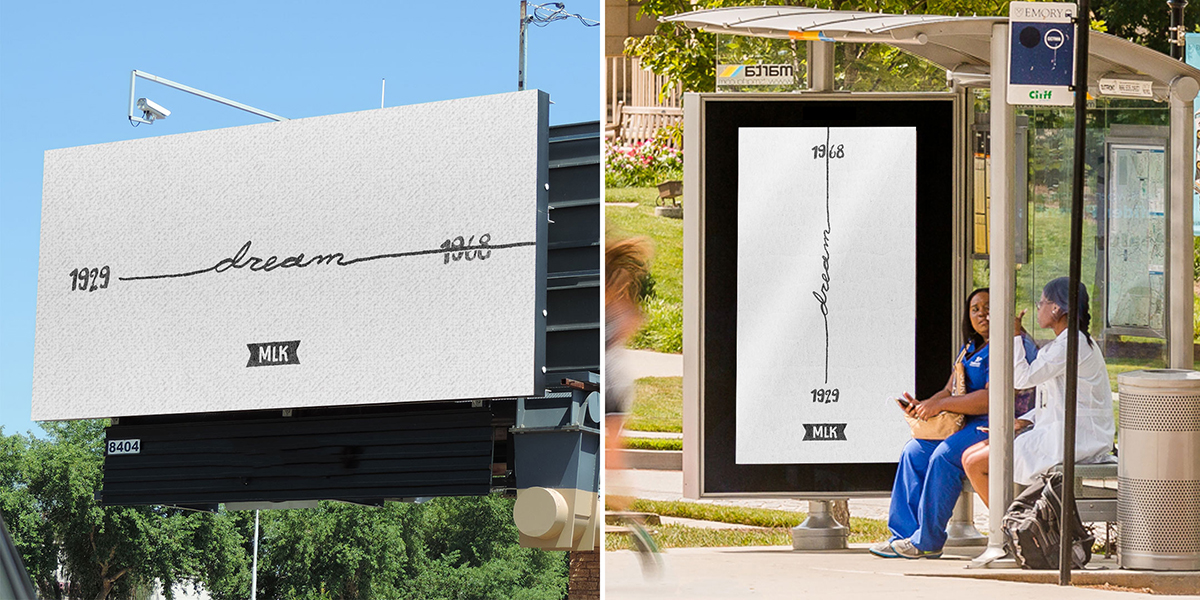
The Dream
This meaningful example of outdoor advertising in Atlanta is designed to pay homage to Martin Luther King, JR. Specifically, the messaging behind the simple but impactful billboard is a celebration of his life and the dream that inspired a nation.
The dream began with his birth in 1929, and lives on today, even past his death in 1968.
Handicap International
Not all great outdoor advertising strategies need to be on a billboard, as Handicap International and the Herezie group in Paris, France realized. In order to bring awareness to the long waiting lists for prosthetics, Handicap International made the daring move of outfitting the broken statues in Paris’ parks with prosthetic parts, as well as small informational signs.
The clever advertising ploy encouraged a double look for the passerby and valuable education on the issue.
Summer With Ikea
IKEA made light of the brief summer months in Belgium with a series of outdoor advertisements encouraging viewers to enjoy the brief period of summer and sunshine! The majority of the billboards are dark, stormy skies with a sliver of sunny skies and summery furniture arrangements from the retailer.
IKEA uses a clever play on humor and making fun of Belgian weather to make an impact.
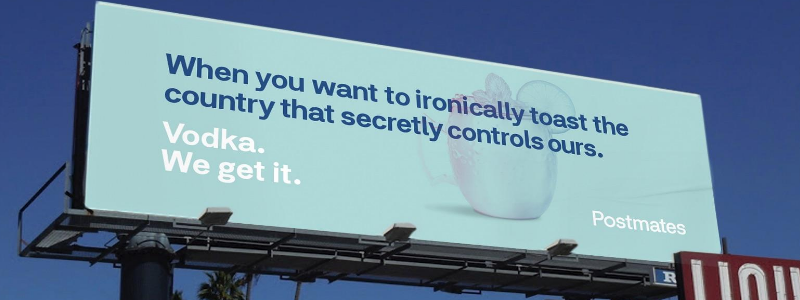
Postmates Outdoor Advertisements
This saucy advertisement created by 180LA agency in Los Angeles is a great example of using a stop-and-stare! the tactic in outdoor advertising. Postmates delivery service superimposes wry text over a faint picture of a Moscow Mule and ties it to having vodka delivered to you.
A nod to the political drama of Russian interference in the 2016 election may take a moment for readers to process, but the resulting giggle and shock value will make readers consider Postmates twice.
Interested in more creative outdoor media examples? Check out our other article on some of our favorite Outdoor Advertising Ideas.
Historical Perspective of Great Outdoor Advertising
Outdoor advertising, often synonymous with billboards, has a history that traces back further than one might initially think. Its roots can be found in ancient civilizations, including Egypt, where large stone obelisks were used to proclaim laws and treaties. These were, in essence, the first billboards, aiming to disseminate messages to a broad audience.
In ancient Rome, walls were frequently used to post public messages, which ranged from political campaigns to popular events. Moving into the Middle Ages, signage took a turn toward the commercial, with tradesmen using signs to showcase their wares or services, especially in bustling market towns.
However, the true boom in outdoor advertising as we know it began in the 19th century. The Industrial Revolution brought about rapid urbanization and the rise of consumer goods. As products were mass-produced, the need to advertise and differentiate them became paramount. This period saw the rise of large posters and painted signs, advertising everything from medicines to shows.
The 20th century brought technological innovations that transformed outdoor advertising. The invention of the neon light in the 1910s added a luminous glow to outdoor promotions, especially in vibrant urban areas like Times Square in New York City or the Las Vegas Strip. With the advent of the automobile, roadside billboards grew in popularity, targeting travelers and commuters.
Today’s outdoor advertising world is a culmination of these historical developments, blending traditional billboard designs with high-tech digital screens, interactive features, and a focus on integration with online and social media campaigns.
Through the ages, the essence of outdoor advertising has remained consistent: to capture attention in the public sphere and convey a message effectively. As we delve deeper into other sections of this article, we’ll see how brands are innovating within this age-old medium to stay relevant in our fast-paced, digital era.
Digital Integration in Outdoor Advertising
In today’s fast-paced, interconnected world, outdoor advertising isn’t just about static images on large canvases alongside highways. With advancements in technology, the lines between digital and physical mediums are blurring, giving rise to a more interactive and dynamic form of outdoor promotion.
Digital Billboards: No longer limited to fixed images, digital billboards can rotate through multiple ads, adjust content based on the time of day, and even display real-time data. For instance, a restaurant might showcase its breakfast menu in the morning and switch to dinner specials in the evening.
Interactive Elements: QR codes, previously thought to be a dying technology, have seen a resurgence, especially in the post-pandemic world. They’re now frequently incorporated into outdoor ads, allowing viewers to scan and access more information, promotions, or even augmented reality (AR) experiences directly on their smartphones.
Augmented Reality (AR) Enhancements: Brands are using AR to turn static billboards into immersive experiences. By scanning a code or using a specific app, viewers can see animated graphics, 3D models, or additional layers of information superimposed over the real-world image of the billboard.
Data-Driven Personalization: Some billboards equipped with cameras and sensors can now adjust their displayed content based on the demographics of the passerby, such as age or gender. While this raises privacy concerns, it’s an example of how outdoor advertising is trying to be as targeted and personalized as its online counterpart.
Social Media Integration: Many outdoor campaigns now come with hashtags, encouraging viewers to share their experiences or thoughts on social platforms. This not only boosts the ad’s reach but also helps brands engage with their audience in a two-way conversation.
Real-time Updates: Some campaigns utilize real-time data to keep their content fresh and relevant. For instance, a travel company might display the current temperature in a popular holiday destination, or a sports brand could showcase live scores during a big game.
Environmental Sensors: Billboards in certain locations come equipped with environmental sensors. Depending on factors like rain, sunlight, or temperature, the content of the advertisement might change. For example, an ad for a clothing brand could showcase raincoats during wet conditions and sunglasses on sunny days.
How To Promote Your Product & BMedia Group Puerto Rico
Promoting your product and effectively expanding your client base requires a multi-faceted approach that aligns with your target audience’s preferences and behaviors. In Puerto Rico’s dynamic market, embracing billboard advertising as part of your promotional strategy can yield remarkable results. By strategically positioning your product in high-traffic areas, crafting compelling visuals and messages, and tapping into the cultural nuances of the island, you can create a memorable and impactful campaign that resonates with your audience.
The advertising landscape has undergone a significant transformation, and at the forefront of this change is the evolution from traditional to digital billboards. This shift marks a pivotal moment for businesses, especially in dynamic markets like Puerto Rico. Understanding the impact of digital billboards on local businesses begins with appreciating their journey from static images to digital marvels.
Evolution from Traditional to Digital Billboards
For decades, traditional billboards have been a popular choice for businesses to advertise their products or services due to their simplicity and widespread presence. However, the advent of digital technology has revolutionized this medium and brought a new level of dynamism to outdoor advertising. With digital billboards, businesses now can display multiple ads in a rotation, change messages in real time, and incorporate motion graphics. This evolution has not only enhanced the visibility of advertisements but also opened up new avenues for creativity and engagement with the audience.
Digital Billboard Advertising in Puerto Rico & Beyond
The digital billboard market in Puerto Rico has experienced significant growth, given the island’s distinctive cultural and economic landscape. The diversity of audiences, comprising both locals and tourists, presents a unique opportunity for businesses to target a range of demographics. Furthermore, the region’s adoption of digital billboards has given rise to innovative advertising strategies that cater to the vibrant and dynamic audience that characterizes Puerto Rico.
As we delve deeper into the advantages, technological advancements, and strategies associated with digital billboard advertising, it becomes clear why this medium is becoming increasingly popular among business owners in Puerto Rico and beyond.
Advantages of Digital Billboards for Local Businesses
Instant Updates: Unlike traditional billboards, digital versions allow for instant content updates. This means businesses can react in real-time to market changes, events, or consumer trends.
Multiple Messages: A single digital billboard can display multiple messages throughout the day, enabling businesses to communicate various aspects of their brand or product line effectively.
Real-time Advertising and Updates
Timely Campaigns: Digital billboards offer the unique advantage of time-sensitive advertising. Businesses can run campaigns that are relevant to specific times of the day, weather conditions, or even current events.
Interactive Engagement: Some digital billboards offer interactive capabilities, engaging passersby through quizzes, polls, or social media integration, making the advertisement more memorable and impactful.
Broader Audience Reach and Engagement
Strategic Locations: Positioned in high-traffic areas, digital billboards capture a wide and varied audience, from locals to tourists, increasing brand exposure.
Enhanced Recall: The vibrant and dynamic nature of digital billboards leads to higher engagement and recall rates compared to traditional billboards, making them a powerful tool for brand awareness.
In summary, digital billboards offer unparalleled advantages for local businesses, especially in a diverse and vibrant market like Puerto Rico. Their ability to deliver dynamic, timely, and engaging content ensures that businesses can not only reach a broader audience but also create more impactful and memorable advertising campaigns.
Technological Advancements in Digital Billboard Advertising
The impact of digital billboards on local businesses is significantly amplified by ongoing technological advancements. These innovations not only enhance the effectiveness of billboard advertising but also open new avenues for engaging with audiences.
Interactive Features and Audience Analytics
Engagement Tools: Modern digital billboards often incorporate interactive elements like touch screens, QR codes, and augmented reality, inviting passersby to engage directly with the advertisement.
Data-Driven Insights: Advanced analytics tools are now integrated with digital billboards, providing businesses with valuable data on viewer demographics, engagement levels, and ad performance. This information is crucial for tailoring future campaigns.
Integration with Social Media and Mobile Apps
Cross-Platform Marketing: Digital billboards can seamlessly integrate with social media and mobile apps, creating a cohesive marketing strategy that spans multiple platforms.
Enhanced Customer Interaction: This integration allows for real-time customer interaction and feedback, making the advertising experience more dynamic and personalized.
Reduced Waste: Unlike traditional billboards that require physical materials for each new ad, digital billboards eliminate this waste, aligning with modern eco-friendly business practices.
These technological advancements are shaping the future of digital billboard advertising. These innovations not only enhance the effectiveness of the ads but also offer businesses valuable insights and eco-friendly options.
Cost-Effectiveness and ROI
Understanding the cost-effectiveness and return on investment (ROI) is crucial for local businesses considering digital billboards. The impact of digital billboards on local businesses is not just in their visibility and technological prowess but also in their financial viability.
Comparison with Other Advertising Mediums
Higher Initial Cost, Greater Long-Term Value: While digital billboards may have a higher initial cost compared to traditional billboards or some online ads, their dynamic nature and broader reach often translate into a higher long-term ROI.
Versatility Over Other Mediums: Digital billboards offer a level of versatility and audience engagement that is hard to match with other mediums, making them a cost-effective choice for businesses aiming for high-impact advertising.
Understanding Pricing and Ad Placement Strategies
Flexible Pricing Models: Digital billboard advertising often comes with flexible pricing options, including variable rates based on time slots, duration, and specific locations.
Strategic Placement for Maximum Impact: Understanding the best locations and times for ad placement can significantly enhance the effectiveness of a campaign, ensuring that businesses get the most value for their investment.
Digital billboards can be a cost-effective advertising solution for local businesses. Their ability to deliver targeted, engaging content, coupled with flexible pricing and strategic placement, makes them a valuable investment with a potentially high ROI. This makes digital billboards an attractive option for businesses in Puerto Rico looking to maximize their advertising budget.
Creative Strategies for Effective Digital Billboard Campaigns
Crafting an effective digital billboard campaign requires a blend of creativity and strategic planning. The impact of digital billboards on local businesses is maximized when these campaigns are thoughtfully designed and executed.
Design Tips and Content Ideas
Visual Appeal: Use high-quality, visually appealing graphics that stand out. Bold colors and clear, readable fonts are essential.
Simplicity is Key: Given the brief interaction time, messages should be concise and easily digestible. A clear, simple message often has the most impact.
Emotional Connection: Aim to create content that resonates emotionally with your audience. This could be through humor, inspirational messages, or relatable stories.
Location, Location, Location: Choose billboard locations based on your target audience. High-traffic areas are ideal, but consider the specific demographics of different locations.
We’ve outlined a couple of key strategies for creating effective digital billboard campaigns. By focusing on design, content, timing, and location, local businesses in Puerto Rico can craft impactful advertisements that not only capture attention but also drive engagement and sales. These creative strategies are crucial for leveraging the full potential of digital billboards.
Future Trends in Digital Billboard Advertising
As we look ahead, the landscape of digital billboard advertising is poised for exciting developments. The impact of digital billboards on local businesses will continue to evolve with these advancements, offering new opportunities for innovative and effective advertising.
Predictions for Technological Innovations
Augmented Reality (AR) Integration: The integration of AR with digital billboards is expected to provide immersive and interactive experiences, making advertisements more engaging and memorable.
Advanced Personalization: With the growth of AI and machine learning, we anticipate more personalized ad content, tailored to the preferences and behaviors of individual viewers or specific audience segments.
Potential Changes in Advertising Regulations
Regulatory Evolution: As digital billboard technology advances, there may be new regulations regarding their usage, placement, and content to ensure public safety and ethical advertising practices.
Privacy Considerations: With the increased use of data analytics and personalization, privacy regulations will likely become more stringent, impacting how businesses collect and use viewer data.
These advancements promise to further enhance the effectiveness of digital billboards for local businesses, offering new ways to captivate and engage audiences. Staying abreast of these trends will be key for businesses looking to leverage digital billboards in innovative and compliant ways.
Maximizing Local Engagement Through Digital Billboards
In the competitive world of advertising, local businesses face the unique challenge of standing out while also fostering a strong connection with their community. Digital billboards offer an unparalleled opportunity to maximize local engagement, turning everyday viewers into loyal customers.
Localized Content for Community Connection
Highlight Local Events and Charities: Use digital billboards to promote local events, charity drives, or community celebrations, showcasing your business’s involvement and support for the local community.
Feature Local Landmarks or Themes: Incorporate imagery or themes related to local landmarks, traditions, or culture in your billboard designs to resonate more deeply with the local audience.
Leveraging Geo-Targeting for Hyper-Local Campaigns
Geo-Targeted Messages: Take advantage of digital billboards’ ability to change content based on location to tailor messages that appeal directly to local neighborhoods or demographics.
Real-Time Weather or Traffic Updates: Incorporate real-time local weather forecasts or traffic updates into your advertisements, adding value to viewers’ daily routines and enhancing brand recall.
Engaging with Local Social Media Trends
Interactive Social Media Campaigns: Encourage social media interaction by integrating current local social media trends or hashtags into your billboard content, driving online engagement through offline advertising.
User-Generated Content: Invite local customers to be part of your billboard campaign by featuring user-generated content, such as photos or testimonials, which can foster a stronger community connection and trust in your brand.
Partnerships with Local Businesses and Organizations
Collaborative Advertising: Partner with other local businesses or organizations for joint advertising efforts on digital billboards, pooling resources for greater impact and fostering a sense of community unity.
Support for Local Causes: Use your digital billboard space to support local causes or non-profit organizations, demonstrating your business’s commitment to the community’s well-being.
By adopting these strategies, local businesses can leverage digital billboards not just as advertising tools, but as platforms for building a stronger, more engaged local community. This approach not only enhances the visibility and appeal of your business but also strengthens your ties with the community you serve.
Conclusion
As we’ve explored throughout this article, the impact of digital billboards on local businesses is profound and multifaceted. From the evolution of traditional to digital billboards, to the technological advancements and creative strategies that enhance their effectiveness, digital billboards represent a dynamic and powerful advertising medium.
Summarizing the Impact of Digital Billboards
Versatility and Engagement: Digital billboards offer unmatched versatility and engagement opportunities, allowing businesses to present dynamic, real-time content to a broad audience.
Technological Edge: The integration of cutting-edge technologies like interactive features, audience analytics, and eco-friendly designs positions digital billboards as a forward-thinking advertising solution.
Encouraging Local Businesses to Consider Digital Billboard Advertising
Investing in digital billboard advertising represents a strategic move for local businesses in Puerto Rico and beyond. It promises high visibility, adaptability, and the potential for a robust return on investment. In today’s competitive advertising landscape, leveraging the power of digital billboards can help businesses stay ahead, effectively reaching and resonating with their target audiences.
For those ready to explore the dynamic world of digital billboard advertising, bMedia is at the forefront of this innovative journey. With our expertise and commitment to excellence, we invite local businesses to partner with us. Together, we can craft compelling digital billboard campaigns that not only capture attention but also drive meaningful engagement and growth.
Let bMedia help you make a significant impact in the market. Reach out to us, and let’s turn your advertising visions into reality.
In the dynamic realm of business, one of the foremost challenges companies face is expanding their brand’s reach and recognition. “How to Increase Brand Awareness?” is a question that continuously reverberates in boardrooms and marketing departments alike.
In this enlightening article, we will delve into the art and science of enhancing brand visibility. By uncovering effective strategies, innovative techniques, and case studies of successful brand awareness campaigns, we aim to equip you with the knowledge and tools needed to chart a course toward a more prominent and influential brand presence.
Whether you’re a fledgling startup or a seasoned enterprise, this guide will be your compass to navigate the journey of brand elevation.
Understanding of your brand characteristics (logo, messaging, etc.)
Understanding Brand Awareness
In the ever-evolving landscape of marketing and business, a firm grasp of brand awareness is paramount. But before diving into strategies and techniques, it’s crucial to comprehend the concept itself. So, what is brand awareness, and why is it a pivotal factor in your brand’s success?
Defining Brand Awareness:
At its core, brand awareness refers to the degree to which your target audience recognizes and remembers your brand. It’s not just about having a logo or a catchy slogan; it’s about becoming a familiar presence in the minds of consumers. When people can easily identify your brand and associate it with certain qualities or products, you’ve achieved a high level of brand awareness.
The Significance of Brand Awareness:
Brand awareness isn’t merely a vanity metric; it holds immense significance for businesses. It serves as the foundation upon which brand loyalty, customer trust, and long-term success are built. When consumers are familiar with your brand, they are more likely to choose your products or services over competitors, even if they’re presented with other options.
Psychology of Consumer Recognition:
Understanding the psychology behind brand recognition is crucial. Humans are naturally drawn to the familiar and tend to trust what they know. A strong brand presence can create a sense of comfort and reliability, making consumers more inclined to engage with your brand and make purchase decisions.
Importance of Brand Awareness
Brand awareness familiarizes the public with a product and differentiates it from competing brands. Businesses that maintain high levels of brand awareness are likely to generate more revenue because consumers are more likely to buy familiar brand names compared to unknown ones. 59% of customers prefer to buy from brands they already know about.
Brand awareness leads to trust, meaning the more recognition our brand has, the more successful your brand or business will be. It is the foundation of acquiring a customer audience and helping them understand and become comfortable with your products and services — increasing your brand equity.
Ways to Build Brand Awareness
Developing a strategic brand awareness campaign will help familiarize consumers with your brand and product offering. The main goal is to increase knowledge within the target audience but a good campaign will also communicate attributes that differentiate you from your competitors.
Here are some ways to increase brand awareness:
Give your brand a voice
Give your brand a personality and use it to identify with your target audience. Having a distinct tone and voice will help your advertisements stick in the mind of consumers. Be mindful of the words you use. A great example is a slogan, which can help make you easily recognizable or a smart combination of colors that are both memorable and eye-catching.
Take advantage of outdoor advertising
Out-of-home advertising, or OOH, is a great way to put your brand out there. Billboards are a traditional method of advertising, but there’s a reason they’ve been around for so long. They work! Billboards placed strategically in high-traffic areas will expose your brand to thousands of people each day. Unlike commercials or digital ads, they’re there 24 hours a day, exposing your brand to anyone who passes by.
There are many ways to use billboards to increase brand awareness. If enough people see your branding on billboards, the more they will be able to recognize and identify elements of your brand identity such as logo and color scheme. This is also known as brand recognition.
One key aspect of building brand awareness is ensuring that your advertising efforts are professional and error-free. This includes avoiding common grammar mistakes that can undermine your credibility and the effectiveness of your ads. Here are some of the most frequent grammar errors found in advertising and tips to avoid them:
Misplaced Apostrophes
One of the most common mistakes is the misuse of apostrophes. Apostrophes are used to indicate possession or contractions, but they are often incorrectly used to form plurals or omitted when needed.
Example of Incorrect Usage:
“Get your car’s washed here.”
Correct Usage:
“Get your cars washed here.”
Tip: Always double-check if the apostrophe is used to show possession (the dog’s bone) or a contraction (it’s = it is). Avoid using apostrophes to form plurals.
Incorrect Subject-Verb Agreement
Ensuring that your subjects and verbs agree in number is fundamental to clear communication. Mistakes in subject-verb agreement can make your advertisements look unprofessional.
Example of Incorrect Usage:
“The team of experts are ready to help.”
Correct Usage:
“The team of experts is ready to help.”
Tip: Identify the true subject of the sentence and make sure the verb agrees in number (singular or plural) with it.
Spelling Errors
Spelling mistakes are perhaps the most obvious and easily avoided errors in advertising. Even a single misspelled word can significantly impact the reader’s perception of your brand.
Example of Incorrect Usage:
“Professional advise available.”
Correct Usage:
“Professional advice available.”
Tip: Use spell-check tools and have multiple people review your advertisements before they are published.
Avoiding common grammar mistakes is crucial for maintaining your brand’s credibility and increasing brand awareness. By paying attention to detail and ensuring your advertisements are error-free, you can present a professional image that resonates with your audience and reinforces your brand’s message.
Combining different reach/frequency data will help you better visualize how well your awareness campaign is performing, helping you make the best and most informed decision for your business.
Surveys
This basic but useful form of measurement will provide you with the metrics needed to determine the trajectory of your campaign. A survey can be conducted through email, website, or telephone. Ask existing customers how they came to know about your brand to understand how people are hearing about you. You can also gain insight into how much people can recall your brand by randomly selecting survey participants and asking them if they are familiar with your brand.
Measure Website Traffic
Website traffic provides insightful data on brand awareness. Tools like Google Analytics can track how many people visited your website. To dive deeper into the detail, the application also allows you to view where your visits are coming from. With Google Analytics, you’ll be able to track whether your visitors are coming through organic search, direct visits (the number of people who type your URL into their address bar), social media, or through referral (links from other sites that direct visitors to your site). Keeping an eye on these trends will help you monitor changes in your brand awareness campaign.
Check Organic Social Growth
2.32 million Puerto Ricans use social media each day. A great way to measure your awareness is to monitor your social media following. How many new and organic followers did you get after the launch of your campaign? Are your posts gaining more likes and shares? Look into what people are saying about your brand online. What are consumers saying about your brand or product? Social media users tend to be more unsolicited, which means they are likely to be more honest compared to other data recording methods such as surveys.
Increase Brand Awareness with bMedia Group
bMedia Group is Puerto Rico’s leading marketing agency. We can help you take advantage of marketing opportunities to help further expose your brand.
Outdoor advertising is our specialty. Through our work, we aim to highlight what you offer while providing a memorable experience for the consumer. We currently have a real estate of over 500 high-exposure billboards on the island. We are confident in our ability to get your brand the recognition it needs for optimum growth and success.
Contact us today, our professionals will help you strategize, execute, and maximize your brand awareness on the island.
In today’s digital age, it’s easy to overlook the importance of traditional advertising methods. However, it’s essential to remember that these tried-and-true strategies still hold significant value when it comes to building brand awareness and reaching a broader audience, especially in local markets. In this article, we’ll dive into various “Examples of Traditional Advertising,” exploring how they can effectively complement your digital efforts and offer unique advantages. Whether you’re a seasoned business owner or just starting, understanding these traditional methods can be a game-changer in your advertising strategy.
Enduring Relevance: Despite the digital age, traditional advertising remains highly relevant and effective.
Diverse Methods: We’ll explore a range of options, from billboards to print media, each with its unique strengths.
Real-World Impact: Through examples, you’ll see how these methods have successfully driven business growth.
As we go through these examples, it’s important to keep in mind your business objectives and how these strategies can support your vision. Traditional advertising, known for its wide reach and tangible presence, can be a potent weapon in your marketing arsenal. Let’s delve into it and learn more.
Billboard Advertising
Billboard advertising, a classic of “Examples of Traditional Advertising,” offers a unique blend of broad reach and creative potential. As a business owner, understanding the nuances of this medium can help you leverage it more effectively.
Strategic Location: The placement of your billboard is key. High-traffic areas like highways, busy streets, and near popular landmarks can significantly increase your ad’s visibility.
Duration of Exposure: Unlike fleeting online ads, billboards are visible 24/7, offering continuous exposure. This constant presence helps in building brand familiarity.
Design Considerations: The design of your billboard is crucial. It needs to be eye-catching, easy to read, and memorable. Simplicity in design often leads to a stronger impact.
Success Stories
Coca-Cola: Known for its creative billboard campaigns, Coca-Cola has used this medium to create iconic and memorable ads that resonate globally.
Apple: Apple’s minimalist billboard designs are perfect examples of how simplicity can capture attention and make a bold statement.
Local Successes: Small businesses, too, have seen significant benefits from billboard advertising. A local restaurant might use a billboard to entice nearby traffic, leading to increased footfall.
The Role of Digital Billboards
In recent years, digital billboards have added a new dimension to this traditional medium. They offer:
Dynamic Content: You can change your ad content easily, allowing for timely and relevant messaging.
Interactive Elements: Some digital billboards offer interactive capabilities, engaging viewers more directly.
Dayparting: This feature allows different ads to be displayed at different times of the day, targeting specific audiences effectively.
Combining Billboards with Other Media
To maximize the impact of your billboard advertising, consider how it can work in tandem with other marketing efforts:
Social Media Tie-Ins: Use your billboard to promote a hashtag or social media campaign, bridging the gap between offline and online advertising.
QR Codes: Incorporating QR codes can direct viewers to your website or a special offer, creating a direct link between the billboard and digital engagement.
In conclusion, billboard advertising, with its vast reach and creative potential, remains a cornerstone in the realm of traditional advertising. By understanding its strengths and how to effectively integrate it into your broader marketing strategy, you can create powerful, memorable campaigns that resonate with your audience and drive real business results.
Print Media: Newspapers and Magazines
Delving deeper into print media, we find a rich landscape of opportunities for business owners. Inside the “Examples of Traditional Advertising,” newspapers and magazines, with their varied audiences and content styles, offer a unique platform for targeted and impactful advertising.
Newspaper Advertising
Local and National Reach: Newspapers cater to both local and national audiences, allowing you to tailor your advertising strategy accordingly. Local newspapers are particularly effective for reaching community-specific markets.
Ad Formats: From full-page spreads to smaller, more budget-friendly options, newspapers offer a variety of ad formats to suit different needs and budgets.
Timeliness: Newspaper ads can be timely, aligning with current events or local happenings, making your ad more relevant and engaging.
Success in Newspaper Advertising
Retail Ads: Local retailers often find great success in newspaper advertising, driving foot traffic with promotions and sales.
Event Promotions: Events, whether local fairs or major concerts, use newspapers to reach a wide audience quickly and effectively.
Exploring Magazine Advertising
Targeted Audience: Magazines often cater to specific interests, lifestyles, or demographics, allowing for highly targeted advertising.
High-Quality Presentation: The glossy, high-quality nature of magazine pages lends a premium feel to your ads, enhancing brand perception.
Longer Shelf Life: Unlike newspapers, magazines are often read over a longer period and kept for weeks or months, giving your ad a longer lifespan.
Magazine Advertising Success Stories
Fashion Brands: High-end fashion brands leverage the visual appeal of magazines to showcase their products in a visually rich environment.
Automotive Industry: Car manufacturers often use magazine ads to detail the features of new models, taking advantage of the medium’s visual and descriptive capacity.
Integrating Print Media with Digital Strategies
In today’s world, integrating your print media advertising with digital strategies can amplify your reach and effectiveness:
QR Codes and URLs: Including these in your print ads can bridge the gap between the physical and digital worlds, driving readers to your online platforms.
Social Media Tie-ins: Use your print ads to promote social media campaigns, encouraging readers to engage with your brand online.
Content Synergy: Align the content of your print ads with your digital marketing efforts for a cohesive brand message across all platforms.
Broadcast Media: Television and Radio
Broadcast media, encompassing television and radio, remains a powerful force inside the ‘examples of traditional advertising’ category. Its ability to reach a wide audience through engaging content makes it an invaluable tool for business owners aiming to elevate their brand presence.
Television Advertising: A Closer Look
Visual Storytelling: Television ads provide the opportunity to tell your story through compelling visuals and sound, creating a memorable brand narrative.
Segmented Audiences: TV channels and programs cater to specific demographics, allowing for targeted advertising strategies.
Super Bowl Commercials: These are prime examples of TV advertising’s impact, where brands create ads that become cultural phenomena.
Infomercials: For products that require demonstrations, infomercials have proven to be highly effective, offering detailed insights into product benefits.
Radio Advertising: Tuning into Success
Auditory Engagement: Radio’s strength lies in its auditory appeal. A well-crafted radio ad can be highly memorable, especially with catchy jingles or slogans.
Local Reach: Radio is particularly effective for reaching local audiences, making it ideal for businesses targeting specific communities.
Cost-Effectiveness: Compared to TV, radio advertising can be more budget-friendly, offering a good return on investment for small to medium-sized businesses.
Radio Advertising Highlights
Local Businesses: Many local businesses find great success with radio ads, especially when they’re tied to local events or promotions.
Niche Markets: Specialty radio stations cater to specific interests, allowing businesses to target niche markets effectively.
Synergy with Billboard Advertising
Broadcast media and billboard advertising can work synergistically. A coordinated campaign that uses both mediums can reinforce your message and increase brand recall. For instance, a billboard can visually complement a radio ad, creating a more comprehensive advertising experience.
Outdoor and Transit in Examples of Traditional Advertising
Outdoor and transit advertising encompasses a wide range of formats beyond billboards, including ads on buses, trains, taxis, benches, and in transit stations. This form of advertising is particularly effective for reaching a broad audience in public spaces, making it a valuable component of traditional advertising strategies for business owners.
Variety and Visibility
Diverse Formats: From bus wraps to bench ads, this medium offers a variety of formats to suit different marketing needs and budgets.
High Exposure: Ads in public transit areas and on vehicles gain high visibility due to the sheer number of people using or encountering public transportation daily.
Targeting and Reach
Geographic Targeting: Transit advertising allows you to target specific geographic areas, ideal for local businesses or events.
Demographic Reach: Since public transportation is used by a diverse cross-section of the population, your ads can reach a wide range of demographics.
Cost-Effective and Continuous Exposure
Long-Term Visibility: Ads in these spaces are typically displayed for extended periods, offering continuous exposure to commuters and pedestrians.
Cost-Effectiveness: Compared to other forms of advertising, outdoor and transit advertising can be more affordable and offer a good return on investment, especially for local campaigns.
Successful Campaigns in Outdoor and Transit Advertising
Local Businesses: Many local businesses use transit advertising effectively to increase brand awareness within their community.
Tourism and Events: Cities often use outdoor ads to promote local attractions, events, or tourism initiatives, reaching both residents and visitors.
Embracing the Full Spectrum of Traditional Advertising
As we wrap up our exploration of “Examples of Traditional Advertising,” it’s clear that traditional methods, from billboards to broadcast media, still hold significant value in today’s digital-dominated world. For you, the business owner, understanding and utilizing these methods can be instrumental in building a comprehensive and effective marketing strategy.
The Enduring Importance of Traditional Advertising
Complementing Digital Strategies: Traditional advertising methods complement digital strategies, creating a holistic marketing approach that leverages the strengths of both.
Building Brand Trust: The tangible and familiar nature of traditional advertising can help build trust and credibility with your audience.
Reaching Diverse Audiences: These methods allow you to reach different segments of your audience, including those less engaged with digital media.
Integrating Traditional and Digital Advertising
Cross-Channel Synergy: Integrating traditional and digital advertising efforts can create a more impactful and cohesive brand message.
Data-Driven Insights: Use insights from digital campaigns to inform and optimize your traditional advertising strategies.
Creative Campaigns: Leverage the unique features of each medium to create innovative campaigns that capture attention across multiple channels.
Final Thoughts
If you’re ready to take your advertising to the next level, consider partnering with a leader in outdoor media. bMedia Group specializes in high-impact billboard advertising across Puerto Rico, offering over 500 locations in a variety of formats, including digital and static billboards, Med Media, Zoom Media, and Fuel Ads. Their expertise in creating dynamic, attention-grabbing campaigns can help you reach up to 90% of the population in minutes. Explore bMedia’s unique advertising solutions and find the perfect billboard for your brand.