What Is Outdoor Advertising? Outdoor Media And OOH Explained

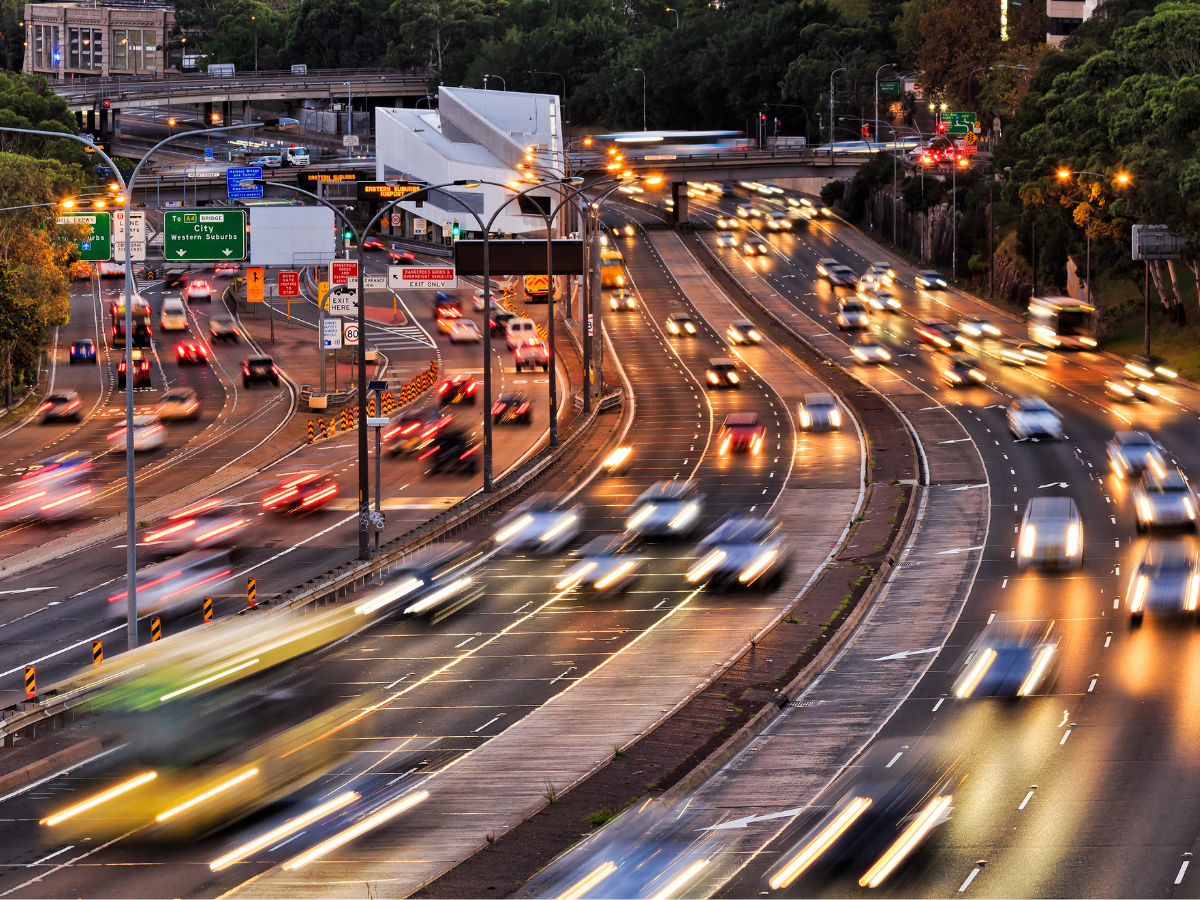
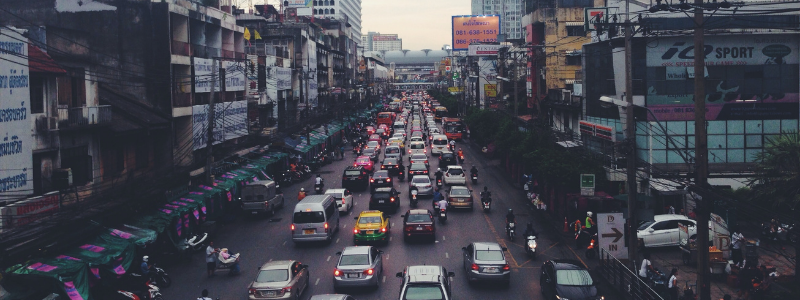
If you have ever looked up and noticed a billboard, an ad at a bus stop, or a message on a screen in a busy plaza, you have seen outdoor advertising in action. What is outdoor advertising in plain terms? It is advertising designed to reach people when they are out in the world, not sitting at home.

You will also hear it called outdoor media or OOH, which stands for out of home. These terms are often used interchangeably. In this guide, you will learn what is outdoor advertising, what formats matter most, how to pick the right placements, and how to think about measurement so you can plan with confidence.

bMedia Group helps brands plan and run outdoor campaigns across Puerto Rico with a technology-forward approach, 500+ locations, and the ability to reach 90% of the population in minutes.

What Is Outdoor Advertising And Why It Works

What is outdoor advertising really doing for your business? It puts your message in front of people during real life moments: commuting, shopping, meeting friends, traveling, and running errands.

Outdoor works best when you need:

  • Broad awareness fast
  • Repetition that builds familiarity
  • Strong local presence by region
  • A message that is easy to understand in a few seconds

Outdoor media is not about cramming information. It is about being clear, visible, and present where your customers already are.
outdoor media

Outdoor Advertising Formats You See Every Day

Outdoor media is a big category. Here are common formats, plus how they typically fit into a plan.

Billboards

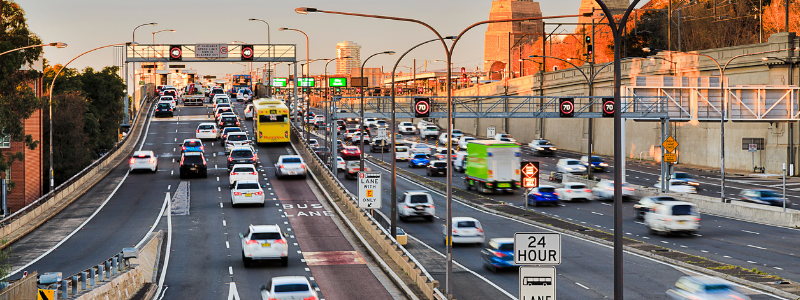
Billboards are large placements along highways and major roads. They are ideal when you want high reach and steady visibility.

Digital Billboards (DOOH)

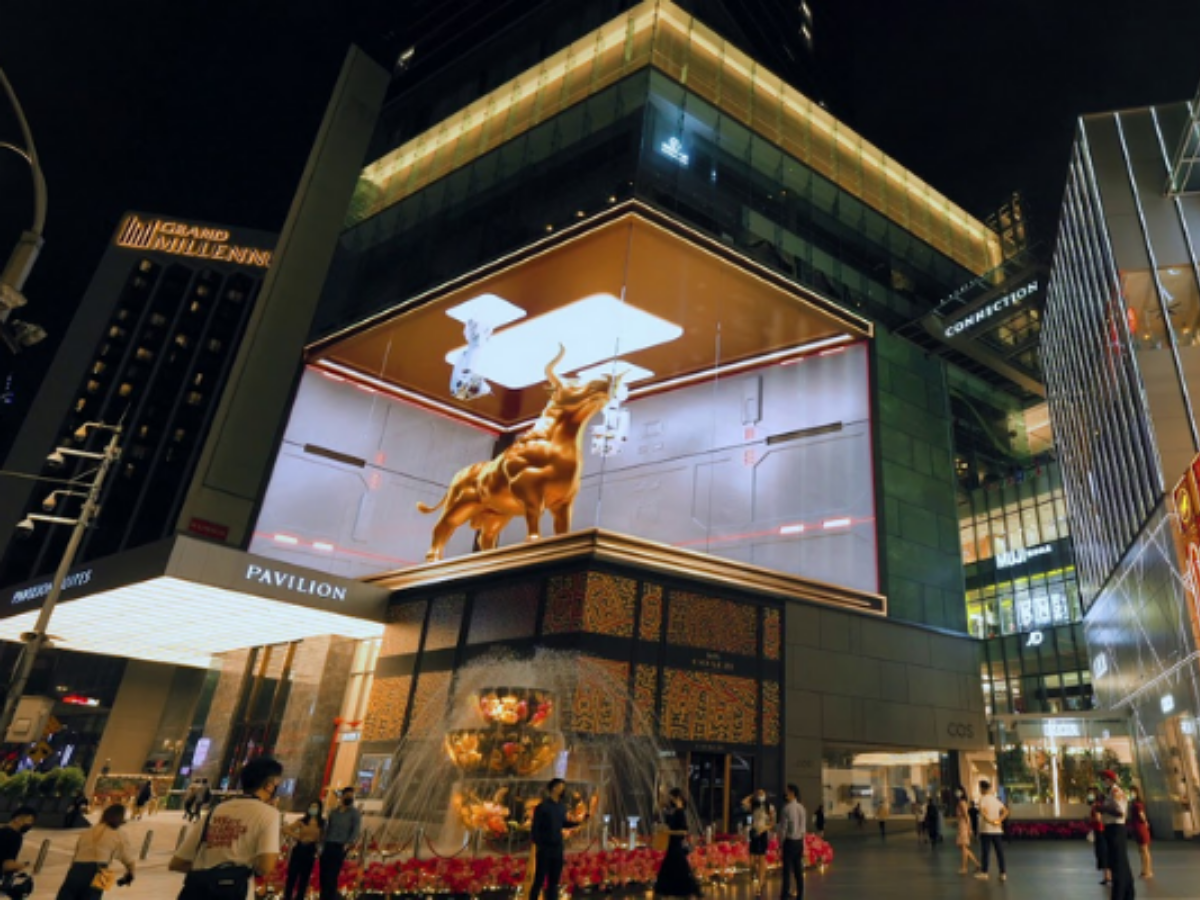
DOOH means digital out of home. These are screens that can rotate multiple ads. They are useful when you want flexibility, quicker creative swaps, or day-part messaging.

Posters And Street-Level Placements

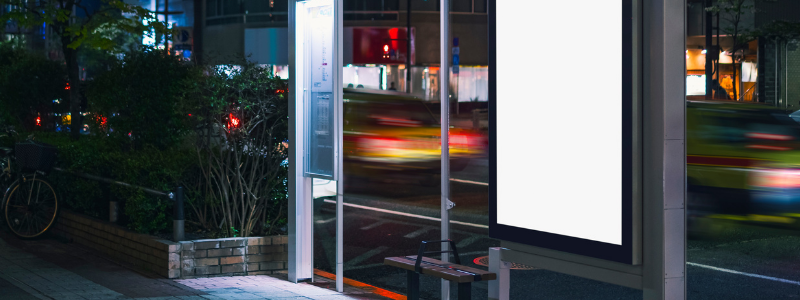
Posters and street furniture (bus shelters, benches, kiosks) sit closer to eye level. They can be excellent for neighborhood targeting and pedestrian-heavy areas.

Transit Advertising

Transit placements include buses and areas around transit hubs. They work well when your audience moves through the same routes every week.

Place-Based Media

This includes formats like:

  • Restroom ads
  • Gas station ads
  • Medical office ads
    These can be effective when you want to reach people in specific settings where they have more time to read.

Outdoor Advertising In Puerto Rico

Outdoor planning improves a lot when you stop thinking “island wide” as one big idea and start thinking in zones.

A practical way to approach it is:

  • Metro reach: San Juan, Bayamón, Carolina, Caguas
  • South and west coverage: Ponce, Mayagüez
  • North corridor: Arecibo and surrounding routes

With bMedia Group’s scale across 500+ locations and a planning approach built around reach and performance, you can match placements to real movement patterns, not guesses.

Quick Decision Guide: Pick Your Format By Goal

If your goal is speed and flexibility

  • Choose DOOH
    Best for promotions, multiple messages, seasonal swaps, and fast creative updates.

If your goal is always-on presence

  • Choose static billboards
    Best for brand recognition, consistent visibility, and simple, memorable messaging.

If your goal is impact

  • Choose spectacular placements
    Best for major brand moments, launches, and high-attention environments where size and placement do the heavy lifting.

Simple Comparison: Digital vs Static vs Spectacular

  • Digital (DOOH): flexible, can rotate messages, great for timing and testing
  • Static: steady, simple, consistent, ideal for long runs
  • Spectacular: premium visibility, high impact, best for big statements

What Drives Cost In Outdoor Advertising

Outdoor pricing is not one flat number. It usually depends on:

  • Location: traffic volume and visibility
  • Format: digital vs static vs premium placements
  • Duration: how long your campaign runs
  • Share of time (digital): how often your ad appears on a loop
  • Production needs: printing, file specs, creative revisions

Quick Details Block: Budget Inputs You Should Know

  • Regions you want to cover
  • Formats you want to use
  • Timeline and start date window
  • Whether you need one message or multiple versions
  • Your primary outcome: reach, traffic, brand lift, or launches

If you bring those inputs to the table, planning becomes faster and more accurate.

How Outdoor Advertising Is Measured

You do not need to be a media buyer to understand measurement. Here are the key terms, in plain language:

  • Impressions: estimated views of your ad
  • Reach: how many different people you may reach
  • Frequency: how often those people may see the ad
  • CPM: cost per thousand impressions, a common way to compare efficiency across channels

Outdoor planning works best when you set expectations clearly:

  • Outdoor is strong at awareness and recall
  • It supports other channels by keeping your brand top of mind
  • It performs better when the message is simple and the placement matches your audience

bMedia Group’s approach stays focused on measurable outcomes, CPM efficiency, targeting by region, and realistic performance reporting without promising exact results.
outdoor advertising

Creative Rules That Make Outdoor Work

Outdoor ads are seen quickly. Your design has to do its job fast.

bMedia Creative Checklist

  • Keep it to one clear message
  • Use large fonts that can be read at distance
  • Strong contrast between text and background
  • One main visual, not a collage
  • Brand name or logo visible, but not cramped
  • If you include a call to action, keep it short
    Think “Visit,” “Call,” or a simple URL. Avoid long sentences.

Quick Details Block: What You Need To Provide

  • Your logo and brand colors
  • One headline or offer
  • One main image (high quality)
  • Any required disclaimer text, if applicable
  • Preferred landing page or phone number

If your ad needs people to remember a phone number, consider pairing it with formats where people have more time, like place-based media. For highway billboards, keep actions simple.

Timeline: How To Plan Without Stress

Outdoor campaigns go smoothly when you give yourself enough time for creativity and approvals.

Planning Timeline (Typical)

  • Week 1: choose region, format, and schedule
  • Week 2: finalize creative and specs
  • Week 3: production and confirmations
  • Launch: monitor, report, and adjust if using DOOH rotations

If you are planning around seasonal demand, aim to start earlier for high-competition periods like holidays, major travel windows, or back-to-school. You do not need exact dates to plan well. You just need a clear window and a clear message.

Common Mistakes To Avoid

These are the issues that most often reduce results:

  • Trying to say too much in one ad
  • Picking locations without matching the audience
  • Running too short to build frequency
  • Using designs that look good on a laptop but fail at distance
  • Skipping measurement expectations until after launch

Outdoor advertising is simple when you treat it like a planning problem, not a guessing game.

Bringing It All Together With bMedia Group

Now you can answer the core question, what is outdoor advertising and how it fits into real business goals. Outdoor media works when your plan is clear: audience, region, format, timeline, creative constraints, and measurement.

bMedia Group brings island-wide scale, 500+ locations, and technology-driven planning to help you run campaigns that are practical, trackable, and built for real visibility across Puerto Rico. If you want to turn outdoor advertising into a repeatable growth channel, start with a format mix that matches your goal, then build creative that can be understood in seconds.
Out of Home Advertising

In an era characterized by digital marketing dominance, “Out of Home Advertising” emerges as a formidable strategy, making a lasting impression in the physical world.

This comprehensive guide explores the dynamic realm of Out of out-of-home advertising, transcending the boundaries of screens and devices to reach consumers where they live, work, and play. From towering billboards that capture attention on busy highways to eye-catching transit ads that navigate urban landscapes, this article delves into the various facets of this impactful medium.

Join us on a journey that uncovers the power, versatility, and creative potential of out-of-home advertising in today’s marketing landscape.

What Does OOH Stand For in Advertising?

As the name suggests, OOH stands for out-of-home [advertising]. It is a marketing strategy to reach a target audience when they are not in their homes.

ooh advertising

OOH Advertising Examples

Mary Lister writing for Wordstream describes several modern examples.

  • Digital and traditional billboards and posters
  • Public furniture including bus stop shelter walls, kiosks, benches, poles
  • Public transit vehicles like bus walls, taxi wraps, subway, and train cars
  • Point-of-sale ads including sandwich boards, taxi cab windows, business front windows, building walls, gas pumps, and trash cans
  • Stand-alone advertisements like those on balloons and other inflatables, floats, and airplane banners

A Brief History of OOH Advertising

The Out of Home Advertising Association points out that OOH advertising dates back thousands of years. The first out-of-home advertising occurred when Egyptians used towering stone obelisks as a platform for informing the public of treaties and laws.

In the 1400s, Johannes Gutenberg’s invention of the printing press gave rise to handbills. By 1796, these advertisements had added eye-catching illustrations. Handbills led to bill posters. These larger advertisements were erected on structures where they could be read by passing vehicle and foot traffic.

The 1830s are believed by many to have launched roadside advertising. Merchants hand-painted signs and affixed advertising to building fronts and fences. These told walkers and drivers that their business was ahead. They often highlighted their wares.

In 1835, Jared Bell began printing large posters. These fifty-square-foot ads told of the arrival of the circus.

1850 brought advertising on street railways. However, the advent of industrialization in the late 1800s and early 1900s saw the formation of the Association of Bill Posters in North America. Later called the Outdoor Advertising Association of America, this organization aimed to promote a greater understanding of out-of-home media. This led to the standardization of billboards. There followed a boom on mass-produced billboard campaigns by such big businesses as Coca-Cola, Palmolive, and Kellogg’s.

The mid-twenties saw the first outdoor advertising company listed on the stock exchange. In the 1940’s the OBIE awards debuted. Coca-Cola’s “Yes Girl” billboard won.

As billboards grew in numbers, legislation arose curbing where they could be erected, how large they could be, and what they could advertise. In 1999, tobacco companies agreed not to advertise on OOH structures.

From billboards, OOH companies diversified into street furniture, cinema, and digital screens.

Today, some of the world’s largest companies lead the way in OOH advertising. This includes Facebook, Google, Amazon, Netflix, Apple, McDonald’s, Amazon, HBO, and Coca-Cola.

what does ooh stand for

The Evolution of Out of Home Advertising

Out of Home Advertising has a rich and storied history, dating back to ancient civilizations. Over the centuries, it has evolved and adapted to the changing needs of advertisers and the dynamic landscapes of cities and towns.

Historical Roots

The origins of Out of Home Advertising can be traced to ancient Egypt, where merchants used painted advertisements on walls to promote their goods and services. This practice gradually spread to other cultures, such as the Roman Empire, where announcements were carved into stone tablets.

Print and Poster Era

With the advent of the printing press in the 15th century, the possibilities for advertising expanded. Posters and handbills adorned city streets, theaters, and public squares, offering glimpses into the consumer culture of the time.

Billboards and Outdoor Displays

The late 19th and early 20th centuries saw the rise of billboards and large-scale outdoor displays. These eye-catching structures became synonymous with Out of Home Advertising, capturing the attention of travelers on railways and highways.

Digital Revolution

In recent decades, the industry has undergone a profound transformation with the introduction of digital technology. Digital Out of Home Advertising (DOOH) has ushered in a new era, featuring dynamic, interactive, and highly targeted campaigns.

Integration with Data and Technology

Today, Out of Home Advertising is seamlessly integrated with data analytics, allowing advertisers to deliver personalized messages to specific demographics. Real-time tracking and optimization have become essential tools in the OOH advertising toolbox.

Place-Based OOH Advertising

With real estate and OOH advertising, location is crucial. Place-based OOH media involves specifically locating advertising where a niche market will see it.

Here are some examples:

  • Wall ads, posters, furniture ads, and kiosks at airports, bus, and train stations
  • Display racks, bulletin boards, posters, and wall billboards at universities, colleges, and school campuses
  • Billboards near restaurants, health clubs, gyms, arenas, movie theaters, and nightclubs.
  • In-store ads on store shelves, shopping carts, checkout stands, and storefronts
  • Shopping mall kiosks, wall displays, store doors,
  • Display panels  on truck stops, trucks, interstate travel stops
  • Special events promotions
  • Interactive, specialized media

Getting Started

If you have decided OOH advertising is an effective marketing tool for your company, first decide who you want to reach. Next, choose an effective location. Where will your niche market see your ads?

Select the message/idea/product you wish to showcase.

What is the best format for your message?

The most effective messages are sharable. Consider bold colors, creative digitals, slogans that will get shared on social media increasing target audience engagement.

Look at the OOH advertising of your competitors. What spaces are they using? What format have they selected? Check out their social media. What content is getting the highest reaction? What do their potential buyers like? Have they integrated adverting modes? An analysis of your competition, you can get good information for your OOH strategies.

Think about your message. Is it clear? Is it creative? Is it engaging?

Out-of-home advertising must have a simple message that can be absorbed by passing motorists or pedestrians in a few seconds. Keep the text limited to a few compelling, easy-to-read words. Consider the power of an image. Your core message has a lot more chance of being shared if it is creative and brief. Your best return on investment comes with it being talked about across media channels.

ooh stands for out of home advertising

Why Consider OOH Advertising?

Studies have shown that 70% of drivers and walkers notice what is being marketed on out-of-home advertising. Thirty percent say they’ve purchased products or services they’ve seen advertised on out-of-home ads the very same day they were exposed to them.

Where TV and radio ads are seen or heard once, pedestrians and drivers see out-of-home ads repeatedly on their way to and from work.

Studies show that out-of-home ads are the best return on investment of any marketing program.

Unlike radio, TV, newspaper, or magazine ads, you can’t skip OOH ads. They are in your face and get noticed. Nielsen surveys found that nearly 50% of adults who searched online for a product had first seen it in an OOH ad.

Thanks to technological improvements, the versatility of out-of-home advertising will continue to grow. With the rise in digital ads, new capabilities and increased effectiveness of OOH ads have resulted. Digital OOH media has brought brighter colors, animation, and convenience in ad production. Multiple images and ads geared to specific demographics have proven that OOH ads will continue to be profitable marketing tools.

Notable Examples of Out-of-Home Advertising

Apple’s “Shot on an iPhone” billboard invites customers to send in photos shot on their iPhones. Outstanding ones were turned into billboards.

Clarin’s interactive campaign at Hong Kong International Airport lured viewers to enter their emails or scan a QR code on the screen with the offer of codes for discounts and free samples.

CVS Beauty Mark’s social media campaign encouraged users to upload their selfies to the hashtag #BeautyUnaltered. Every ten seconds, a different unaltered selfie celebrated real beauty on a Times Square digital billboard.

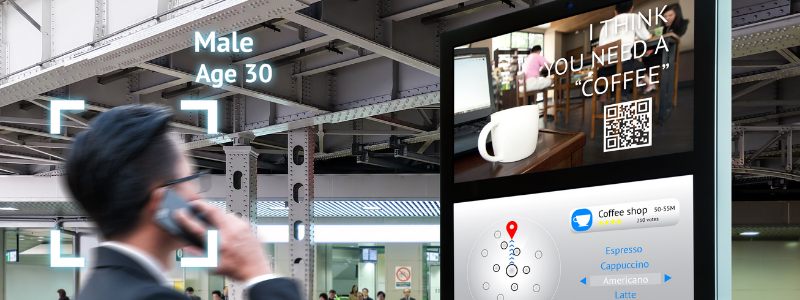
Acadia SUV, GMC used facial analytics to create engaging digital signage. Cameras in the digital display detected audience demographics including age and gender. Based on these data, one of thirty possible video ads was shown to the viewer. Passersby stopped to interact with the kiosk out-of-home ad that harnessed digital out-of-home power to personalize content for maximum audience engagement.

McDonald’s weather-sensitive ads are another example of digital out-of-home advertising. The campaign featured McDonald’s frozen drinks. When the temperature rose to a level that made a cold drink appealing, the campaign played a cold drink. When the temperature became hotter, the ad automatically switched to a frozen drink.

Lasik explored whether elevator riders who wear glasses can be identified. Then, their OOH ad delivered a creative ad targeting those who were candidates for laser eye surgery. The ad’s message changed based on the type of eyewear the rider was wearing. The ads delivered eleven million targeted messages to riders who wore glasses, personalizing the message for age and gender.

Google’s “Make the Most of Summer” used responsive, data-driven digital OOH. The advertising focused on summer experiences in the area where it was placed. The ad engaged viewers through the presentation of dynamic, full-motion sites.

To showcase its new 5G technology, AT&T encouraged viewers of their interactive ad to “Pose with the Pros”. Dallas Cowboys fans could select up to five of their favorite Cowboys to pose with them at a kiosk in concourses at the AT&T Stadium. Their virtual group picture could be emailed to themselves, and/or shared on social media.

So, what does OOH stand for in advertising? Well, it’s more than just your reaction to captivating and compelling billboards – it’s the abbreviation for what you’re looking at, outside.

How Can bMedia Group Help?

Our media service boasts over three hundred out-of-home advertisements in Puerto Rico. We provide our valued customers with a wide variety of effective OOH formats.

Our skilled designers, fabricators, and construction staff members know how to take your design needs and turn them into effective billboards, posters, and other out-of-home advertising. We are proud to have the highest consumer traffic on the island.

For more information regarding how we can increase your brand recognition contact us.

DOOH Advertising

If you have a business, advertising is the only way that you can gain public interest in your venture. All of your hard work needs to pay off, so advertising your business properly will help you generate interest and allow thousands of people the opportunity to see your ideas. The best way for you to advertise your business is through DOOH Advertising. This type of advertising allows you to create an image of yourself or your company on billboards, bus stops, posters, flyers, and many other places. The more places that you put up your advertisement, the more people will see it. When they see your advertisement, they will be able to learn about your business and what you are offering. By using this method, you will be able to increase sales and bring in more customers.

Discover more about DOOH advertising in this article and find out if it is something that could help to elevate your brand.

digital billboard

What Exactly Is DOOH Advertising?

OOH advertising is a popular method of advertising that has been used by companies for decades.

OOH advertising stands for out-of-home advertising, and it is the practice of spreading the word of your business in public spaces for people to see. It allows people to reach out to people and for them to become intrigued by your business, generating more interest.

If OOH advertising stands for out-of-home advertising, what does DOOH mean?

DOOH advertising means digital out-of-home advertising. It is a modern twist on the traditional method of advertising your business on billboards and bus shelters, but digitally.

DOOH advertising allows businesses to use advertising technology to reach their potential clients. This means that they can place advertisements digitally so people can see them when they are in public spaces, reaching a mass audience. They make sure that these advertisements are seen by as many people as possible.

DOOH Advertising Companies

bMedia is a digital advertising company that specializes in DOOH advertising, becoming a leading figure in DOOH advertising in Puerto Rico.

When you work with bMedia, you are working closely with a team of professional media specialists and strategists to make sure that your business is generating the interest that it deserves.

As bMedia works closely with technology, there is the opportunity to work with innovative and creative digital ideas to make sure that your brand is advertised in the best way.

bMedia is a strong figure in OOH advertising, so if you are looking for high-quality DOOH advertising, bMedia can help with your brand and business needs.

bMedia Advertising Rates

bMedia has numerous digital billboards across Puerto Rico in a variety of locations to ensure that your business can be seen all around the island. The rates of billboards depend on their location, but here are some of the locations that bMedia offers and their advertising rates.

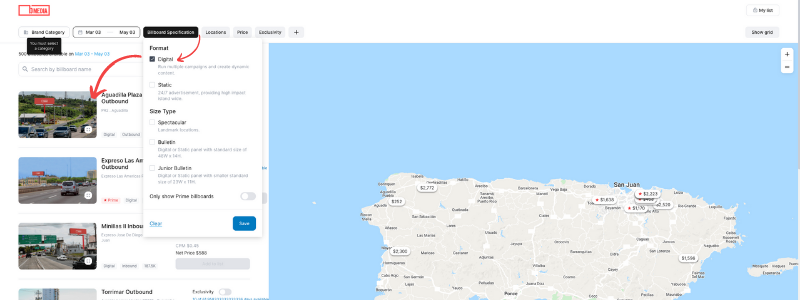
In the filters, you can select “Billboard Specification” and select “Digital” to filter all digital billboards.

digital billboards puerto rico

Monster bTV Expreso De Diego PR22 & PR165 Outbound

This digital billboard is located on Expreso Jose De Diego PR22. Guaynabo. The location of this billboard is very busy and attracts huge crowds every day as it is near gas stations, office buildings, and restaurants.

As this billboard is in such a prime location where it can be seen by thousands of people daily, the price to use this billboard averages $1,200 per day, and you can reserve it for as long as you’d prefer.

Dorado Puente l Expreso De Diego PR22 Inbound

This billboard is located on José de Diego Expressway PR22. It is along the expressway between Dorato and Vega Baja. As it is located on the expressway, a high volume of traffic rides down it every day, so the billboard is in prime position for catching the attention of passengers and drivers in their vehicles.

It is also near Doramor Plaza, which attracts people for its fast-food restaurants, supermarkets, and banks. The price to hire this billboard per day is $117, but there is are no minimum number of days that you have to book the billboard.

Boulangerie l Condado Inbound

This billboard is located on Román Baldorioty de Castro PR26, which is another area of Puerto Rico that draws a high volume of traffic. It is located near restaurants, stores, and even car rentals, meaning that it could draw international attention to your business.

It costs $117 to hire the billboard and there is no minimum number of days that you have to book the billboard. This gives you flexibility in changing billboard locations if you want to promote your business in other areas, not just the one.

Map of all billboard locations available here.

digital advertising billboard

DOOH Advertising Trends

The current trends in DOOH advertising are hard to ignore. Due to the rise in social media, DOOH advertising has become an increasingly popular way of promoting your brand. Digital advancements allow businesses to advertise to specific audiences by using DOOH advertising in public spaces where the brand’s demographic focus can see it.

DOOH advertising also allows businesses and advertisers to manage and track the content that they are displaying to the public. It also allows users to personalize their advertising to draw in the right audience, making it incredibly effective in promoting businesses.

FAQ – DOOH Advertising

What does DOOH stand for in advertising?

DOOH stands for “Digital Out-of-Home” advertising. It refers to digital media used for marketing purposes outside of the consumer’s home. This is a modern evolution of traditional out-of-home advertising, which has been around for decades in the form of billboards, transit posters, and other large-format advertisements. DOOH includes digital billboards, digital signage, and screens that you see in various public places like shopping malls, airports, and train stations.

What is an example of DOOH advertising?

An example of DOOH advertising could be a digital billboard along a busy highway that displays rotating ads from multiple brands. Another example could be interactive kiosks in shopping malls where shoppers can engage with the ad, such as a touchscreen that lets you explore a product’s features. Digital screens in elevators, gyms, and even gas stations can also serve as platforms for DOOH advertising.

What is the difference between DOOH and OOH?

While both DOOH (Digital Out-of-Home) and OOH (Out-of-Home) are forms of advertising that reach the consumer while they are outside of their home, the key difference lies in the medium used for the advertisement.

  • OOH (Out-of-Home): This is the traditional form of outdoor advertising and includes billboards, transit posters, and other static forms of advertising. These are usually printed and do not have the capability for real-time updates or interactivity.
  • DOOH (Digital Out-of-Home): This is the digital evolution of OOH advertising. DOOH can feature dynamic content, which can be updated in real-time and can be interactive. It offers more flexibility and engagement opportunities compared to traditional OOH.

What is the difference between DOOH and digital advertising?

While both DOOH and digital advertising use digital screens to display content, the context and strategy behind them are different:

  • DOOH (Digital Out-of-Home): This form of advertising is location-specific and targets consumers in public places, transit systems, and commercial locations. It can be a one-to-many form of communication where one ad is seen by many people at the same time.
  • Digital Advertising: This is a broader category that includes online advertising channels like search engine marketing, social media ads, and display ads on websites. Digital advertising is often targeted to individual users based on their behavior, preferences, and other personal data.

bMedia: DOOH Advertising Specialists

DOOH advertising is the new way to promote your business. Digital advertising is much more effective than OOH advertising as users can control their advertising by personalizing the content to their target demographic. This allows businesses to reach out to their customers and promote their brands.

Billboard advertising is an extremely effective way to advertise your business, and digital billboards further promote your company by being incredibly eye-catching. Digital billboards that are owned by bMedia are situated in places that generate a lot of traffic, meaning that they will be seen by thousands of people so businesses can gain more attention.

Finally, if you are not DOOH advertising your business, you will be missing out on gaining new interest, attention, and clients. DOOH advertising is extremely important in making sure that your business receives the attention that it deserves.

Reach vs Frequency

Gone are the days of swing-in-the-dark-with-a-dull-blade advertising — in this modern world, marketing strategies are highly refined, surgical operations, sharpened by the power of data sciences.

By assessing vital metrics, we can accurately measure the impact a marketing strategy is likely to have or is having, allowing us to streamline our approach, reach more of our target audience, and, ultimately, stimulate growth and profit.

Yep, there’s no doubt about it – the path to success is paved with metrics, the most important of which (at least in terms of Out-of-Home advertising) are reach and frequency, two intrinsic measurements.

But these metrics aren’t just linked – they’re actually antagonistic, leaving many business owners questioning which should be prioritized to optimize the efficacy of a marketing campaign. So, in this article, we’ll be discussing what these metrics are, how they differ, and how and when you should use them to measure OOH advertising.

reach vs frequency

Reach vs Frequency: Definitions and Differences

We’ve heard both types of metrics probably quite a bit, but would you be able to explain how they differ? Understanding the difference between reach vs frequency is understanding the difference in how you measure the effectiveness of your billboards or out-of-home advertising.

What Is Reach?

Reach refers to the number of people that will potentially be exposed to an aspect of your marketing campaign at least once in a set period of time.

For example, if you pay for one of your ads to be placed on a billboard on a main road, the potential reach of that ad would be at least 1 person per car driving towards the billboard.

Reach can be measured in a number of ways, including…

  • Demographics
  • Census Data
  • Traffic Counts and Vehicle Analytics
  • Daily Effective Circulation
  • Eye Tracking

measuring reach

What Is Frequency?

Frequency, on the other hand, is how many times each person will be exposed to the same marketing aspect of a marketing strategy more than once within a given time frame.

So, borrowing our billboard example from a moment ago, if we assume that the cars driving past from Monday to Friday are commuting to work, that would mean they’re potentially exposed to your ad 5 times a week.

Frequency can be measured by…

  • Estimates —  You can get a very quick estimate of potential frequency by dividing impressions by reach.
  • Demographics
  • Census Data
  • Data Modeling
  • GPS Tracking Data

What Are Effective Reach vs Effective Frequency?

You can think of effective reach as a kind of hybrid metric that combines both standard reach and frequency measurements — Effective reach is the percentage of individuals exposed to your ads enough times that they’re likely to have taken notice.

This baseline amount of exposure is known as effective reach.

Effective reach can also be measured using…

  • Census Data
  • Data Modeling
  • GPS Tracking Data
  • Digital Statistics, e.g. Comparisons between pre- and post-campaign sales figures, online traffic, use of unique promo codes, etc.

What Are Impressions?

Whereas reach refers to how many individuals see an advertisement in a set time frame, and frequency refers to how many times an individual is exposed to an advert in a set time frame, impressions refer to how many times your ad was served.

For example, let’s say you’ve invested in a spot on a digital billboard that cycles through ads from 4 other businesses throughout the day perpetually. Your impressions metric would show the number of times your ad was displayed in a given time period.

On traditional billboards, impressions would refer to how many show your ad in a certain area. This is important as other businesses may have a more saturated presence in the area than yours, which would pull focus from your ads.

As they’re a simple count of ad servings, impressions are one of the easiest metrics to keep track of.

Wouldn’t it be great if we could just maximize both reach and frequency and be done with it? You’d be pulling in customers left and right, and, quite frankly, you wouldn’t care to learn more about either one in this article.

As we’re sure you’re aware, implementing marketing campaigns costs money, and you’ll be splitting your budget between the campaign’s reach and frequency.

If you pump more capital into one, then you have less to allocate to the other. In the world of OOH marketing, finding the right balance between reach and frequency is critical to effective billboard advertising.

Reach vs Frequency: Which Should You Prioritize?

It’s common for businesses to prioritize reach over frequency, as they think the more people that see the ad the better, but this is commonly overlooked in marketing.

While it’s true that you want lots of people to see your advertisement, in the absence of frequency, reach can be a complete waste of money.

Modern life is incredibly cutthroat and fast-paced, and people’s attentions are constantly split between a number of things. To claim some valuable real estate in someone’s mind, you need them to see your ad multiple times — you need to establish an effective frequency!

Effective frequency usually sits around the 3+ exposures mark, and once you have that on lock, you can utilize the effective reach metric and gain a more accurate picture of how your campaign is panning out.

Prioritizing frequency at the expense of reach can also be a critical error, as your ad simply won’t engage with enough members of your target audience. The trick is to learn when it’s strategic to back one metric horse over the other, so to speak.

When Should You Prioritize Reach?

Reach is most important when you’re introducing a new product or service.

Statistically speaking, reach works best when introducing something new to the public. So if you’ve got something fresh to contribute to established markets or, better yet, something groundbreaking to offer in emerging markets, reach should get the lion’s share of your budget.

Reach is most important with an established brand advertising seasonal promotions.

If your brand is already a household name in the area, and you want to entice people with a seasonal sale of some kind, you don’t need to worry so much about frequency, as this foreknowledge of your company does a lot of the heavy lifting.

Reach is most important when there is a lack of competition.

The more saturated a space is with the marketing campaigns of competing businesses, the more you need to lean into frequency and bolster impressions to draw attention, but if the area is largely uncontested, you can win the attention war with a reach-laden campaign.

measuring reach vs frequency

When Should You Prioritize Frequency?

Frequency is most important when establishing your brand.

When you’re trying to break your brand name into the public consciousness, whether locally or nationally, repetition is your best friend, so it’s important to shift a certain amount of your budget over to frequency and impressions.

Frequency is most important when establishing trust.

If your campaigns are executed artfully, with just the right amount of repeat exposure, you can inspire feelings of comfort and familiarity in your audience, thereby establishing trust. Without investing in frequency, this trust will not develop in the mind of your target audience.

Frequency is the most important when there is a wealth of competition.

We’ve all been in a situation where two or more people are trying to speak to us at the same time.

How much of this tangled talk do you actually hear and comprehend?

None of it, right?

Unless, that is, one of the voices is shouting.

The same is true of OOH advertising.

In a heavily contested zone, your brand needs to rise above the rest and dominate the scene. It needs to stand up and shout (visually speaking), and the way to imbue your ads with a voice is maximizing frequency and impressions — it’s like giving them a microphone!

Advertising Metrics Can Change

The above suggestions aren’t exactly golden rules, as there are a number of variables to consider before maximizing one metric over the other. Nothing is set in stone.

Every marketing strategy has its own flavor, its own nuances, and creative approach, and no impression is exactly analogous to another. As such, there is no standard format for implementing and monitoring campaigns.

We know this can sound pretty daunting, but you’re not in this alone!

bMedia and Advertising Metrics

Here at bMedia, we don’t just provide you the physical space to exhibit your OOH advertisements; our dedicated team of marketing experts help you build your campaign from the ground up to suit your goals.

As a business owner, it’s important to understand the synergy between reach vs frequency and impressions, but if you’re not quite sure how to optimize metric balance, we’ll ease the burden with sound advice on measuring advertising effectiveness.

Our OOH advertising network spans the entire nation of Puerto Rico, so you can rest assured we have the sites available to maximize any metric in almost any location.

We can help you start telling your story, but more importantly, we can guarantee people see it!

OOH Advertising Trends

With COVID-19 keeping us all indoors and separated for the greater part of 2020, it was assumed that Out-of-Home Advertising (OOH) would fall short in terms of Return on Investment (ROI) for businesses everywhere. However, with vaccination programs in place, and a better understanding of safety protocols and social distancing — people are eager to return outdoors. What does that mean for OOH advertising and what trends can we expect to come from this?

OOH advertising trends

What is OOH Advertising?

Out-of-home advertising refers to any type of communications medium that a consumer encounters when they are outside of their homes.

Despite the pandemic putting a screeching halt on what would’ve been a breakthrough year for out-of-home advertising, it hasn’t tampered with its longevity in being one of the most effective and popular forms of marketing.

OOH ads can communicate to the masses faster and more effectively. It also allows brands to be flexible and creative with their marketing and outreach without limits.

As the world slowly returns to “normal,” more people will be exposed to out-of-home advertisements—meaning it’s going to be a good year for OOH advertising and the businesses that take advantage of it.

Brands have the opportunity to be innovative with their approach and design when it comes to out-of-home advertising. New ideas, concepts, and advertising trends continuously emerge that engage and entertain potential customers who come across these mediums. Here are some trends we can expect from the OOH sector in 2021.

New Media Types

Today, virtually any outside space can be transformed into some sort of OOH advertisement.

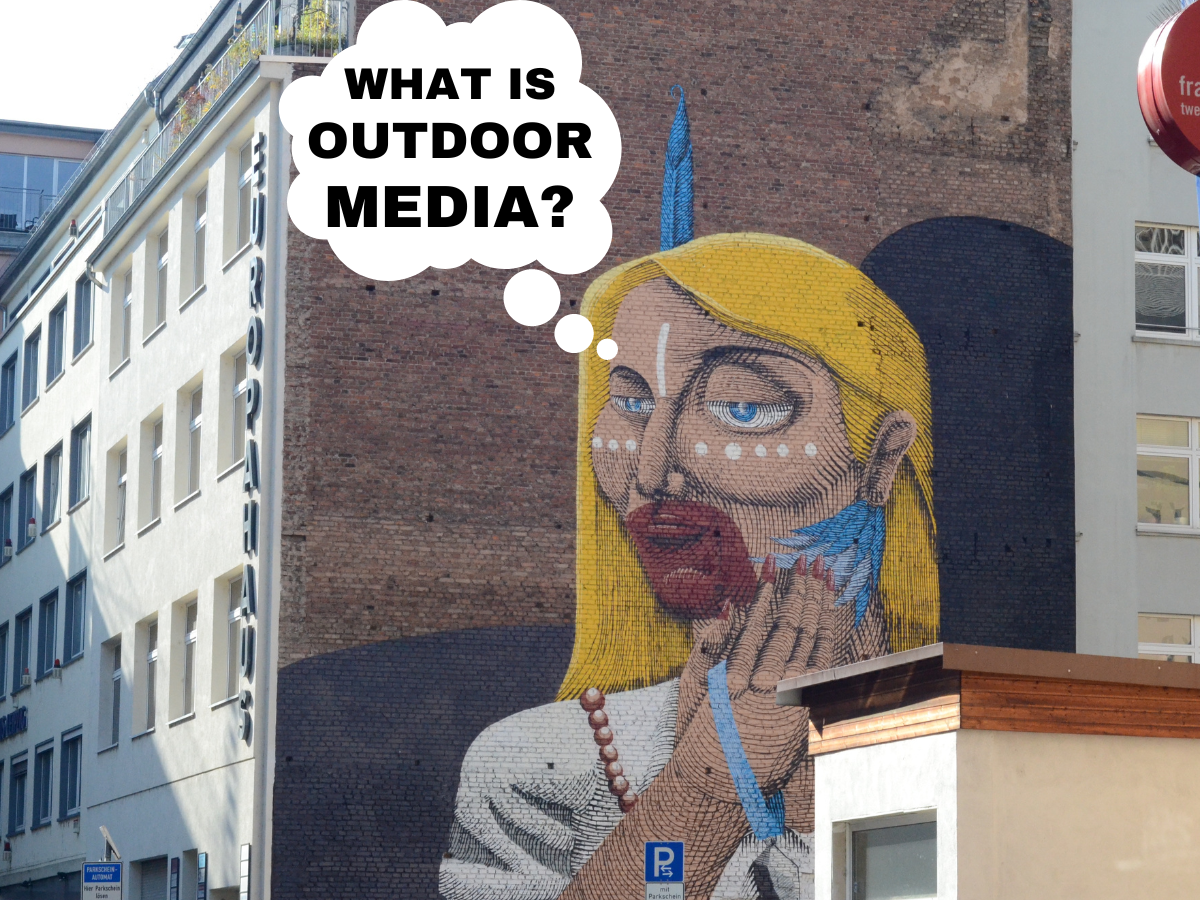
We are now seeing new media types such as car wraps, murals, art installations, and digital signage emerging all around us. It’s assumed that out-of-home advertising ends with static billboards and transit posters, but that is far from the truth.

The digital shift has made out-of-home advertisements incredibly innovative.

We now see digital billboards, street furniture, light shows, and transit signage that light up metropolitan areas all around the world.

Digital-Out-of-Home advertising (DOOH), is becoming incredibly popular with some of the world’s largest companies. You can find digital ads at shopping malls, medical waiting rooms, transit hubs, and alongside major roadways and highways.

Unlike static billboards, digital signage allows for moving images and interactivity. Movement is great at grabbing the attention of passerby-ers, resulting in greater impact. Digital signage also allows for a variety of content to be displayed on the same medium, some ads are programmed to change at specific time intervals. The variety will keep viewers interested and more receptive to your ad’s message.

Geotargeting and Mobile Integration

Mobile integration paired with an out-of-home advertisement is known to bring impressive results for any business strategy. Billboards are now using geotargeting technologies that allow companies to generate data that points them to the right demographic, the right location, and the right times to display their advertisement. By targeting the right audience, there is a better chance of a conversion.

Geotargeting delivers content and advertisements to consumers based on their geographic locations. This could include geographical proximity to a mobile billboard or proximity to a store, and etc.

Analytics and data surrounding your marketing campaign ensure adequate media planning. Another benefit to geo-targeted ads is that it allows companies to track and monitor their campaign’s performance.

Interactive Brand Communication

Interactive advertising can be expdigital advertising signserienced through store displays, kiosks, and digital signage everywhere. Interactive advertising encourages consumer participation, allowing them to provide feedback and become part of your ad’s dialogue.

Because these types of out-of-home advertisements are incredibly innovative, consumers are excited to engage with the ad, increasing their conversion and ROIs. These types of advertisements are eye-catching and can become an experience in itself for the consumer.

Through the use of hashtags and interactive games, the consumer becomes involved in the ad, making the branding process more compelling and effective.

Brand Storytelling

Storytelling is a way for brands to create a human connection with their audience. An advertising campaign with a capturing narrative can impact the subconscious, ultimately creating a relationship between the brand and consumer. A consumer-brand relationship is important because you want to have dedicated consumers who’ll remain loyal to your product or service.

When storytelling with OOH ads, brands can design billboards or digital displays that tell only a part of the story, leaving consumers wanting and waiting around for the next saga of your campaign. This creates excitement and hype around your campaign, which later translates into increased ROI and brand awareness.

Increased Budget and Investment for OOH Advertising

The arrival of smartphones saw companies turn more to mobile and web advertising, thinking out-of-home advertising was a thing of the past when in fact, OOH advertising has seen steady growth since 2012.

Many companies are catching on to the reliability and growth that OOH ads can bring and are increasing their budgets for this form of advertising. Out-of-home advertising represents a large portion of advertising spending. In 2017, OOH advertisements represented $29 billion across key markets globally — some of the companies spending the most on OOH advertisements include Apple, Google, and Amazon.

Additionally, major companies such as Netflix and Alibaba are investing big in outdoor ad companies as out-of-home advertising formats are becoming increasingly valuable forms of commercial real estate.

smart technology billboards

SMART Advertising

Consumers are becoming more and more tech-savvy every day, resulting in more of us relying on our smart devices more and more. There are smartphones, smart TVs, smartwatches, and beyond. It’s no question that almost every technological device is transitioning to SMART technology, and it’s the same for billboards and other outdoor signage.

We are now seeing the integration of billboards and SMART technology, known as SMART billboards, which can further increase the visibility of your brand.

Some features of SMART billboards are:

  • Built-in cameras and computer databases.
  • Analytical tools that can pull information from databases and social media to change visuals on the billboard in real-time.
  • Using social media apps like Instagram, Facebook, and Twitter to provide relevant content that engages the consumer.
  • Providing live updates on weather and traffic.
  • Built-in sensors to trigger ads.
  • Personalized content based on consumers’ reactions and activities.
  • High-tech LED lights and sound systems.

Ultimately, the driving factor for steady out-of-home advertising growth is its ability to keep up with change and global digitalization. This ever-evolving advertising strategy proves this “traditional” means of advertising is here to stay. If you’re seeking to maximize your marketing strategy, it’s best to include billboards and other forms of out-of-home advertising.

At bMedia, we provide our expertise to ensure your brand gets the most out of your OOH advertisement. With proper insights and strategies, bMedia can help your advert resonate and capture the attention of your targeted audience, resulting in increased revenue and visibility for your brand.