How to Promote Your Business in the Community

Promoting your business is essential if your goal is to stand out from your competitors and gain brand recognition in the community. Therefore, it’s important to take advantage of promotion opportunities in your area that will generate more customers and help solidify a trusted brand-consumer relationship in your community. In today’s digital age, promotion opportunities are endless. Businesses can spread the word about their product through search engines, social media channels, online directories, or even go with the ever-so-trusted billboard. To reach your target audience, you must make your brand visible on multiple platforms. Here are some different ways how to promote your business in the community.
how to promote your local business

Out-of-Home Advertising (OOH)

The first step to promoting your business is to make it visible. What better way to do it than out-of-home advertising (OOH). Outdoor advertising techniques include street signage, flyers, street teams, promotional events, and the beloved billboard.

The most trusted and original forms of OOH advertising are billboards. Billboards work because they are eye-catching and one of the most trusted forms of advertising for consumers. The majority of Puerto Ricans live in urban areas, and the great thing about billboards is that they can target local high-traffic areas where customers can interact with your campaign.

Today, we are seeing billboards evolve, boasting endless advertising potential for business. Digital billboards continue to rise in popularity because it allows users to directly engage with the advertisement, creating a memorable experience that highlights the product/ service you are offering.

To ensure a successful billboard campaign, we have determined some best practices to help maximize your promotion:

  • Keep it simple
  • Use borders and cropping appropriately
  • Be intentional with colors and contrast
  • Leverage key locations and seasons
  • Be careful of fonts

Establish a Social Media Presence

There are 2.32 million social media users in Puerto Rico as of January 2021, equivalent to 81.6% of the total population. Social media platforms like Instagram, Facebook, YouTube, TikTok, and Pinterest are great marketing tools because of the ability to engage with existing customers while reaching out to new customers. As of December 2020, Facebook received 80.3% of all social media site visits in Puerto Rico. Facebook advertising is all about getting your message on the right news feeds using targeting options. Facebook allows you to advertise using images, videos, and even polls for interactivity.

Additionally, social media can be used as a marketing tool by creating brand-specific content. Social media has provided us with a range of posting formats such as images, short video stories, live sessions, tutorials, and more. Creating content for these platforms is an opportunity for business owners to engage with consumers while promoting a specific product, service, or event.
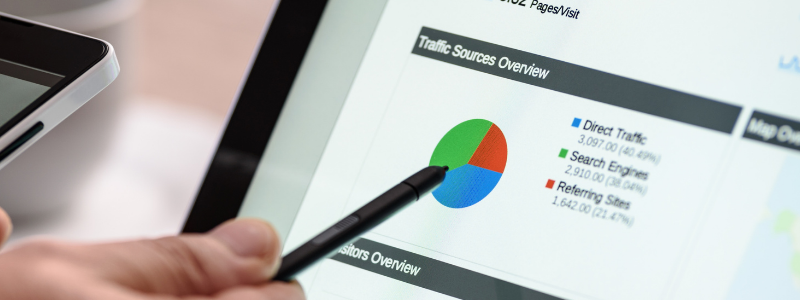
promote business with SEO

Take Advantage of Search Engines Like Google

Being visible on Google is great for your brand, it puts you directly in front of consumers seeking solutions. Creating and verifying your Google Business profiles allows your business to show up on Google Maps and caters results to the searcher’s current location. Creating a Google My Business account is free and once verified, you can optimize your listing to show up as a high-ranking result for relevant searches using a good SEO strategy.

Be Involved in the Community

If you’re wondering how to promote your business in the community, a good place to start is to be active and attentive in your community. Businesses can sometimes be involved in the community for the wrong reasons and they show. Be sincere, be genuine. Don’t push your business if it’s not relevant or actually helpful. In one way or another, your business will come up and your community will support it after they’ve seen and felt your support.

Being involved in the community involves giving back to it. Donating to a local charity will bring your business closer to locals by making it more approachable. Consumers are likely to support your business if you’re associated with a charity or cause close to them. You can give back to your community in several ways including:

  • Annual contribution to charity
  • Special promotions with a percentage of sales going to a cause
  • Donate products or services to local schools or community centers

5 star reviews

Get Online Customer Reviews

Set up profiles on platforms like Yelp and Tripadvisor to increase brand exposure. These platforms are used by locals and visitors when looking for local businesses. 92% of consumers purchase from a business after viewing it on Yelp. These platforms allow customers to leave reviews, making it easy for business owners to monitor and respond to any business inquiries. Make sure all business information, such as hours, phone number, address, and website are all accurate for potential customers.

Importance of a Good Marketing Strategy

A good marketing strategy is a blueprint that will determine how your message will reach out to your target audience. Your business might be making a profit, but to remain successful, you must consistently stay ahead of your competitors. The best way to ensure this is to have a good marketing strategy in place. Not only will good advertising give you an edge, but it can also give you insight into how your business is performing, allowing you to make the right business decisions.

Market research is crucial in creating your promotional strategy. Data and information collected from this research will allow you to develop your product or service to boost profit potential. It can also help you create a detailed organization plan, ensuring optimum utilization of resources to get the message in front of the target consumer.

How to Measure the ROI of Your Campaigns

Once you’ve learned how to promote your business in the community, it’s then important to know how to measure the effectiveness of your promotional efforts.

Marketing ROI involves attributing profit or revenue as a direct cause of marketing growth initiatives. To determine whether your advertising campaign is successful or not, there’s a straightforward formula you can use:

ROI = (Sales growth – organic sales growth – Marketing Cost) / Marketing Cost

Marketing costs include but are not limited to:

  • Overhead and internal expenses
  • Agency fees
  • Media buys
  • Creative costs

ROI helps determine budget allocation for ongoing and future ad campaigns. It’s important to consistently evaluate KPIs such as reach, frequency, and impressions so you can determine if your marketing efforts are benefiting business growth and help you allocate your budget accordingly.

Strategize with bMedia Group

If you’re looking for ways to promote your business within your community, reach out to bMedia Group. We are Puerto Rico’s leading experts in outdoor and billboard advertising. Our professionals can help you strategize, execute and maximize the effectiveness of your promotional campaign and market research.

Contact us today! We’ll guarantee your ads will be seen and remembered, helping you unlock unlimited business growth.


Reach vs Frequency

Gone are the days of swing-in-the-dark-with-a-dull-blade advertising — in this modern world, marketing strategies are highly refined, surgical operations, sharpened by the power of data sciences.

By assessing vital metrics, we can accurately measure the impact a marketing strategy is likely to have or is having, allowing us to streamline our approach, reach more of our target audience, and, ultimately, stimulate growth and profit.

Yep, there’s no doubt about it – the path to success is paved with metrics, the most important of which (at least in terms of Out-of-Home advertising) are reach and frequency, two intrinsic measurements.

But these metrics aren’t just linked – they’re actually antagonistic, leaving many business owners questioning which should be prioritized to optimize the efficacy of a marketing campaign. So, in this article, we’ll be discussing what these metrics are, how they differ, and how and when you should use them to measure OOH advertising.

reach vs frequency

Reach vs Frequency: Definitions and Differences

We’ve heard both types of metrics probably quite a bit, but would you be able to explain how they differ? Understanding the difference between reach vs frequency is understanding the difference in how you measure the effectiveness of your billboards or out-of-home advertising.

What Is Reach?

Reach refers to the number of people that will potentially be exposed to an aspect of your marketing campaign at least once in a set period of time.

For example, if you pay for one of your ads to be placed on a billboard on a main road, the potential reach of that ad would be at least 1 person per car driving towards the billboard.

Reach can be measured in a number of ways, including…

  • Demographics
  • Census Data
  • Traffic Counts and Vehicle Analytics
  • Daily Effective Circulation
  • Eye Tracking

measuring reach

What Is Frequency?

Frequency, on the other hand, is how many times each person will be exposed to the same marketing aspect of a marketing strategy more than once within a given time frame.

So, borrowing our billboard example from a moment ago, if we assume that the cars driving past from Monday to Friday are commuting to work, that would mean they’re potentially exposed to your ad 5 times a week.

Frequency can be measured by…

  • Estimates —  You can get a very quick estimate of potential frequency by dividing impressions by reach.
  • Demographics
  • Census Data
  • Data Modeling
  • GPS Tracking Data

What Are Effective Reach vs Effective Frequency?

You can think of effective reach as a kind of hybrid metric that combines both standard reach and frequency measurements — Effective reach is the percentage of individuals exposed to your ads enough times that they’re likely to have taken notice.

This baseline amount of exposure is known as effective reach.

Effective reach can also be measured using…

  • Census Data
  • Data Modeling
  • GPS Tracking Data
  • Digital Statistics, e.g. Comparisons between pre- and post-campaign sales figures, online traffic, use of unique promo codes, etc.

What Are Impressions?

Whereas reach refers to how many individuals see an advertisement in a set time frame, and frequency refers to how many times an individual is exposed to an advert in a set time frame, impressions refer to how many times your ad was served.

For example, let’s say you’ve invested in a spot on a digital billboard that cycles through ads from 4 other businesses throughout the day perpetually. Your impressions metric would show the number of times your ad was displayed in a given time period.

On traditional billboards, impressions would refer to how many show your ad in a certain area. This is important as other businesses may have a more saturated presence in the area than yours, which would pull focus from your ads.

As they’re a simple count of ad servings, impressions are one of the easiest metrics to keep track of.

Wouldn’t it be great if we could just maximize both reach and frequency and be done with it? You’d be pulling in customers left and right, and, quite frankly, you wouldn’t care to learn more about either one in this article.

As we’re sure you’re aware, implementing marketing campaigns costs money, and you’ll be splitting your budget between the campaign’s reach and frequency.

If you pump more capital into one, then you have less to allocate to the other. In the world of OOH marketing, finding the right balance between reach and frequency is critical to effective billboard advertising.

Reach vs Frequency: Which Should You Prioritize?

It’s common for businesses to prioritize reach over frequency, as they think the more people that see the ad the better, but this is commonly overlooked in marketing.

While it’s true that you want lots of people to see your advertisement, in the absence of frequency, reach can be a complete waste of money.

Modern life is incredibly cutthroat and fast-paced, and people’s attentions are constantly split between a number of things. To claim some valuable real estate in someone’s mind, you need them to see your ad multiple times — you need to establish an effective frequency!

Effective frequency usually sits around the 3+ exposures mark, and once you have that on lock, you can utilize the effective reach metric and gain a more accurate picture of how your campaign is panning out.

Prioritizing frequency at the expense of reach can also be a critical error, as your ad simply won’t engage with enough members of your target audience. The trick is to learn when it’s strategic to back one metric horse over the other, so to speak.

When Should You Prioritize Reach?

Reach is most important when you’re introducing a new product or service.

Statistically speaking, reach works best when introducing something new to the public. So if you’ve got something fresh to contribute to established markets or, better yet, something groundbreaking to offer in emerging markets, reach should get the lion’s share of your budget.

Reach is most important with an established brand advertising seasonal promotions.

If your brand is already a household name in the area, and you want to entice people with a seasonal sale of some kind, you don’t need to worry so much about frequency, as this foreknowledge of your company does a lot of the heavy lifting.

Reach is most important when there is a lack of competition.

The more saturated a space is with the marketing campaigns of competing businesses, the more you need to lean into frequency and bolster impressions to draw attention, but if the area is largely uncontested, you can win the attention war with a reach-laden campaign.

measuring reach vs frequency

When Should You Prioritize Frequency?

Frequency is most important when establishing your brand.

When you’re trying to break your brand name into the public consciousness, whether locally or nationally, repetition is your best friend, so it’s important to shift a certain amount of your budget over to frequency and impressions.

Frequency is most important when establishing trust.

If your campaigns are executed artfully, with just the right amount of repeat exposure, you can inspire feelings of comfort and familiarity in your audience, thereby establishing trust. Without investing in frequency, this trust will not develop in the mind of your target audience.

Frequency is the most important when there is a wealth of competition.

We’ve all been in a situation where two or more people are trying to speak to us at the same time.

How much of this tangled talk do you actually hear and comprehend?

None of it, right?

Unless, that is, one of the voices is shouting.

The same is true of OOH advertising.

In a heavily contested zone, your brand needs to rise above the rest and dominate the scene. It needs to stand up and shout (visually speaking), and the way to imbue your ads with a voice is maximizing frequency and impressions — it’s like giving them a microphone!

Advertising Metrics Can Change

The above suggestions aren’t exactly golden rules, as there are a number of variables to consider before maximizing one metric over the other. Nothing is set in stone.

Every marketing strategy has its own flavor, its own nuances, and creative approach, and no impression is exactly analogous to another. As such, there is no standard format for implementing and monitoring campaigns.

We know this can sound pretty daunting, but you’re not in this alone!

bMedia and Advertising Metrics

Here at bMedia, we don’t just provide you the physical space to exhibit your OOH advertisements; our dedicated team of marketing experts help you build your campaign from the ground up to suit your goals.

As a business owner, it’s important to understand the synergy between reach vs frequency and impressions, but if you’re not quite sure how to optimize metric balance, we’ll ease the burden with sound advice on measuring advertising effectiveness.

Our OOH advertising network spans the entire nation of Puerto Rico, so you can rest assured we have the sites available to maximize any metric in almost any location.

We can help you start telling your story, but more importantly, we can guarantee people see it!

Go To Market Strategy for Startups

We don’t mean to intimidate you (and maybe you were already aware), but there’s something you need to know: Studies show that 90% of all startups fail within five years of formation — not a very reassuring statistic, right? But what’s the story behind this damning figure?

It all comes down to obscurity. Simply put, nobody knows about your business or what products/services you offer. In an ideal world, you could pour endless amounts of cash into a marketing push that announces your presence to the world with gusto, but, as we’re sure we’re both painfully aware, this is no ideal world.

Not only are advertising budgets rather meager for startups, you’re up against other businesses with established product-market-fit, which is daunting, to say the least… but there is a way to cut through the competition and get your voice heard – an effective go-to-market strategy for startups.

marketing strategy for startups

What Exactly Is A Go-To-Market Strategy, And Why Is It Important For Startups?

A go-to-market strategy for startups is precisely what it sounds like – an advertising game-plan that breaks an unknown product or service into a target market; it’s your key to the locked door of commerce!

Your go-to-market strategy is a blueprint that illustrates how you will reach the people you want to reach with the message you want them to hear. It’s considered a separate entity to standard marketing stratagems, as they imply an established market position, whereas GTM is a way of reaching an initial audience from nothing.

It’s the foundation on which all your future marketing campaigns will be based, and a strong foundation inspires confidence, not just within your target audience, but among your investors, too. Creating a GTM strategy is the ultimate way to position your business for success moving forward. Other GTM benefits include…

  • Weeding out potential risks
  • Generating profit quickly
  • Developing your business and product/service
  • Attaining you a competitive edge over other startups

Creating a Go-To-Market Strategy For Your Startup

The three pillars you’ll need to know for a go-to-market strategy for startups are the What, Who, and How

  • What are you trying to sell?
  • Who needs what you’re trying to sell?
  • How are you going to introduce your offering to those who need it?

If you can answer these questions, you’ll have laid the foundation for a successful entrance into your particular niche of the market, so let’s consider how this can be done.

Step 1. Know Your Audience

You may well have come up with the concept of your product or service through finding gaps or weaknesses in the market yourself, and that’s great; it means whatever you come up with has some form of real-world appeal, but now you have to find others like yourself and figure out what makes them tick.

Hone in on your target audience, and try to map out their behaviors and general way of thinking. Forget about trying to sell something to the world; focus on this very finite group of people and figure out exactly what they’re looking for.

Modern consumers expect businesses to know all about their wants and needs, but we’re not mind readers, so instead, we can build up a customer persona by… This applies to all types of businesses. It doesn’t matter if you are a digital service providing with a nationwide audience, like providing legal wills online, or a brick and mortar business creating tangible products to specific locations, like a vodka distillery, knowing your audience is crucial.

Scheduling Interviews with Potential Users

Interviewing people takes time, but you won’t find more rich, accurate, and enlightening results via any other means, so it pays to talk to prospective customers face-to-face.

Far more fluid and personal than standardized surveys, interviews give you a real insight into the lives of people who your product/service could help, which is a great way to gather data you can use at a later date to refine your offering.

Be wary of time constraints and ask effective questions, such as…

  1. What are their preferred channels of communication (e.g. email, Facebook, Instagram, TikTok, billboards, etc)?
  2. What are they disappointed by or lacking?
  3. In their eyes, what makes a product or business effective and valuable?

survey your audience

Questionnaires

Interviews are fantastic sources of information, but they’re almost too focused. Although you’re narrowing your research to drum up a customer persona, you still need to venture further afield to ascertain splits in that persona in terms of age, profession, location, etc, and questionnaires are a great way to do so.

The wider net you cast will give you more of an insight into what pain points are simply individual woes and which are felt universally, ripe for capitalization.

However, do bear in mind that you’ll need to provide some form of incentive to encourage people to complete your questionnaire, and try to keep it short and sweet, too — we’re all busy people.

Purchase Pre-Existing Data

There are countless other companies that have had to study their target audience before you founded your startup, and you can use this to your advantage.

Paying for research carried out by similar companies gives you effort-free results. Now, they’re not going to be quite as accurate as the results you’ll get from your own studies, but they can certainly help to create a more substantive customer persona in a short amount of time.

Due to its immediacy, this method is often employed first as a sort of scattershot data drive. It gives you a rough estimate of things like target consumer age, location, profession, income, pain points, and purchase triggers.

Step 2. Know Your Competitor

If you’re going to offer something new, you need to know what your competitor is already bringing to the table. If an established entity has beaten you to the punch, your chances of gaining traction with a GTM strategy are slim-to-none. Find ways around it.

Step 3. Coming Up With a Value Proposition

In a nutshell, a value proposition is a snappy headline followed by 2–3 sentences that divulge why your product/service:

  • Is relevant to the user
  • Solves the user’s problem
  • Is unique and cannot be found elsewhere

For example, let’s say you’ve invented an automatic garlic clove peeler. Your value proposition should establish that garlic is one of the most common ingredients in cuisine around the globe (relevance), it makes the tough job of peeling cloves effortless (problem solved), and it’s a patented design (unique).

It’s important not to get caught up in mentioning features alone. To entice customers, you need to tell them in no uncertain words how it will make their life easier or more enjoyable.

Step 4. Establish The Best Lines Of Communication For Reaching Your Target Audience

With your target audience in sight, it’s time to find out how to reach them. People of different age groups and professions communicate and are exposed to things in unique ways.

For example, younger people will consume a lot of adverts on social media platforms like TikTok and Instagram, while older generations may only use Facebook or perhaps even just email.

Another example is that people working from home will engage with mostly digital adverts, but for those who commute to an office, billboard advertising will be highly effective.

Don’t feel you have to settle for just one mode of communication per faction of your target audience. Research has shown that omnichannel approaches to customer communication have a much higher retention rate than single-channel approaches.

go to market strategy

Step 5. Zeroing In On Marketing Tactics

People don’t just use different channels of communication, they also have preferences in regard to how they’re engaged with.

For instance, certain demographics may respond well to the personal/celebrity touch of paid partnerships, while others will be distrustful of this tactic as the pecuniary aspect of the agreement makes the brand representative seem disingenuous and the product seem weak.

Step 6. Don’t Stop Testing

Even if you think you’ve got everything figured out, you need to keep on testing your theories by measuring advertising effectiveness. Test different styles of ad copy, test the efficacy of different images, test different marketing tactics… test everything!

Marketing is a trial and error process, so the more mistakes you get out of your system early on by putting plans through their paces, the fewer you’ll be paying for later with a poor campaign.

Step 7. Budget Planning

Once your research has provided all the answers you need to shape your GTM strategy, it’s time to map out what your budget may look like and how it will be split across different marketing tactics.

Step 8. Implementation

At this stage, you’ve done most of the heavy lifting, and now it’s time to use what you’ve learned to implement your marketing strategy!

bMedia and Developing a Go-To-Market Strategy

As mentioned earlier, omnichannel marketing tactics in GTM strategies are far more effective than single-channel plans, which is why you should seriously consider incorporating a robust OOH line of communication with your target audience as part of your strategy, either as the primary or supporting mode of contact.

Granted, digital marketing has great reach potential, but as a fatally saturated facet of the advertising industry, it tends to inspire a lot of fatigue in the viewer. Billboards and OOH adverts, on the other hand, still grab attention, cinching valuable real estate in the consciousness of the viewer.

But providing the physical space for your ads is just the tip of the bMedia Group’s iceberg. Our dedicated team of marketing experts can help you build a custom, go-to-market strategy for startups from the ground up, ensuring you and your business can generate customers, and start changing people’s lives with your product/service.

Contact us today, and we’ll talk you through how we measure the efficacy of OOH advertising with state-of-the-art analytics to optimize the potential of your campaigns and stimulate rapid business growth.
Your startup may be small, but with bMedia in your corner, you’ll cast a much larger shadow, giving you the confidence and market position to hold your own against giants of any given industry, giants that, with our help, you will soon tower over.

Measuring Advertising Effectiveness

To a certain extent, advertising can be a trial and error process. Not all marketing campaigns start out great, right off the bat. Most successful strategies are built on little errors businesses weed out over time by measuring advertising effectiveness.

What’s the Importance of Measuring Advertising Effectiveness?

Measuring Advertising Effectiveness

Sure, you can equate a sudden influx of clients to your recently implemented marketing campaign, or a downturn in lead conversion to seasonal variables, but unless you have the metrics and cold hard statistics to prove it, you can never be sure how your strategy is performing.

When it comes to advertising your business, you need to know the real-world effects of every decision you make, as each of these decisions is costing you money. So, let’s take a look at the different ways of measuring advertising effectiveness, and what advertising metrics you should be using.

Advertising Performance Metrics

Before you can apply any advertising metrics to your campaign, you need to ensure that it is measurable, and this is done by setting time-sensitive, advert-specific goals.

Establishing Objectives

Objectives are everything when it comes to marketing. After all, if there is no goal to work towards, it’s impossible to measure success, as success becomes irrelevant – which isn’t the outlook you want to have if you’re trying to grow your business.

Once you’ve established the objective of an advertisement, you’ll know what metrics to apply to measure performance.

These are known as key performance indicators.

Deciding on Key Performance Indicators

You can think of KPIs as steps that must be taken to achieve your marketing objective.

For example, your overarching objective might be to drive sales of a particular product up 20% by next quarter. Therefore, a KPI to observe would be the number of visitors the product page receives after the release of the ad compared to the traffic it was logging beforehand.

Once you’ve established a quantifiable backdrop for your advertisements, there are literally hundreds of ways to track the performance of your advertising campaign and determine whether you’re pulling in an ROI. Let’s take a look at some of the more commonly used metrics.

Reach

Reach is quantified in different ways depending on the medium, but it always tells you the same thing. It simply refers to the total number of people exposed to your advert — the more, the merrier!

Frequency

Frequency is the number of times each individual sees your advert. Repetition plays a huge role in memory retention, so if each person sees your ad a few times, it’s definitely a good thing; however, too much exposure to the same advert will cause fatigue, and it will start to fade into the background.

Impressions

Impressions metrics are basically a combination of reach and frequency metrics. They measure the total number of times your advert has been seen, even if by the same people.

Cost Per Customer

How much does your advertisement cost when split between the customers it brings? If the cost per customer is less than the revenue they brought in, then your advert is, at the very least, not drawing a loss.

Cost Per Click (CPC)

Similar to cost per customer, this metric measures how much the ad is costing you when divided across the clicks it has garnered.

Click-Through Rate (CTR)

How many people are clicking through on one of your online advertisements? If the number is exceedingly low when compared to the overall reach of the ad, it’s underperforming.

Advertising Metrics: How Is the Efficacy of Out-of-Home Marketing Measured

Advertising Metrics


With advancements in technology, thousands of metrics have been made available to the online digital marketer, which may leave you questioning the relevance of traditional outdoor advertising. How would you even go about measuring advertising effectiveness through the impact of a billboard or poster campaign?

Well, you’d be surprised how quantitative this area of the marketing industry is. In fact, as your outdoor ads are mostly going to direct viewers to engage with your brand online in some form or another, it means you can use a lot of the same technologies utilized by digital marketers, to assess your outdoor advertising effectiveness.

One Strategy at a Time

Firstly, to assess how well your outdoor advertising is doing, you need to stabilize all other marketing activities. If you see an increase in interest or revenue, you need to be able to say with confidence that the outdoor roll-out is responsible for the growth.

Traffic Data

Here at bMedia, we use a state-of-the-art car tracking system in all our billboard locations to give you an accurate estimate on the probable exposure of your advertisement.

Landing Page Tracking

Just because your adverts are out in the real world, doesn’t mean you can’t use computers to analyze their performance. By placing a unique URL on your advertisement, you can then use an online tracker to measure how many visitors the URL receives, just by viewing your out-of-home advertising.

Hashtags and Social Media Tracking

You can do a similar thing with hashtags. Assign a unique hashtag to your billboards, and monitor proliferation online across various social media platforms.

Promo Codes

The same principles apply to promo codes too. Let’s say that you’re a watch manufacturer, and you wanted to entice customers with a modest discount. You could print, “Use Promo Code WATCHTHISSPACE for 10% off” on just your billboards, then measure how many customers applied the code at checkout.

Keyword Tracking

It’s quite possible that people will see your advert, get the general gist, but miss the exact wording of a promo code or hashtag. They may then respond to your ad by searching your brand online alongside phrases such as “new deal”, “watch offer”, or “promotion”.

By keeping an eye out for those keywords in your online analytics, you’ll have a clearer picture of how many people your outdoor advertisement is influencing.

Customer Surveys

Don’t get us wrong – state-of-the-art analytics technology is great and all, but you could also just try asking your customers where they heard about your brand and what brought them to your site. Try this in your online contact forms, email marketing campaigns, or even social media.

Mobility Tracking

Another way you can drum up more of an idea about reach, frequency, and impressions is to measure the movement of journeys people make in vehicles or otherwise in a certain area. This can be done by monitoring the GPS location of willing survey participants or, perhaps, asking them to write and submit a travel diary.

Outdoor Advertising Effectiveness: Why Outdoor Advertising Is Essential to the Success of Your Business

Outdoor advertising effectiveness

As more and more of our lives are playing out in front of screens, we’ve seen a massive spike in the popularity of digital marketing, and while this is an effective means of reaching people, it’s not necessarily the best way to advertise to prospective clients/customers.

The constant barrage of online ads and lead acquisition emails we experience in our day-to-day lives is enough to drive anybody up the wall. Rather than enticing the viewer, they tend to cause irritation and feelings of distrust.

In response to this over-exposure to digital marketing mediums, the value of traditional outdoor marketing has skyrocketed, and bMedia is at the forefront of this surge in popularity.

When people see a bMedia billboard, they’re not scrolling past it at lightning speed or distracted by a million other bits of data, they’re focused on your advert and your advert alone, reading it slowly, weighing up each word, enjoying the visual accompaniment, making a mental note to investigate further once they get to where they’re going.

bMedia Can Help You Grow Your Business

Contact us today and gain access to over 500 high-exposure areas across the entire island of Puerto Rico, meaning that we can single-handedly optimize the reach of your outdoor advertising campaign.

Our intuitive billboard location map makes it incredibly easy to explore your options, but we do so much more than simply provide the space for your advertisements. Our crack team of marketing strategists with years of experience in the industry will help you build your campaign from the ground up to serve your specific business goals.

Effective Billboard Advertising

Billboards are a great medium to use when you really want to get your message to your customers.  Some people think they’re outdated in an increasingly digital world, but there’s a reason they’re still going strong. Everywhere from Times Square to Puerto Rico, they work! However, there are a few key factors worth noting that really contribute to effective billboard advertising.

Some say TV and radio advertising are losing out to streaming services. Others champion using online ads, but each channel there has a critic claiming no one uses that social network anymore. What’s undeniable is that people will still venture out into the world on a regular basis, and there’s no need to update their device in order to read a billboard.

The effort and detail put into everything behind the billboard will help maximize its message and effectiveness. In other words, the more you focus on the goals behind the ad, the audience, the design, and the location, the more optimized your billboard is for maximum effectiveness.

Here’s where to start your quest for effective billboard design:

effective billboard advertising

Tips for Most Effective Billboard Advertising

To make sure your billboard advertising is reaching its full potential, there are a few things you’ll want to pay close attention to.

Follow these 7 guidelines:

  1. Make sure you know your target audience
  2. In most cases, simple is better than complex
  3. Use clear messaging
  4. Follow best practices for ease of reading
  5. Always aim for a goal
  6. Focus on one call to action
  7. Never forget to use this to build your brand

This may seem like a lot of steps, but it really isn’t since many of them build on each other. Learn on to read how to best accomplish each one of these.

Define a Target

The first important aspect of creating effective billboard advertising is making sure that it’s targeting a specific group of viewers. Since such a wide variety of people will be exposed to it, it’s very tempting to try to advertise to everyone. Studies have shown that targeting a specific demographic using your billboard can often get the message across far more clearly than going after a broader group. Instead of a lot of people getting your message, it generally turns into no one hearing it.

When you decide on a target group, you’ll know who you’re talking to. Once you know exactly who’s going to be listening, you know how to craft your message in a way that they’ll hear it.

Keep It Simple

Too many words end up being too much information to remember. Don’t forget that people often see billboards when they’re driving or busy doing something else, so they don’t always have the chance to stop and read – even if they want to. Make sure you get your point across as quickly as possible.

A good general rule is to use a maximum of six words on your billboard, as this is about the most that people can quickly take in.

But, just because you can use six doesn’t mean that you have to. Using only one word can be great. Zero words can be amazing.

effective billboard design

Make Sure People Understand You

The next step is to keep your billboard understandable.  When you’re trying to sell something, you don’t want to show off in a way that strains the brain of your customer.  If someone really has to stretch to understand what you’re saying, they might start feeling stupid.  Once they associate your brand with that feeling, people aren’t really going to have a lot of motivation to give you their money.

But, if you make your billboard easy to understand, your customers will start to feel good about themselves.  Suddenly, you’re the brand that they relate to, and that’s who they want to have in their life.

Make Sure People Can Read It

We’ve already covered why your billboard should only have a few words and why it should be easy to understand, but it’s also extremely important to make sure people can read it.  By this, we mean to make sure the actual design can be taken in by the eyes of your customers.

Don’t use elaborate fonts that are difficult to make out. Don’t use colors that are so similar that they’re hard to tell apart. Make sure the billboard has lots of contrast between the different elements, but also make sure they’re colors that go well together.

Set a Goal

This is near the bottom of the list, but it’s still one of the most necessary parts of creating an effective billboard. It really should be done at the same time that you define your target. Make sure that you have a specific result that you hope for the sign to accomplish, or you’re just going to be creating a colorful banner.

Are you looking to create more brand awareness? Perhaps you’re marketing a specific product or service, for which you can track sales through the billboard campaign?

It doesn’t need to be a complicated or difficult goal.

Do you want to get more people in your store?  That’s a great goal.

Do you want to make sure potential customers learn about a promotion?  That’s another.

What about just making people interested in your brand?  That’s one of the most common reasons for creating a billboard.

effective billboard advertising examples

Define a Single Call-To-Action

What are you wanting your audience to do when they see your ad? Is there a phone number you want them to call? Maybe a website or social media channel you want them to visit? Is there a discount code you’d like them to enter? Don’t forget your contact info somewhere within the billboard advertisement, to make sure viewers don’t just see your ad – they engage with and respond to it.

Go With Brand Building

Now that we’re talking about your brand, that brings up a really good piece of advice.  Think about using the billboard mostly to keep your brand in the eyes of your consumers.  They’ll see your message every day on their way to work, but they don’t always have the chance to stop and read it.  Or, they may not even have a need for your products or services at the moment – but the sign will still be there.

If your name has been melted into their brains during a morning commute every single day, they’ll take that into consideration when they encounter you in a shop.  You’ll feel like a trusted friend who has always been there for them.

Don’t Be Intimidated By Overdone Effective Billboard Advertising Examples

If you do a search for “effective billboard advertising examples”, you’re likely going to come up with some pretty impressive results. You might find these amazing pieces of art to be inspiring, or you might be prepared to throw in the towel because you’ll never be able to think of an idea so great.

Take a deep breath and remember that out of millions of billboards, the internet will be happy to point out a few amazing success stories. These were developed by the top advertising agencies, and often had a bit of luck to really make them happen.

Just focus on the fact that the point of your billboard is to achieve your goals with your customers. Having an award-winning ad that will go viral online feels great, but it doesn’t contribute to your bottom line. Stick with the tips above, and you’ll be fine.

How to Buy Billboard Advertising

Now that you have more of an idea of how to do billboard advertising, you’re probably wondering the specifics of how to buy billboard advertising. Essentially there are two ways to go about it: building a billboard or renting space on one that already exists.

Pros of building a billboard:

  • You have more control over the billboard as a whole.
  • You don’t have to worry about the contract running out and not being able to renew.

Cons of building a billboard:

  • You need to either own or rent the land where it is placed (or the building it’s attached to).
  • You’re responsible for building and maintaining it.

Pros of renting an already existing billboard:

  • There is a lot less planning and commitment on your part, and the whole process can be significantly faster and easier.
  • If you decide the location isn’t working for you, you can move when the rental term is finished.

Cons of renting an already existing billboard:

  • Depending on the contract, the price or availability of the billboard could change in the future.
  • Some (but not all!) companies will place restrictions on what you can put on the billboard.

How bMedia Can Help With Effective Billboard Design

Now that you have all this new knowledge about billboards, why not put it to the test?  Give us a call, we are the largest provider of outdoor media in Puerto Rico and can help you get started with creating effective billboard advertising. As we consider your audience, your message, and the size of the ad, we’ll make sure that your billboard ad is most effective in its location and performance.

Types of Humor in Advertising

In this digital world, we’re reaching the point where companies are expected to provide more than just a great service or product. Of course, this is where you should start, but more and more, companies are noticing the benefits of being authentic and creating a true bond with their audience. Being able to make your customers feel an emotion when engaging with your products or advertisements can allow your business to stand out. 

Humor can be a very effective advertising tool for taking your product, brand, or service to the next level.

Humor is a great way to trigger emotions in your audience, and triggering emotion will take your brand much further than using the basic, plain, cut and dry advertising techniques that so many companies rely on.

funny billboard advertising

Types of Humor in Advertising

There are many different types of humor in advertising that can be effective. These include:

  • Surprises
  • Personification
  • Exaggeration
  • Puns
  • Comparison

Read more about each method below!

Surprises

One of the best types of humor in advertising is using surprises. Can you remember a time that someone did something completely unexpected? As we know from the real world, surprise triggers a comic response. The initial reaction of shock and surprise quickly gets replaced by a feeling of “wow, that was hilarious”. In advertising, using surprise can be a little trickier, since it definitely needs to be done tastefully. We recommend that if you’re going to implement surprise into advertising, it’s a good idea to workshop your ideas with a team to ultimately create a funny yet appropriate advertisement. 

Advertising messages can use surprises in a bunch of different ways, across many different mediums. For example, you could choose a bold headline or billboard that shocks people, even just for a split second. You could send emails with big, animated surprises, or create videos with dialogue that can startle viewers. Of course, just like with any other advertisement, you need to be able to incorporate your product or service in there. However, surprises can help generate attention, as it is random, ridiculous, and if done right, will leave an impression. 

Personification

Personification is one of the most used, and best, types of humor in advertising. It’s one of the most classic tricks in the book, but there’s a reason for that. The use of personification in advertising is truly endless. Think of the Geico gecko or Tony the frosted flakes tiger. These well-known brand mascots help bring an additional sense of humor, and therefore memorability, to advertisements, cereal boxes, and entire brands. 

Personification helps messages be more entertaining and memorable. Of course, personification doesn’t always make sense to use, but when done properly, people will both understand and appreciate the humor. We’re naturally drawn to people that make us laugh, and there’s no reason to think that this doesn’t apply to brands and advertisements as well. One of the great things about advertising is that it is a great platform for making unrealistic possibilities come to life.

types of humor in advertising

Exaggeration

Exaggeration, or blowing things way out of proportion, is another one of the best types of humor in advertising. It is often used to really emphasize a point or attribute, or to simply poke fun at a real-life issue or common scenario. A word of caution- exaggeration definitely helps make you emphasize a point, it doesn’t necessarily make people much more receptive to that point you’re trying to make. Exaggeration, however, is one of the best tools you can use to make your ad more unique, expressive, and memorable- nine times out of ten, these attributes are a big plus.

This type of humor blows things way out of proportion, to a level that makes people appreciate just how unbelievably extra it is. It can be used to really hammer out a point or to make fun of a common scenario or real-life issue. While it makes people understand that you’re trying to make a point, it doesn’t necessarily make them more receptive to the point you’re making. But, It does help your message be more unique and expressive, which is almost always a plus.

Puns

Puns are a really double-edged sword, so it’s definitely important to tread lightly with these. They’re the easiest types of humor to go wrong, but a cleverly delivered pun can be an effective way of advertising. A lot of people and companies avoid puns altogether, mainly because it’s pretty easy to underdeliver if there isn’t much of a bang. 

It doesn’t make sense to use a full pun in a full joke format, but a pun could be used in a shorter phrase on a billboard. It’s definitely a great way to make people chuckle, and the ah-ha moment associated with understanding a pun can help drive brand recall. It definitely takes a lot of time, workshopping, and exterior feedback to make sure your pun is clever enough and a good fit for your target audience.

Comparison

Lastly, one of the final types of humor you commonly see in advertising is comparison. Comparison is pretty straightforward: it puts two or more things beside each other to create a contrast. Many big brands use this before, like fast food companies showing their delicious, juicy burger versus the old, drab, crusty version of the competitors. Many of these comparisons also include exaggeration, which additionally helps appeal to our sense of humor. When it comes down to it, product A isn’t necessarily this much better than product B, but weaving a sense of humor into the comparison can help persuade a customer better. Customers could appreciate the boldness and humor of your message.

how to make a funny billboard

bMedia: Puerto Rico’s Leaders in Outdoor Advertising

Humor is a great method to employ on many different advertising mediums, billboards included. A humorous billboard can be eye-catching, memorable, and provide your company with a great return on that advertisement. 

If you’re advertising in Puerto Rico, there’s no better billboard company than bMedia. At bMedia, we have decades of experience designing eye-catching and high-performing billboards in Puerto Rico. We use high-level advanced analytics to create and subsequently monitor your business’s ideal billboard advertising campaign, and we have hundreds of advertising locations to choose from.

bMedia are Puerto Rico’s leaders in OOH media and advertising. We will work with you to ensure your advertisements are seen and remembered. Contact us today!

Restaurant Billboard Ideas

No matter what industry you are in, you certainly know the importance of marketing and advertising. Effective advertising can help you stand out from the competition. There is perhaps no industry where this is more important than in the restaurant industry. With quite literally millions of options to choose from, people will be drawn to restaurants with good advertising. Thus, it’s crucial that your restaurant’s advertising stands out. Need some restaurant billboard ideas and tips? We’re here to help!

The most effective and successful restaurant billboards contain striking images, plays on words and humor, or details that make onlookers do a double-take. With a clever and out-of-the-box billboard design, people are sure to take notice and flock to your restaurant. Here are some of our favorite designs to help generate some restaurant billboard ideas.

Restaurant Billboard Ideas and Tips

While there are many different directions you can take your restaurant billboard design in, there are some standard guidelines you should follow. These include, but are not limited to:

  • Using contrasting colors and elements
  • Highlighting a new product/dish
  • Play with angles and perspectives for a clever touch
  • Partner with local and seasonal events
  • Experiment with sizing
  • Get creative with fonts

With this in mind, here are some great examples of effective restaurant billboards that have done some of these things.

Compare and Contrast

restaurant billboard ideas

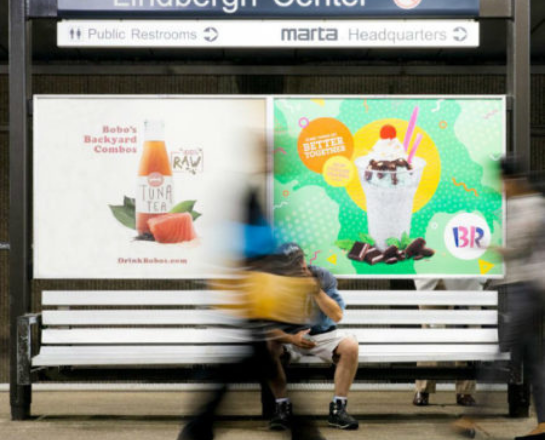
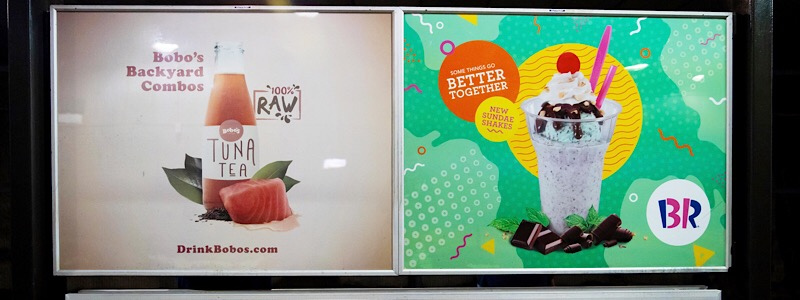
As part of an intricate advertising campaign from Outfront Studios, Baskin Robbins created billboards, posters, and even web landing pages with the theme of: “some things go better together.” The agency created a fictitious company called Bobo’s Fish Juice that featured some eyebrow-raising flavor combinations. These faux-healthy advertisements were then placed side by side with delicious images of Baskin Robbins shakes.

Though Baskin Robbins is not known to be a healthy choice, the advertising campaign managed to make healthy ingredients look less desirable using an artful compare and contrast. Color schemes, images, and even tone are subtle ways to compare and contrast products to highlight your restaurant. As seen in this example, conceptual contrast and color contrast can work together in a very effective way.

Highlight a Product

how to design a restaurant billboard

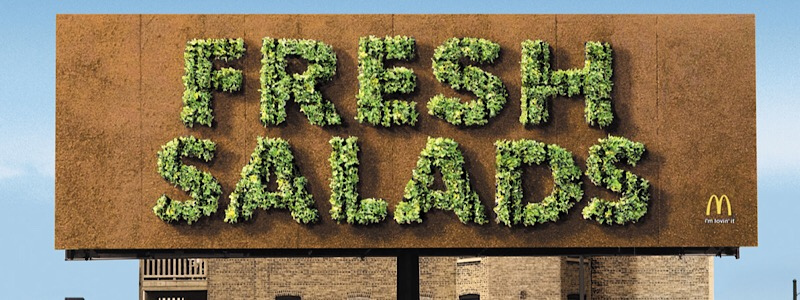
McDonald’s created an ambitious campaign to promote the quality and freshness of its salads. The hamburger chain planted thousands of heads of lettuce on a billboard made of soil. Over three weeks, the bare billboard sprouted full blooms of fresh green lettuce spelling out “FRESH SALADS.” The innovative advertisement boosted sales by 30%, and 500,000 salads were sold during the campaign period.

McDonald’s also ran similar campaigns with a carrot bus stop advertisement and a giant hatching egg outside another store location. This was a great example of creating hype around a specific dish or ingredient by highlighting it.

One great thing about the restaurant industry is that you have a universally-appealing product to advertise to people: food. High-quality food photography can make all the difference with your restaurant’s out-of-home advertising. Imagine you are driving home from work and can’t wait to eat. If you see a huge billboard depicting a delicious-looking pizza, you’ll be much more inclined to read where that pizza comes from and go and purchase it.

Play with Perspectives

restaurant billboard design ideas

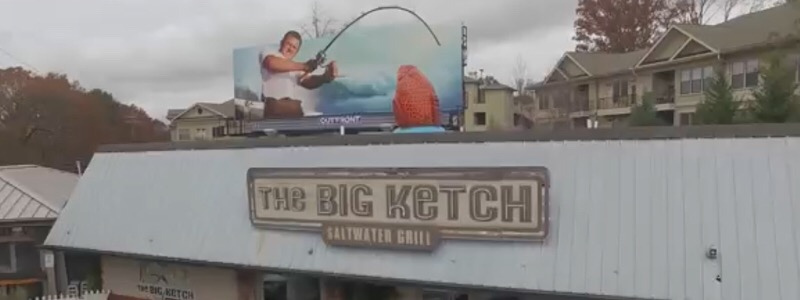
This restaurant billboard idea for a seafood restaurant caught a lot of eyes. The actual advertisement is comprised of two parts: The billboard in the background, and the plastic fish emerging from the top of the actual restaurant building. From this angle, both elements of the advertisement look like they are all one piece. However, the billboard is a few yards away behind the building that the fish rests on.

This billboard uses perspective and optical illusion to make the fisherman on the billboard look like he’s reeling in an extremely large fish. This is an interesting way to capture and keep the attention of viewers, as the fish and fisherman will appear to move depending on where the viewer approaches from.


Partner with Local Events

restaurant ooh advertising

This upscale restaurant in downtown Toronto participated in the annual Winterlicious event by offering a special prix fixe meal. Though many restaurants in the area participate in the event, Far Niente took it one step further. The concept art is simple, depicting salt, flour, and cheese being sprinkled against a black space. However, the simple images use restaurant ingredients to invoke the image of snow falling on a winter’s night. This ties directly into the event it is participating in.

This ad run shows us a creative way to incorporate local events in restaurant advertisements, and how seasonal advertisement can be impactful. Seasonal advertising is quite effective with billboard advertising, as you can keep a seasonal billboard up for short or long periods of time, depending on the time of year you’re appealing to. Plus, you can run similar campaigns while appealing to different seasons, and your audience will be excited to see what you’ve come up with next.

An Excellent Use of Cutouts

what should i put on a restaurant billboard

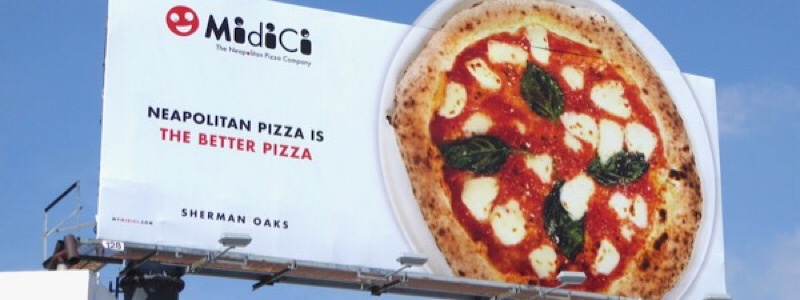
MidiCi pizza used a three-dimensional cutout to make the shape of an otherwise typical billboard irregular and eye-catching. The plate seems to hang off of the billboard. Furthermore, the bold green and red tones of the pizza advertised pop against the otherwise pristine white plate and background.

The use of three-dimensional cutouts and color is an easy way to showcase specific products or dishes on your restaurant billboards. Playing with sizing, including making certain elements of your billboard larger than the others, or playing with shapes as this one does, is a great way to make your billboard stand out from the rest.

Contrasting Text

restaurant billboard how to

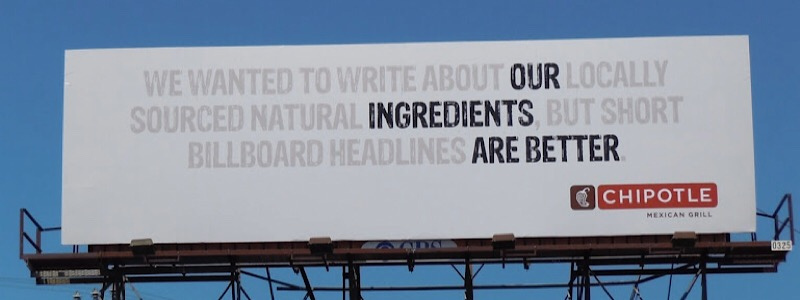
Chipotle ran this billboard advertisement that also invites another look. Onlookers immediately see the target message in bold black text: our ingredients are better. However, a second look reveals another message about locally sourced natural ingredients, and even includes a dose of humor.

This artful use of contrast text and a message-within-a-message is deceptively simple, but Chipotle has accomplished not one but two important marketing messages about its ingredients in just a few seconds. Consider playing with bold contrast to deliver two messages for the price of one in your own restaurant billboard.

How bMedia Can Help

The advertising experts at bMedia are the leaders in out-of-home advertising in Puerto Rico. No matter what industry you find yourself in — including the restaurant industry — bMedia can help you find the right audience at the right time in the right place.

With hundreds of billboards in locations island-wide, you are sure to find the spot that’s right for you and your business. Here at bMedia, we use tried-and-true best practices and strategies to optimize your advertising budget and produce a spectacular return on investment. To learn more about how bMedia can help your business reach its maximum advertising potential, contact us today!

Billboard Design Best Practices

Designing a billboard can be hard work, especially if you don’t know what your goal is. You need to be able to strike a balance between adhering to universally understood billboard design best practices, and being creative, eye-catching, and authentic to your brand. 

At bMedia, we have decades of experience designing eye-catching and high-performing billboards in Puerto Rico. We use high-level advanced analytics to create and subsequently monitor your business’s ideal billboard advertising campaign. Because of our proven results, we are often regarded as Puerto Rico’s top billboard advertising company.

billboard design tips

Why Advertise with Billboards?

Before we take you through our tried and true billboard design tips, you’re probably wondering if billboards and other OOH advertising mediums are still worth it. In this age, practically everyone is glued to their smartphone, tv, or laptop 24/7. Does this mean that online ads are the best? 

There are a few different reasons why billboards, and outdoor advertising in general, are still an effective advertising medium in 2021.

Outdoor advertising is more noticeable.

Online advertising can be frustrating since so many consumers have ad-blockers in place. Those that don’t are bombarded with so many ads that none really stand out. However, billboard ads don’t have these problems, as they’re basically unblockable.

Outdoor advertising is more accepted by consumers.

Consumers are generally pretty wary of social media ads, especially after educating themselves on the manipulative tricks that many online advertisers use on them. Billboards, on the other hand, are a long-standing accepted form of advertising that isn’t subject to any ethical issues, like social media and other online ads can be.

Outdoor advertising can benefit other advertising campaigns.

People tend to be more perceptive of their surroundings outside of the home. They can take in your advertisements, even if they’re not consciously aware of it. This effect can boost your other advertising campaigns.

According to research from Ocean Neuroscience, consumers were 48% more likely to engage with a mobile ad when exposed to the same out-of-home advertisement first.

Billboards help with brand building and recall.

Outdoor advertising has shown to be very effective in building brand awareness and brand image. Researchers think that this has to do with the fact that people tend to be more perceptive of their surroundings outside of the home.

This type of advertising can be very cost-effective.

Another key advantage of outdoor advertising, especially for companies with limited marketing budgets, is its cost-effectiveness. In the current marketing environment, outdoor advertising is often cheaper than print or digital advertising. Additionally, outdoor advertising is more long-term than print or digital ads, which often require repeated payments to carry out campaigns. Paying to have an advertisement on a billboard for a month can be a much better use of funds than repeatedly paying for a commercial campaign.

how to design a billboard

Billboard Design Best Practices

With our decades of experience at bMedia, we’ve compiled a list of billboard design best practices that hold true across all businesses and industries. Note how all of our billboard design tips allow for a lot of flexibility, which is critical to enabling your brand to share its own unique vision.

1. Keep it simple.

Use fewer than 7 words and fewer than 3 visual elements. Billboards are made to be quick bursts of essential information. Making it more complicated than above will dilute the message your brand is trying to send.

2. Use borders and cropping properly.

Making an object larger than life will turn heads. Leverage size, cropping, and borders to help make your billboard eye-catching.

3. Be intentional with colors and contrast.

Bright colors and sharp contrasts make for an easily digestible billboard that’s also eye-catching.

4. Leverage key locations and seasons.

You wouldn’t want to advertise your new holiday line of sweaters in the middle of April. At the same time, you also want to make sure the location of your advertisement matches your target demographic. You’ll want to advertise in different places if you sell luxury goods vs if you sell more affordable, discounted goods. Ensure that you’re getting the right information to the right people at the right time.

5. Be careful with fonts.

The most critical part of proper use of fonts is to ensure your billboard is readable from various distances. You don’t want your font size too big or too small, and you definitely want to stick to simple, easily discernible fonts. Don’t overly condense text, unevenly weight fonts, or make the font too thick or thin! Simplicity and readability are key.

billboard design best practices

Examples of Effective Billboards

As you may have picked up by now, there’s no one-size-fits-all billboard design. Even when following our billboard design tips, you will see that there’s plenty of room to be creative and unique. As such, there are many different examples of effective billboards that can turn heads and attract customers.

One company that’s done a great job with its billboard advertising is Apple. Even though it’s one of the world’s leading technology companies, Apple frequently uses billboards and other traditional forms of advertising. In 2015, Apple launched its “Shot on iPhone” campaign. The campaign offered iPhone users the opportunity to capture images on their phones that would then be used on billboards, commercials, and other ads. Apple’s Shot on iPhone campaign displays the importance of engaging consumers and being thoughtful with image selection. These billboards were remarkably simple, yet remarkably effective.

Another fantastic billboard example was a Formula Toothpaste billboard in Indonesia. This remarkably creative advertisement shows a man whose teeth are so strong that he is literally ripping the billboard off of its supporting structure. This billboard is a wonderful example of using creativity to stand out. Once again, it’s a clean, simple image that effectively communicates Formula’s product and value while simultaneously being creative. 

bMedia: Puerto Rico’s Premier Outdoor Advertising Firm

If you are advertising on the island of Puerto Rico, there is no better company to work with than bMedia. We have hundreds of billboards in strategic locations island-wide to ensure that you can connect your billboard to your consumers. We utilize advanced analytics to measure and optimize billboard engagement, providing your business with maximum value.

bMedia are Puerto Rico’s leaders in OOH media and advertising. We will work with you to ensure your advertisements are seen and remembered. Contact us today!

Successful Billboards Around The World

Billboards have long been a staple of the marketing and advertising space. In fact, they are probably one of the first things that come to mind when thinking about traditional advertising. However, in today’s world, one is confronted with advertising at almost every turn. So the question becomes: how do you stand out? Here, we will discuss some tips on how to create successful billboards, as well as giving some examples from around the world.

Not all billboards are created equal.

The market and the audience of certain billboards must be taken into careful consideration in order to maximize their effectiveness. Because of this, billboards around the world are designed in different ways and seek to capture different audiences.

Tips for Successful Billboards

The process of creating successful billboards takes time, creativity, and ingenuity. However, when executed well, they can be remarkably effective and result in a high return on investment (ROI). Below are some tips for creating successful billboards.

Keep It Simple

You might feel the need to add as much information as possible onto your billboard. However, you must remember that most people are only glancing at a billboard in passing. Therefore, it’s important that you get straight to the point. Bold colors, readable text, and eye-catching images will help capture your audience’s attention. Additionally, remember to keep your message clear and concise. It can certainly be clever, but your audience does not have that much time to pause and figure out what you’re trying to convey.

successful billboard campaigns

Your Audience Is #1

When designing successful billboards, it’s crucial that you keep in mind who your audience is. Advertisers must meet the audience where they already are. So, if you’re advertising your tractors, why not place a billboard out in the country? If you’re promoting a new rideshare app, why not place the billboard in an urban center, where there is a need for the service? Keeping your audience at the forefront of your mind will help you optimize the success of your billboard and lead to the best ROI.

Go Digital

Digital billboards are popping up all over the place, even in places where you’d least expect them. While digital billboards may be a bit more expensive than traditional static billboards, they can actually result in a higher ROI. This is because digital billboards can be used on a rotating basis. One company can advertise on the digital billboard in the morning, while you can advertise on the same billboard in the evening, based on the audience you’re trying to reach. Because of this, you can optimize your investment and reach the people you want to reach, only when you know they’ll be there.

Other Things to Keep in Mind

A few other things that are important to keep in mind when designing your successful billboard include:

  • Location
  • Daily traffic
  • Type of traffic (car vs. foot)
  • Budget
  • Duration of campaign
  • Timeliness

Examples of Successful Billboards

Now that we’ve discussed some tips for creating successful billboards, we’ll share some examples from around the world.

Asia

successful billboards

Location: Japan

Billboard: Mt. Fuji’s Litter

Perhaps the most interesting aspect of this billboard is that it technically isn’t a billboard. Sure, it has the frame and structure of a successful billboard – but it’s missing the actual content of a billboard. Of course, the position and intended viewing angle of the board attempt to turn Mt. Fuji into the content. Given the cultural significance and sheer recognition of Mt. Fuji to its target audience, the effect is substantial. The litter framing the famed natural spectacle leaves a stunning impression about the impact that litter has on natural areas.

best billboards

Location: Philippines

Billboard: Skype Qik Live

Mobile devices and social media are huge in Asia. Whether it be a mobile game, the hottest new trending app, or just chatting with friends, the smartphone is a gateway into a world of almost endless entertainment. This company created a billboard that allows mall-goers to record themselves on a nearby mobile phone installation. Then, their clip appears on the ad. This interactive billboard makes physical advertising media relevant to the many enthusiastic smartphone users in Manila.

Europe

good billboard examples

Location: England

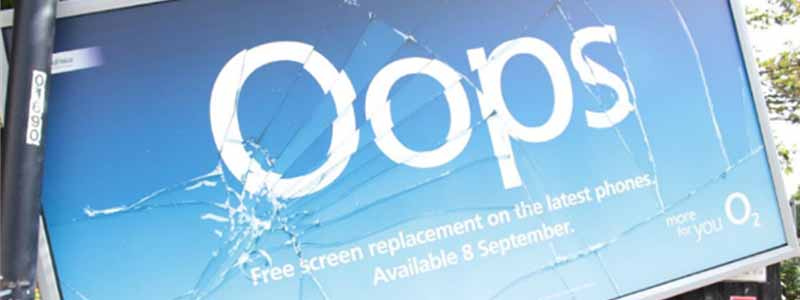
Billboard: Free screen replacements

How many times have you or a friend lost hold of your smartphone, only to pick it up and discover that the screen has shattered? This universally disappointing image of a shattered phone is certainly eye-catching. By replicating this effect on this billboard, it catches the viewer’s attention and reminds them of their broken phone screen.

creative billboard ideas

Location: Denmark

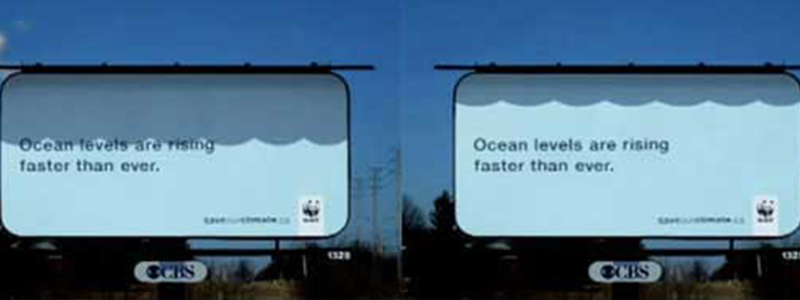
Billboard: WWF – Rising Ocean Levels

This one is interesting as the viewer has to see this billboard multiple times at different points in the day to get the full effect. Basically, the awning on top of this billboard is supposed to cast a shadow. The shadow will change depending on the sun’s relation to the billboard. As the sun moves throughout the day the shadow will change in accordance, making it seem as if the water line on the board is moving upwards. Given that Denmark exists next to the Atlantic, rising ocean levels actually do affect them as they change the shoreline of the country. This is an example of a successful billboard that uses repeated exposure to leave an impact.

North America

best billboards around the world

Location: USA

Billboard: Adam Ruins Everything

Anyone who has spent long enough time on Facebook has probably seen a video snippet of Adam Ruins Everything, a series dedicated to dispelling half-truths and common misconceptions. While one can imagine that such an “in your face” ad might not be incredibly popular with all Americans, there’s no doubt that it’s effective in attracting the attention of its home audience. Not only does it call attention to a fact that Americans may not like to think about, but it also works as a form of passive activism. It forces passersby to reassess the value that they’ve placed on such a monument.

ideas for successful billboards

Location: USA

Billboards: Total Recovered campaign

During the COVID-19 pandemic, plenty of ads sprung up reminding people to stay at home and wear masks. However, there was not that much positive advertising. An advertising agency called Orb decided to create a campaign highlighting the total number of people that had recovered from COVID-19. This campaign acted as a beacon of hope, while most other COVID-related advertising was rather bleak.

South America

how to make a good billboard

Location: Peru

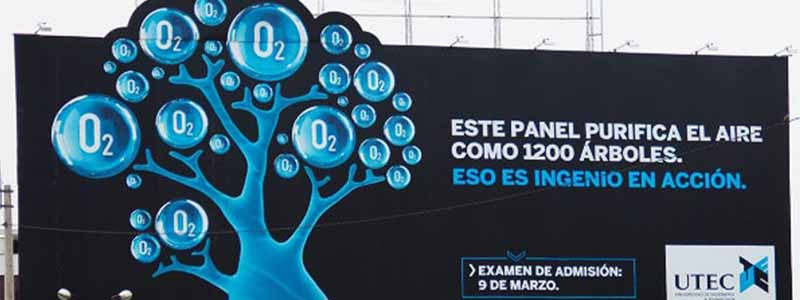
Billboard: Clean Air

The city of Lima located in Peru was estimated to have the highest pollution levels in all of South America back in 2012. This billboard was created in response. This billboard actually takes the surrounding polluted air and purifies it, emitting fresh air back out. As one can imagine, it was incredibly well-received by its target audience due to the fact that it actively improved their lives.

most impactful billboards

Location: Argentina

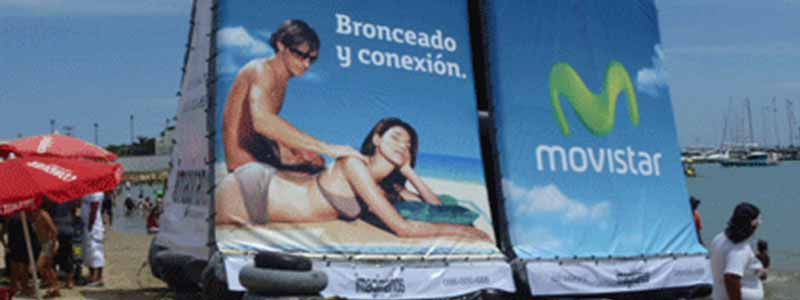
Billboard: Amphibious billboards

Who said billboards need to be roadside? These amphibious billboards can be found either on the beachside or out in the water themselves. Given that South America is known for its fair share of beautiful beaches, it only makes sense to play up to the region’s natural strengths and advertise in popular beach spots.

Australia

examples of successful billboards

Location: Melbourne

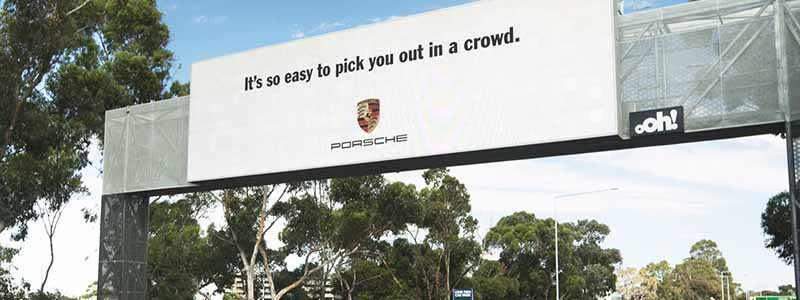
Billboard: Porsche Ads

If you have enough money and the inclination to buy a Porsche, you probably feel good about the purchase and enjoy it when other people notice your car. The Porsche company itself understands this and put up an ad in Melbourne that can tell when a Porsche is approaching. The ad calls out Porsche drivers and compliments them on their car, making them feel good and adding a little bit of additional value to their purchase.

creative billboard examples

Location: Perth

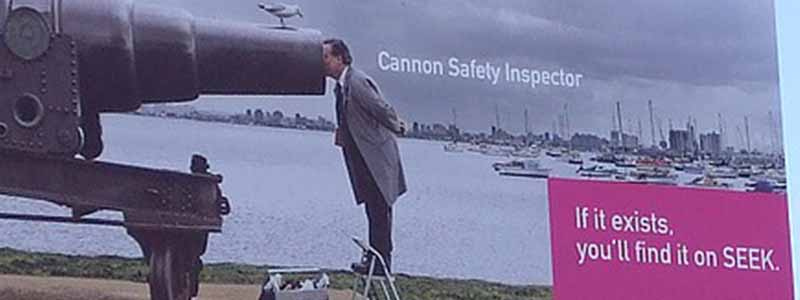
Billboard: SEEK Job Site – Cannon Safety Inspector

Finding the right person for the job can be tough, especially when the person you need has to have an incredibly specific and obscure skillset. This billboard put up in Perth might not be the fanciest, but is still entertaining and effective. The imagery gives off sentiment that would feel at home in a “Monty Python” skit, appealing to the sensibilities and humor of Australians.

How bMedia Can Help

If you’re looking to design and execute a creative and successful billboard campaign, look no further than bMedia. bMedia is Puerto Rico’s leader in outdoor advertising, with over 300 high-impact advertising locations.

To learn more about how bMedia can help your brand reach new audiences, contact us today!

Why Use Billboards to Advertise?

Billboards have been around for ages. In fact, archaeologists have even found evidence of what they believe to be “ancient billboards” dating back thousands of years. Regardless of your age or where you live, billboards have likely been a part of your life for as long as you can remember. They’ve become such a common part of life that we probably don’t even think much of them when we see them. However, for advertisers, billboards can be an integral part of any campaign or advertising strategy.

Billboards aren’t still used today just because they’ve been around forever. Advertisers still use them today because they get results. The effectiveness of a billboard is measured by its return on investment (ROI), how many people see it on a regular basis based on location, how memorable it is, and how likely it is to create a conversion or a sale.

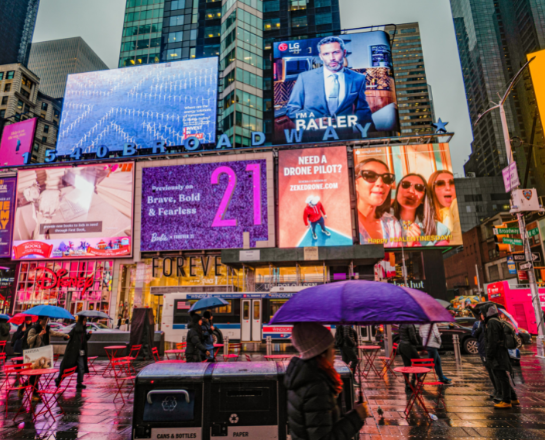
Although billboards have been around for a very long time, they have certainly changed over the years. Many companies today are choosing to use digital billboards. A great example of the power and prevalence of digital billboards in Times Square in New York City. Many, if not most, of the billboards there are now digital billboards.

Are you still wondering, “Why use billboards to advertise?” Read more to find out why this tried-and-true medium of advertising is still just as prevalent as ever!

why use billboards to advertise

Why use billboards to advertise?

The answer to this question should be obvious. It is, however, also very multi-faceted and probably more nuanced than you might think. Billboard advertising is great for targeting specific audiences, causing repeated exposure, capture attention from people who might not want to be advertised to, and so much more.

Billboards allow geographically targeted marketing.

One of the most important things to consider when crafting a marketing strategy is your target audience. You want to make sure that you’re getting your message in front of the right people. If you have brick and mortar location or a relatively limited service area, then you don’t want to waste money on ads that target people outside your area. You also want to make sure that the people in your service area hear your message. Billboards allow you to succeed on both counts.

When you put your message on a billboard, you know where people will be when they see your message. You can look at the road the billboard is on and get a good idea of where people will be coming from and going when they see your message.

The location aspect of billboards also allows you to be strategic about your budget. Billboards in more rural areas will obviously be less expensive than those in high-traffic, urban areas. However, you’ll still be able to reach a relatively large audience for a lower cost.

why billboard advertising

Repetition drills in certain messages.

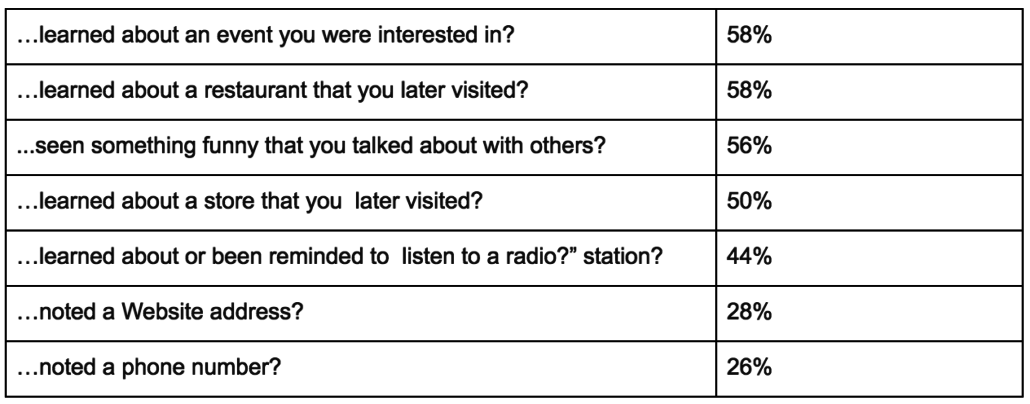
Some messages are better for billboards than others. People drive by billboards regularly, but they tend to go by them quickly unless the area is known for especially heavy traffic. Messages that are easy to digest and actionable are especially effective. A study asked people to discuss their engagement with billboards. Let’s look at their answers.

On a roadside billboard, have you ever…

Billboard Advertising Stats
Notice that simple, clear, and actionable information had the biggest impact. Billboards work on an almost subconscious level, their message sinking in as people drive past them day after day. Messages that are witty, time-sensitive, or related to immediate needs all have an especially big impact on drivers.

Billboards capture one of the few captive audiences left.

Today people are inundated with advertising from the moment they wake up until their head hits the pillow at night. But people also have more ways to avoid engaging with ads, when ads come on TV they look at their phone, and they can use programs to block ads from their phone. In this sort of environment, how do you make sure that people actually pay attention to your ads?

There is one place where people have to keep their eyes on the world around them, and that’s when they’re in their car. If you really want people to pay attention to your ad you need to catch them when they are in traffic. Strategically placed billboards with the right outdoor advertising ideas allow you to do just this.

importance of billboards

Time the average American spends driving:

  • 17,600 minutes per year
  • 48 minutes per day

That’s 48 minutes a day where people are staring out the front window of their vehicle. Beyond that, it’s time when they might be thinking about your message. After drivers see your message, they will have the rest of their drive to process it. And this can happen every time they drive past your billboard!

Digital billboards have opened new avenues.

Many people underestimate the power of billboards because they have outdated perceptions in terms of their perception of billboards. Digital billboards have brought this advertising tool into the 21st century, allowing billboards to take full advantage of the latest technology.

Instead of using one permanent image, digital billboards are essentially large computer screens that can be programmed to display messages in a range of innovative ways. Things can be as simple as switching between images periodically so that multiple advertisers can cut costs by sharing a single billboard, or they can get more complex by utilizing animation and real-time updates.

People who can recall seeing a digital ad in the last month:

  • Place-based: 70%
  • Online: 43%

These figures were taken from a study based on self-reporting, but there is still a clear takeaway. When people see a message in person, they’re more likely to recall it than when they see it online. As digital advertisements become more prevalent and invasive in our everyday lives, many people have begun to not notice these ads as much. If a consumer is exposed to the same ad consistently and frequently, they may begin to experience ad fatigue. Ad fatigue is the event in which one ad appears to a consumer so many times that the CTR (click-through rate) of that ad begins to go down.

Compared to digital and online ads, billboards are clearly much more memorable and don’t contribute to ad fatigue in the same way that online ads do. People are more likely to pay attention to place-based ads and billboards because they are much more noticeable but much less invasive.

how to use billboards effectively

Billboard advertising stands above the rest.

Billboards occupy a unique place in the advertising landscape because of their physical presence. They aren’t ephemeral like radio, TV, and internet advertising. They stand on the side of the road, their message emblazoned across a giant canvas. There is a power in the billboard that other advertising tools just cannot recreate.

Billboard advertising isn’t a magic solution to every marketing need, but when used correctly it can do things that no other method can. If you have a clear and actionable message that you want to convey to a captive audience, then a billboard might be just the thing you need.

As we’ve said multiple times, billboard advertising can also be an incredibly cost-effective method of advertising. For not that much money, you can get way more eyes on your ad than virtually any other medium for the same amount of money. You can also customize the location, design, size, and type of your billboard to match your business’ specific budget and needs.

How bMedia Can Help

Why use billboards to advertise? bMedia is here to answer that question! The professionals at bMedia are the leading experts in outdoor and billboard advertising in Puerto Rico. Whether you have an idea for a billboard already and need help executing your campaign, or you haven’t even started, bMedia is here to help.

Advertising professionals at bMedia have extensive industry experience that will guarantee the effectiveness of your billboard advertising campaign. With the execution of their tried-and-true best practices, bMedia is your best bet in maximizing the effectiveness and ROI of your advertising campaign. Contact bMedia today!