Reach vs Frequency

Gone are the days of swing-in-the-dark-with-a-dull-blade advertising — in this modern world, marketing strategies are highly refined, surgical operations, sharpened by the power of data sciences.

By assessing vital metrics, we can accurately measure the impact a marketing strategy is likely to have or is having, allowing us to streamline our approach, reach more of our target audience, and, ultimately, stimulate growth and profit.

Yep, there’s no doubt about it – the path to success is paved with metrics, the most important of which (at least in terms of Out-of-Home advertising) are reach and frequency, two intrinsic measurements.

But these metrics aren’t just linked – they’re actually antagonistic, leaving many business owners questioning which should be prioritized to optimize the efficacy of a marketing campaign. So, in this article, we’ll be discussing what these metrics are, how they differ, and how and when you should use them to measure OOH advertising.

reach vs frequency

Reach vs Frequency: Definitions and Differences

We’ve heard both types of metrics probably quite a bit, but would you be able to explain how they differ? Understanding the difference between reach vs frequency is understanding the difference in how you measure the effectiveness of your billboards or out-of-home advertising.

What Is Reach?

Reach refers to the number of people that will potentially be exposed to an aspect of your marketing campaign at least once in a set period of time.

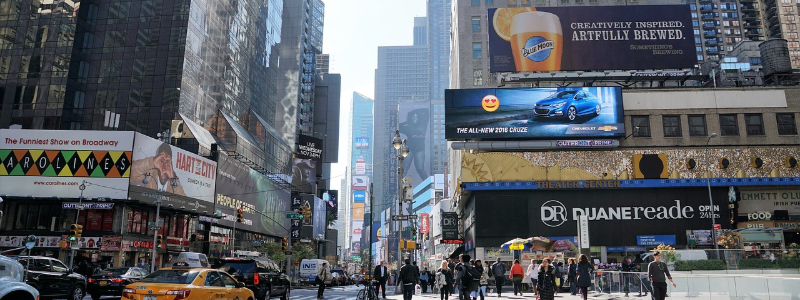
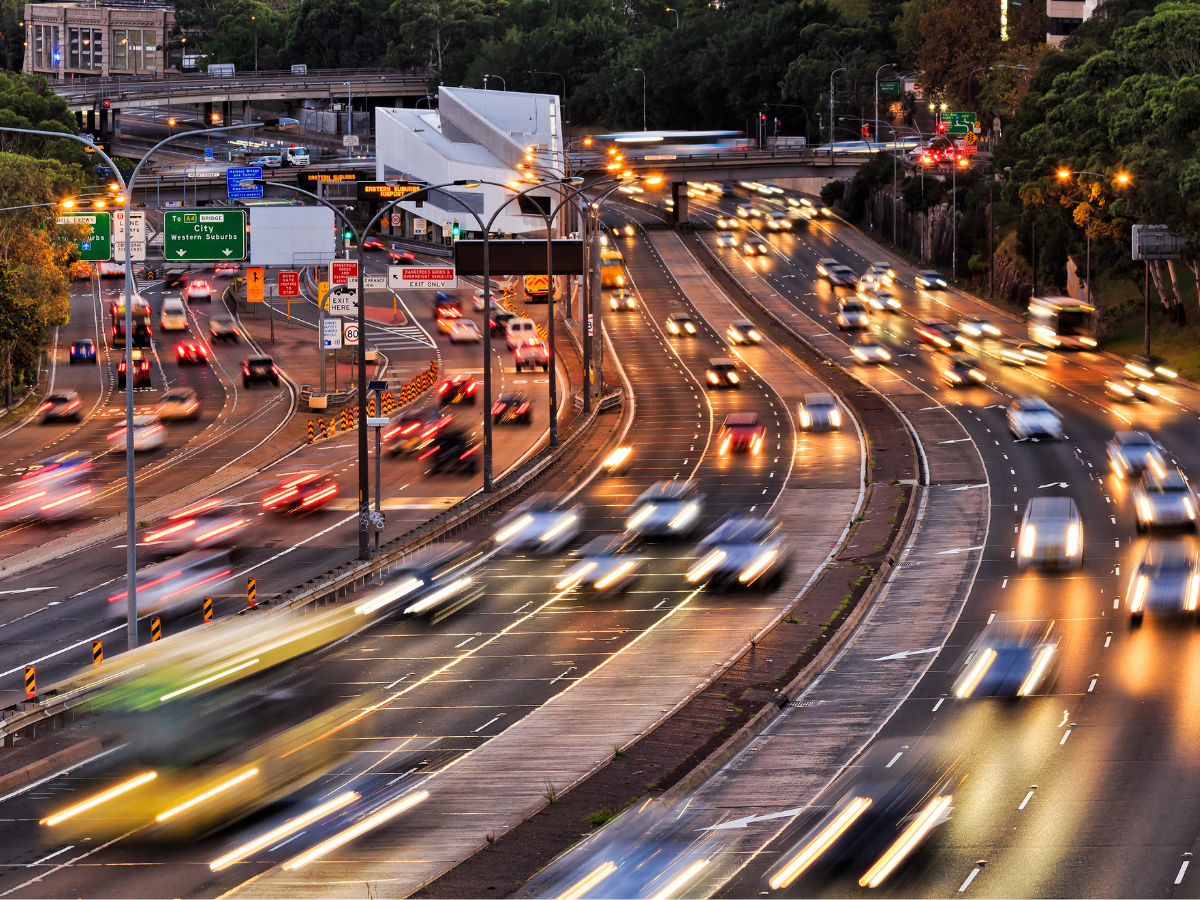
For example, if you pay for one of your ads to be placed on a billboard on a main road, the potential reach of that ad would be at least 1 person per car driving towards the billboard.

Reach can be measured in a number of ways, including…

  • Demographics
  • Census Data
  • Traffic Counts and Vehicle Analytics
  • Daily Effective Circulation
  • Eye Tracking

measuring reach

What Is Frequency?

Frequency, on the other hand, is how many times each person will be exposed to the same marketing aspect of a marketing strategy more than once within a given time frame.

So, borrowing our billboard example from a moment ago, if we assume that the cars driving past from Monday to Friday are commuting to work, that would mean they’re potentially exposed to your ad 5 times a week.

Frequency can be measured by…

  • Estimates —  You can get a very quick estimate of potential frequency by dividing impressions by reach.
  • Demographics
  • Census Data
  • Data Modeling
  • GPS Tracking Data

What Are Effective Reach vs Effective Frequency?

You can think of effective reach as a kind of hybrid metric that combines both standard reach and frequency measurements — Effective reach is the percentage of individuals exposed to your ads enough times that they’re likely to have taken notice.

This baseline amount of exposure is known as effective reach.

Effective reach can also be measured using…

  • Census Data
  • Data Modeling
  • GPS Tracking Data
  • Digital Statistics, e.g. Comparisons between pre- and post-campaign sales figures, online traffic, use of unique promo codes, etc.

What Are Impressions?

Whereas reach refers to how many individuals see an advertisement in a set time frame, and frequency refers to how many times an individual is exposed to an advert in a set time frame, impressions refer to how many times your ad was served.

For example, let’s say you’ve invested in a spot on a digital billboard that cycles through ads from 4 other businesses throughout the day perpetually. Your impressions metric would show the number of times your ad was displayed in a given time period.

On traditional billboards, impressions would refer to how many show your ad in a certain area. This is important as other businesses may have a more saturated presence in the area than yours, which would pull focus from your ads.

As they’re a simple count of ad servings, impressions are one of the easiest metrics to keep track of.

Wouldn’t it be great if we could just maximize both reach and frequency and be done with it? You’d be pulling in customers left and right, and, quite frankly, you wouldn’t care to learn more about either one in this article.

As we’re sure you’re aware, implementing marketing campaigns costs money, and you’ll be splitting your budget between the campaign’s reach and frequency.

If you pump more capital into one, then you have less to allocate to the other. In the world of OOH marketing, finding the right balance between reach and frequency is critical to effective billboard advertising.

Reach vs Frequency: Which Should You Prioritize?

It’s common for businesses to prioritize reach over frequency, as they think the more people that see the ad the better, but this is commonly overlooked in marketing.

While it’s true that you want lots of people to see your advertisement, in the absence of frequency, reach can be a complete waste of money.

Modern life is incredibly cutthroat and fast-paced, and people’s attentions are constantly split between a number of things. To claim some valuable real estate in someone’s mind, you need them to see your ad multiple times — you need to establish an effective frequency!

Effective frequency usually sits around the 3+ exposures mark, and once you have that on lock, you can utilize the effective reach metric and gain a more accurate picture of how your campaign is panning out.

Prioritizing frequency at the expense of reach can also be a critical error, as your ad simply won’t engage with enough members of your target audience. The trick is to learn when it’s strategic to back one metric horse over the other, so to speak.

When Should You Prioritize Reach?

Reach is most important when you’re introducing a new product or service.

Statistically speaking, reach works best when introducing something new to the public. So if you’ve got something fresh to contribute to established markets or, better yet, something groundbreaking to offer in emerging markets, reach should get the lion’s share of your budget.

Reach is most important with an established brand advertising seasonal promotions.

If your brand is already a household name in the area, and you want to entice people with a seasonal sale of some kind, you don’t need to worry so much about frequency, as this foreknowledge of your company does a lot of the heavy lifting.

Reach is most important when there is a lack of competition.

The more saturated a space is with the marketing campaigns of competing businesses, the more you need to lean into frequency and bolster impressions to draw attention, but if the area is largely uncontested, you can win the attention war with a reach-laden campaign.

measuring reach vs frequency

When Should You Prioritize Frequency?

Frequency is most important when establishing your brand.

When you’re trying to break your brand name into the public consciousness, whether locally or nationally, repetition is your best friend, so it’s important to shift a certain amount of your budget over to frequency and impressions.

Frequency is most important when establishing trust.

If your campaigns are executed artfully, with just the right amount of repeat exposure, you can inspire feelings of comfort and familiarity in your audience, thereby establishing trust. Without investing in frequency, this trust will not develop in the mind of your target audience.

Frequency is the most important when there is a wealth of competition.

We’ve all been in a situation where two or more people are trying to speak to us at the same time.

How much of this tangled talk do you actually hear and comprehend?

None of it, right?

Unless, that is, one of the voices is shouting.

The same is true of OOH advertising.

In a heavily contested zone, your brand needs to rise above the rest and dominate the scene. It needs to stand up and shout (visually speaking), and the way to imbue your ads with a voice is maximizing frequency and impressions — it’s like giving them a microphone!

Advertising Metrics Can Change

The above suggestions aren’t exactly golden rules, as there are a number of variables to consider before maximizing one metric over the other. Nothing is set in stone.

Every marketing strategy has its own flavor, its own nuances, and creative approach, and no impression is exactly analogous to another. As such, there is no standard format for implementing and monitoring campaigns.

We know this can sound pretty daunting, but you’re not in this alone!

bMedia and Advertising Metrics

Here at bMedia, we don’t just provide you the physical space to exhibit your OOH advertisements; our dedicated team of marketing experts help you build your campaign from the ground up to suit your goals.

As a business owner, it’s important to understand the synergy between reach vs frequency and impressions, but if you’re not quite sure how to optimize metric balance, we’ll ease the burden with sound advice on measuring advertising effectiveness.

Our OOH advertising network spans the entire nation of Puerto Rico, so you can rest assured we have the sites available to maximize any metric in almost any location.

We can help you start telling your story, but more importantly, we can guarantee people see it!

Go To Market Strategy for Startups

We don’t mean to intimidate you (and maybe you were already aware), but there’s something you need to know: Studies show that 90% of all startups fail within five years of formation — not a very reassuring statistic, right? But what’s the story behind this damning figure?

It all comes down to obscurity. Simply put, nobody knows about your business or what products/services you offer. In an ideal world, you could pour endless amounts of cash into a marketing push that announces your presence to the world with gusto, but, as we’re sure we’re both painfully aware, this is no ideal world.

Not only are advertising budgets rather meager for startups, you’re up against other businesses with established product-market-fit, which is daunting, to say the least… but there is a way to cut through the competition and get your voice heard – an effective go-to-market strategy for startups.

marketing strategy for startups

What Exactly Is A Go-To-Market Strategy, And Why Is It Important For Startups?

A go-to-market strategy for startups is precisely what it sounds like – an advertising game-plan that breaks an unknown product or service into a target market; it’s your key to the locked door of commerce!

Your go-to-market strategy is a blueprint that illustrates how you will reach the people you want to reach with the message you want them to hear. It’s considered a separate entity to standard marketing stratagems, as they imply an established market position, whereas GTM is a way of reaching an initial audience from nothing.

It’s the foundation on which all your future marketing campaigns will be based, and a strong foundation inspires confidence, not just within your target audience, but among your investors, too. Creating a GTM strategy is the ultimate way to position your business for success moving forward. Other GTM benefits include…

  • Weeding out potential risks
  • Generating profit quickly
  • Developing your business and product/service
  • Attaining you a competitive edge over other startups

Creating a Go-To-Market Strategy For Your Startup

The three pillars you’ll need to know for a go-to-market strategy for startups are the What, Who, and How

  • What are you trying to sell?
  • Who needs what you’re trying to sell?
  • How are you going to introduce your offering to those who need it?

If you can answer these questions, you’ll have laid the foundation for a successful entrance into your particular niche of the market, so let’s consider how this can be done.

Step 1. Know Your Audience

You may well have come up with the concept of your product or service through finding gaps or weaknesses in the market yourself, and that’s great; it means whatever you come up with has some form of real-world appeal, but now you have to find others like yourself and figure out what makes them tick.

Hone in on your target audience, and try to map out their behaviors and general way of thinking. Forget about trying to sell something to the world; focus on this very finite group of people and figure out exactly what they’re looking for.

Modern consumers expect businesses to know all about their wants and needs, but we’re not mind readers, so instead, we can build up a customer persona by… This applies to all types of businesses. It doesn’t matter if you are a digital service providing with a nationwide audience, like providing legal wills online, or a brick and mortar business creating tangible products to specific locations, like a vodka distillery, knowing your audience is crucial.

Scheduling Interviews with Potential Users

Interviewing people takes time, but you won’t find more rich, accurate, and enlightening results via any other means, so it pays to talk to prospective customers face-to-face.

Far more fluid and personal than standardized surveys, interviews give you a real insight into the lives of people who your product/service could help, which is a great way to gather data you can use at a later date to refine your offering.

Be wary of time constraints and ask effective questions, such as…

  1. What are their preferred channels of communication (e.g. email, Facebook, Instagram, TikTok, billboards, etc)?
  2. What are they disappointed by or lacking?
  3. In their eyes, what makes a product or business effective and valuable?

survey your audience

Questionnaires

Interviews are fantastic sources of information, but they’re almost too focused. Although you’re narrowing your research to drum up a customer persona, you still need to venture further afield to ascertain splits in that persona in terms of age, profession, location, etc, and questionnaires are a great way to do so.

The wider net you cast will give you more of an insight into what pain points are simply individual woes and which are felt universally, ripe for capitalization.

However, do bear in mind that you’ll need to provide some form of incentive to encourage people to complete your questionnaire, and try to keep it short and sweet, too — we’re all busy people.

Purchase Pre-Existing Data

There are countless other companies that have had to study their target audience before you founded your startup, and you can use this to your advantage.

Paying for research carried out by similar companies gives you effort-free results. Now, they’re not going to be quite as accurate as the results you’ll get from your own studies, but they can certainly help to create a more substantive customer persona in a short amount of time.

Due to its immediacy, this method is often employed first as a sort of scattershot data drive. It gives you a rough estimate of things like target consumer age, location, profession, income, pain points, and purchase triggers.

Step 2. Know Your Competitor

If you’re going to offer something new, you need to know what your competitor is already bringing to the table. If an established entity has beaten you to the punch, your chances of gaining traction with a GTM strategy are slim-to-none. Find ways around it.

Step 3. Coming Up With a Value Proposition

In a nutshell, a value proposition is a snappy headline followed by 2–3 sentences that divulge why your product/service:

  • Is relevant to the user
  • Solves the user’s problem
  • Is unique and cannot be found elsewhere

For example, let’s say you’ve invented an automatic garlic clove peeler. Your value proposition should establish that garlic is one of the most common ingredients in cuisine around the globe (relevance), it makes the tough job of peeling cloves effortless (problem solved), and it’s a patented design (unique).

It’s important not to get caught up in mentioning features alone. To entice customers, you need to tell them in no uncertain words how it will make their life easier or more enjoyable.

Step 4. Establish The Best Lines Of Communication For Reaching Your Target Audience

With your target audience in sight, it’s time to find out how to reach them. People of different age groups and professions communicate and are exposed to things in unique ways.

For example, younger people will consume a lot of adverts on social media platforms like TikTok and Instagram, while older generations may only use Facebook or perhaps even just email.

Another example is that people working from home will engage with mostly digital adverts, but for those who commute to an office, billboard advertising will be highly effective.

Don’t feel you have to settle for just one mode of communication per faction of your target audience. Research has shown that omnichannel approaches to customer communication have a much higher retention rate than single-channel approaches.

go to market strategy

Step 5. Zeroing In On Marketing Tactics

People don’t just use different channels of communication, they also have preferences in regard to how they’re engaged with.

For instance, certain demographics may respond well to the personal/celebrity touch of paid partnerships, while others will be distrustful of this tactic as the pecuniary aspect of the agreement makes the brand representative seem disingenuous and the product seem weak.

Step 6. Don’t Stop Testing

Even if you think you’ve got everything figured out, you need to keep on testing your theories by measuring advertising effectiveness. Test different styles of ad copy, test the efficacy of different images, test different marketing tactics… test everything!

Marketing is a trial and error process, so the more mistakes you get out of your system early on by putting plans through their paces, the fewer you’ll be paying for later with a poor campaign.

Step 7. Budget Planning

Once your research has provided all the answers you need to shape your GTM strategy, it’s time to map out what your budget may look like and how it will be split across different marketing tactics.

Step 8. Implementation

At this stage, you’ve done most of the heavy lifting, and now it’s time to use what you’ve learned to implement your marketing strategy!

bMedia and Developing a Go-To-Market Strategy

As mentioned earlier, omnichannel marketing tactics in GTM strategies are far more effective than single-channel plans, which is why you should seriously consider incorporating a robust OOH line of communication with your target audience as part of your strategy, either as the primary or supporting mode of contact.

Granted, digital marketing has great reach potential, but as a fatally saturated facet of the advertising industry, it tends to inspire a lot of fatigue in the viewer. Billboards and OOH adverts, on the other hand, still grab attention, cinching valuable real estate in the consciousness of the viewer.

But providing the physical space for your ads is just the tip of the bMedia Group’s iceberg. Our dedicated team of marketing experts can help you build a custom, go-to-market strategy for startups from the ground up, ensuring you and your business can generate customers, and start changing people’s lives with your product/service.

Contact us today, and we’ll talk you through how we measure the efficacy of OOH advertising with state-of-the-art analytics to optimize the potential of your campaigns and stimulate rapid business growth.

Your startup may be small, but with bMedia in your corner, you’ll cast a much larger shadow, giving you the confidence and market position to hold your own against giants of any given industry, giants that, with our help, you will soon tower over.

Outdoor Advertising Trends

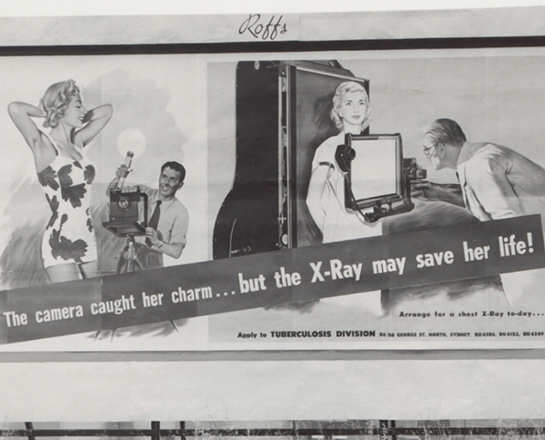
Today, billboards are one of the most popular and effective advertising mediums. While the rise of new advertising technologies has transformed the advertising market, billboards remain both popular and incredibly effective, due to the fact that they can adapt to new advertising trends with ease.

In Puerto Rico, there’s an average of six-hundred-and-fourteen automobiles for every one-thousand people. That’s a lot of traffic! Moving across highways and roads, drivers are usually looking to pass the time. For this reason, advertisers strategically place billboards where drivers can easily see and take note of them, even if subconsciously.

Each billboard, if designed properly, conveys an engaging and unique message. Each message has the potential to turn the driver, who may not have even heard about that particular company or product, into a customer. Or, at the very least, into someone who is interested in considering what the billboard is offering.

Outdoor Advertising Trends 2022: How Did We Get Here?

If you want to fully understand the outdoor advertising trends 2022 marketers are focusing on, it’s best to take a step back and think about our history with outdoor advertising.

As an advertising medium, billboards are quite old. In fact, they’ve been around since the late 19th century. As years progress, billboards continue to grow and transform. This allows them to remain both relevant and effective, especially as a source of true guerilla marketing.

In order to make a truly excellent billboard advertisement, it’s important to understand the history of outdoor advertising trends, as well as where outdoor advertising stands today.

Outdoor Advertising Trends

How Did Billboards Begin?

In 1867, the first billboard advertisement was leased. As time passed, billboards became more popular, and the advertisements became far more elaborate and unique. With the rise of the automobile, roads and highways were created. On these roads and highways, billboards could be placed on the sides. It was this development that lead to billboard advertising becoming one of the primary advertising mediums of the 20th Century.

If you go back to the year 1867, that was when the first billboard advertisement was leased. Just twenty-four-years after that, in 1891, the Associated Bill Posters’ Association was formed. This association was designed to expand people’s understanding of the billboard medium and to organize and coordinate efforts that had to do with designing and setting up billboards.

With the rise of the Associated Bill Posters’ Association, billboards became far more popular. People began to understand the medium and the advertising potential that lay within it.

Outdoor Advertising Current Trends

When the first mass-market automobile was released – the Ford Model T – everything changed. The Model T became one of the first affordable automobiles. Instead of relying on more archaic forms of transport, people drove automobiles.

As automobiles became more popular, cities realized a need for efficient networks of roads and highways. This led to the creation of what we know today as roadways.

Advertisers quickly flocked to empty spaces along these roads and found a true potential for different forms of advertising. Since then, billboards have become an important aspect of the advertising landscape. In fact, they’re one of the more evolving forms of marketing that continues to adapt to newer forms of technology.

Quick Facts of Historical Outdoor Advertising Trends

  • In the mid-to-late nineteenth century, billboards became an advertising medium
  • When the Associated Bill Posters’ Association was formed, people became aware of the medium and its potential for advertising
  • The Ford Model T led to roads and highways, which changed the advertising industry
  • Billboard were placed across roadway networks and became one of the most popular advertising mediums

Outdoor Advertising Future Trends

What Is The Current Billboard Advertisement Design Philosophy?

In today’s outdoor advertising trends, there are several design choices that almost every billboard makes, in one way or another. Each one of these design choices began as trends before morphing into a set standard.

Billboard advertisements are, first and foremost, a visual medium. Words are often used, but sparingly, because the images are designed to speak for themselves. Effectively, outdoor advertisements should be clear and succinct, primarily because viewers don’t have longer than a few seconds to digest it. If there are too many words, there’s a good chance the billboard won’t be read or understood.

In the earlier days of billboard advertisements, visuals were often used alongside words. Billboards were still a visual medium, but words were given more weight. An example of this was advertisements for circus shows and theater acts.

Today, that is no longer the case. Billboards now use striking visuals as an incentive that immediately captivates the essence of what is being sold. While words are still important, they are used sparingly.

Digital Outdoor Advertising Trends

To go along with the striking visuals, viewers may find the use of strong colors that are both engaging and visually appealing. Today, many billboards use colors like blue, yellow, black, white, and red. These colors are complementary. Their contrast also makes it easier to read and to emphasize certain aspects of the advertisement.

The most important aspect of designing a billboard advertisement is simplicity.

Today, people are bombarded with the flow of information. The internet is responsible for most of this. In fact, online advertisers are hard-pressed to truly identify and convert the right customers. Billboards often follow a different goal. Billboards, first and foremost, are seen by a wider public audience. This gives advertisers the chance to get in front of larger crowds. However, it means, also, that outdoor advertisements must be as simple, engaging, and captivating. For this reason, it’s important to work with outdoor advertisers that are as experienced in design as they are in formatting language for marketing purposes.

What Are The Current Outdoor Advertising Trends?

Digital billboards were undeniably a game-changer in the outdoor advertising industry. So much so, in fact, that there was a time that this list of current trends could focus on that alone. The exciting news is we’ve evolved past that, and here are the outdoor advertising future trends that we think you should keep your eyes on:

Innovative Out Of Home Advertising

Digital Outdoor Advertising Trends

One of the primary outdoor advertising current trends is to make use of digital billboards. A digital billboard is a canvas that boasts endless advertising potential. For one, using a digital billboard, allows you to use animation, distinct (and dynamic) color choices, unique typography, among other creative choices.

With a digital billboard, the set-up process is much easier and much shorter. This usually reflects longevity, as well. Setting up a digital billboard consists of making the advertisement, and renting the digital space for a specific period of time. That’s it. The advertisement is displayed until another takes its place.

As digital billboards continue to become more and more popular, a variety of unique and creative advertising choices and trends directly related to the medium will catch on. Right now, interactivity is very popular, and many advertisers are experimenting with it.

Outdoor Advertising Trends 2022

Dynamic Messaging is Taking Over Innovative Out-of-Home Advertising

Carrying on with the theme of using digital billboards, they can be changed instantly and on-demand. That means that the days are finished in which you had to put up one sign for a certain amount of time.

It’s now possible to have your ad displayed at the most ideal time for your target market.

This is beneficial in two ways:

  1. You can get your ad in the eyes of your specific target market. If you’re targeting early birds, you don’t need to bother displaying your message late at night when they’re at home tucked in bed.
  2. The pricing rates can vary. If you’re looking for a high-traffic time (such as rush hour), then this won’t really impact you much. But if you have a lower budget and think that an off time is better for your strategy overall, you won’t necessarily have to pay peak prices.

Interactive Messaging is One of the Main Outdoor Advertising Future Trends

We touched on this earlier, but we are very confident that the future of innovative out-of-home advertising involves interactive messaging. As futuristic as this sounds, it can take many forms. As a matter of fact, using reflections or interactive physical elements have been successfully done in the past (especially in urban environments, such as at bus stops).

Many current forms of this strategy involve some kind of camera on the billboard itself to capture the viewer, but there are also increasingly easier ways involving smartphone integrations.

When thinking about mobile interaction and billboards, most people assume this involves the type of tracking methods used in online advertising, but that’s not necessarily the case. For a fun example of what’s possible, imagine creating a video game on a billboard. Viewers could scan a QR code and then use their phones as a game controller.

More Focused Ads Are a Major Strategy in Outdoor Advertising Current Trends

This is probably the most significant way to sum up current outdoor advertising trends. They can be updated easily because they’re digital. They can be displayed at specific times, and they can even be interactive and customized for individual viewers. Put all that together, and the game has changed significantly since the days when you put a generic headline up with a product photo to keep your brand in viewers’ minds.

In our world where print publications are going extinct and online browsers are loaded with ad blockers, outdoor advertising is one of the most effective ways to reach your customers. As always, it’s important to keep up to date on the trends, as well as focus on best practices.

Digital Outdoor Advertising Effectiveness

Using an interactive digital billboard, you are able to directly have the user directly engage with the advertisement. This leads to a far more memorable and enjoyable experience, while also serving as a wonderful way of highlighting what you are offering.

Soon enough, there will be other trends related to the medium. These trends will transform digital billboards, and digital billboards will continue to transform the billboard advertising medium.

Interested in learning more about outdoor advertising? Contact bMedia, a leading provider of billboard advertisements in Puerto Rico.