Out of Home Advertising

In an era characterized by digital marketing dominance, “Out of Home Advertising” emerges as a formidable strategy, making a lasting impression in the physical world.

This comprehensive guide explores the dynamic realm of Out of out-of-home advertising, transcending the boundaries of screens and devices to reach consumers where they live, work, and play. From towering billboards that capture attention on busy highways to eye-catching transit ads that navigate urban landscapes, this article delves into the various facets of this impactful medium.

Join us on a journey that uncovers the power, versatility, and creative potential of out-of-home advertising in today’s marketing landscape.

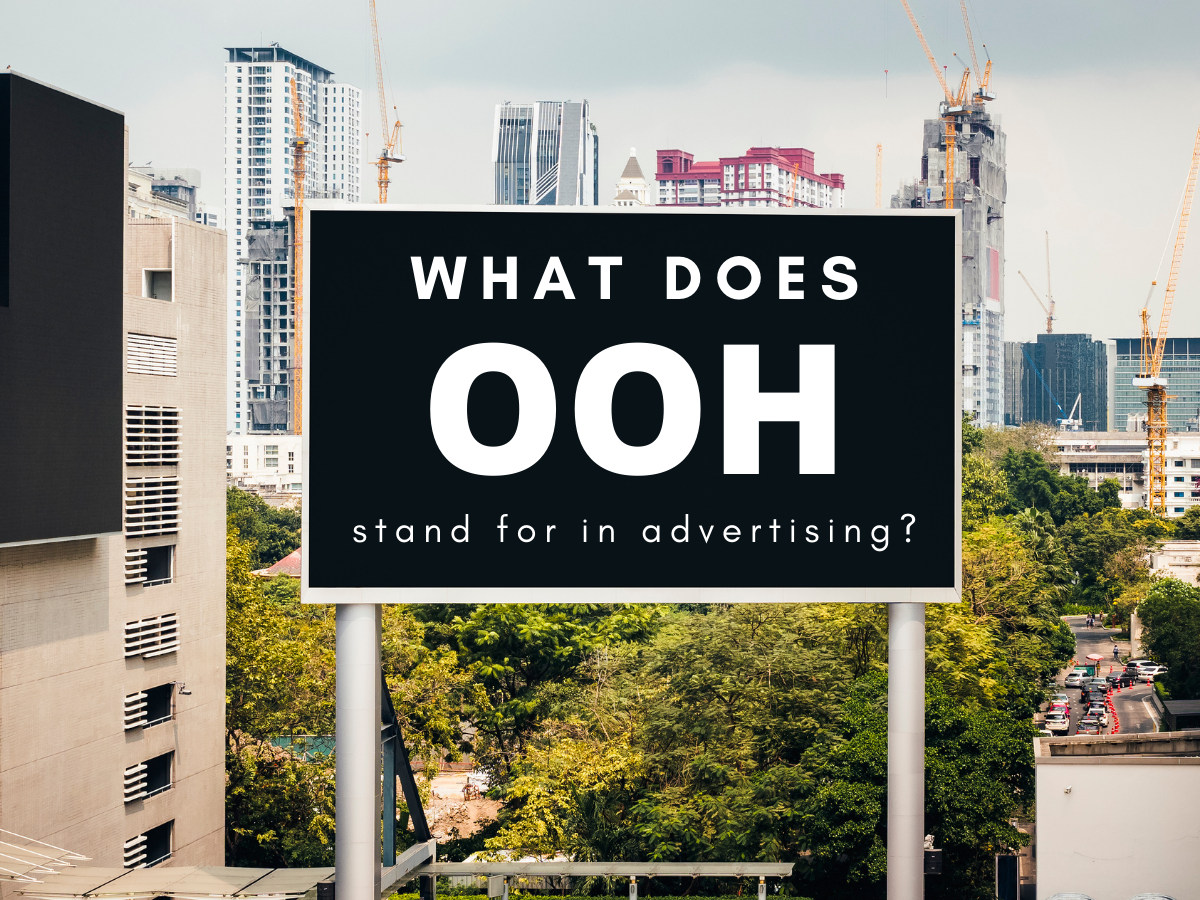
What Does OOH Stand For in Advertising?

As the name suggests, OOH stands for out-of-home [advertising]. It is a marketing strategy to reach a target audience when they are not in their homes.

ooh advertising

OOH Advertising Examples

Mary Lister writing for Wordstream describes several modern examples.

  • Digital and traditional billboards and posters
  • Public furniture including bus stop shelter walls, kiosks, benches, poles
  • Public transit vehicles like bus walls, taxi wraps, subway, and train cars
  • Point-of-sale ads including sandwich boards, taxi cab windows, business front windows, building walls, gas pumps, and trash cans
  • Stand-alone advertisements like those on balloons and other inflatables, floats, and airplane banners

A Brief History of OOH Advertising

The Out of Home Advertising Association points out that OOH advertising dates back thousands of years. The first out-of-home advertising occurred when Egyptians used towering stone obelisks as a platform for informing the public of treaties and laws.

In the 1400s, Johannes Gutenberg’s invention of the printing press gave rise to handbills. By 1796, these advertisements had added eye-catching illustrations. Handbills led to bill posters. These larger advertisements were erected on structures where they could be read by passing vehicle and foot traffic.

The 1830s are believed by many to have launched roadside advertising. Merchants hand-painted signs and affixed advertising to building fronts and fences. These told walkers and drivers that their business was ahead. They often highlighted their wares.

In 1835, Jared Bell began printing large posters. These fifty-square-foot ads told of the arrival of the circus.

1850 brought advertising on street railways. However, the advent of industrialization in the late 1800s and early 1900s saw the formation of the Association of Bill Posters in North America. Later called the Outdoor Advertising Association of America, this organization aimed to promote a greater understanding of out-of-home media. This led to the standardization of billboards. There followed a boom on mass-produced billboard campaigns by such big businesses as Coca-Cola, Palmolive, and Kellogg’s.

The mid-twenties saw the first outdoor advertising company listed on the stock exchange. In the 1940’s the OBIE awards debuted. Coca-Cola’s “Yes Girl” billboard won.

As billboards grew in numbers, legislation arose curbing where they could be erected, how large they could be, and what they could advertise. In 1999, tobacco companies agreed not to advertise on OOH structures.

From billboards, OOH companies diversified into street furniture, cinema, and digital screens.

Today, some of the world’s largest companies lead the way in OOH advertising. This includes Facebook, Google, Amazon, Netflix, Apple, McDonald’s, Amazon, HBO, and Coca-Cola.
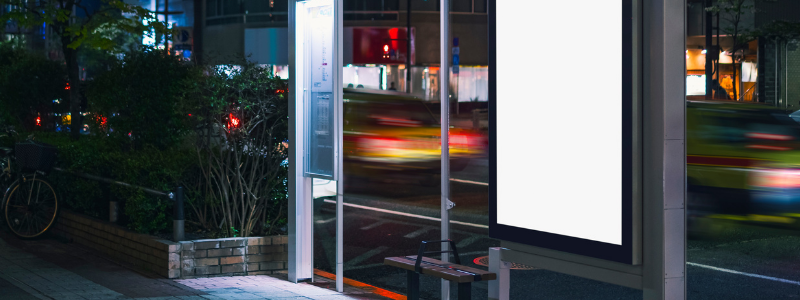
what does ooh stand for

The Evolution of Out of Home Advertising

Out of Home Advertising has a rich and storied history, dating back to ancient civilizations. Over the centuries, it has evolved and adapted to the changing needs of advertisers and the dynamic landscapes of cities and towns.

Historical Roots

The origins of Out of Home Advertising can be traced to ancient Egypt, where merchants used painted advertisements on walls to promote their goods and services. This practice gradually spread to other cultures, such as the Roman Empire, where announcements were carved into stone tablets.

Print and Poster Era

With the advent of the printing press in the 15th century, the possibilities for advertising expanded. Posters and handbills adorned city streets, theaters, and public squares, offering glimpses into the consumer culture of the time.

Billboards and Outdoor Displays

The late 19th and early 20th centuries saw the rise of billboards and large-scale outdoor displays. These eye-catching structures became synonymous with Out of Home Advertising, capturing the attention of travelers on railways and highways.

Digital Revolution

In recent decades, the industry has undergone a profound transformation with the introduction of digital technology. Digital Out of Home Advertising (DOOH) has ushered in a new era, featuring dynamic, interactive, and highly targeted campaigns.

Integration with Data and Technology

Today, Out of Home Advertising is seamlessly integrated with data analytics, allowing advertisers to deliver personalized messages to specific demographics. Real-time tracking and optimization have become essential tools in the OOH advertising toolbox.

Place-Based OOH Advertising

With real estate and OOH advertising, location is crucial. Place-based OOH media involves specifically locating advertising where a niche market will see it.

Here are some examples:

  • Wall ads, posters, furniture ads, and kiosks at airports, bus, and train stations
  • Display racks, bulletin boards, posters, and wall billboards at universities, colleges, and school campuses
  • Billboards near restaurants, health clubs, gyms, arenas, movie theaters, and nightclubs.
  • In-store ads on store shelves, shopping carts, checkout stands, and storefronts
  • Shopping mall kiosks, wall displays, store doors,
  • Display panels  on truck stops, trucks, interstate travel stops
  • Special events promotions
  • Interactive, specialized media

Getting Started

If you have decided OOH advertising is an effective marketing tool for your company, first decide who you want to reach. Next, choose an effective location. Where will your niche market see your ads?

Select the message/idea/product you wish to showcase.

What is the best format for your message?

The most effective messages are sharable. Consider bold colors, creative digitals, slogans that will get shared on social media increasing target audience engagement.

Look at the OOH advertising of your competitors. What spaces are they using? What format have they selected? Check out their social media. What content is getting the highest reaction? What do their potential buyers like? Have they integrated adverting modes? An analysis of your competition, you can get good information for your OOH strategies.

Think about your message. Is it clear? Is it creative? Is it engaging?

Out-of-home advertising must have a simple message that can be absorbed by passing motorists or pedestrians in a few seconds. Keep the text limited to a few compelling, easy-to-read words. Consider the power of an image. Your core message has a lot more chance of being shared if it is creative and brief. Your best return on investment comes with it being talked about across media channels.
ooh stands for out of home advertising

Why Consider OOH Advertising?

Studies have shown that 70% of drivers and walkers notice what is being marketed on out-of-home advertising. Thirty percent say they’ve purchased products or services they’ve seen advertised on out-of-home ads the very same day they were exposed to them.

Where TV and radio ads are seen or heard once, pedestrians and drivers see out-of-home ads repeatedly on their way to and from work.

Studies show that out-of-home ads are the best return on investment of any marketing program.

Unlike radio, TV, newspaper, or magazine ads, you can’t skip OOH ads. They are in your face and get noticed. Nielsen surveys found that nearly 50% of adults who searched online for a product had first seen it in an OOH ad.

Thanks to technological improvements, the versatility of out-of-home advertising will continue to grow. With the rise in digital ads, new capabilities and increased effectiveness of OOH ads have resulted. Digital OOH media has brought brighter colors, animation, and convenience in ad production. Multiple images and ads geared to specific demographics have proven that OOH ads will continue to be profitable marketing tools.

Notable Examples of Out-of-Home Advertising

Apple’s “Shot on an iPhone” billboard invites customers to send in photos shot on their iPhones. Outstanding ones were turned into billboards.

Clarin’s interactive campaign at Hong Kong International Airport lured viewers to enter their emails or scan a QR code on the screen with the offer of codes for discounts and free samples.

CVS Beauty Mark’s social media campaign encouraged users to upload their selfies to the hashtag #BeautyUnaltered. Every ten seconds, a different unaltered selfie celebrated real beauty on a Times Square digital billboard.

Acadia SUV, GMC used facial analytics to create engaging digital signage. Cameras in the digital display detected audience demographics including age and gender. Based on these data, one of thirty possible video ads was shown to the viewer. Passersby stopped to interact with the kiosk out-of-home ad that harnessed digital out-of-home power to personalize content for maximum audience engagement.

McDonald’s weather-sensitive ads are another example of digital out-of-home advertising. The campaign featured McDonald’s frozen drinks. When the temperature rose to a level that made a cold drink appealing, the campaign played a cold drink. When the temperature became hotter, the ad automatically switched to a frozen drink.

Lasik explored whether elevator riders who wear glasses can be identified. Then, their OOH ad delivered a creative ad targeting those who were candidates for laser eye surgery. The ad’s message changed based on the type of eyewear the rider was wearing. The ads delivered eleven million targeted messages to riders who wore glasses, personalizing the message for age and gender.

Google’s “Make the Most of Summer” used responsive, data-driven digital OOH. The advertising focused on summer experiences in the area where it was placed. The ad engaged viewers through the presentation of dynamic, full-motion sites.

To showcase its new 5G technology, AT&T encouraged viewers of their interactive ad to “Pose with the Pros”. Dallas Cowboys fans could select up to five of their favorite Cowboys to pose with them at a kiosk in concourses at the AT&T Stadium. Their virtual group picture could be emailed to themselves, and/or shared on social media.

So, what does OOH stand for in advertising? Well, it’s more than just your reaction to captivating and compelling billboards – it’s the abbreviation for what you’re looking at, outside.

How Can bMedia Group Help?

Our media service boasts over three hundred out-of-home advertisements in Puerto Rico. We provide our valued customers with a wide variety of effective OOH formats.

Our skilled designers, fabricators, and construction staff members know how to take your design needs and turn them into effective billboards, posters, and other out-of-home advertising. We are proud to have the highest consumer traffic on the island.

For more information regarding how we can increase your brand recognition contact us.
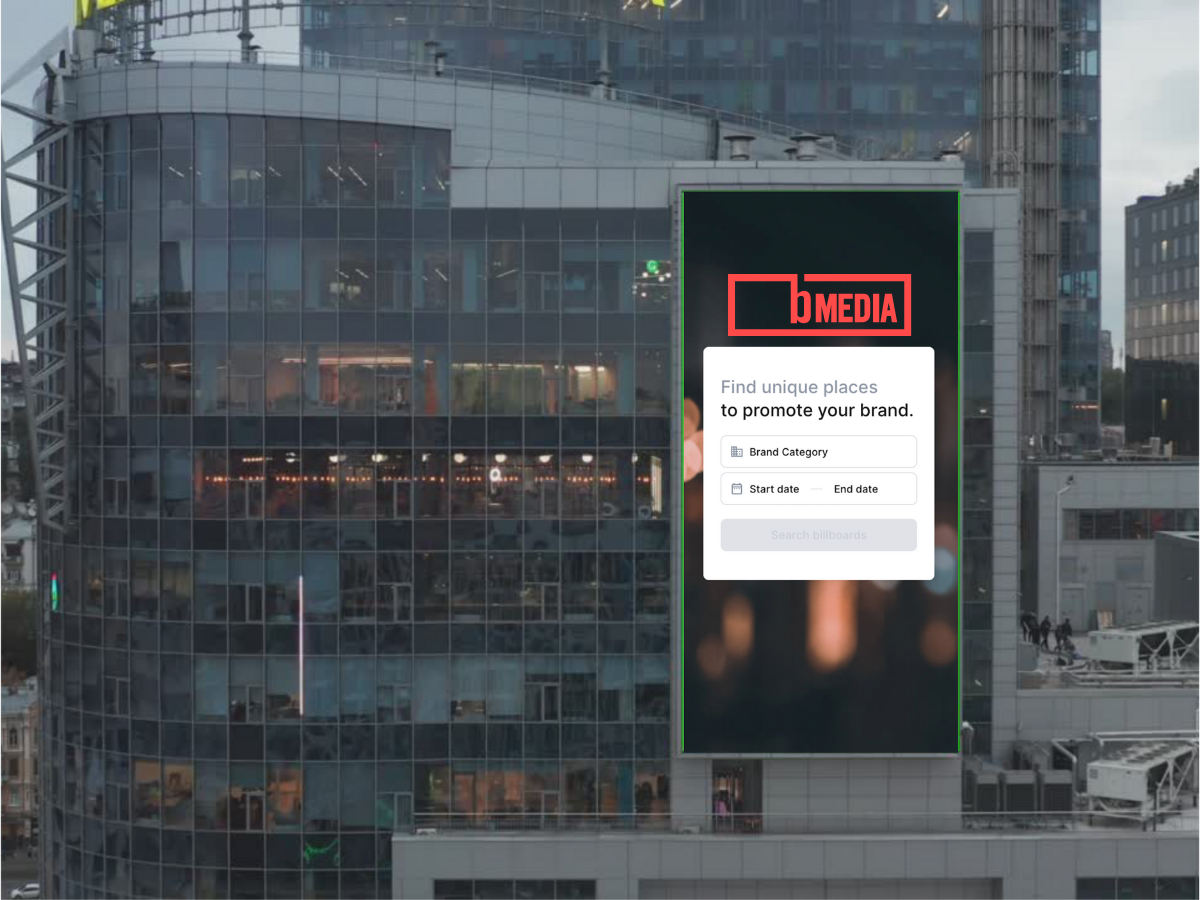
DOOH Advertising

If you have a business, advertising is the only way that you can gain public interest in your venture. All of your hard work needs to pay off, so advertising your business properly will help you generate interest and allow thousands of people the opportunity to see your ideas. The best way for you to advertise your business is through DOOH Advertising. This type of advertising allows you to create an image of yourself or your company on billboards, bus stops, posters, flyers, and many other places. The more places that you put up your advertisement, the more people will see it. When they see your advertisement, they will be able to learn about your business and what you are offering. By using this method, you will be able to increase sales and bring in more customers.

Discover more about DOOH advertising in this article and find out if it is something that could help to elevate your brand.

digital billboard

What Exactly Is DOOH Advertising?

OOH advertising is a popular method of advertising that has been used by companies for decades.

OOH advertising stands for out-of-home advertising, and it is the practice of spreading the word of your business in public spaces for people to see. It allows people to reach out to people and for them to become intrigued by your business, generating more interest.

If OOH advertising stands for out-of-home advertising, what does DOOH mean?

DOOH advertising means digital out-of-home advertising. It is a modern twist on the traditional method of advertising your business on billboards and bus shelters, but digitally.

DOOH advertising allows businesses to use advertising technology to reach their potential clients. This means that they can place advertisements digitally so people can see them when they are in public spaces, reaching a mass audience. They make sure that these advertisements are seen by as many people as possible.

DOOH Advertising Companies

bMedia is a digital advertising company that specializes in DOOH advertising, becoming a leading figure in DOOH advertising in Puerto Rico.

When you work with bMedia, you are working closely with a team of professional media specialists and strategists to make sure that your business is generating the interest that it deserves.

As bMedia works closely with technology, there is the opportunity to work with innovative and creative digital ideas to make sure that your brand is advertised in the best way.

bMedia is a strong figure in OOH advertising, so if you are looking for high-quality DOOH advertising, bMedia can help with your brand and business needs.

bMedia Advertising Rates

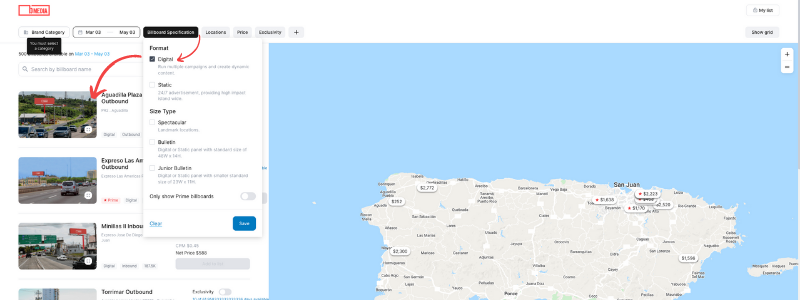
bMedia has numerous digital billboards across Puerto Rico in a variety of locations to ensure that your business can be seen all around the island. The rates of billboards depend on their location, but here are some of the locations that bMedia offers and their advertising rates.

In the filters, you can select “Billboard Specification” and select “Digital” to filter all digital billboards.

digital billboards puerto rico

Monster bTV Expreso De Diego PR22 & PR165 Outbound

This digital billboard is located on Expreso Jose De Diego PR22. Guaynabo. The location of this billboard is very busy and attracts huge crowds every day as it is near gas stations, office buildings, and restaurants.

As this billboard is in such a prime location where it can be seen by thousands of people daily, the price to use this billboard averages $1,200 per day, and you can reserve it for as long as you’d prefer.

Dorado Puente l Expreso De Diego PR22 Inbound

This billboard is located on José de Diego Expressway PR22. It is along the expressway between Dorato and Vega Baja. As it is located on the expressway, a high volume of traffic rides down it every day, so the billboard is in prime position for catching the attention of passengers and drivers in their vehicles.

It is also near Doramor Plaza, which attracts people for its fast-food restaurants, supermarkets, and banks. The price to hire this billboard per day is $117, but there is are no minimum number of days that you have to book the billboard.

Boulangerie l Condado Inbound

This billboard is located on Román Baldorioty de Castro PR26, which is another area of Puerto Rico that draws a high volume of traffic. It is located near restaurants, stores, and even car rentals, meaning that it could draw international attention to your business.

It costs $117 to hire the billboard and there is no minimum number of days that you have to book the billboard. This gives you flexibility in changing billboard locations if you want to promote your business in other areas, not just the one.

Map of all billboard locations available here.

digital advertising billboard

DOOH Advertising Trends

The current trends in DOOH advertising are hard to ignore. Due to the rise in social media, DOOH advertising has become an increasingly popular way of promoting your brand. Digital advancements allow businesses to advertise to specific audiences by using DOOH advertising in public spaces where the brand’s demographic focus can see it.

DOOH advertising also allows businesses and advertisers to manage and track the content that they are displaying to the public. It also allows users to personalize their advertising to draw in the right audience, making it incredibly effective in promoting businesses.

FAQ – DOOH Advertising

What does DOOH stand for in advertising?

DOOH stands for “Digital Out-of-Home” advertising. It refers to digital media used for marketing purposes outside of the consumer’s home. This is a modern evolution of traditional out-of-home advertising, which has been around for decades in the form of billboards, transit posters, and other large-format advertisements. DOOH includes digital billboards, digital signage, and screens that you see in various public places like shopping malls, airports, and train stations.

What is an example of DOOH advertising?

An example of DOOH advertising could be a digital billboard along a busy highway that displays rotating ads from multiple brands. Another example could be interactive kiosks in shopping malls where shoppers can engage with the ad, such as a touchscreen that lets you explore a product’s features. Digital screens in elevators, gyms, and even gas stations can also serve as platforms for DOOH advertising.

What is the difference between DOOH and OOH?

While both DOOH (Digital Out-of-Home) and OOH (Out-of-Home) are forms of advertising that reach the consumer while they are outside of their home, the key difference lies in the medium used for the advertisement.

  • OOH (Out-of-Home): This is the traditional form of outdoor advertising and includes billboards, transit posters, and other static forms of advertising. These are usually printed and do not have the capability for real-time updates or interactivity.
  • DOOH (Digital Out-of-Home): This is the digital evolution of OOH advertising. DOOH can feature dynamic content, which can be updated in real-time and can be interactive. It offers more flexibility and engagement opportunities compared to traditional OOH.

What is the difference between DOOH and digital advertising?

While both DOOH and digital advertising use digital screens to display content, the context and strategy behind them are different:

  • DOOH (Digital Out-of-Home): This form of advertising is location-specific and targets consumers in public places, transit systems, and commercial locations. It can be a one-to-many form of communication where one ad is seen by many people at the same time.
  • Digital Advertising: This is a broader category that includes online advertising channels like search engine marketing, social media ads, and display ads on websites. Digital advertising is often targeted to individual users based on their behavior, preferences, and other personal data.

bMedia: DOOH Advertising Specialists

DOOH advertising is the new way to promote your business. Digital advertising is much more effective than OOH advertising as users can control their advertising by personalizing the content to their target demographic. This allows businesses to reach out to their customers and promote their brands.

Billboard advertising is an extremely effective way to advertise your business, and digital billboards further promote your company by being incredibly eye-catching. Digital billboards that are owned by bMedia are situated in places that generate a lot of traffic, meaning that they will be seen by thousands of people so businesses can gain more attention.

Finally, if you are not DOOH advertising your business, you will be missing out on gaining new interest, attention, and clients. DOOH advertising is extremely important in making sure that your business receives the attention that it deserves.

Creative Strategy in Advertising

In today’s fast-paced marketing world, creativity isn’t optional; it’s essential. With consumers exposed to thousands of ads every day on radio, TV, social media, and outdoor platforms, capturing their attention requires more than a catchy slogan. It demands a well-crafted creative strategy.

At bMedia Group, we specialize in creating bold, memorable advertising campaigns that break through the noise, particularly in outdoor and out-of-home (OOH) media. Let’s explore how a strategic and creative approach to advertising can elevate your brand and why it’s a must-have for long-term marketing success.

creative advertising strategy

What Is a Creative Advertising Strategy?

A creative strategy is a structured plan that guides how your business communicates with its audience through marketing. It aligns your branding, goals, audience insights, tone of voice, and messaging into a cohesive roadmap for content and campaign execution.

At its core, a creative advertising strategy helps businesses:

  • Define their target audience and key messages
  • Determine which advertising channels are most effective
  • Set measurable goals and KPIs
  • Create compelling visual and verbal brand elements
  • Develop memorable campaigns that connect emotionally

Identifying Your Target Audience: The First Step in Creative Strategy

No matter how clever your message is, it won’t succeed if it’s aimed at the wrong audience.

Your creative strategy begins with audience targeting. This involves identifying the people most likely to connect with your product or service, understanding their behaviors and needs, and designing messages that resonate with them. Utilize tools such as market research surveys, competitor analysis, and customer data to develop accurate buyer personas.

Once you’ve honed in on your ideal audience, your advertising message becomes sharper, more relevant, and far more cost-effective.

Aligning Your Brand Voice and Message

A successful campaign isn’t just eye-catching; it reflects your brand’s voice, values, and tone.

Ask yourself:

  • What does my brand sound like?
  • How do I want customers to feel when they engage with my ad?
  • What core message do I want them to take away?

Whether you’re aiming for a bold and edgy campaign or one that’s heartwarming and emotional, your messaging should stay consistent across platforms. Keep in mind that effective advertising focuses on benefits over features – emphasize how you improve the customer’s life, not just what you sell.

Powerful Call-to-Actions That Convert

Once your audience is hooked, it’s time to drive action. This is where your call-to-action (CTA) comes in.

The CTA is the bridge between interest and conversion. Strong CTAs use direct, benefit-driven language to push users toward a desired goal.

Examples of high-performing CTAs include:

  • “Get a Free Quote Today”
  • “Find Your Nearest Location”
  • “Book Your Adventure Now”
  • “Don’t Miss Out – Subscribe Now!”

In outdoor advertising, CTAs must be instant and straightforward; viewers only have a few seconds. Clear, concise language is key.

Setting Marketing Objectives and Tracking Performance

Every great creative campaign starts with specific, measurable objectives. These help ensure that your efforts aren’t just innovative but also practical.

Ask yourself:

  • What does success look like for this campaign?
  • Are we aiming for brand awareness, lead generation, or direct sales?
  • Which performance metrics will we track?

Popular advertising KPIs include:

  • Click-through rate (CTR)
  • Impressions and reach
  • Return on ad spend (ROAS)
  • Conversions
  • Customer acquisition cost (CAC)

These metrics let you test, learn, and optimize your creative strategy over time.

creative marketing strategy

Why Brand Style, Voice, and Tone Matter in Advertising

Your brand identity is more than just a logo. It’s the total experience you create for your audience, and it plays a massive role in whether your ads succeed.

Key elements of brand identity include:

  • Logo and visual style
  • Typography and color palette
  • Taglines and slogans
  • Emotional tone and language choices

Think of McDonald’s. Their visual elements (red and yellow), slogan (“I’m lovin’ it”), and even jingle are deeply etched into public memory. That’s the power of consistent branding across all marketing channels.

Collaboration and Timeline: Building a Campaign That Stays on Track

Great creative campaigns are rarely built in isolation. Stakeholders across marketing, sales, design, and leadership must be aligned on goals, messaging, and timelines to ensure effective collaboration.

Create a shared calendar or project tracker with key milestones like:

  • Concept development
  • Design approvals
  • Ad placements
  • Campaign launch
  • Performance reporting

Having clear checkpoints helps teams stay organized, communicate effectively, and keep the campaign moving forward on schedule.

Why Creative Strategy in Marketing Matters More Than Ever

With competition rising and attention spans shrinking a thoughtful and creative strategy is no longer optional. It allows your business to:

  • Cut through the noise with a unique message
  • Build long-term brand equity
  • Deliver consistent experiences across channels
  • Adapt to evolving audience behaviors and trends
  • Maximize advertising ROI

In short, a creative strategy serves as the blueprint for memorable advertising.

what-is-a-creative-strategy-in-advertising

Types of Creative Advertising Strategies That Work

Creative strategy isn’t one-size-fits-all. Here are a few approaches we’ve seen work wonders:

Be Responsive and Accessible

Modern consumers expect fast answers and real-time interaction. Keep lines of communication open across all channels, including social media, email, chat, and phone.

Make It Memorable

Use slogans, jingles, or unique visuals that stick. Consistency across your messaging will increase brand recall and loyalty.

Use Out-of-Home (OOH) Advertising Wisely

Billboards are not just old-school; they’re high-impact and high-visibility. Whether static or digital, they offer exposure 24/7 and are trusted by consumers more than online pop-ups or banner ads.

Leverage Digital Billboards

Today’s digital out-of-home (DOOH) technology allows brands to run dynamic, data-driven campaigns on bright screens across cities and highways. You can even change messaging by time of day, weather, or audience demographics.

Use Out-of-Home (OOH) Advertising Wisely

Billboards are not just old-school; they’re high-impact and high-visibility. Whether static or digital, they offer exposure 24/7 and are trusted by consumers more than online pop-ups or banner ads.

Leverage Digital Billboards

Today’s digital out-of-home (DOOH) technology allows brands to run dynamic, data-driven campaigns on bright screens across cities and highways. You can even change messaging by time of day, weather, or audience demographics.

Why OOH Advertising Still Delivers Results

Even in the digital age, outdoor advertising remains one of the most effective tools in a marketer’s toolkit.

Here’s why:

  • It’s always on: 24/7 exposure
  • OOH builds trust: Perceived as more reliable than digital ads
  • It enhances recall: Visuals are more memorable than text
  • Complements digital: Supports multi-channel strategies

From static billboards to transit ads and digital screens, OOH campaigns boost brand awareness in ways other formats can’t.

how to create a creative strategy

Partner With bMedia: Your Experts in Puerto Rico Advertising

At bMedia, we help businesses across Puerto Rico develop creative and effective advertising strategies that work. Whether you’re launching a new product, rebranding, or just trying to stand out from your competition, we bring experience, insights, and innovation to every campaign.

With:

  • Over 500 billboard and DOOH locations in Puerto Rico’s most high-traffic areas
  • Expert marketing and strategy consulting
  • Full campaign development support

We’ll help you take your brand to new heights.

Ready to Build Your Creative Advertising Strategy?

If you’re ready to stand out in a crowded marketplace, it starts with an innovative, imaginative, creative strategy. Whether you’re a small business, established brand, or marketing agency, bMedia Group is here to help bring your vision to life.

Let’s make something unforgettable.

Contact us today and get started on your next big campaign.