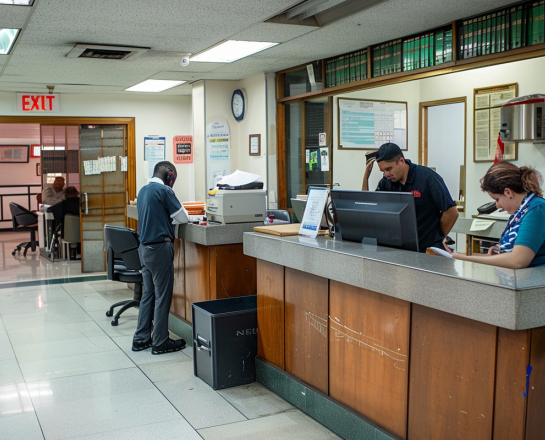
How to Start a Business in Puerto Rico

Welcome to the world of entrepreneurship in Puerto Rico. You are about to embark on a journey that combines the island’s rich cultural heritage with a thriving business environment. Puerto Rico offers a unique landscape for both local and international entrepreneurs. Whether you’re attracted by the tropical climate, strategic location, or growing economic opportunities, this region has much to offer.

Starting a business in Puerto Rico requires a deep understanding of the local market dynamics, regulatory environment, and cultural nuances. To help you with this, we have created a comprehensive guide titled “How to Start a Business in Puerto Rico.” It is designed to walk you through the essential steps, from initial research and legal procedures to effective marketing strategies, including the powerful realm of billboard advertising. With each step, you will gain insights and practical advice to navigate the complexities of setting up your business in this promising region.

Our goal is to provide you with a friendly yet expert guide that makes the business setup process as smooth and successful as possible. Whether you’re looking to open a quaint café in the heart of San Juan, a boutique resort along the coastline, or a tech startup that leverages local innovations, this guide will equip you with the knowledge you need to start your business journey with confidence. Let’s dive into the details.

How-to-Start-a-Business-in-Puerto-Rico

Step 1: Conduct Market Research

Embarking on a business venture in Puerto Rico begins with one critical step: market research. Understanding the local consumer behavior, economic trends, and competitive landscape can dramatically increase your chances of success. Here’s how you can start your market research effectively:

  • Identify Your Target Market: Define who your customers are. Are they local residents, tourists, or perhaps businesses in a specific sector? Understanding your target audience’s preferences, buying habits, and needs will help tailor your products and services.
  • Analyze Industry Trends: Look into the broader industry trends within Puerto Rico. How has the economic climate affected this industry? Are there emerging sectors that might offer opportunities? Resources like the Puerto Rico Trade and Export Company provide insights and statistics that are invaluable.
  • Competitive Analysis: Identify your main competitors. What are they doing well? Where could they improve? By analyzing your competition, you can find a niche or service not currently offered that could differentiate your business.
  • Customer Surveys and Feedback: If possible, gather feedback directly from potential customers. This can be through online surveys, focus groups, or informal conversations. Their insights will provide a direct line to what your target market desires.
  • Utilize Local Resources: Make use of local market research firms and online databases to gather data about your industry. The Puerto Rico Chamber of Commerce and the United States Census Bureau are excellent starting points for demographic and economic data.

By meticulously analyzing the market, you will not only understand where your business fits within the local ecosystem but also gauge potential challenges and opportunities. This foundational knowledge is essential as you move forward with setting up your business in Puerto Rico.


Step 2: Choose the Right Business Structure

Choosing the appropriate business structure is pivotal as it influences everything from your day-to-day operations to tax obligations, and even your personal liability. In Puerto Rico, you have several options to consider, each with its own set of advantages and disadvantages:

  • Sole Proprietorship: This is the simplest form of business structure, easy to set up and manage. Ideal for small, low-risk businesses, a sole proprietorship means that the business liabilities are treated as your personal liabilities.
  • Partnership: If you’re considering a business with one or more partners, this might be the way to go. There are two types in Puerto Rico: limited partnerships (LP) and general partnerships (GP). While partnerships offer the benefit of shared responsibility, they also require clear agreements to manage risk.
  • Corporation (Corp.): A corporation is a more complex structure but provides significant advantages in terms of liability protection and potential tax benefits. In Puerto Rico, corporations are subject to the corporate tax rate and must adhere to stringent regulatory requirements.
  • Limited Liability Company (LLC): Combining the benefits of a corporation and a partnership, an LLC in Puerto Rico offers flexibility and protects its members from personal liability. This structure is popular among foreign investors and entrepreneurs due to its protective features and simplicity.

Legal Requirements for Registering Your Business:

  • Choose a Business Name: Ensure your business name is unique and register it with the Puerto Rico State Department.
  • Register for Permits and Licenses: Depending on your business type, you may need specific permits and licenses to operate legally in Puerto Rico.
  • Tax Registrations: Register for the necessary state and federal taxes. You will need an Employer Identification Number (EIN), which can be obtained from the IRS.

Selecting the right business structure is crucial for your long-term success and legal compliance. Each type has specific implications for your liability, tax obligations, and operational flexibility. Carefully consider which structure aligns best with your business goals and consult with a legal expert to navigate the complexities of Puerto Rican law. This careful planning will lay a solid foundation for your business and help avoid significant hurdles in the future.


Step 3: Register Your Business

Registering your business is a fundamental in how to start a Business in Puerto Rico. This process solidifies your presence in the local market and involves several key actions:

Documentation and Registration

  • Register Your Business Name: Before you can register your business, you must ensure that your business name is not already in use. Check with the Puerto Rico State Department’s Commercial Registry to see if your desired name is available.
  • Obtain an Employer Identification Number (EIN): Essential for all businesses, the EIN is your federal tax ID. You can apply for it through the IRS website. This number is required for tax filings, opening a bank account, and hiring employees.
  • File Organization Documents: Depending on your business structure, you will need to file different documents:
    • Corporations must file articles of incorporation.
    • LLCs file articles of organization.
    • Partnerships require a partnership agreement.

Where to File

Documents can be filed online via the Puerto Rico State Department’s portal or in person at their office. It’s important to ensure that all information is accurate to avoid delays.

Cost and Time

  • Fees: The cost to register a business in Puerto Rico varies depending on the business structure and the type of filings required. Typically, fees range from $150 to $500.
  • Timeframe: The registration process usually takes between 4 to 6 weeks. However, this can vary based on the complexity of your business structure and the completeness of your submitted documents.

Other Legal Considerations

  • Licenses and Permits: Identify any specific licenses or permits your business may require based on its activities. Common examples include health department permits for restaurants or environmental permits for construction companies.
  • Local Zoning Laws: Check local zoning regulations to ensure that your business location is in an area zoned for your type of business. This is crucial for avoiding future legal complications.
  • Annual Reports: Most businesses in Puerto Rico are required to file annual reports with the Puerto Rico State Department. These reports keep your business in good standing and update the state on any significant changes to your business.

Completing these registration steps is not just a legal formality; it also provides your business with credibility and legitimacy in the eyes of customers, suppliers, and financial institutions. Make sure to follow through meticulously to set a strong foundation for your business operations in Puerto Rico.


Step 4: Understand Tax Obligations

Proper management of tax obligations is critical for your business success in Puerto Rico. Familiarizing yourself with local and federal tax requirements will help you avoid legal issues and ensure financial health. Here’s what you need to know about the tax landscape for businesses in Puerto Rico:

Local Tax Responsibilities

  • Puerto Rico Sales and Use Tax (IVU): Similar to sales tax, IVU is applicable to most goods and services sold within Puerto Rico. The current standard rate is 11.5%, with a reduced rate for certain items such as unprocessed foods.
  • Corporate Income Tax: Companies operating in Puerto Rico are subject to corporate income tax on their earnings. The rate varies depending on your business’s income level but generally ranges from 20% to 30%.
  • Municipal Taxes: In addition to state taxes, businesses may also be subject to taxes imposed by the local municipalities. These can include property taxes, business license taxes, and more.

Federal Taxes

  • U.S. Federal Income Tax: Despite being a territory, residents and businesses in Puerto Rico generally do not pay U.S. federal income taxes on income sourced within Puerto Rico; however, any income sourced from the U.S. must be declared and could be subject to taxation.
  • FICA and Medicare: Businesses are required to contribute to Social Security and Medicare, just as in the mainland United States. This involves withholding the appropriate amounts from employee wages and matching those contributions.

Staying Compliant

  • Regular Updates: Tax laws can change, so it’s important to stay informed. Consulting with a tax advisor who is familiar with both Puerto Rican and U.S. tax laws is advisable.
  • Filing Deadlines: Be aware of and comply with all filing deadlines to avoid penalties and fines. This includes monthly, quarterly, and annual tax filings, depending on your business activities.
  • Record Keeping: Maintain meticulous records of all financial transactions, tax filings, and relevant business activities. Good record keeping not only helps in staying compliant but also in managing your business effectively and preparing for audits.

Understanding and managing your tax obligations is essential for operating a successful business in Puerto Rico. By ensuring compliance with both local and federal tax laws, you protect your business from legal complications and build its reputation as a trustworthy entity.
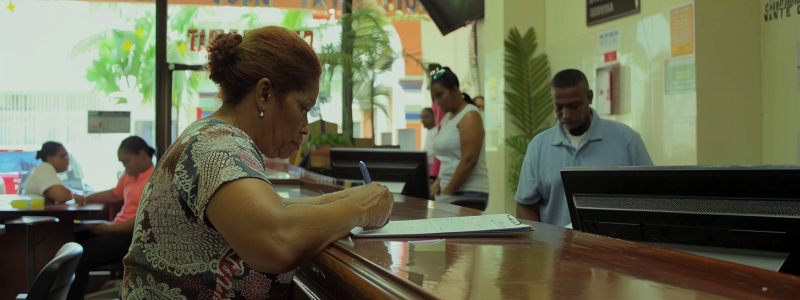
Puerto-Rico-Business-Registration

Step 5: Secure Financing

Securing adequate financing is a crucial step in how to start a Business in Puerto Rico. Whether you need initial startup capital, funds for expansion, or cash to cover operational costs, here are some avenues you can explore to secure the necessary funds:

Types of Financing Available

  • Bank Loans: One of the most traditional forms of financing, bank loans can provide significant amounts of capital. You’ll need to present a solid business plan and good credit history to qualify. Local banks in Puerto Rico, such as Banco Popular de Puerto Rico and FirstBank, offer various business loans with competitive terms.
  • Government Grants and Subsidies: The Puerto Rican government offers various grants and subsidies through agencies like the Economic Development Bank for Puerto Rico. These are especially targeted at sectors such as technology, agriculture, and tourism.
  • Venture Capital: For businesses with high growth potential, particularly in industries like tech, venture capital could be a viable option. Local venture capital firms provide funding in exchange for equity in your company.
  • Angel Investors: Angel investors are typically high-net-worth individuals looking to invest in promising business ventures in exchange for equity. Networking in local business events and conferences can be a good way to meet potential investors.

Tips for Successful Financing

  • Prepare a Comprehensive Business Plan: This should detail your business idea, market analysis, management structure, and financial projections. A well-prepared business plan is crucial to convince lenders and investors of the viability of your business.
  • Understand the Terms of Financing: Whether it’s a loan or an equity investment, understanding the terms of your financing agreement is critical. Pay special attention to interest rates, repayment schedules, equity stakes, and any other obligations.
  • Build and Maintain Good Credit: Good personal and business credit scores can significantly increase your chances of securing a loan with favorable terms. Regularly check your credit report and work on improving any negative factors.
  • Explore Multiple Options: Don’t limit yourself to one type of financing. Explore various sources to determine which one best suits your business needs and offers the most favorable terms.

Finalizing Your Financial Plan

Once you have identified potential sources of funding, prioritize those that align best with your business goals and financial needs. It might also be beneficial to combine different types of financing to cover various aspects of your business expenses.

Securing the right financing involves careful planning and negotiation but is essential for the health and growth of your business. By exploring all available options and preparing thoroughly, you will significantly increase your chances of securing the necessary funding to launch and expand your business in Puerto Rico successfully.


Step 6: Set Up Your Business Location

Choosing the right location is crucial for the success of your business in Puerto Rico. This decision impacts your operational efficiency, branding, customer traffic, and overall business growth. Here are key considerations when setting up your business location:

Factors to Consider

  • Target Market Proximity: Your location should be easily accessible to your target market. Consider the demographics and buying behaviors of the area to ensure alignment with your business offerings.
  • Visibility and Accessibility: A location that is visible and easily accessible to foot or vehicle traffic can significantly increase customer visits. Look for areas with good infrastructure, public transportation access, and ample parking.
  • Zoning Laws: Ensure the chosen location complies with local zoning laws. These laws determine what types of businesses can operate in certain areas. Check with the local municipality to avoid any legal issues that might arise from non-compliance.
  • Competition: Evaluate the competitive landscape of the area. Being too close to competitors can be challenging unless you have a clear differentiation strategy.
  • Cost of Real Estate: The cost of leasing or buying a property varies widely across Puerto Rico. Consider your budget and financial forecasts to ensure the location cost is sustainable for your business model.

Steps to Set Up Your Business Location

  1. Research Potential Locations: Identify several potential locations based on the factors mentioned above. Conduct thorough research, including site visits and discussions with other local business owners.
  2. Evaluate Lease Agreements or Purchase Terms: Carefully review all terms in lease agreements or purchase contracts. Consider seeking legal advice to understand all obligations and rights.
  3. Infrastructure Needs: Assess the infrastructure of the potential location. This includes utilities, internet availability, logistics needs, and any modifications required to suit your business operations.
  4. Obtain Necessary Permits and Licenses: Depending on the location and nature of your business, you may need additional permits and licenses specific to that area. This can include signage permits, health department approvals, or special state licenses.
  5. Plan Your Layout and Design: The layout and design of your business should not only reflect your brand but also optimize operational efficiency. Plan for customer flow, employee workspaces, and storage needs.

Finalizing Your Location

Once you have finalized your location, take the time to announce your arrival in the community. This can involve an opening ceremony, special promotions, or community events to generate buzz and build relationships with local residents and other businesses.

Choosing the right location is a strategic decision that requires careful planning and consideration. By taking into account these key factors and following the steps outlined, you can establish a business location in Puerto Rico that supports your company’s growth and market penetration objectives.


Step 7: Marketing Your Business

Effective marketing is crucial for any business aiming to succeed, especially in the competitive landscape of Puerto Rico. While various marketing strategies can elevate your brand, incorporating billboard advertising into your marketing mix can significantly enhance your visibility and customer engagement. Here, we emphasize the unparalleled benefits of billboard advertising, specifically through a leading company in the sector, bMedia.

General Marketing Strategies

  • Develop a Strong Brand Identity: Establish a recognizable brand identity that reflects your business ethos and appeals to your target audience. This includes having a compelling logo, consistent themes, and a coherent message that resonates with your customers.
  • Leverage Digital Marketing: Use digital platforms effectively—optimize your website for SEO, engage on social media, and send out targeted emails. These methods help broaden your reach and interact directly with potential customers.
  • Local Media Engagement: Gain local media exposure by featuring in Puerto Rican newspapers, radio, and TV channels. This traditional form of media still holds significant sway and can boost your reputation within local communities.
  • Community Involvement: Increase your local presence by participating in or sponsoring community events. This not only enhances visibility but also helps in fostering community relationships, crucial for business growth.

Advertising with bMedia: Benefits

  • Strategic High-Traffic Locations: bMedia offers premium billboard placements in some of the most frequented areas across Puerto Rico, ensuring your advertisements get maximum exposure to your target demographic.
  • Consistent Brand Exposure: Billboards capture the attention of a wide audience repeatedly, which is vital for brand recall. With bMedia’s strategically located billboards, your business gains continuous exposure, helping to keep you top-of-mind among potential customers.
  • Tailored Advertising Solutions: bMedia specializes in creating tailored advertising solutions that resonate with specific audiences. This personalized approach ensures that your marketing message is not only seen but also impactful.

Tips for Effective Billboard Advertising

  • Choosing the Right Locations: With bMedia’s extensive network, select locations that best meet your demographic needs for optimal visibility and impact.
  • Designing Impactful Billboards: Collaborate with bMedia’s experienced designers to create visually striking and memorable billboards. An effective billboard is visually appealing and delivers its message clearly and quickly to those on the move.
  • Regular Campaign Evaluations: bMedia provides valuable analytics on the performance of your billboards, allowing you to measure effectiveness and make informed adjustments to your marketing strategy.

Cost-Effective Advertising

  • Transparent Pricing: bMedia offers competitive pricing models that cater to various budget sizes, ensuring that you can benefit from high-quality billboard advertising without compromising other marketing initiatives.
  • Measurable Returns: Track the success of your billboard campaigns with bMedia’s advanced tracking tools. This data helps you understand your return on investment and refine your strategies for even better results.

Puerto-Rico-Business-Incentives

A Final Word

Integrating billboard advertising into your marketing strategy can significantly increase your business’s market presence in Puerto Rico. By partnering with bMedia, you leverage their expertise, strategic placement, and customized advertising solutions to not only reach but also resonate with your target audience. Remember, successful marketing is about making lasting impressions and building relationships—bMedia’s billboard advertising can help you achieve just that. Let your brand be seen and remembered with bMedia.


Increase Brand Awareness

According to Forbes, most people are exposed to between 4,000 and 10,000 ads per day; there is a challenge for companies to cut through all the noise and make an impact on advertising. Today’s business environment is overrun by competition; you need to differentiate yourself from everyone else. Your product needs to stand out, and increase brand awareness is one of the best ways to do it. This is one of the most powerful advertising mediums for instant recognition and trust among your customers.

Companies can harness the power behind brand advertising platforms such as Out of Home Advertising – OOH to build brand recognition and awareness and expand the market.

Increase Brand Awareness

What is OOH Advertising?

As the name suggests, Out of Home advertising or OOH is an advertising mode found outside the consumer’s home. Companies like bMedia group are leveraging this platform to give businesses a fighting chance.

OOH is inclusive of everything; benches, bus shelters, and billboards. If you can see an ad outside your home, and it’s not on your mobile phone, you are most likely looking at some form of OOH.

Because people spend a lot of time outdoors, the growth of digital advertising has made it hard to get your message heard quickly. OOH provides a solution that combines both digital advancements and traditional advertising, a powerful tool for marketers and advertisers.

Out of Home Advertising Incredible Statistics

Here are some incredible statistics about billboards you probably did not know:

  • In 2018, advertising through OOH was the only traditional tool that showed growth. More than $8 billion was used in OOH ads, growing quarterly.
  • Over 80% of billboard viewers look at the message, and almost half look at the images.
  • Three-quarters of people have noticed the ads on digital billboards, subway, static billboards, newspaper stands, and taxi cabs.
  • Over 69% of all billboard viewers have made purchasing decisions due to OOH ads.

In this regard, it goes to show that incorporating OOH ads in your marketing for brands plan can do the following:

Build and Maintain Your Brand Awareness 

OOH provides the perfect opportunity to instant increase brand awareness, popularity, and elevate its credibility. These strong carryover effects ensure that your awareness strengthens over time.

The larger-than-life images, strong branding awareness, and excellent visibility causes your company to stand out in this cluttered digital space. This is not a competition with other forms of media but a way to cut through the plethora of adverts.

Digital billboards will go a long way in promoting your brand and ensuring your name is on the lips of your potential clientele.

Reach a Massive Audience

OOH provides the most continuous brand popularity and presence of all advertising modes. It informs, stimulates, and entertains one’s senses 24 hours a day. In addition, the ad reach is a much larger audience that includes people who are not constantly on social media.

It also reaches an audience that’s hard to find and engage with, such as people who are cost-prohibitive and light TV viewers. With the many different types of media becoming increasingly fragmented, advertisers need to expand, and OOH targets a very broad demographic.

Sustain Awareness

OOH can maintain your brand’s awareness over time. Therefore, it is more significant and sustainable than other advertising mediums such as television. This is because its continuous presence reaches an audience that other media outlets cannot reach.

The high frequency is also a fundamental strength of OOH. The repeated exposure will ensure that your brand is forever remembered by those who view it.

Out of Home Advertising Incredible Statistics

How Do You Measure The Effectiveness of OOH?

Puerto Ricans are greatly deluged with visual stimulation, and it is estimated that, on average, they can actively view as many billboards as possible. So, naturally, this registers strongly in their minds.

However, for a billboard to be effective and truly stand out from the competition, it must have a captive audience, such as people on a bike, walking, running, or driving. This ensures they cannot ignore the billboard.

Measuring the effectiveness of a billboard is important for every campaign. Therefore, the billboard company, such as bMedia group should provide you with specific data and statistics as pertains to:

The Location

OOH is a unique way of advertising that’s not dynamic. With the internet, ads can change within a short time span. Still, billboards change less often and sometimes offer the most effective ad strategy.

Measuring their effectiveness starts with evaluating the location of their placement. The points to consider include the following:

  • The number of vehicles or people that are passing by the billboard daily.
  • The number of people and cars that see the billboard per day.
  • The number of vehicles or people that interacted with the billboard per day.

How To Measure The Traffic Effectiveness of a Billboard

To measure its effectiveness, it is essential to know the exact amount of traffic surrounding the billboard’s location.

The first thing is to try and find the perfect and most ideal location with a lot of traffic. However, you should know that such areas are usually higher priced than areas with lower traffic. Still, with the amount of business your company will likely receive, this is more than worth it.

Measurement of the traffic is done through many different methods, including using government data, road traffic counts, manually logging in the daily data, and road traffic counts.

The numbers will help determine the ideal location for placing your billboard.

How To Measure The Traffic Effectiveness of a Billboard

Analytics

Suppose you have a slogan, catchphrase, or brand name unique to your business. In that case, you can use Google Analytics data to scrape methods that can be used to analyze how often those specific words and phrases are typed into search engines.

This is similar to executing keyword search for SEO and helps you understand how you can measure the billboard’s effectiveness. The more search hits your brand name has, the higher the number of people viewing your billboard and taking action.

Hashtags

Hashtags have been used widely to provide enough opportunities to get customers on board for a specific message. In addition, you can utilize hashtags to better evaluate the effectiveness of your billboard ad. The number of people responding and commenting on the hashtag is a great measurement.

Sales Analytics

There is a direct relationship between the number of sales and outdoor ads. The higher the sales figure you receive after placing a billboard ad, the more effective the billboard. Essentially the billboard should bring in more customers, which increases sales. If this does not happen, then it is not effective.

Are You Looking To Advertise Through OOH in Puerto Rico?

At bMedia Group, we are the local leaders in everything related to outdoor media in Puerto Rico. As a local company, we provide advertisement vehicles that will make your message get through to your target audience and help increase brand awareness.

Contact our sales team today for an in-depth analysis of this winning advertising model!

Foods to Try in Puerto Rico

Our beautiful island of Puerto Rico boasts exquisite beaches and is home to a vibrant culture that includes upbeat music, people, and most importantly, exquisite cuisine. When visiting the island, prepare to fuel up on some of the most delicious dishes of Puerto Rico. Puerto Rican cuisine is extremely diverse and is influenced by West African, Spanish, and Indigenous Taino ingredients and cooking styles. Popular ingredients in Puerto Rican cuisine include plantains, yucca, rice (Arroz), papaya, tropical fruits and vegetables, and more. Here are some of the best foods to try in Puerto Rico.

Puerto Rican Foods to Try

There are some traditional and popular foods that are loved by Puerto Ricans and visitors alike.

Some of the most authentic foods to try in Puerto Rico are as follows:

Mofongo

This Puerto Rican delight is made with green plantains, mashed garlic, and meat such as chicken, beef, fish, or small pieces of chicharron.

The plantain is chopped into pieces and fried, they are then crushed and molded into a bowl with a hollow inside where the meat is placed.

Mofongo can be found at various food trucks and restaurants and is considered one of the most popular Puerto Rican dishes.

tostones puerto rico

Tostones

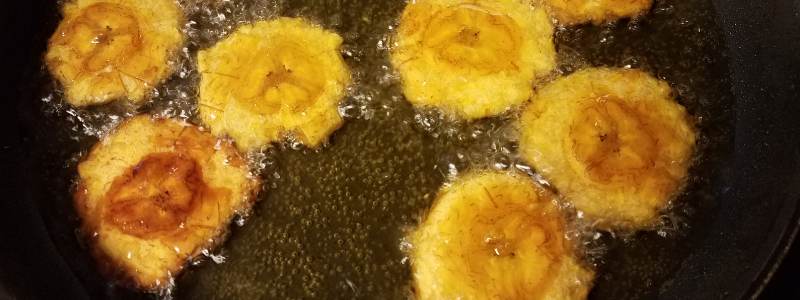
This dish, which is often served as an appetizer, is made with thinly sliced plantains coated in batter.

Tostones are deep-fried and flattened using a tostonera, which is a wooden press.

They are often served with a condiment made from ketchup, mayonnaise, garlic, and other spices, also known as mayo ketchup.

Tembleque

Tembleque is a dessert pudding made from coconut milk, sugar, salt, and cornstarch.

It has a smooth consistency and is often topped with cinnamon.

This dessert is enjoyed all year round but is a staple for the Christmas season.

Pasteles

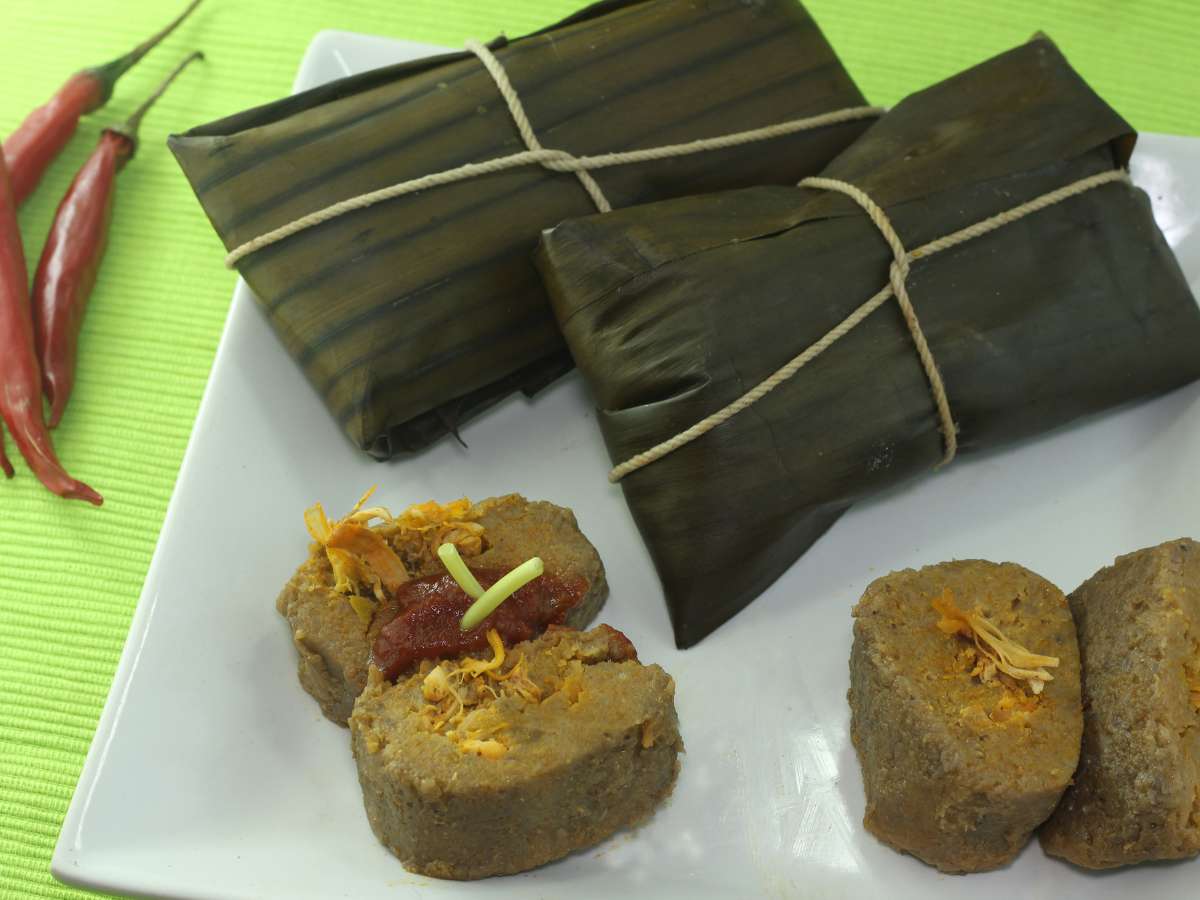
Pasteles are a combination of vegetable dough and meat filling and can be made with either yucca or green plantain.

They are stuffed with meat, usually pork, but can also include vegetables and pumpkin.

They are wrapped in banana leaves and boiled until the leaves fall off. Once ready, they are seasoned with achiote and sofrito.

octopus salad puerto rico

Ensalada de Pulpo

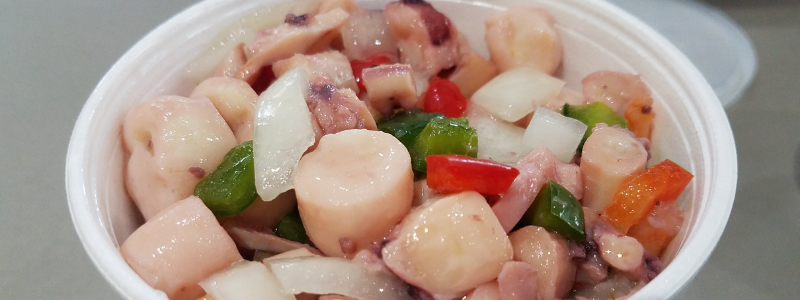
In English, this dish translates to octopus salad, and that’s exactly what it is.

Ensalada de Pulpo is made from chewy octopus and tart vinegar.

This dish is usually served with another Puerto Rican favorite, Tostones.

Rellenos de Papa

Rellenos de papa is a popular island appetizer best described as a savory mashed potato croquette stuffed with ground meat or picadillo and seasoned with sofrito.

Other ingredients, such as cheese, onions, and other vegetables can also be found in Rellenos de Papa.

arroz con gandules puerto rico

Arroz con Gandules

This is probably one of the most popular foods to try in Puerto Rico.

This holy grail dish centers around rice and Gandules, or pigeon peas.

Gandules are used often in Caribbean cuisine and manifest as small, green, oval beans that contain a nutty flavor.

Arroz con Gandules or Puerto Rican rice is the island’s national dish along with roasted pork, or Pernil.

Pernil

Pernil is a slow-roasted pork leg or shoulder marinated with adobo mojado, which is a mixture of olive oil, vinegar, garlic, oregano, salt, and black pepper.

Pernil is most often served with Arroz con Gandules or sweet plantains and is usually enjoyed during the holidays.

mofongo with shrimp puerto rico

Advertising in Puerto Rico

The marketing opportunities are endless in Puerto Rico; however, a unique and localized communication strategy is needed because of the island’s uniqueness.

Puerto Rico is a unique market because we see U.S influence mixed with Hispanic culture and the Spanish language.

The island is usually thought of as a middle ground between North America and South America, which is why businesses see lucrative opportunities on the island. However, it helps to know who your audience is – including what they eat.

Food Advertising

Food advertising, especially with the use of billboards, is aimed to reach a wide range of people and demographics.

In 2016, approximately $13.5 billion was spent on advertising by food companies.

In Puerto Rico, restaurants held 2.69% of the total spending on digital advertising in 2021.

Food companies invest in advertising such as billboards because it’s an effective way to increase return on investment (ROI).

Advertising can easily influence an individual’s food choices, so this is a great way to advertise your company’s new food product or to highlight your restaurant’s new menu item.

Billboards and OOH Advertising

Gone are the days of static billboards, today we see digital and smart billboards that are transforming the advertising market. If you’re looking for foods to try in Puerto Rico or you’re looking to influence certain foods to try, chances are that advertising will play a part.

Effective advertising can help you get ahead and stand out from the competition, and billboards are the easiest way to do that.

Here are some reasons why:

  • Outdoor advertising is more noticeable than mobile or television ads.
    • Online advertising can be ineffective due to ad-blockers. Additionally, due to the increasingly high number of mobile and television ads we see each day, it can be challenging to make your advertisement stand out on these platforms.
  • Billboards are more accepted by consumers.
    • Billboards have been around for a long time, and are generally accepted as a form of advertising. The ethical issues surrounding social media and online ads have made people wary.
  • Billboards help with brand building.
    • OOH advertising can build brand awareness as people are most perceptive of their surroundings when outside of the home.
  • Billboards are cost-effective.
    • Billboards are generally cheaper than print or online advertising. Additionally, they are more long-term than other forms of advertisement that often require businesses to make repeated payments.

bMedia and Your Business

BMedia is the leader in OOH advertising in Puerto Rico. We work with people from all types of industries, including the food industry, to help them reach their target audience and increase their return on investment.

With decades of experience erecting high-performing and eye-catching billboards, we aim to maximize your businesses using strategic locations and advanced analytics to optimize billboard engagement.

The billboard real estate in Puerto Rico is thriving, and we’re here to help you find the perfect spot for your advertisement.

Through best practices, we aim to help your business reach its maximum value.

Contact us today!

Do I Need a Passport to Visit Puerto Rico?

If you are an American citizen considering visiting Puerto Rico, then you might often find yourself wondering if you require a passport to visit this island. Do I need a passport to visit Puerto Rico is something that many people debate. But, if you are actually considering a trip to the island, then this is something that you actually need to know the answer to.

In this quick guide, we’ll be taking a look at why this is, and lots more that you should know before traveling to Puerto Rico.

Do I Need a Passport to Visit Puerto Rico

Do I Need a Passport to Visit Puerto Rico?

As an American citizen, you will not need your passport in order to enter Puerto Rico.

This is because Puerto Rico is an American territory and not a separate country from the United States. So, if you are an American citizen you can travel freely to Puerto Rico without requiring a passport, including travel for business.

Do I need a passport to visit Puerto Rico as a Non-US Citizen? If you are not a US citizen, then you will be required to use your passport to travel to and from Puerto Rico.

Although Puerto Rico is located in the Caribbean, it is actually an official U.S. Commonwealth. So, when you are traveling to Puerto Rico from the USA, it really is no different from traveling from a mainland state to Hawaii. The same principle applies to other US territories, including the U.S. Virgin Islands.

So, if you are planning to travel to any of these islands, you also will not need a passport.

But, just because you do not need your passport doesn’t mean that you shouldn’t take it with you. In order to board a flight from the USA to Puerto Rico, you will need to show photo identification.

This can be your driver’s license, but if you do not have one, or have misplaced it, your passport might be a better option.

What to Expect When Visiting Puerto Rico

If you are a US citizen, traveling to Puerto Rico is easy. Despite this, many US citizens haven’t actually visited the island.

So, what should you expect from Puerto Rico?

Well, the first thing that you should expect from Puerto Rico is beauty.

This island is breathtaking, and most residents refer to it as paradise. The island isn’t massive, but it is packed with lots of excellent things to do, for both tourists and business travelers. From beautiful beaches to breathtaking views and outstanding food and drinks, there is something for everyone in Puerto Rico.

As Puerto Rico is a US territory, you might expect it to be very similar to the USA. In some ways, Puerto Rico is very similar to the States that make up the USA, but there are also some pretty big differences.

Life in Puerto Rico moves at a different pace to life in many of the US States, especially the big cities. So as well as expecting breathtaking views, you should also expect a slower pace of life. After all, this is why Puerto Rico is such a popular destination for a weekend getaway.

do i need visa to go to puerto rico

Things you Need In Order to Travel to Puerto Rico

One of the main things that makes Puerto Rico appealing as a travel destination is how easy it is to travel there if you are a US citizen.

Can I Travel to Puerto Rico Without a Passport?

Do I need a passport to visit Puerto Rico?

As it is a US territory, you do not need your passport to travel there, which makes planning to travel a lot easier. This is also a massive help if you are planning to travel for business because it is one less thing that you have to worry about on your trip.

In reality, to travel to Puerto Rico, there really isn’t that much that you need to take with you if you are a US citizen. As it is a US territory, a lot of the things in Puerto Rico mirror the United States.

So, you do not have to worry about things such as currency and learning a new language when you plan on visiting, because the official languages are English and Spanish, and you can simply use US dollars.

You also do not have to worry about getting any additional vaccinations because the only vaccines required by the CDC to travel to Puerto Rico are routine vaccines that you already will have had.

Overall, Puerto Rico is a pretty safe travel destination, especially for solo travelers.

So, the only thing that you need to travel to Puerto Rico is a form of photo ID.

travel to puerto rico

Why You Should Visit Puerto Rico

So, as you can see, there are lots of outstanding reasons why you need to visit Puerto Rico. It doesn’t have to be for a vacation, you could simply visit this beautiful island to take a break and really focus on your work and your business. While Puerto Rico makes an outstanding trip for leisure, the fact that it is a US territory also makes it convenient for business trips too.

To travel to Puerto Rico you do not need to worry about exchanging currency, you do not need to worry about learning any more than basic Spanish, and you don’t even have to worry about taking your passport.

Additionally, you can also rent a car or use apps like Uber in Puerto Rico easily because these companies work the same way in Puerto Rico as the rest of the USA, and your cell phone will also work exactly the same too.

So, as you can see, there are lots of reasons to visit Puerto Rico. Especially if you are planning a business trip.

Industries in Puerto Rico

Puerto Rico’s economy has had a long and dynamic history, especially as it relates to its status as a US territory. The island is known especially for the incredible beaches and storied sightseeing destinations. This makes tourism one of its most important economic sectors. However, there is a lot about the industries in Puerto Rico that you may not know.

Up until the mid-1900s, agriculture was the main industry supporting Puerto Rico’s economy. The island, which had limited mineral resources, was largely neglected by Spanish colonial rulers. However, San Juan became a major trade port in the Caribbean. In the decades that followed World War II, factories and manufacturing became very important to the Puerto Rican economy under American rule. This shift happened because of government-sponsored economic development and social welfare programs. These developments supported private business and updated Puerto Rico’s transportation infrastructure.

Now, however, Puerto Rico’s economy has shifted into a service economy, as manufacturing growth has slowed in the past few decades. The services sector, which includes things like trade, tourism, finance, and government work, has quickly become the leading industry in Puerto Rico. The services sector accounts for around half of Puerto Rico’s GDP and employs up to 75% of all workers on the island.

industries in puerto rico

Major Industries in Puerto Rico

Agriculture

The agriculture industry is still alive in Puerto Rico. However, it is nowhere near the most dominant industry. According to recent data, agriculture makes up less than 1% of Puerto Rico’s annual Gross Domestic Product (GDP).

Puerto Rico used to have a relatively large sugarcane production industry, but this has mostly ceased to exist. This is in large part due to government regulations on sugar companies in the US and its territories, as well as on producers abroad that import to the US. Puerto Rico does have a thriving rum production industry, but it imports most of the molasses necessary.

The three traditional farm products still produced in Puerto Rico are:

  • Coffee
  • Tobacco
  • Milk

However, due to its tropical climate, many farms also produce tropical fruits including mango, pineapple, and melon. Additionally, there are beef, pork, and poultry farms that serve both local and international markets.

Manufacturing

In 2010, the manufacturing sector made up 46.4% of Puerto Rico’s GDP. However, in the past decade, a few key changes have caused the closure of many Puerto Rican manufacturing plants. Firstly, global competition has increased. This has caused companies to look elsewhere to satisfy their growing demand. Additionally, the repeal of Section 936 ended a decades-long practice where US corporations had a tax exemption on income produced in US territories, including Puerto Rico.

Despite all this, Puerto Rico still has a relatively active manufacturing sector. Over half of the manufacturing industry relates to pharmaceutical production. Pharmaceuticals make up over half of Puerto Rico’s total exports. The pharmaceutical production industry in Puerto Rico is responsible for employing over 18,000 people. Chemical and chemical products, as well as computers and electronics, make up some other large parts of Puerto Rico’s manufacturing sector.

puerto rico economy

Service

The service industry is Puerto Rico’s fastest-growing industry, and it has most recently overtaken manufacturing as Puerto Rico’s primary industry in terms of GDP production.

The three branches of Puerto Rico’s service industry, described in further detail below, are finance and real estate, trade, and tourism.

Finance & Real Estate

Finance, real estate, and insurance produce up to 20% of Puerto Rico’s annual GDP. Puerto Rico benefits from having its financial system fully integrated with the mainland American system, meaning that many American banks, real estate firms, and insurance companies have offices in Puerto Rico. 

Trade

Trade accounts for about 10% of Puerto Rico’s annual GDP. Puerto Rico is included in the USA’s customs system, and the USA is Puerto Rico’s largest trading partner. The island’s key exports are pharmaceuticals, chemicals and chemical products, and computers and electronics. Puerto Rico also has significant trade agreements with Singapore, Japan, Brazil, and the European Union.

Tourism

Tourist interest in Puerto Rico has continued to grow year after year. Tourists from both the mainland United States and from international destinations continue to be drawn to Puerto Rico’s stunning natural beauty, rich history and culture, and gorgeous tropical weather. In addition, many Caribbean cruises include San Juan as a stop. It is estimated that upwards of 5 million visitors stay at a hotel in Puerto Rico every year, with larger numbers of cruise ship passengers visiting annually as well. Tourism supplies an estimate of over $5.5 billion to the Puerto Rican economy every year.

puerto rico industries

Outlook: Which Industries in Puerto Rico are Poised for Growth?

The service industry in Puerto Rico is the most obvious for continuous future growth. Tourism interest will only continue to grow. Additionally, experts project growth in real estate and financial services for the foreseeable future as well. 

Additionally, entrepreneurship is another area with potential for growth. Entrepreneurship is currently is still at the beginning of its growth in Puerto Rico. Nevertheless, many organizations focused on growing small businesses have begun to establish a presence on the island. The Puerto Rican government also has many programs that allow aspiring entrepreneurs to access funding. 

A key factor that many companies tend to overlook is the importance of advertising. Advertising can help convey a brand’s image and desire to new and current consumers. This in turn helps to drive sales and foster brand loyalty. It’s extremely important to understand the local culture of the city, state, town, country, or territory that you hope to advertise in, and there’s no better way to do that than by working with a local advertising group.

How bMedia Can Help

No matter what industry your business operates in, bMedia’s experienced team can help you reach new customers across Puerto Rico. bMedia is Puerto Rico’s leader in outdoor advertising, with over 300 high-impact locations to choose from. Moreover, bMedia’s billboards statistically have the highest consumer traffic in Puerto Rico. bMedia leverages cutting-edge technology and industry-specific leading practices to ensure that your advertisement will be seen and noticed by the right customers. Feel free to contact us with any inquiries you have