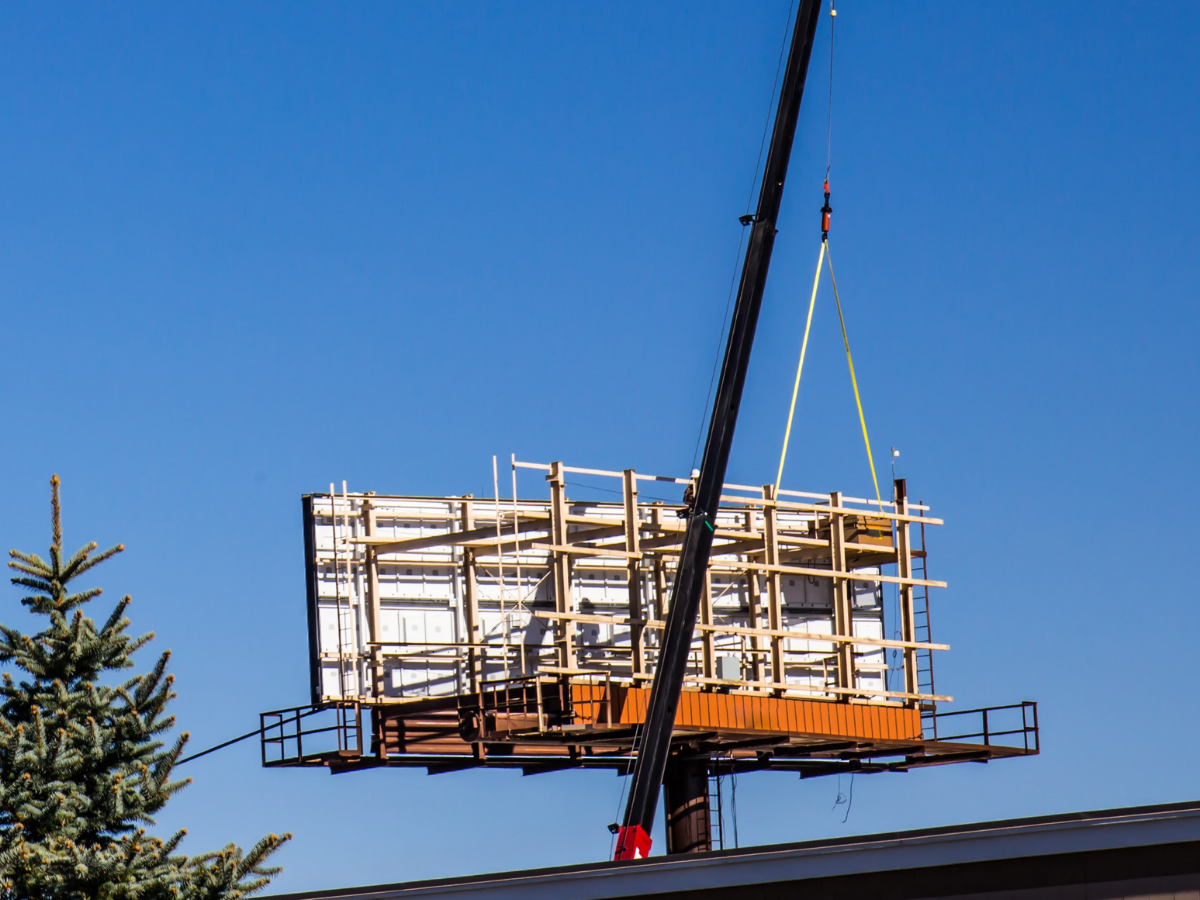
How Are Billboards Put Up?

They dot the landscape along America’s busiest highways. Statista.com estimates that there were over three hundred and forty-three thousand billboards in the USA in 2020. Nearly ten thousand of them were digital. This number has been increasing by ten percent a year. But how are billboards put up?

Drivers and pedestrians pay more attention consciously and unconsciously than you might think. An Arbitron study notes that over seventy percent of American drivers surveyed stated that they consciously look at billboard messages. Almost sixty percent learned of an event or restaurant by viewing billboards. Up to 15% shopped at a place they saw advertised on a billboard the same day they read the ad.

While many read billboards, most give little thought to how billboards are put up.
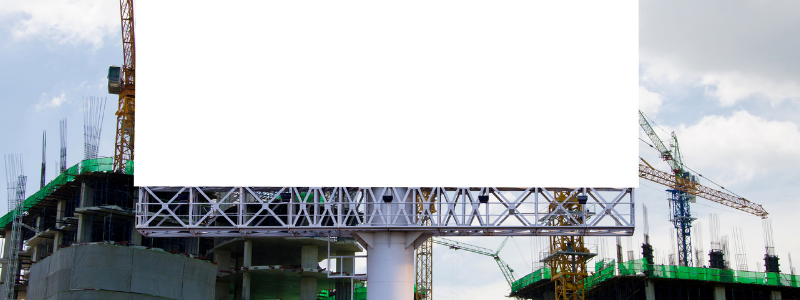
setting up billboards

Choosing a Location

As with real estate, the three most important things about billboards: location, location, location. Location often determines the size or type of design. The best locations have high-density traffic—either pedestrian or vehicle. Billboards can also be found in shopping malls and neighborhoods.

In choosing where to put that billboard, you should consider things like:

  • Sign face alignment: Your sign must be read within three seconds and placed at a readable height. The location must have no visible interference from trees, tall buildings, bushes, or fences.
  • High Traffic Count: Check with the Department of Transportation or do an informal assessment of traffic in proposed billboard areas.
  • Audience Demographics: Who is your ideal consumer? Consider gender, education, profession, income, age, and other factors. Is the location the best place to reach them? For example: If you want to reach young adults consider a location near a college or university.
  • Residential or Commercial? Is your business geared to residential or business audiences? Consider whether to locate your billboard within a commercial area or one located in a residential area.
  • Local ad placement: If your business is reliant on local customers, place it in a spot where local foot traffic will see it.
  • Consider the intent: If you sell surfer sportswear, it makes sense to locate your billboard near the water. Place your sportswear billboard near major sports facilities. Whose eye are you trying to catch? Where are they likely to travel?
  • Busy traffic areas: Where is high traffic in your area? Look for areas that get traffic congestion during rush hour. Also, consider locating near traffic circles, city centers, and areas like pedestrian crossings where there is a natural slowing of traffic.

Billboard Design

Sarah Firle suggests these design considerations:

Keep the message simple. Drivers who pass may be going fast. You have seconds to make an impact with a single photograph or short colorful text. Use seven words or less.

Put a premium on typography. Consider which font and size will offer the quickest read.

Focus on a single idea. Billboards aren’t meant to give facts about your brand. What is the one lasting impression you want your audience to grasp?

Aim for a visually memorable billboard. Try to incorporate surprising—even shocking—visual elements.

Aim for a call to action. Entice audiences to act like Chick-fil-A’s cow signs.

Include product demonstration. Think about your product’s function and how you can illustrate it.

Make your billboard design fit your overall marketing strategy. There should be continuity in your logo, brand, and your other advertising.

Color is important. It both attracts attention and leaves a lasting visual impression. Penneco.com advises that choosing the right colors can make the difference between standing out and fading into the background. They suggest picking no more than three colors and making them vibrant. Good choices are high-intensity shades that stand out against the background.
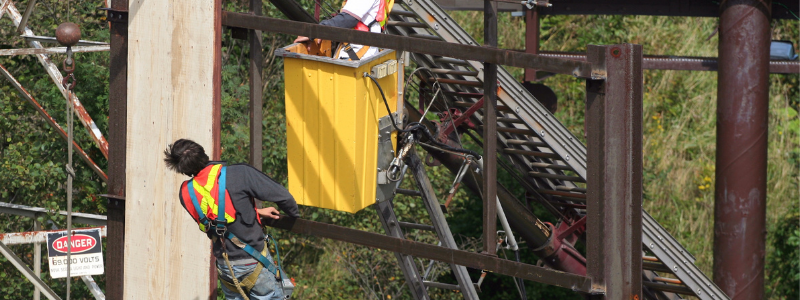
billboard construction

Billboard Construction

How are billboards put up physically?

When it comes to building a billboard, size, cost, materials, and design are all important considerations. A typical billboard is twelve feet high with an upper height twenty-five feet off the ground. Billboards may be anywhere from twenty-five to forty-eight feet wide. Billboards may take the form of bulletins or poster panels. Bulletin-sized ads which we normally think of as billboards may be as large as twenty feet by sixty feet.

The cost of the bulletin board is based on size and materials. Billboard costs range anywhere from ten to twenty thousand dollars.

The most commonly used material for traditional billboards is polyvinyl chloride. Polyethylene has taken the lead in recent billboard construction because it offers an attractive recyclable option.

Some billboards use computer-aided or hand-drawn messages. Thirty-sheet poster panels measure up to twelve by twenty-five feet. These are lithographed or silk-screen-printed.

Billboards often appear for thirty days. Advertising space may be rented for only a week or two before a special event and replaced the day after the event. Billboard space may also be purchased for multi-month contracts.

Technological Influences on Billboard Design

According to business2community.com technological advances have changed billboard design. Digital out-of-home advertising now accounts for over $35 billion in revenue.

Billboard advertising is increasingly smarter. Today’s billboards may show information and react to their viewers through sensors and facial recognition software.

Modern digital ads use augmented reality and other interactive technology to increase viewer engagement.

Billboards do more than show information, Bluetooth energy beacons send information based on demographics to interact with the reader. Advertisers can tweak details to appeal to specific demographics.

Integration between billboards and mobile technology allows interaction, data sharing, and customized experiences.

Thanks to technology, advertising placement is almost limitless. Digital ads can be placed on building walls, passenger shelters, buses, taxis, trains, and inside airports.
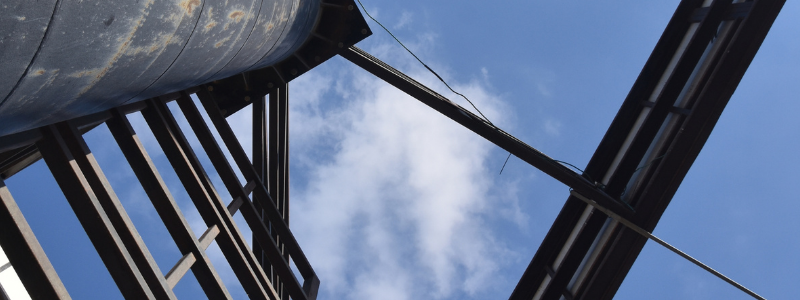
posting new billboard

Why Invest in Billboards?

There are many advantages to using your advertising budget to buy billboard space. Large and eye-catching, billboards target a huge, diverse market.

Even for those whose first language is not English, billboards offer important information about a product or service. The largely pictorial information has a strong visual effect.

People in America spend a significant amount of time in their cars. Billboard advertising has a captive audience. It isn’t dependent on their buying a newspaper, a magazine, or a tablet to view the product or service. Billboard advertising lets businesses reach more people faster and cheaper than any other form of marketing.

  • For middle and upper-class target audiences, billboards allow companies to build and strengthen their brand recognition, reputation, and product image.

Running TV and radio spot ads is very pricey. These run, at best, only a few times a day. Magazine and newspaper ads are also expensive. They cost both the business and the potential buyer and are dependent upon the customers purchasing that paper or magazine. On the other hand, the message on billboards is always working.

With other forms of advertising, potential buyers might be exposed to a brand or service just once or twice. With billboards, drivers and pedestrians have repeat exposure day after day.

A billboard’s brief message has the potential to remain in the viewer’s mind. Because it is succinct and repeated, the message is long-lasting.

How Can bMedia Group Help?

With over three hundred attention-generating locations in Puerto Rico, bMedia Group offers its valued clients a wide variety of effective billboard formats. Our skilled designers and construction staff members are masters of taking your design wants and creating effective billboards.

There is a good reason why bMedia Group has the highest consumer traffic in the area.

For more information regarding how we can increase your brand recognition contact us.
14 Benefits of Billboard Advertising

Advertising on billboards has been around for decades and there is more than one reason that it’s still an effective way of communicating your message, product, or brand. We’ve put together our top benefits of billboard advertising.

What is Billboard Advertising?

Billboards are best described as large posters. Since the time of the ancient Egyptians, billboards have been used to advertise goods and services.

Advertisers have paid to get their message on display in large outdoor advertising spaces. Billboards aim to attract the attention of pedestrians and motorists who regularly pass by them.

Billboard advertising uses a large print. The message must be read and understood in seconds. Thus, advertisers often include images that elicit emotions. The intent of billboard advertising is to market a company, a brand, a product, a service, a special event, or a campaign. 

billboard_highway

What are the Benefits of Billboard Advertising?

Billboards have captive audiences

Billboards usually appear in high traffic areas.

This includes cities, along busy highways, on buses, near airports, near arenas, or on building walls. The aim of billboard advertising is to get viewed by large numbers of riders, drivers, or walkers.

Research shows that we may be exposed to as many as four thousand ads each day.

North Americans spend 17,600 minutes in a car. That works out to 300 hours per person annually. Viewers are a captive audience

Viewers pay attention

People DO look at these roadside advertisements.

Research shows that 75% of the people to drive, ride, or walk by these billboards consciously look at billboards when they are driving or riding.

There are many billboard opportunities

Billboards are a popular advertising medium.

In the USA alone, there are 350,000 billboards. Opportunities to erect a billboard along a highway, atop a building, on a wall, on a park bench, or on the side of a bus abound.

You can match the location to a niche market

Because billboards are everywhere, you can select a location where traffic includes a large percentage of your target market.

Billboards create brand awareness

If you are trying to get increased traffic to your website, billboards are not the most effective advertising medium. Nor are billboards apt to increase the number of visits to your store.

However, billboards excel at getting and increasing brand awareness. Here is why. Most people see the same billboard many times. Thus, they remember your brand. 

Catchy, witty, or memorable images or slogans offer a great way for potential customers to learn about your business.

Later, when they want your product or service, they will remember they saw your billboard ad. Your brand will be engrained in their minds.

billboard downtown

Billboards have changed with consumer preferences

Billboards aren’t a one-size-fits-all advertising medium. Billboards have changed with the times. For example, eight thousand American billboards were digital by 2019.

Viewers are mostly amused and engaged by billboards

Over half the population admits to finding a billboard ad highly engaging within the past month.

Billboards work 24/7

A costly Super Bowl ad is over in seconds. Radio and television ads run an equally short time. Magazine ads depend upon subscribers and readers paying attention to the ad as they flip through the magazine. The cost of your billboard ad guarantees it is played not just a few times a day but all day every day. 

Billboards provide repeat exposure to your ad as passersby have a regular route. They see your ad at least twice a day five or more days each week.

Less is more 

The billboard’s message is short.  It has to be read and understood in the time it takes to pass by. Research has shown that these images and/or catchphrases stick in the viewers’ minds. The most effective billboard ads reduce the message to one compelling phrase or image.

Billboards have a wide demographic

With billboard ads, your company can reach a wide variety of customers.

And you can do this one advertising tactic. Instead of spending your advertising dollars on several types of ads, you can touch many types of target customer groups.  Moreover, you don’t have to research which niche market to target. You don’t have to spend your advertising dollars and time attempting to reach potential customers. By using billboard ads, you may even find potential buyers in areas undreamed of.

black screen billboard

Billboards have a high return on investment (ROI)

Because billboards are located in such busy areas, they have the highest number of views and reactions to any marketing strategy. Billboards have a proven high return on investment.

Research has shown that for every advertising dollar spent on billboards, the return on investment is almost six dollars

Billboards will never go out of style

Despite new forms of advertising, billboards are here to stay.

As long as people drive, walk, bike, jog, or run to work or to run errands, they will remain a target market for billboard advertising. Billboards will always capture a part of advertising budgets.

Even in unusual times like a pandemic, people will still go out—if only for curbside pickup. During their drive to pick up preordered items, drivers will see and remember billboard ads.

Billboards appeal to all ages

If you doubt the effectiveness of billboards to even young children, you need only drive by billboards advertising mouthwatering foods, toys, or an event like a circus. Research has shown that children recognize ads for the “Golden Arches” before they can even talk.

The child target market is a powerful one. Smart marketers have learned that at a very early age, children build brand loyalty. Thus, advertisers strive to foster a relationship with the youth market.

Billboard advertising reflects changing attitudes

The first electronic billboard was installed in 1904 in New York City. It advertised whiskey. Since that time, there have been—and will continue to be—changes in product, services, and styles of billboard advertising

As times change, products and services that appeal to the consumer also change. So, too, do the billboard styles, messages, and images.

Urbanization continues to grow. Thus, billboards will expand, enlarge, and become more technically attention-getting.

There is a trend toward more interactive billboards. Advertising spaces have become increasingly responsive and flexible towards audiences. These new interactive billboards will appeal to the niche market with personal, engaging messages based on carefully researched information about their habits, interests, and consumer preferences.

New advertising trends will focus on what the consumer wants; what he needs; his shopping times; product appeal.

For more information on how to find the right billboard and location for your business, contact bMedia Group.

How To Design A Billboard

So, you’ve set aside a budget for OOH (out-of-home) advertising, but you’re not quite sure how to design a billboard. Where do you start? What do you say?

Once you know who your audience is and what consumption habits they might have, you can choose the next step to create a captivating design and engaging content. Deciding what to say is a big part of it, however, how you say it is even more important. Bringing the ad to life so that your audience reads and retains the message is crucial. bMedia has narrowed it down to 5 key things to focus on when designing a billboard.

Simplicity Is Key

We’ve all heard the saying, “less is more.” When designing for moving targets, aiming for that is key for a successful ad. Try to make the message short and sweet. A good rule of thumb to go by when it comes to how to design a billboard is to use no more than seven words. Make your billboard contain only the essence of what you want your audience to retain.

A billboard that has one main message, with seven words or less, is much easier to read and absorb. While a billboard that has more text or content might contain useful information, no one has time to read the entire thing and there’s not a focal point. It’s an information overload, especially for someone who’s quickly passing by the billboard.

billboard design simple

Consider Location & Season

This one is product specific. Meaning, after you choose the main point you would like to convey to your audience, consider where and when it will be most impactful. Is location relevant, and does the season timely to your message.

Make Use Of Space & Time

Ads are everywhere, meaning you are competing for the attention of the audience. They can be walking down the street, on the go in their car, or looking out a window in the office. Thinking about what your audience is doing will ensure they are able to capture the message. Maybe the message is portrayed with an image, which can be worth a thousand words. Images have the ability to make instant emotional connections.

This goes back to our first tip – less is indeed more.

billboard design

The Three Cs

What are the three c’s you ask? Color, contrast, and creativity. A combination of these will help crank up the volume (or down, depending on the message).

Color

This will help evoke emotion. Choosing the right colors helps you send the correct message.

  • Reds: love, hate, passion, and anger
  • Blues: cool, flowy, calm, and relaxed
  • Purples: status, royalty, and wealth
  • Orange: excited, happy, energy, and vitality
  • Yellow: hope, summer, and warmth
  • Green: nature, health, luck, and finances

Contrast

Color plays a key role, but contrast rules our perception. Contrast, or opposing shades, is what will truly grab the attention. It helps organize the design and establish a hierarchy. The contrast in your design hints at what is most important by signaling what to focus on most. The text on our website stands out from the contrasting background, to bring your focus and attention to what we deem most important. It helps things stand out and really make an expression. There are several different ways to apply contrast to the design of your billboard:

  • Size – contrasting sizes will have the design stand out more. Don’t go crazy here, though, too many different sizes can confuse your audience.
  • Shape – contrasting shapes will have the eye focus on the one shape that doesn’t look like the others. Use this to your advantage.
  • Color – See above
  • Texture – A background texture brings depth to the foreground, therefore creating more contrast between the two. Texture also complements your message.
  • Position/alignment – The rule of thirds in photography can be applied here, or the use of empty space.
  • Saturation – Going back to color, having black and white and then a splash of color really helps your design and message stand out.
  • Space – Consider space with your message, as space can help your message stand out. Especially in a minimalistic design.

Creativity

Now, combining both color and contrast in a balanced way is tricky – that’s where creativity comes in. Too much contrast can be confusing and too little color can be boring. There is no magic formula, however, there is a process to help ensure you use both correctly.


creative billboard

Typography

If you do use words, make sure they look good. The three main things to focus on are:

  • Font
  • Kerning
  • Size

If you are going to put words on a billboard, its purpose is that your audience actually reads the message (not for decoration). Using a legible font like Sans-Serif will make the message easier to read. Placing the text is just as important, giving each word its place and purpose. Finally, size – don’t be afraid to go big if it is important. Not only does it make your wording more legible, but it also gives people more time to see what you are trying to say.

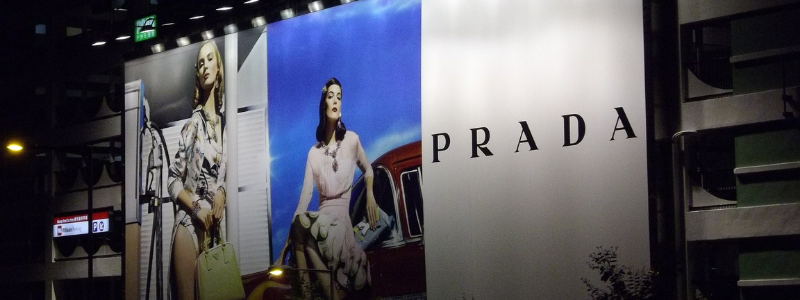
prada billboard example

Billboard Experts

If you’re trying to establish a presence in Puerto Rico, bMedia has the expertise, professionalism, and locations necessary. They work hand-in-hand with seasoned experts to create stunning billboards. While creating innovative designs, they focus on what you actually need. That means putting in work on the details and ensuring high-quality aesthetics. If you’re still unsure how to design a billboard, bMedia can always give further guidance.