Spotify Funny Billboard Ads

Billboards are a popular advertising medium because they’re a great way to get a simple message to a lot of people quickly and affordably. They can target people based on the location where they will be viewed, and they often have a captive audience who has no choice but to notice the sign.

But, in the internet age, are they becoming less useful? Do we depend on electronic targeting and digital technology to get our point across?

No, not with a little creativity. In fact, one recent campaign of Spotify funny ads is a perfect example of how outdoor advertising can be even more successful than something posted online.
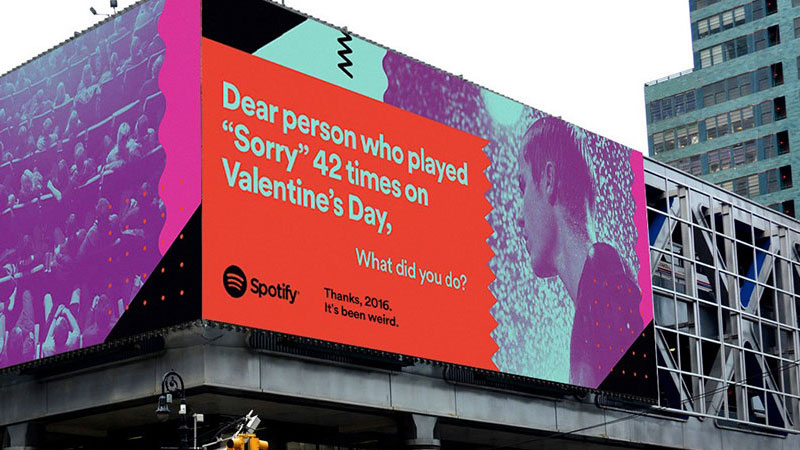
Spotify Funny Ads

Thanks 2016, it’s been weird

In November of 2016, the online music streaming service Spotify launched a global campaign of funny ads using billboards. Each sign contained messages that were localized for the markets where they appeared. The messages were crafted using Spotify data to find what people were listening to, and they often matched with specific and memorable events that occurred that year. Then they added in a strong mix of humor to make sure they were entertaining, and splashed them proudly on billboards.

Some messages were specifically for the local audience, such as this one in the UK:

“Dear 3,749 people who streamed “It’s The End Of The World As We Know It” the day of the Brexit vote, Hang in there.”

Others showed where the data came from, but still could work anywhere in the world, like:

“Dear person in L.A. who listened to the “Forever Alone” playlist for 4 hours on Valentine’s Day, you ok?”
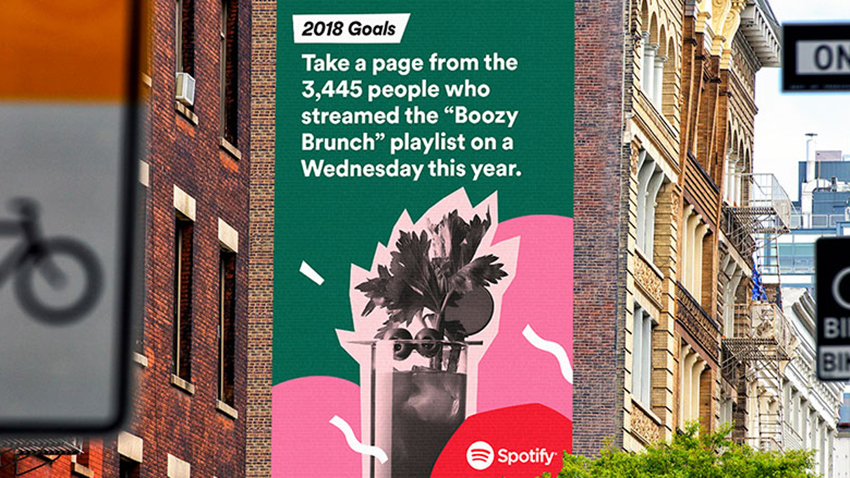
Spotify 2018 Funny Ads

Indirect Brand Advertising

One thing you’ll notice about these Spotify funny ads are that they don’t say anything specific about what Spotify does. They all refer to people listening to songs, so they imply that the company has something to do with playing music, but it doesn’t have any other information about why you would want to use the service. They assume that everyone who would use them to stream music already knows about their offering and how it works, or is smart enough to pop the name into a search engine.

This saves valuable real estate on the sign to show the new look of their brand, and it doesn’t distract from the humor.
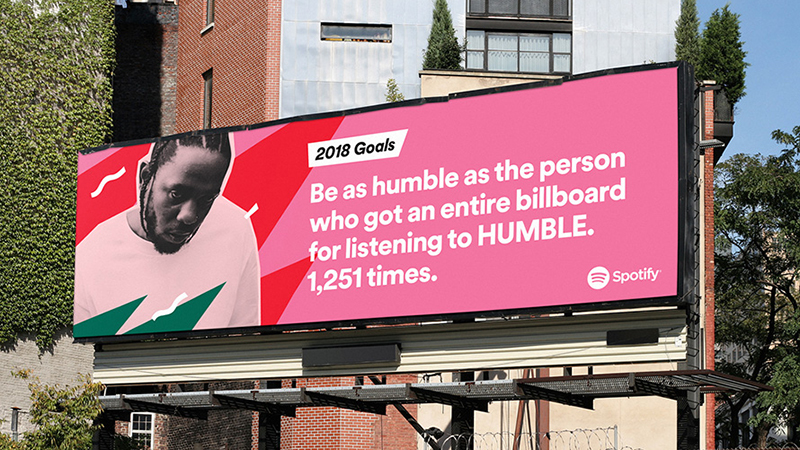
Funny Music Ads Spotify

Showing Their Fun Side

One of the biggest reasons that companies go with ads that deliver some sort of emotion is because they give personality to a brand. This works in the case of Spotify, because one of their main purposes is to offer entertainment. These signs weren’t music to your ears, but they probably caused you to laugh a little bit. This adds to an overall image of a company that will make you happy, and you’ll subconsciously remember that when choosing which website to get your music from.
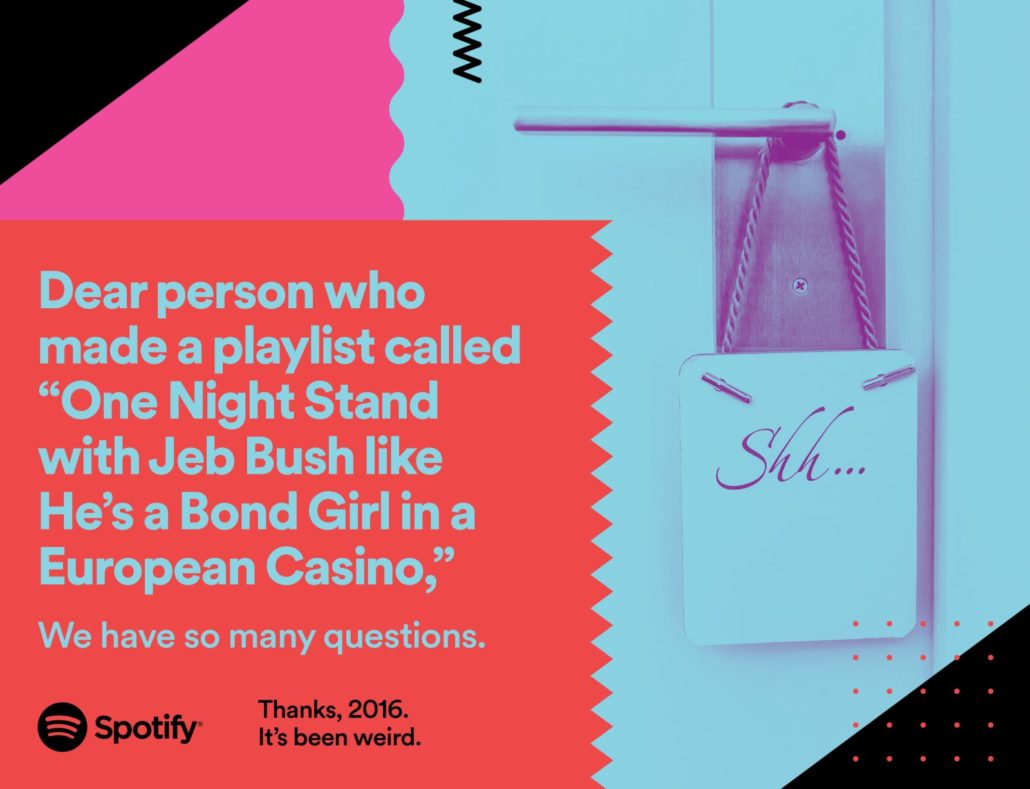
Funny Spotify Billboard Advertisement

Relevant to the Time

Another brilliant aspect of this campaign was how it was relevant to the time. 2016 was a busy year in the world, and there were many celebrity deaths, unexpected political situations, multiple international crises, and a lot of other difficult or surprising events. Social media users had become used to blaming everything on 2016, and this campaign played right into that – in a non-depressing way. It even managed to take all that distress and turn it into something funny.

Billboards Going Viral

One of the common concerns about billboards is that they’re not as likely to go viral as something that’s easy to share online. This campaign helped prove that not only are billboards not outdated, but the number of digital cameras out there may make them more likely to go viral than an image saved on a website. A campaign has to be made correctly, but physical objects can be less likely to get lost in the noise.
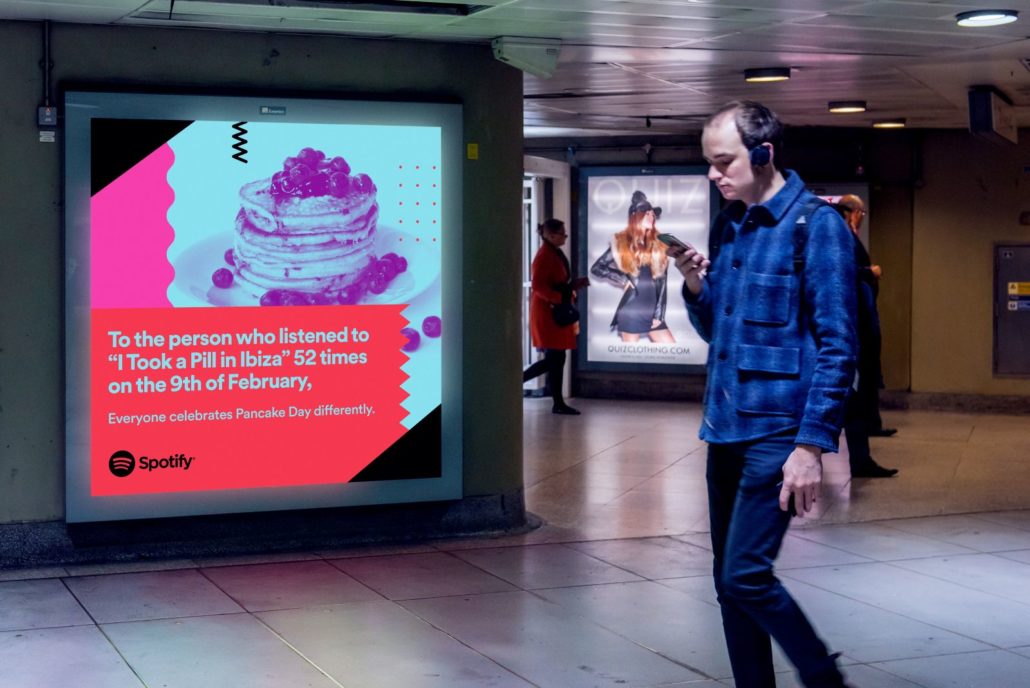
Spotify Hilarious Billboard

Big Data in a New Way

Speaking of going viral, this Spotify funny ads campaign used another buzzword that’s popular in the internet era: big data. Many companies are gathering and cataloging massive amounts of data from their customers, and most are still trying to figure out what to do with it. This information is a dream for marketers and advertisers (especially in the online space), but this is a creative use of it that many hadn’t thought of. Big data in an ironic way really stood out.
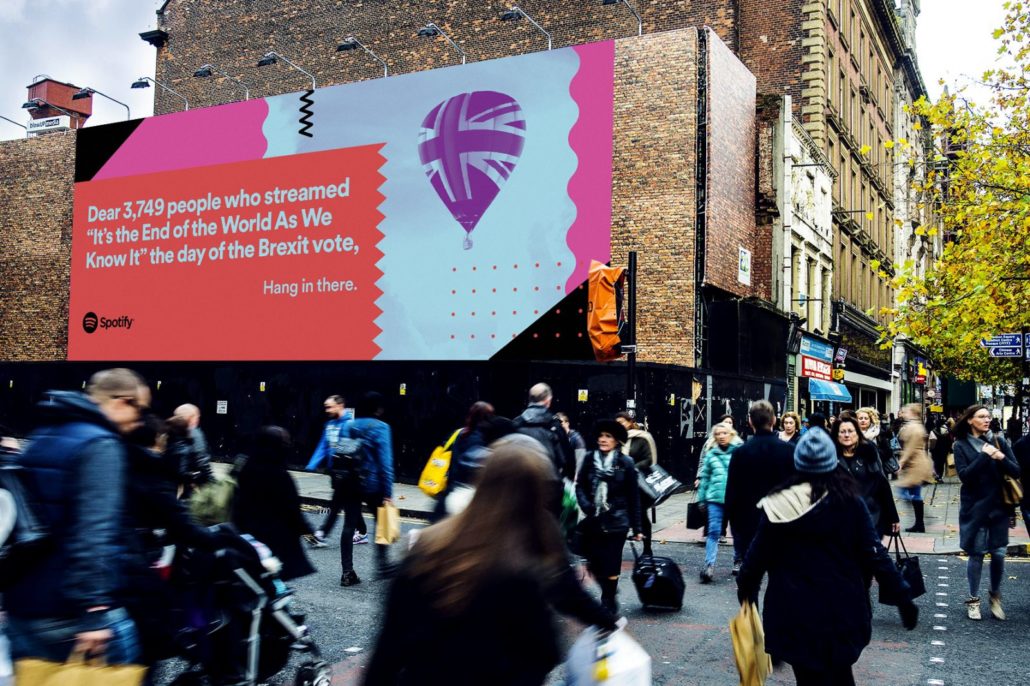
Brexit Spotify Billboard

Grab Attention with Your Billboards!

This example with Spotify is just one of many recent campaigns where outdoor advertising was still going strong in the 21st century. It’s often a good idea to balance it out with the other advertising media you use, but it can be a strong way to boost sales and build brands in many different industries.

Reach out to us if you have any ideas you’d like to discuss seeing on a sign, and we’ll be overjoyed if it’s a funny campaign like this that will spread the laughs around!
15 Most Creative Billboard Ads

Anyone who’s ever driven down the highway can tell you that not all outdoor media is created equally. Some fail to stand out, most are straightforward and simple. But there are a select few creative billboard ads that really make an impression – and those are the ones that we want to learn from. There has been much discourse in the past about what makes a “good” billboard. However, it might be easier to look at some of the most creative ones to see what really makes a billboard stand out from the rest.The first two ads we’ve got show the importance of utilizing the surrounding area. Sure, you could put a plain advertisement on a billboard just about anywhere. But if you’ve carefully chosen your location, you can make great, creative billboard ads like the ones below.

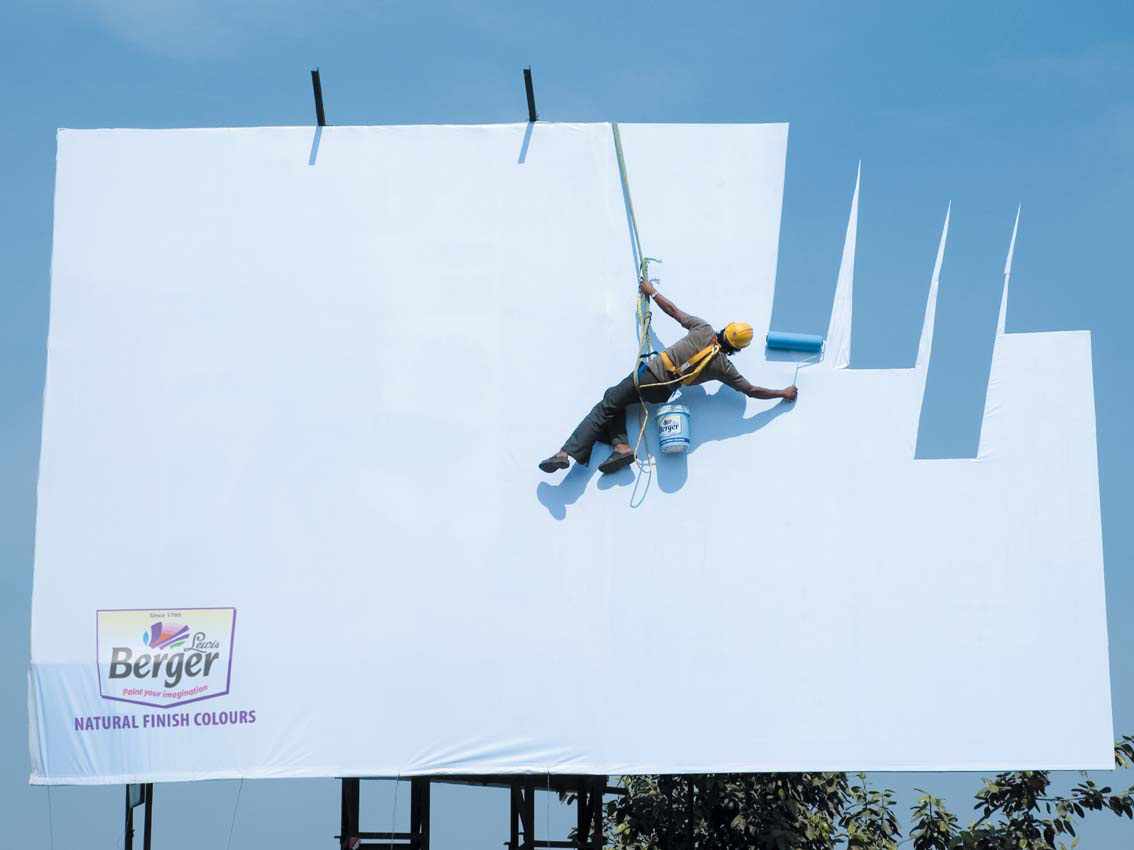
1. Berger’s “Sky” ad.

This outdoor media is optical illusions 101 – it uses careful framing to create a surreal image. In this case, it makes the viewer think a man is painting the sky. You might be too surprised the first time to absorb the brand, but you’ll look more closely the next time you pass.

Bergers Sky Creative Billboard Ads
(Image Source: Ads of the World)

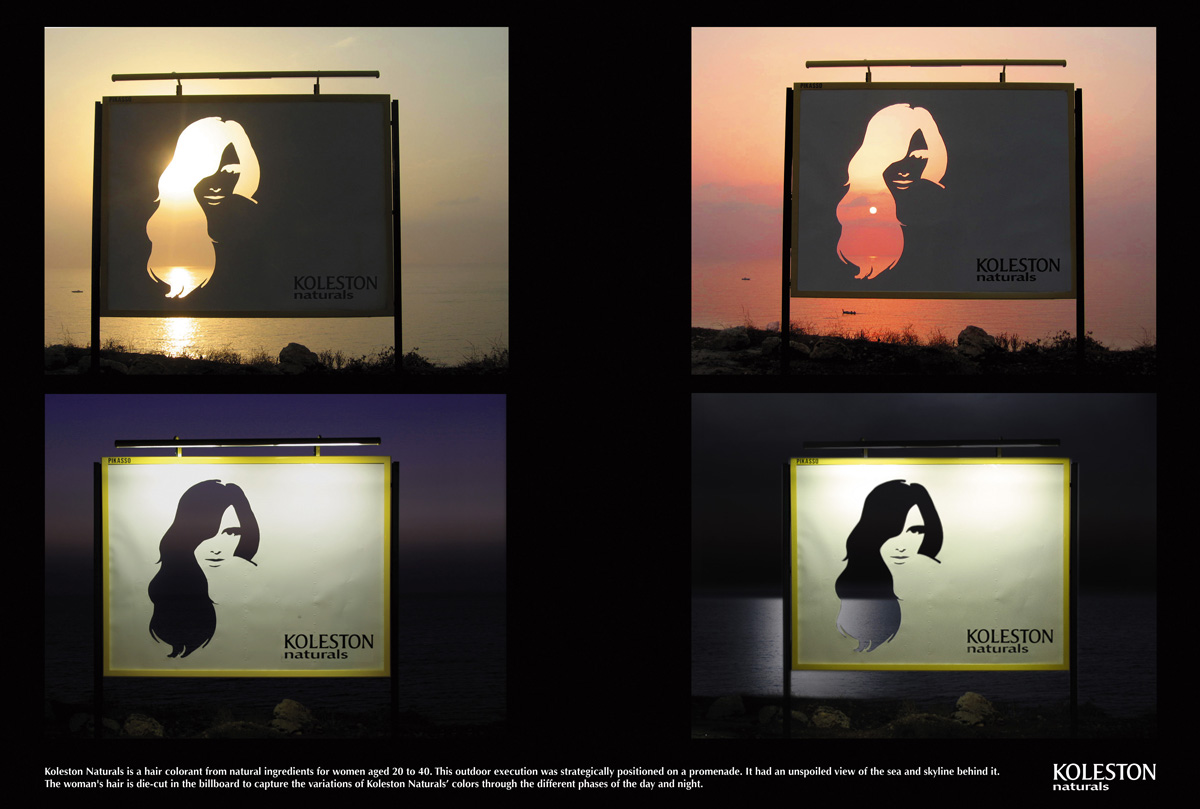
2. Koleston Naturals’ Beachside ad.

Koleston uses a bit more of a straightforward approach here. The advertisement is clear to see, but the clever use of scenery and lighting makes it much more memorable.

In the vein of advertisements that make smart use of space around them, there are some ads which work almost exclusively due to the perspective they’re viewed from. Such ads can only be used in limited ways, but they’re doubly efficient for their specific placement.

Koleston Billboard Advertisement
(Image Source: Ads of the World)

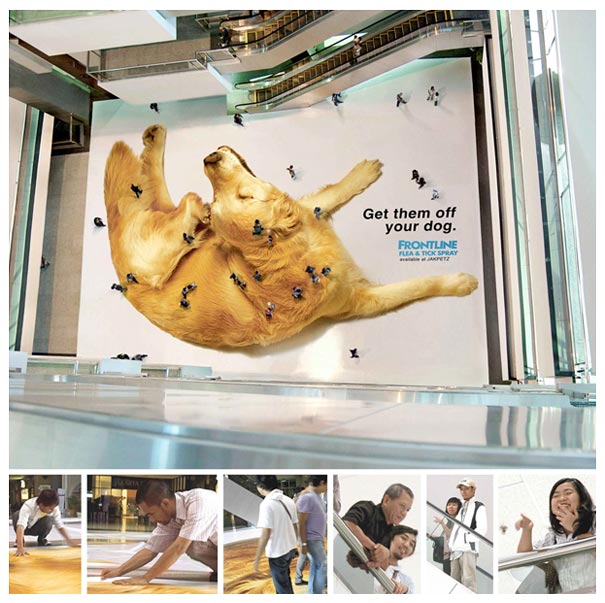
3. Frontline’s Floor Tick ad.

This neat advertisement from Indonesia utilizes the pedestrians themselves as part of its advertisement. The pedestrians could probably look down for a moment and figure it out, but the true viewers are the ones looking from above. If you are one of those viewers, this ad will really stand out.

Frontline Floor Tick Billboard Ad
(Image Source: Adpressive)

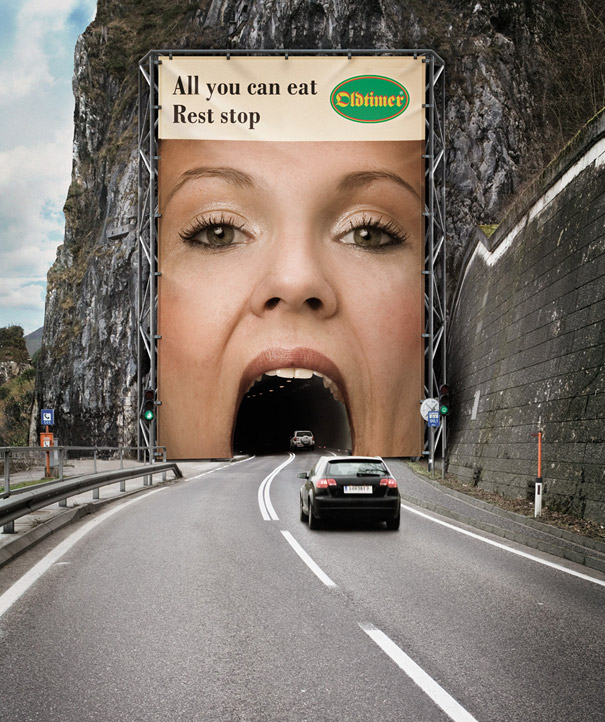
4. Oltimer’s Tunnel ad.

A fairly unsettling billboard, depending on your sensibilities. But it’s no less effective or impactful: you definitely get the idea. This ad uses the cars as part of the advertisement, just like the tick one, but in a much more direct way.

Oldtimer Billboard Ad
(Image Source: Boredpanda)

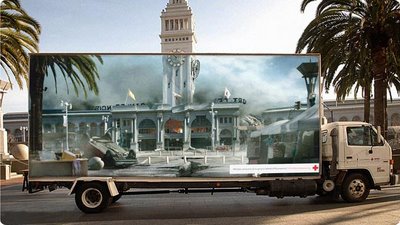
5. Red Cross Earthquake Illusion series.

Not just a single ad like the others, this was part of a series of billboards made by the Red Cross to help advertise the importance of earthquake preparedness. Whether or not it greatly improved public safety is hard to say, but it was certainly a great stroke of advertising prowess.

For those who are willing to make it happen, you can find great success with adding special effects to your billboards. All the ones we’ve looked at so far were plain, but well-planned advertisements. Now let’s look at some that use extra effects to get the point across.

Red Cross Billboard
(Image Source: Moillusions)

6. Smoking Mustang ad.

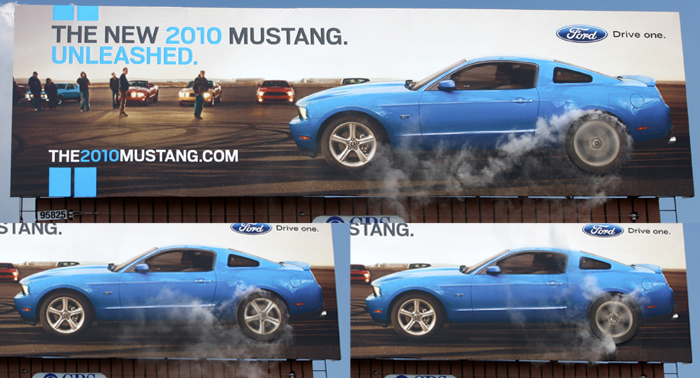
It’s hard not to look when you see smoke in the air – something Ford knew all too well when they put out their smoking Mustang ad. This billboard uses periodic puffs of smoke from the wheel area to draw attention to a faux burnout– talk about an eye catcher!

Ford Mustang Billboard
(Image Source: JasonIRosenberg)

7. Avera’s Smoking Car ad.

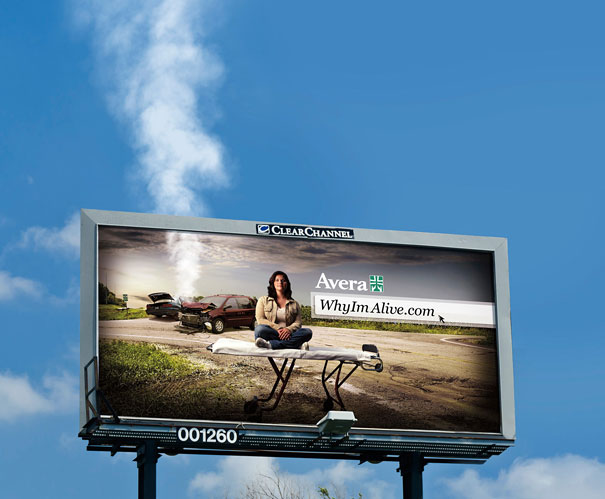
In contrast to the Mustang ad, this billboard uses smoke to draw attention to the scene of a crash. This makes the idea of the Avera medical support seem extra dramatic. After all, car crashes are the exact kind of sudden occurrence that makes insurance so important.

Avera Creative Billboard Ads
(Image Source: Boredpanda)

8. Cannes Crying ad.

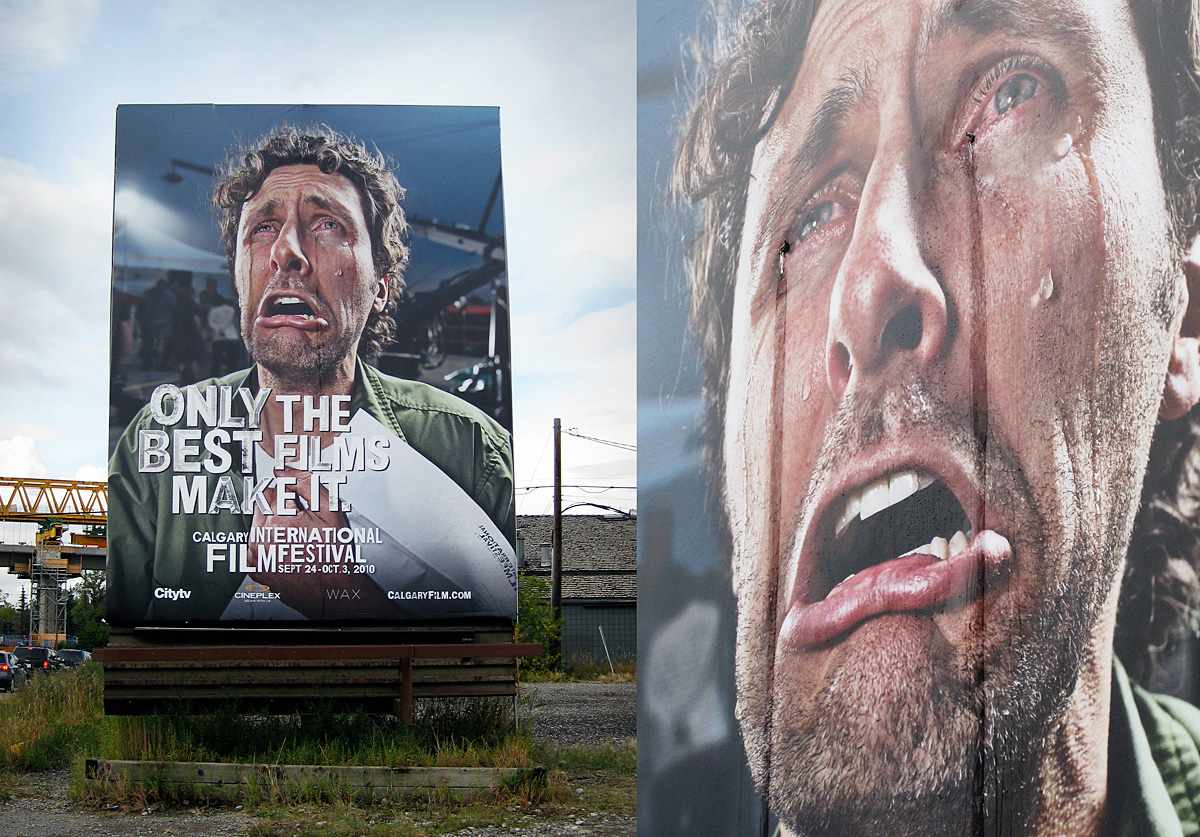
This ad uses two simple nozzles to create a crying effect on the billboard, in addition to the actual tears shown in the picture. It’s plain, and probably easy, but it has a charming effect once you notice it.

On the topic of the liquid using crying advertisements, there have been a few billboards from different companies that are set to react to the rain. These may or may not include actual liquids being used.

Cannes Crying Billboard
(Image Source: Ads of the World)

9. Calvin Klein Wet Nightie ad.

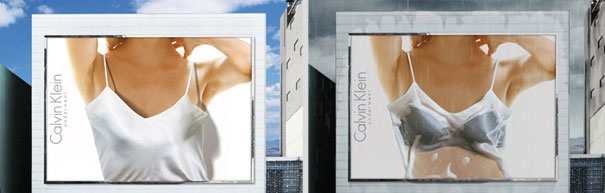
It’s no secret that sex sells. And what could be better for the rain-distracted driver than this sudden, titillating display? Disregarding any potential concerns of distraction, there’s no way this ad will go unnoticed when the rain comes down.

Calvein Klein Billboard Ad
(Image Source: Boredpanda)

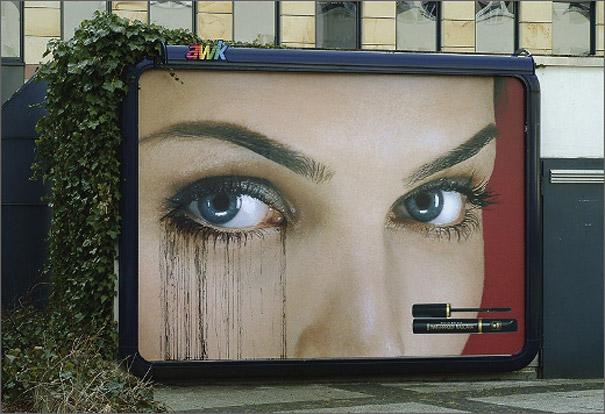
10. Max Factor’s Running Mascara ad.

Max Factor isn’t here to sell you any big claims about waterproof mascara. This is normal mascara, plain and simple – the billboard is just there to get your attention once it rains. It works.

Max Factor Mascara Billboard
(Image Source: Boredpanda)

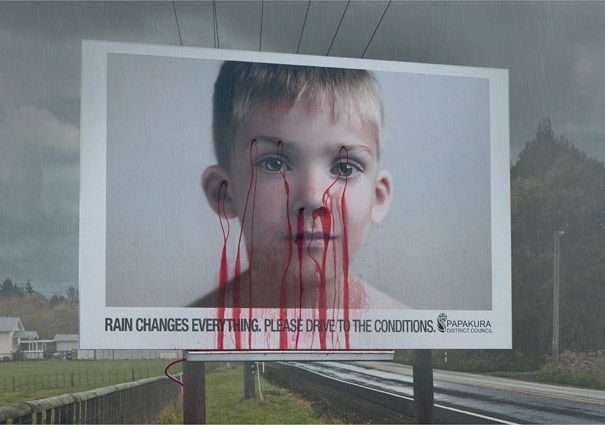
11. Papakura’s Bleeding ad.

Papakura’s district council in New Zealand has had enough of unsafe driving, and it shows. This hard-hitting (and questionably appropriate) advertisement puts the consequences of reckless rainy driving in perspective by leaking red fluid whenever it rains. Harsh, but effective.

Speaking of harsh, billboard advertising isn’t always fun and games. Sometimes, you can use the space of a billboard to address a really serious matter.

Papakura Bleeding Billboard
(Image Source: Boredpanda)

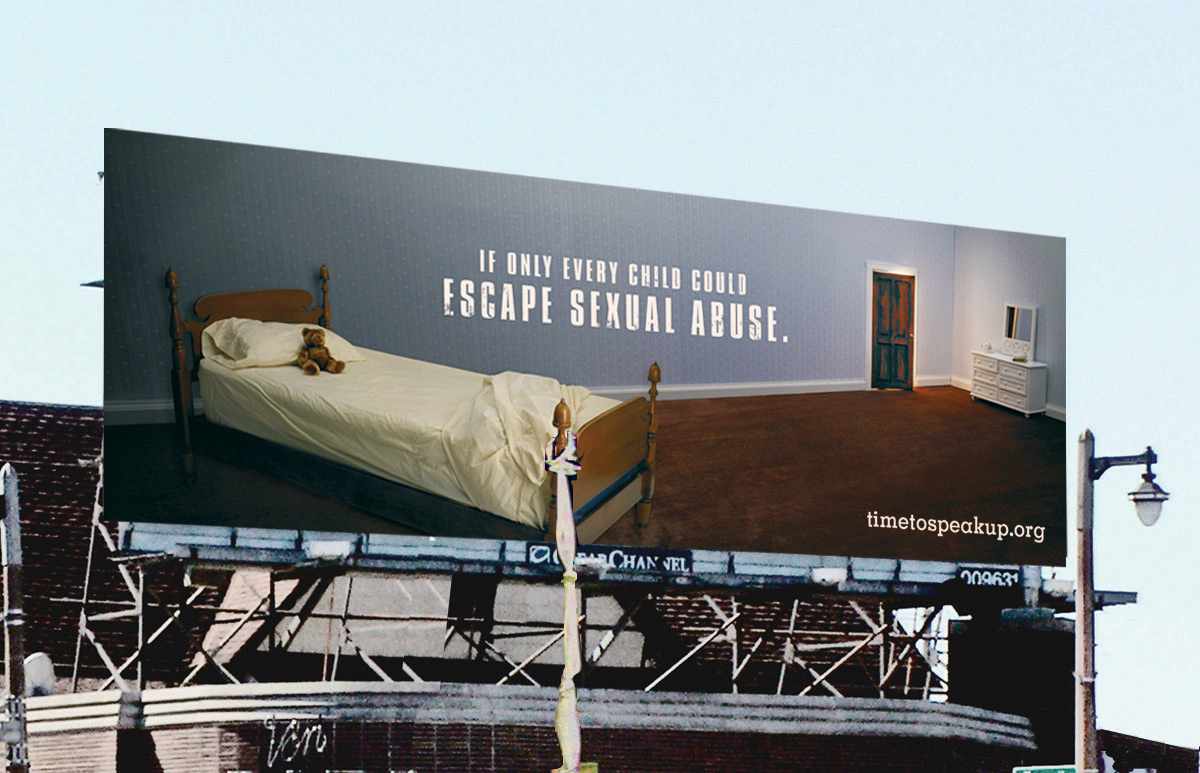
12. Escape Abuse ad.

The impact of this creative billboard ad makes it hard to add anything to the discussion – it really speaks for itself. Absolutely visceral through its simple presentation, with the addition of a bedsheet rope to accentuate the point.

Creative Billboard Ads
(Image Source: Ads of the World)

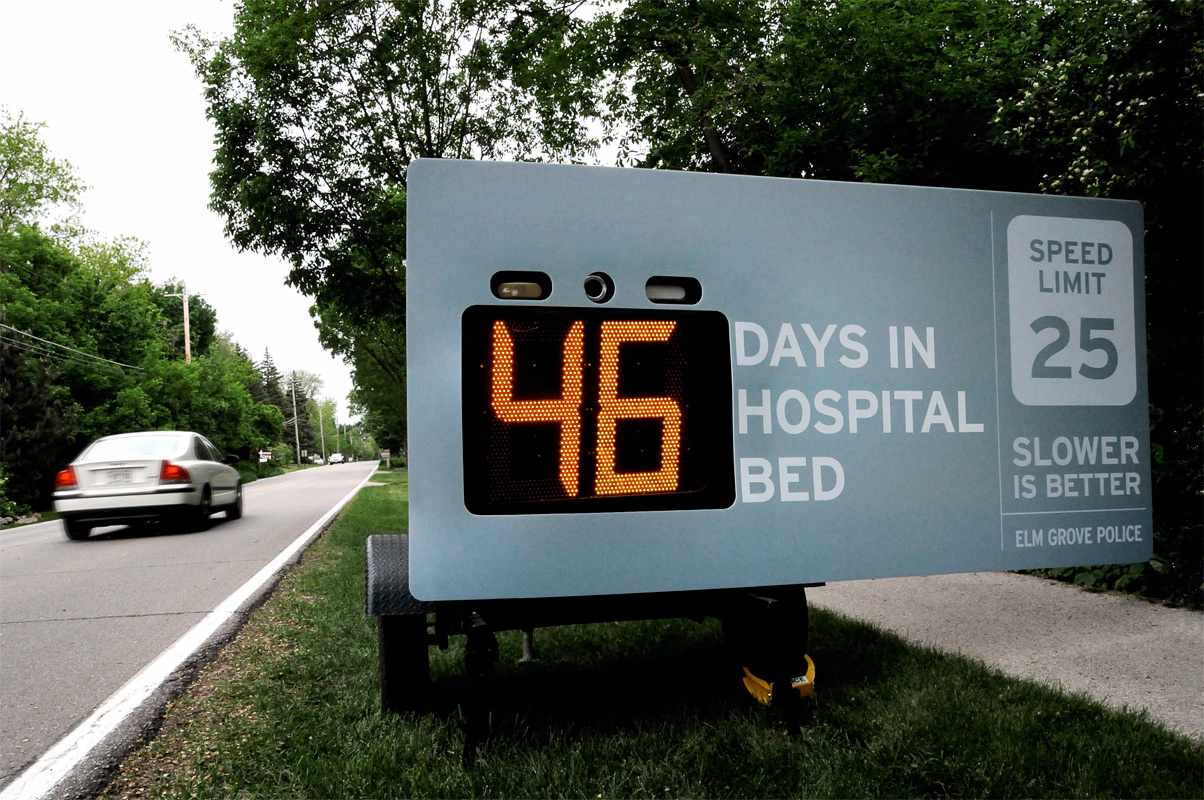
13. Speeding Consequence ad.

Almost everybody looks at the speed markers on the side of the road. Some of us, to adjust our speed, and others, to see how much more we can push it. But regardless of how you drive, this advertisement is sure to grab your eye.

The last surefire way to get eyes on your billboard is by investing in an additional prop. This might mean designing the board differently, or perhaps establishing a whole prop in front of it. Here are two great examples of the technique:

Consequences of Speeding Billboard
(Image Source: Ads of the World)

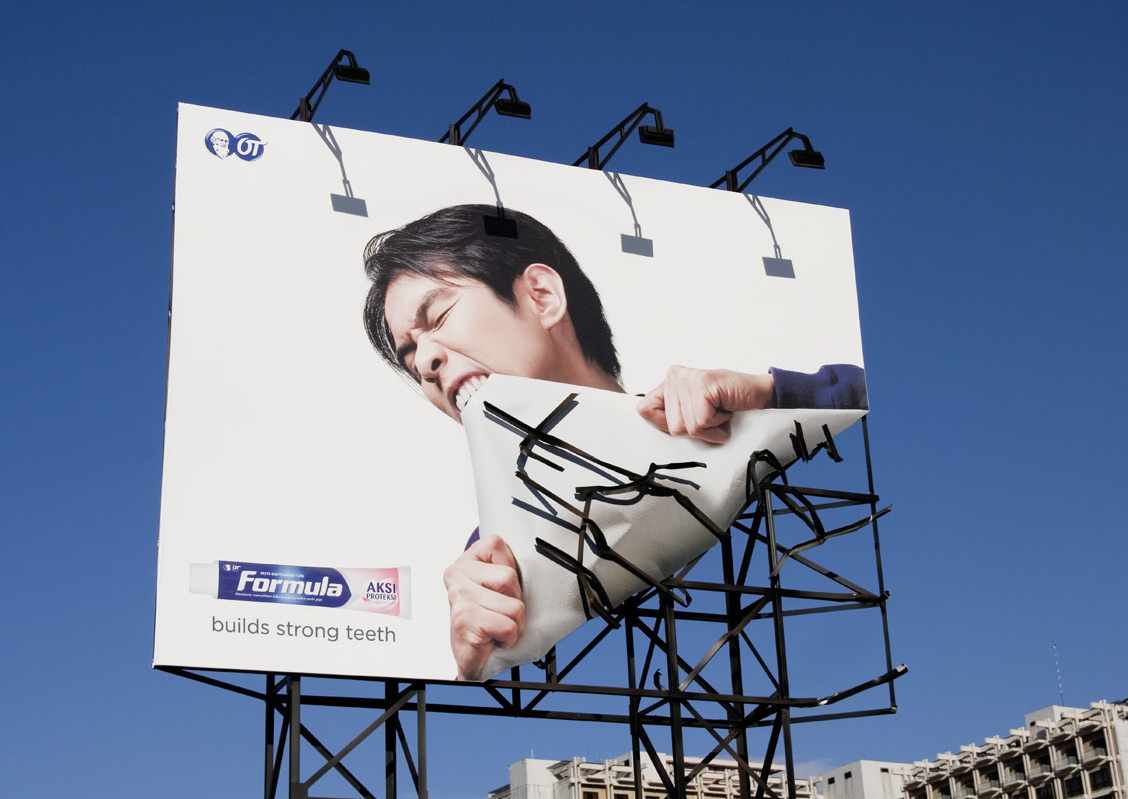
14. Formula Billboard Bite ad.

This billboard is another simple, effective one. You know exactly what it’s saying: Formula gives you strong teeth! All it takes is a little creative design on the billboard, and your ad can be just as concise.

Formula Bite Billboard
(Image Source: Ads of the World)

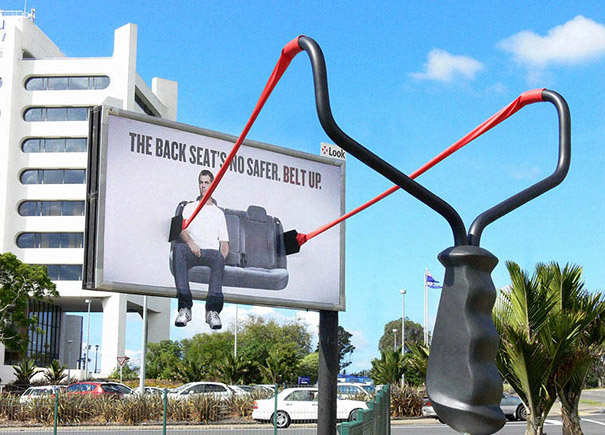
15. Backseat Ejector ad.

If you’re passing by this ad too quickly, you might miss it. But once you see it completely, it’s quite a powerful message. So powerful, in fact, that the Colorado Board of Transportation faced some flak after putting them up. Controversy means it worked, though; people definitely talked about it.

Backseat Ejector Billboard
(Image Source: Boredpanda)

The Best Creative Billboard Ads

As you can see from this list, the best billboards are those that escape the “extra-big, but otherwise normal advertisement” way of thinking. This can be done in a variety of ways: by using props, by using clever staging, or even just good design. If you think that putting water nozzles on your billboard will help, it can probably be done, and the interest you generate will often be more than the effort it took. Consider the location of your billboard and the nature of your brand; the possibilities are endless when it comes to billboard advertising.

A Billboard that Identifies People Who Litter

Do you have an opinion on people who litter?  Almost everyone does. Unfortunately, for those living in crowded urban areas, it’s really just a fact of life. Governments and societies try to crack down on it, but many people just don’t listen.

One anti-litter group decided that enough was enough, and they took a fairly radical step to fight the problem.  But, did they cross any ethical lines themselves?  That’s up to you to decide.

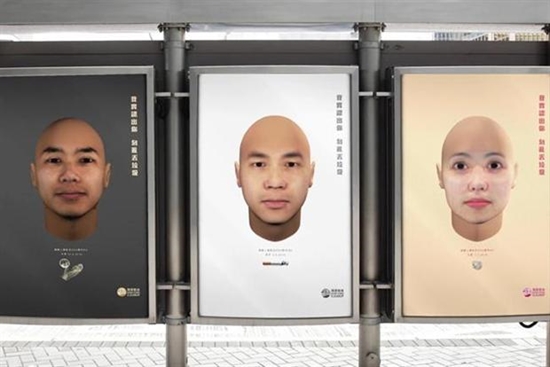
The Faces of Litter

The Problem

Hong Kong is a city full of people.  As a matter of fact, the more than 7 million inhabitants crammed into such a small place ranks it as the fourth most densely populated region on the planet.

That many people always adds up to a logistical nightmare when it comes to waste disposal, but it doesn’t help that littering seems to be the official sport.  Every day, there is more than 16,000 tons of waste dumped in the city, and this has given life to the Hong Kong Cleanup Initiative.  The organization’s name is pretty straightforward about what they do, but you might be surprised to learn that they literally launched an in-your-face campaign to combat the problem.

Litter Hong Kong

Basics of the Campaign

The government has already tried many methods of going after this problem, so the campaign had to find a unique way of getting to people.  There are pretty hefty fines given to anyone caught littering, but that just wasn’t motivational enough.  This led the environmental group to team up with Ogilvy & Mather Hong Kong to try and put together something that would really get people listening.  So, the strategy decided on for this campaign was to do a bit of shaming for the litterbugs in society.

They Even Found the Perfect Day to Do It

This whole project was called the Face of Litter Campaign, and they had the perfect day to launch it:  Earth Day.  Leading up to it, teams had worked to collect garbage, and they managed to pick up more than 4,000 tons from the streets.  Then, they gave it to some scientists to work their magic.

What Tech Did They Need to Do It?

Scientists at Parabon NanoLabs used Snapshot™ DNA phenotyping to analyze who had touched the various garbage samples, and this allowed them to make a digital drawing of the litterbug responsible for each individual piece.  They tended to focus on bits of garbage that would have physical bits of people left behind, and some of the favorites were coffee cups, cigarette butts, and condoms.  This technology has the ability to predict eye color, hair color, skin color, freckling, shape of the face, and a lot more about people just from a tiny amount of their DNA.  It may sound like something out of science fiction, but that’s the world we live in today.

Do Not Litter Outdoor Media

What Did It Accomplish?

The Hong Kong Cleanup Initiative has some great programs in place to clean up the trash.  Unfortunately, they were really stuck in the pattern of cleaning up after people, and they weren’t having much success in preventing littering in the first place.  That’s where this campaign really helped out – it got people talking.  In only two weeks, it managed to get 3.9 million engagements on social media, and $5 million in earned media coverage.

Advertising vs. Activism

This campaign was very successful by many measurements, but it does raise some ethical questions.  The pictures that were shown were generated drawings of theoretical people, but is it appropriate to publicly shame people?  Even if it works to solve a problem, it can cause harm to people who may or may not deserve it.  We don’t have the answer to this, it’s really up to you and your own personal beliefs.

Science!

A major takeaway from this campaign is how science can be used in advertising.  It’s likely that this whole project would have been far less interesting if they had simply taken photographs of people caught in the act of littering.  It really stands out because of the amazing science that many people didn’t realize was possible, but then it was the perfect chance to convey the message once it had everyone’s attention.

How far will your advertising go?

Have you ever done anything similar to get your message across?  You don’t necessarily have to be so aggressive with your advertising tactics, but this doesn’t change the fact that pulling stunts like this will get you talked about.  So, don’t be afraid to push the limits, but make sure you’re thinking about your image as a whole before you do anything too crazy.

If you’re not sure how to do this on your own, just give us a call.  We’re ready to hear your ideas!

How to Promote Your Business in Puerto Rico

If you own or run a business in Puerto Rico, there are many different ways that you can promote it and try to gain a larger customer base.  The entire advertising industry has changed a lot because of the advances in technology, but that doesn’t mean the traditional methods are simply things of the past.  In today’s world, you can put signs on the side of the road, print ads in the hands of customers, or blast them with digital pixels on electronic devices.  All of these methods can work to accomplish different goals and reach different people.

Here, we’ll focus on three of the most successful strategies to use in Puerto Rico.  If you use a mixture of these methods in your business, you should see some pretty strong results.

Puerto Rico Business

1.  Billboards

Puerto Rico is densely populated, and everyone here knows that.  With more than 3.5 million individuals living together in 3,515 square miles, the island has more than 1000 people per square mile.  Mixed in with all these potential customers is about 3 million registered vehicles, so that works out to being a lot of people sitting in traffic with eyes ready to see your billboard.  Also, studies have found that more than half of people discuss interesting messages they see on billboards, and a quarter of people go to a store because of what they read.

Many of these people are already in the car and ready to go shopping, and those are pretty good odds for any marketer.

Billboards should be primarily used to target a very general audience.  There’s no way to change the sign for each customer, so a wide message about your brand is the most helpful.  Electronic signs give the possibility for quick successions of ads, but they still get blasted across the population.

Outdoor advertising like this is a great way to remind people that your company still exists.  Overall, they’re a great way to increase brand recognition.  This can really be the difference between consumers choosing your brand from a competitor’s product when they’re sitting next to each other on a shelf.

Social Media Puerto Rico

2. Social Media

There are a ton of social media platforms already, and new ones are being launched every day.  Many of these have possibilities to advertise inside of them, and they can be useful because they’ve already convinced users to give them treasure trove of personal data.  In other words, the networks know what people are interested in, so you can make sure to only pay for showing your product to consumers who are likely to buy it.

But, out of all the choices you have, Facebook is your best bet in Puerto Rico.  The amount of users on the island has been steadily increasing, and it was nearly 90% during 2015.  That means that nearly everyone has an account, and many of them use the social network on a regular basis.

You should plan on using Facebook to advertise when you have some unique and interesting content to draw people in.  There is a lot of clutter, so words alone probably won’t be noticed.  However, if you have a video or an interesting blog post to attract user’s busy eyes, you might just get a click.  If they really like what they see, they’ll share your post.  And a recommendation from a friend is something that money can’t buy!

3. Google Strategy

Don’t forget that the internet is a big place, and social media is only a small part of it.  Getting noticed in the top few results of a Google search for a broad term can be quite tough.  But, you can get pushed even higher on the list with a relatively small investment.  Using Google AdWords, you can pay to have your result pop up (with a notification that it’s a paid ad).

However, you need to make sure that you use some search engine optimization (SEO) strategies before doing this.  This is another chance to really narrow the viewers of your ad to a specific target group, so make sure you learn what people will be searching for before you write your ad – and only include the best terms.  This option should be used when you have a very specific message for a very specific group of people.

Promote Business Puerto Rico

Strategic Combination

You’ll benefit from using one of these methods, but the real power is in using all of them.  However, you don’t need to just start throwing money.  Make sure you have an overall strategy to see how they can all work together, and be careful to let them each take advantage of their specific strengths.  Don’t necessarily split your marketing budget evenly – think of it as one big number that’s going to increase your bottom line!

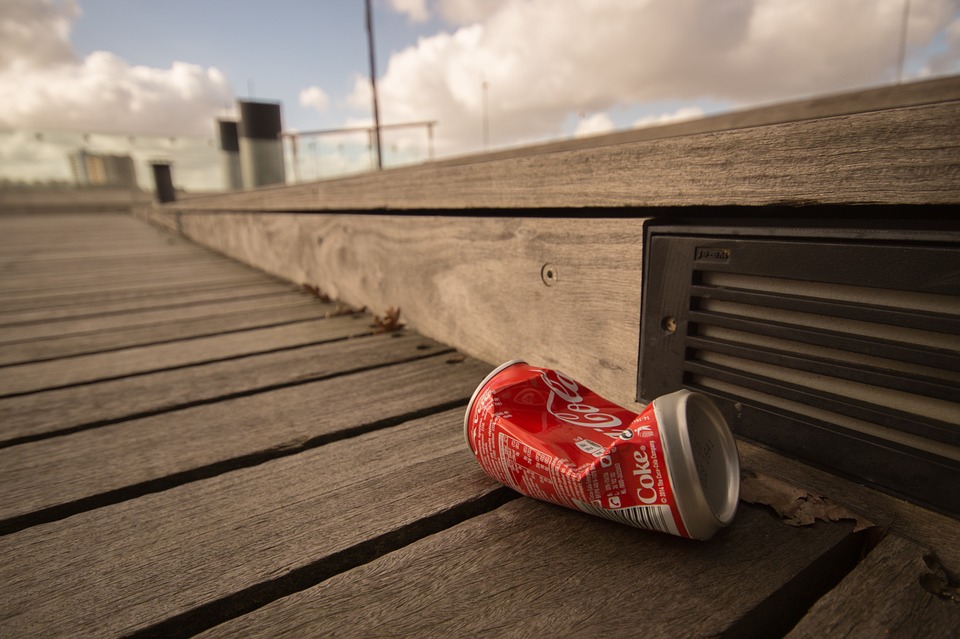
Coke’s Mini Ads for Huge Results!

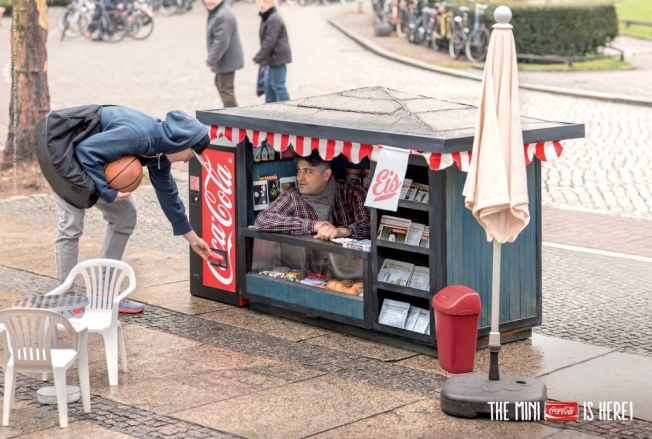
By no means is it an exaggeration to say that the Coca-Cola Company is one of the largest companies on Earth.  In fact, it was listed as the world’s third most valuable brand in 2015. And it’s been going strong since its introduction in 1886. It may be a company valued at $83.84 billion, but that doesn’t mean that Coca-Cola’s only focus is on getting bigger.  In fact, one recent ad campaign was built around making things tiny.  Really tiny. The product they were selling was mini cans of Coke, so they had to do something to keep with a theme of being smaller than normal.  They couldn’t be overly dramatic and shrink the world, but they could shrink the shops that sold the drink.  And they did.

The Big Scoop on Coke’s Little Ad

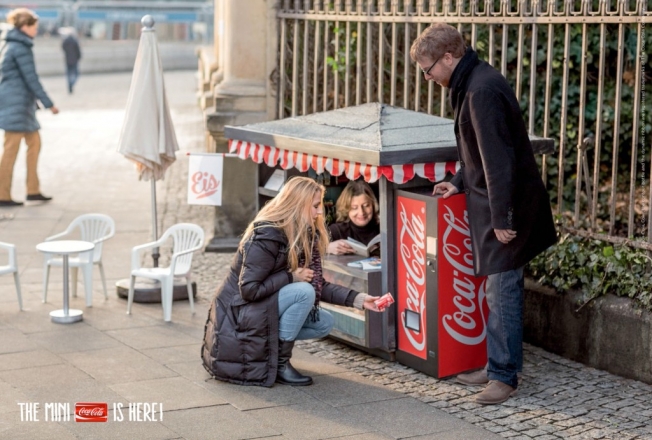
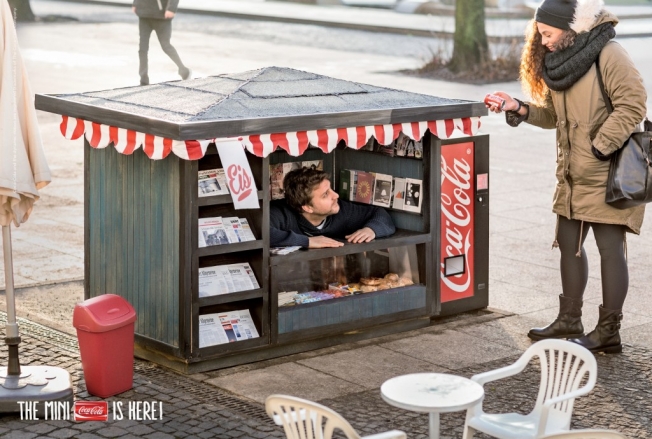
The campaign in question was played out in five different major cities throughout Germany.  Basically, Coke installed sales kiosks that looked exactly the same as the hundreds of others that the city dwellers would wander past that day, except these new ones were very small, and they had a mini machine and a person inside.  The vending machine was the right size to still pop out the new 150 ml can, but it looked more like something that elves would shop at.

Interestingly, the shops were fully functional, and they sold many different mini products.  But, the whole setup was designed in a way that would showcase the little cans of Coca-Cola.

The only exception to the tiny plan was the person inside.  These vendors were a normal height, but they were positioned in such a way that kept them at the same level as the counter.  It was brilliantly put together in a way to keep the illusion alive.

Unfortunately, these mini kiosks were only there for a temporary time in 2014, so you don’t have the chance to hop over to Germany and go visit them.  But, they made sure to give you a way to visually relive the experience.  They did this by also creating some print ads showing the kiosk as well as a video that could be shared online.

Why This Little Stunt?

Mini Kiosk Coca Cola Campaign
This whole campaign was built around a central motto: “It’s the little things in life that make us happy.”  So, it wasn’t about spreading the knowledge, sampling a new flavor, or rambling on about some new innovative production process.  Instead, it really just aimed to show people that they could be happy, even from the littlest things.  Such as a 150 ml can of Coke.

Instead of going big and corporate, they decided to use guerrilla marketing in a localized location.  They anticipated that people would get a kick out of it, and they wanted to take advantage of social sharing to spread the message.

And, as always with Coca-Cola, they wanted to improve the customer experience and keep on building up that brand.

Outdoor Media for an Indoor Product

Coco Cola Outdoor Media
Soft drink companies generally fight viciously over interior space for their advertising, but this campaign shows it doesn’t have to be that way.  Coke easily could have made some big stunt inside of the stores, and they did put a lot of marketing materials there, but not this particular campaign.

Sometimes advertising a product where consumers don’t expect it is a great way to get noticed.  This really stood out because the scene was so typical, but so different, that people couldn’t help but notice.  It really broke through all of the noise of the competing advertisements.

Of Course It Won Advertising awards

Coca Cola Mini Kiosk

It wasn’t just the Coca-Cola Company that came up with this idea, and the advertising agency behind it was Ogilvy & Mather Berlin.  They were pretty proud of the results, and among other awards, they walked away with multiple honors in the 2014 Cannes Lions International Festival of Creativity.

Coke’s Strategy is Diverse

They’ve had polar bears, athletes, normal people, and even Santa Claus as spokespeople for their drinks, but, most of those live in print ads and on television.  So it was refreshing for everyone involved to see a campaign get into the great outdoors.

Also, they’re still at it with the mini ads.  This year they ran a Superbowl spot featuring the Hulk and Ant Man (two Marvel characters), and they engaged in a big chase to see who could get the little Coke.

As Always, Coca-Cola Builds Their Brand

On average, there were about 380 of the mini cans sold each day of the campaign, and that’s a 278% increase of normal vending machine sales.  But, that wasn’t the point.  The main goal was to contribute to their overall brand image, and it really had to meet their claim that Coca-Cola will “open happiness.”  It stuck out to customers and gave them the feeling that Coke is fun, relevant, and something that makes them happy.

It doesn’t matter what your product or service is, there’s always a way to use outdoor media to strengthen a brand as a whole.  Are you taking advantage of that?  If not, feel free to contact us today.

A Giant Soda Machine Shower

There’s nothing better than catching some sunshine on a hot day at the beach.  But, after some time lounging, swimming in the ocean, and digging in the sand, there are two things you want:  A cold shower and a refreshing drink. Most companies skip straight to the second part of this consumer need, but one was thinking outside of the bottle with a guerilla marketing campaign.  And it worked.

The Sprite Soda Shower

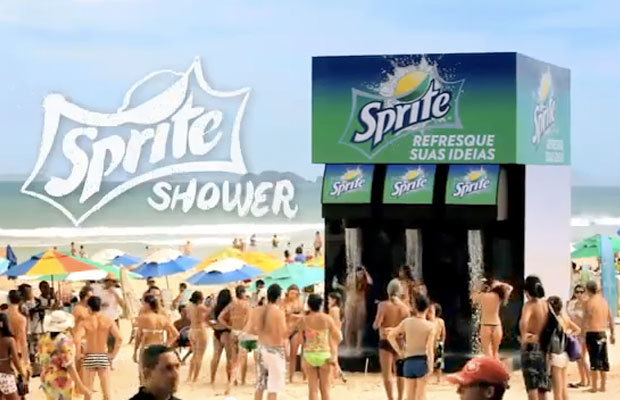
This whole event was part of a outdoor media campaign in 2012 that the Coca-Cola Company used to help promote Sprite.  Essentially, they built a giant soda dispenser complete with the famous green and yellow logo of the lemon-lime drink, and they invited people to stand where the cup would usually go.  Once the beachgoer pushed back on the giant lever, a shower would rain down on them.

The best and worst news about the campaign is that it only poured water, not Sprite.  Less refreshing, but also less sticky people. They mixed the giant contraption with the opportunity for people to have samples of the soda, and it created quite a stir.  Since the summer days on the crowded beach in Brazil could get up to 40°C, there were a lot of people looking for something to cool them down. It managed to shower more than 1,500 each day that it was in place, and you can be sure that these people made an association in their mind with that green label.

But, Why Wash All Your Potential Customers?

Sprite Shower
If you’re selling drinks, this sounds like a fairly silly tactic.  Why wouldn’t you just spend the money on samples of your product, and then freely pass them out all over the beach? Well, that sort of strategy can work, but this was better for many reasons. First, it was talked about.  No one rushes home and tells their friends about having a free drink, but they are quick to share their story of becoming a soda.

Next, it created important mental associations.  If potential customers are just handed a drink on a hot day, they’ll down it and not think twice.  But, if they physically feel refreshment both outside and inside of their body, they’re much more likely to associate that brand with a positive feeling.  And that’s the kind of thing that will make a difference when they’re staring at a fridge full of competing brands. Also, this gives identity to a brand.  The other companies may make fine products at similar prices, but this one is playful.  When happy people head out for a day in the sand, they want to take some brands with them that match their attitude.

What Was the Reaction of the Advertising World?

In short, it was positive.  That’s a big part of the reason that we’re still talking about this campaign a few years later.

The agency behind the giant soda shower was Ogilvy Brazil, and they were quite praised for the idea. It was quite talked about at the Cannes Lions International Festival of Creativity where it won multiple awards, and it even took home a gold in one category.

Sprite is Used to Being the Cool Kid

It’s definitely worth noting that this stunt fits in well with the brand image that the soft drink has been working on for years.  Sprite has made a name for themselves over time as being trendy and making sure that the younger generations know they’ll be stylish if this is what they’re drinking.  They’ve had a lot of basketball, hip-hop, and street art in their campaigns, so they fit right in placing themselves in the middle of a beach party.

Time to Shower Your Customers with Attention

One of the biggest takeaways from this campaign is that marketing really comes down to creative solutions, and it’s about much more than just getting the word out.  It can be fairly expensive to invest in many forms of advertising, and this causes many people to hesitate about getting the word out.  But, sometimes a campaign can be about getting your customers to decide why they like you, and then make sure this new fact sticks into their mind.  It might not get them to drop what they’re doing and run to the store, but it can be a big part of building a loyal customer base throughout the years.

If you don’t want to build a giant soda machine but still want to show some love to your customers, then try to think outside of the box.  And don’t worry if you’re having a slow day in the creative part of your brain, just give us a call and we’re happy to help.

What do you think of the Sprite Shower?

What is Skinvertising?

Before we begin, we just want you to know that bMedia Group does not support the idea of skinvertising

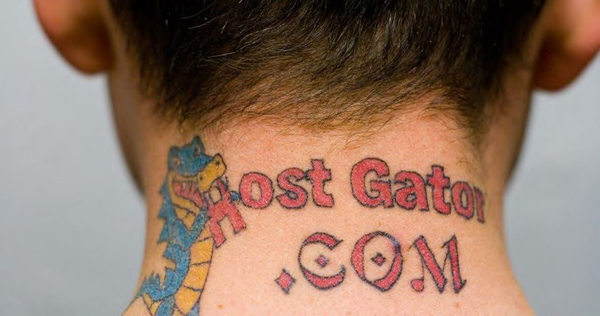
Host Gator Skinvertising


One of the fundamental requirements of outdoor media or even advertisement in general is that it needs to be placed somewhere where the intended audience can see it. However, as the world gets more crowded and competitive, there are less and less places available. This keeps advertisers hot on the lookout for any new surfaces on which to place their messages, and they often resort to creative solutions.

Coincidentally, there is one other group who loves displaying colorful messages, and their ears were wide open when they heard companies could be willing to pay for their space. This group, of course, is tattoo fans.

What Is Skinvertising?

Skinvertising is exactly what it sounds like: when someone has an advertisement placed on their skin. Since the most practical way of doing this is by using a tattoo, it’s a pretty difficult to undo this once it has been created. However, the permanence of this has led many people to find this whole concept to be really extreme, and some even think it’s just a joke.

It’s not. Many people have literally had advertisements inked into their skin, and a good number of these designs were done on people’s faces. Obviously, you’re going to question why people are motivated to do this, but there isn’t any simple answer. Most of them find themselves in need of money (for one reason or another), and they typically set up auctions so the real estate will go to the highest bidder.

Why Do People Do It?

Everyone seems to have their own reasons for getting this done, but a common trend seems to be needing money quickly. Many of them have families and children to support, and they suddenly find themselves in a position where they don’t have enough income.

But really, who are some of these people?


Jim Nelson SkinvertisingJim Nelson

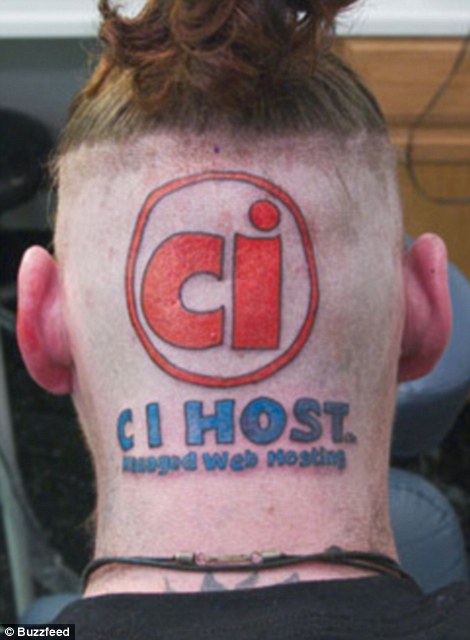
Nelson was one of the originals who rocketed to internet fame with skinvertising. He was paid $7,000 to have a web hosting company’s logo on the back of his head. Ironically, the company didn’t last very long after paying for it, but the ad was still promoting them for years!


Karolyne Williams SkinvertisingKarolyne Williams

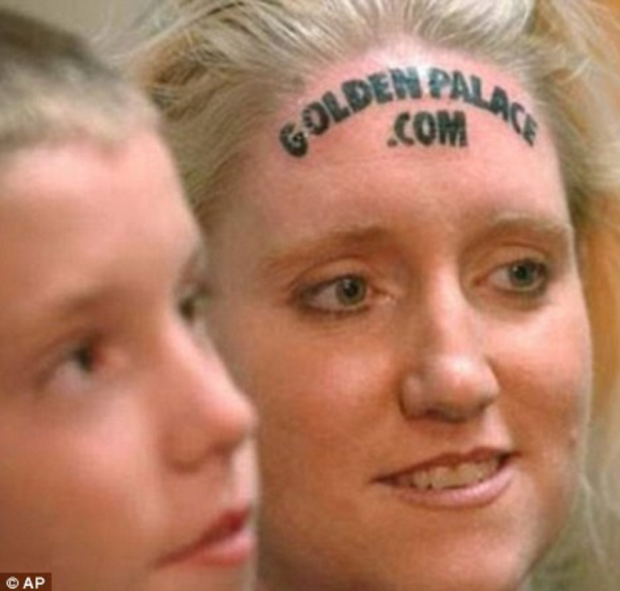
Williams was a mother who had GoldenPalace.com tattooed on her forehead for about $10,000. She said she really needed the money to support her son and send him to a private school. Eventually, she was able to grow out her bangs enough to partially cover the tattoo.


Mark Greenlaw SkinvertisingMark Greenlaw

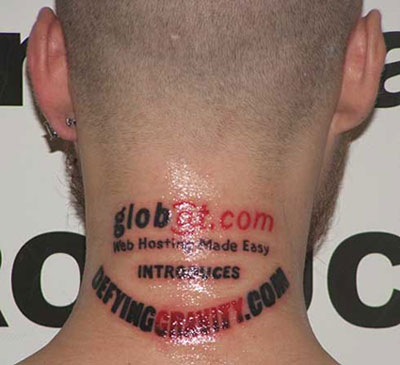
Greenlaw was another inking entrepreneur, and he auctioned off space on the back of his neck which was won by an auction site called Glob@t. He even went so far as to sign a contract that he would travel to a certain number of states and countries each year, or pay a fine to the company he was advertising. His aim was to provide for his family before his paychecks started coming in when he joined the army.


Skinvertising PeopleBilly Gibby

Gibby is known by multiple names, and one of them is “Billy the Human Billboard.” He lost his job in 2007, and he needed to find a way to pay the bills to support his wife and five kids. So, he started auctioning off his face for a minimum price of $4,000, and most of his customers were websites (many of which were adult focused).
Billy even legally changed his name to Hostgator Mel Dotcom in 2011, and the website Hostgator paid him $15,000 for this. But, he decided the facial tattoos weren’t working anymore in 2013, so he auctioned off other parts of his body to get enough money for laser removal on his face.


Human Billboards of the Past

While the whole concept of skinvertising may seem a little radical, attaching ads to humans is something that’s far from new. If you need a few examples, just think about how many logos and messages you see on shirts, hats, and shoes every single day. Also, have you ever noticed someone standing on the street with a big sign around their neck? That practice goes all the way back to 19th century London when the government decided to tax advertising posters stuck to walls. Always a crafty bunch, the advertisers started paying people to wear them, and a new profession was born. You’ve no doubt seen people waving signs (of various levels of quality) on the side of the road, but some are willing to take this the next step.

When Was It Popular?

The skinvertising tattoo craze really seemed to take off in the early 2000s, and it was basically riding the coattails of the dot-com bubble. It seemed to be most popular among websites, and this probably had a lot to do with the fact that all they really needed to print was the URL.

Ads Outlast the Companies

One of the most interesting parts of this phenomenon is the permanence around it. The tattoos easily stick around for a long time, but there have been many cases where the company went out of business before the person could have the ink removed.

More Basic Version in Japan

A similar trend popped up in Japan in recent years, but it was far less permanent than tattooing. Women are paid to place stickers on their thighs, and they have to share a certain amount of photos on social media. The women have to be over 18, but it’s definitely following a provocative strategy that believes sex sells. However, many Japanese cities are pretty saturated with regards to their advertising space, so it’s not a bad idea to find some new real estate.

Love It or Hate It, Skinvertising is Creative

There are a wide variety of opinions about this topic, and there’s a good chance you have strong feelings about it. However, whether it’s a genius idea or absolutely ridiculous, you have to admit that it solves a certain problem.

What’s the most creative thing you’ve done to get word out about your company?

Making Cities Smarter Using Outdoor Media

IBM has been using technology to make the lives of business people easier for more than a century, but they don’t exactly have the sexiest brand image.  They’ve done a great job of promoting themselves as a no-nonsense company that will give you a solid bottom line, but that’s a difficult concept to translate into a trendy advertising campaign. However, thinking outside the box, they recently succeeded in creating an outdoor media campaign so groundbreaking it’s being used as an advertising case study today!

The Campaign

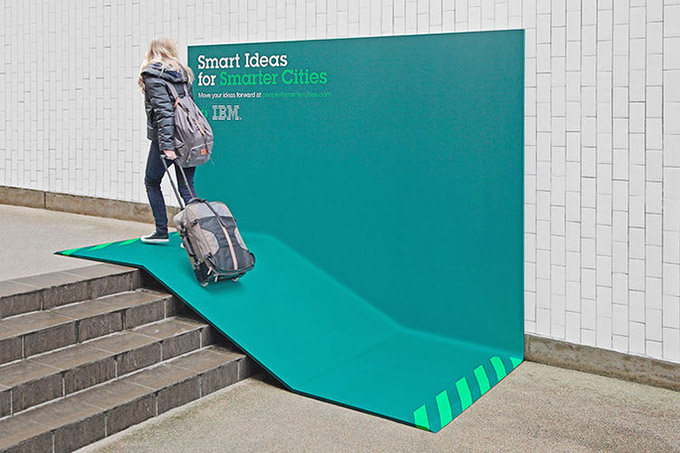
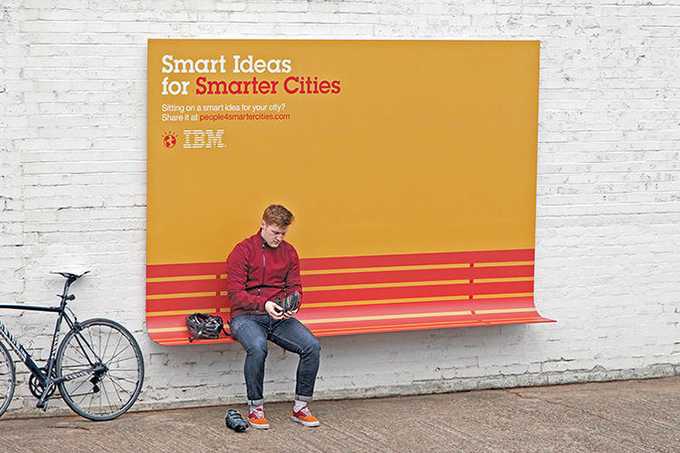
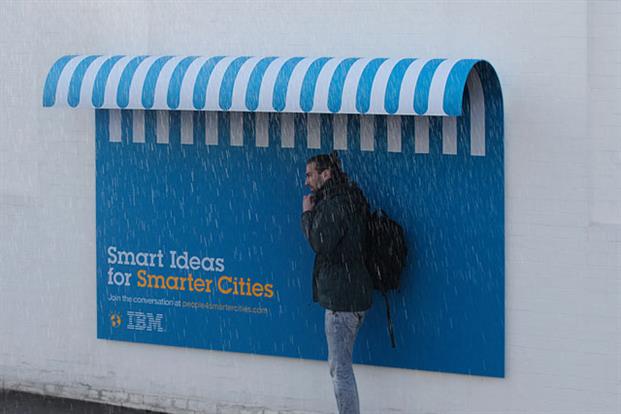
The campaign itself featured three unique billboards that all contained the slogan, “Smart Ideas for Smarter Cities,” and they did more than just look beautiful.  They were placed in London and Paris, and each one was a very clever solution to a common problem that urbanites often face.

The Bench

IBM Smart Cities Bench

The first was a two-toned billboard with an orange background and red outlines of a bench at the bottom.  But, the clever part was that it actually curved outward where the bottom part of a seat should be, and pedestrians could physically sit on it.  In other words, they did the opposite of a standard advertising practice, and they allowed a bench to connect itself to their billboard.

The Rain Cover

IBM Start Cities Rain Cover

The next billboard wasn’t extremely different from the bench, except it was blue, white, and upside down.  This one provided what looked like an awning, but it saved many people from getting soaked while out walking on a rainy day.

The Ramp

IBM Smarter Cities Ramp

In order to make the third billboard, the designers had to break the mold and start over.  This one was green and much larger, and it was positioned next to a few stairs.  Obviously, it made sense to extend the bottom of the sign in a way that would create a little ramp up the staircase.  It worked for bikes, wheelchairs, suitcases, and anyone else looking for an innovative way to get around.

What Was It Advertising?

These signs are incredibly creative and impressive, but the actual purpose behind them is more mysterious.  They were advertising the People 4 Smarter Cities Program, and this is one which has the goal of providing a platform for the spread of smart ideas.  The aim is to create an easier and more efficient way for city leaders to hear the creative solutions that citizens and other cities have to the various problems of running a metropolis.

Thinking Outside of the Box

The whole concept shows the advantages of thinking outside the box, and the People 4 Smarter Cities project is the type that can be difficult to educate the public about.  Companies often try to push these ideas, but they get brushed off by the average person because they simply look like corporate propaganda. However, it’s hard to ignore a billboard that solves a problem, so people started paying attention.

The Results in the Advertising World

The People for Smarter Cities campaign was orchestrated by Ogilvy and Mather, and the advertising agency received a lot of praise in the creative world.  At the Cannes Lions International Film Festival of Creativity in 2013, they won one of the most coveted prizes in the advertising industry, the Outdoor Lion Grand Prix award.  The campaign was the top of 5,610 entries, and some of the reasons for winning included that they were such simple ideas presented in a new and innovative way.

All It Took Was a Curve

One of the most spectacular parts of this advertising campaign was how a very simple concept demonstrated the whole purpose of the program.  The only physical difference between these and the millions of other signs on the street was a curve or a bend.  Without those, it would just be a flat board trying to push an idea, but the presentation was an actual example of the kind of intelligent thinking that they hope to achieve.

Video of the ‘People For Smarter Cities’ Campaign

How Can Your Business Be Smarter?

Many companies think that the product or service that they offer could limit having a fun, engaging ad campaign, but this just goes to show that even the most traditional businesses can still have a little fun with their creative power.

If you’re not convinced, go ahead and reach out to us.  We can certainly come up with some ideas to help your billboards turn heads.

bMedia Group Acquires Showtime Outdoor Media

On December 18th, 2015 we acquired Showtime Outdoor Media, a local outdoor media company serving the Puerto Rico market. This acquisition makes bMedia Group the #1 local billboard media company in the industry.

This announcement was made by our founding partner Juanchi Casillas, who said “through the consolidation of these companies, bMedia will offer the most comprehensive and valuable billboard circuit in Puerto Rico due its strategic and unique locations. This acquisition reaffirms our commitment to the market to continue to add value to our customers providing them with high impact top of the line quality billboards coupled with excellent service.”

bMedia Showtime Merger

“During the past years, we have been working on making contributions to the market through strategic consolidations that help the local economy and improve the dynamics between clients and billboard advertising. The acquisition of Showtime is another key step in achieving our objective”, said Héctor Horta, who is also a founding partner of bMedia.

As part of this consolidation agreement, bMedia Group will have the support of well-known producer, Jose “Pepe” Dueño, who was the founder of Showtime Outdoor Media. He will join the team to facilitate the continuity of “both Showtime and bMedia are distinguished for the passion and the personal attention we provide to our customers. We are proud to be Puerto Rican entrepreneurs whose goals and achievements continue to contribute to our country’s growth”, said Dueño.

Founded in 2009, bMedia Group provides first in class billboards in digital and static formats. The company offers strategic outdoor media advertising services, flexible solutions, and personalized services through a team of marketing professionals.