What is Skinvertising?

Before we begin, we just want you to know that bMedia Group does not support the idea of skinvertising

Host Gator Skinvertising


One of the fundamental requirements of outdoor media or even advertisement in general is that it needs to be placed somewhere where the intended audience can see it. However, as the world gets more crowded and competitive, there are less and less places available. This keeps advertisers hot on the lookout for any new surfaces on which to place their messages, and they often resort to creative solutions.

Coincidentally, there is one other group who loves displaying colorful messages, and their ears were wide open when they heard companies could be willing to pay for their space. This group, of course, is tattoo fans.

What Is Skinvertising?

Skinvertising is exactly what it sounds like: when someone has an advertisement placed on their skin. Since the most practical way of doing this is by using a tattoo, it’s a pretty difficult to undo this once it has been created. However, the permanence of this has led many people to find this whole concept to be really extreme, and some even think it’s just a joke.

It’s not. Many people have literally had advertisements inked into their skin, and a good number of these designs were done on people’s faces. Obviously, you’re going to question why people are motivated to do this, but there isn’t any simple answer. Most of them find themselves in need of money (for one reason or another), and they typically set up auctions so the real estate will go to the highest bidder.

Why Do People Do It?

Everyone seems to have their own reasons for getting this done, but a common trend seems to be needing money quickly. Many of them have families and children to support, and they suddenly find themselves in a position where they don’t have enough income.

But really, who are some of these people?


Jim Nelson SkinvertisingJim Nelson

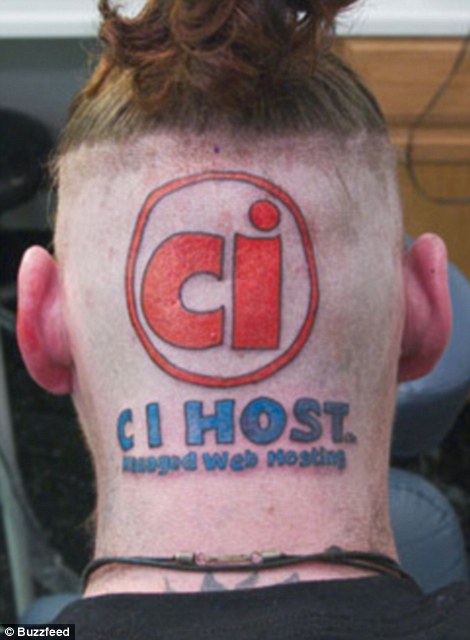
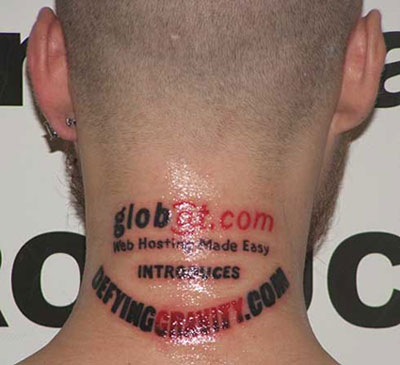
Nelson was one of the originals who rocketed to internet fame with skinvertising. He was paid $7,000 to have a web hosting company’s logo on the back of his head. Ironically, the company didn’t last very long after paying for it, but the ad was still promoting them for years!


Karolyne Williams SkinvertisingKarolyne Williams

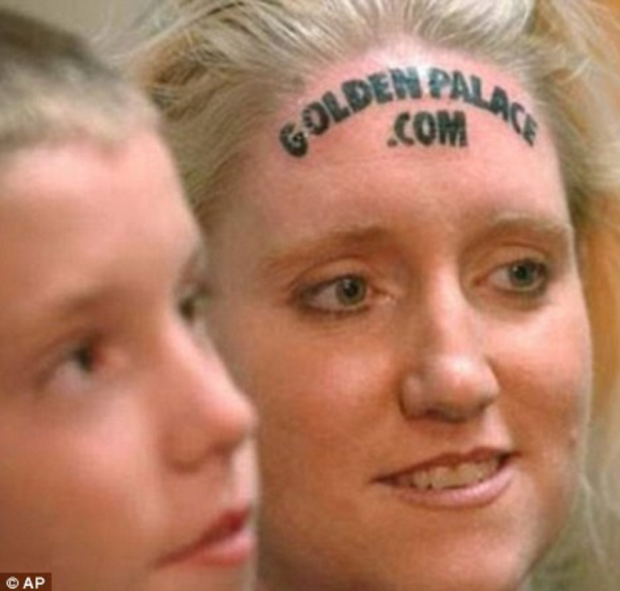
Williams was a mother who had GoldenPalace.com tattooed on her forehead for about $10,000. She said she really needed the money to support her son and send him to a private school. Eventually, she was able to grow out her bangs enough to partially cover the tattoo.


Mark Greenlaw SkinvertisingMark Greenlaw

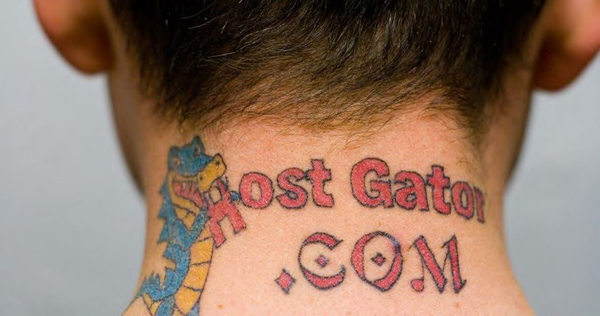
Greenlaw was another inking entrepreneur, and he auctioned off space on the back of his neck which was won by an auction site called Glob@t. He even went so far as to sign a contract that he would travel to a certain number of states and countries each year, or pay a fine to the company he was advertising. His aim was to provide for his family before his paychecks started coming in when he joined the army.


Skinvertising PeopleBilly Gibby

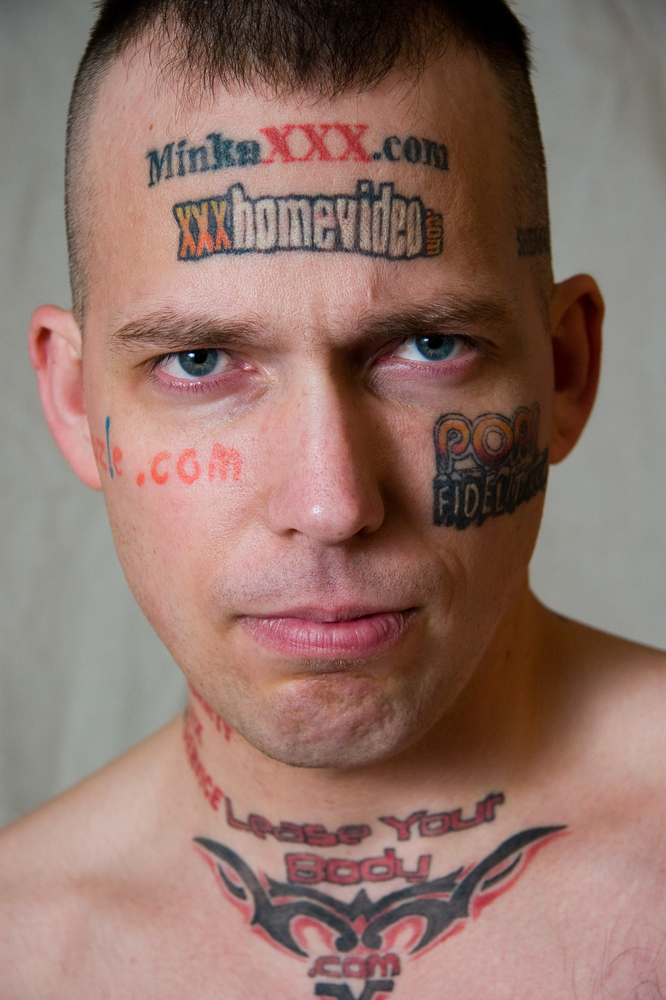
Gibby is known by multiple names, and one of them is “Billy the Human Billboard.” He lost his job in 2007, and he needed to find a way to pay the bills to support his wife and five kids. So, he started auctioning off his face for a minimum price of $4,000, and most of his customers were websites (many of which were adult focused).
Billy even legally changed his name to Hostgator Mel Dotcom in 2011, and the website Hostgator paid him $15,000 for this. But, he decided the facial tattoos weren’t working anymore in 2013, so he auctioned off other parts of his body to get enough money for laser removal on his face.


Human Billboards of the Past

While the whole concept of skinvertising may seem a little radical, attaching ads to humans is something that’s far from new. If you need a few examples, just think about how many logos and messages you see on shirts, hats, and shoes every single day. Also, have you ever noticed someone standing on the street with a big sign around their neck? That practice goes all the way back to 19th century London when the government decided to tax advertising posters stuck to walls. Always a crafty bunch, the advertisers started paying people to wear them, and a new profession was born. You’ve no doubt seen people waving signs (of various levels of quality) on the side of the road, but some are willing to take this the next step.

When Was It Popular?

The skinvertising tattoo craze really seemed to take off in the early 2000s, and it was basically riding the coattails of the dot-com bubble. It seemed to be most popular among websites, and this probably had a lot to do with the fact that all they really needed to print was the URL.

Ads Outlast the Companies

One of the most interesting parts of this phenomenon is the permanence around it. The tattoos easily stick around for a long time, but there have been many cases where the company went out of business before the person could have the ink removed.

More Basic Version in Japan

A similar trend popped up in Japan in recent years, but it was far less permanent than tattooing. Women are paid to place stickers on their thighs, and they have to share a certain amount of photos on social media. The women have to be over 18, but it’s definitely following a provocative strategy that believes sex sells. However, many Japanese cities are pretty saturated with regards to their advertising space, so it’s not a bad idea to find some new real estate.

Love It or Hate It, Skinvertising is Creative

There are a wide variety of opinions about this topic, and there’s a good chance you have strong feelings about it. However, whether it’s a genius idea or absolutely ridiculous, you have to admit that it solves a certain problem.

What’s the most creative thing you’ve done to get word out about your company?

A Billboard That Tracks Airplanes

In the case of a recent British Airways advertising campaign, the sky was literally the limit.  Through a mixture of old and new, they pushed the limits of billboard advertising to give the world something that had never quite been seen before.

The Magical Billboard Concept

When measuring by size of fleet, number of routes, and revenue, British Airways is the largest airline in the United Kingdom.  However, the industry is incredibly competitive, and the company still has the desire to soar to new heights with their ad campaigns.

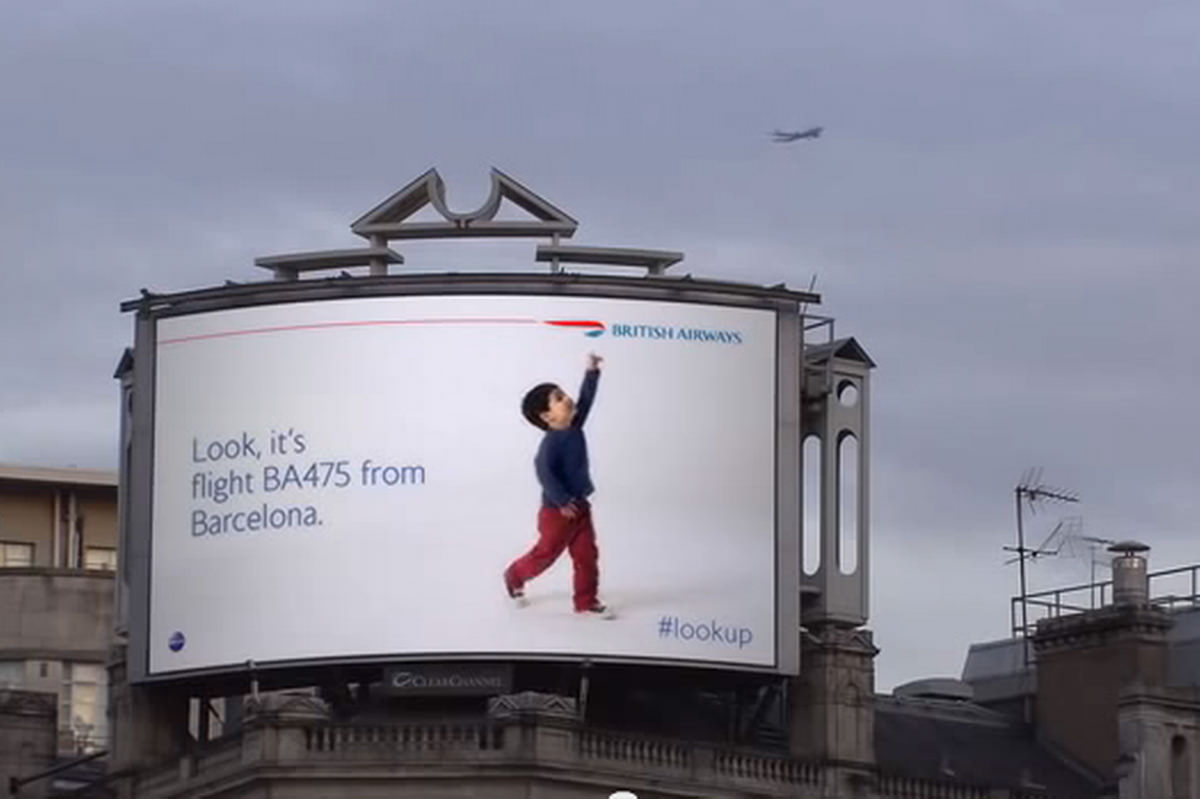
This led to them creating two digital billboards in London.  These specific signs were located between the view of people on the street and the flight paths of planes coming and going from Heathrow Airport.  Advanced technology was integrated into the display that could track planes as they flew overhead, and that’s when the magic would start.

A video would start to play that showed a child point at the airplane and run off after it. The sign would also give the flight number and location that the plane took off from, and then it would go back to a very simple display about British Airways.

Why Did They Take This Route?

British Airways entered into the campaign with a few main goals, and one was wanting to remind customers of how many global destinations the airline operates out of. Next to that, they wanted to point out some newer destinations, and they hoped that it would inspire consumers to log on to the British Airways website and book a trip.

On the other hand, this wasn’t a campaign that simply advertised a hashtag. It was all planned around a strategy that would help consumers connect with the brand on an emotional level. It’s a common practice for people to look up to planes in the sky and dream that they’re on their way to an exotic location, and this billboard found a way to bring back early memories of everyone who saw it. Using a child allowed viewers to connect with the feelings of being amazed by flight when little, and it avoided all the thoughts of disillusionment brought on by lost luggage and long delays.

The Technology Behind the Billboard

British Airways Lookup
The sign used a surveillance system that was custom built specifically for this campaign to make sure it tracked actual planes, and it made sure that the video was synchronized with the planes as they zoomed by. In order to identify which plane it was, it used a special antenna that could register the transponder of all aircraft within a certain radius.  The programming also took many other factors into consideration.  For example, it thought about the altitude of the plane, the cloud cover in the sky, and the light (or lack thereof) to ensure that people could accurately see what they were intended to

Reaction from the Internet

A dedicated webpage, ba.com/lookup, was created specifically for the campaign.  It was designed to help customers easily convert their longings into bookings, and it enabled them to spend more time packing their bags.  It seemed to work because it received more than 43,300 unique visits.

Also, the video of the sign was viewed more than 1.3 million times online, and the campaign earned more than 45 million social media impressions. #Lookup was displayed under the video, and it was used more than 3,400 times on Twitter.

The Advertising World Also Approved

The whole campaign was developed by the Ogilvy 12th Floor agency, and it was a success overall. At the Cannes Lions International Festival of Creativity, the campaign won the Direct Grand Prix.  Similar concepts had been tried in other parts of the world, but this was the first of its kind in the United Kingdom.

Mix of Digital and Traditional Marketing

One of the biggest takeaways from this campaign is that advances in technology don’t necessarily have to mean the death of more traditional forms of advertising.  Print ads may seem far less relevant than online media that keep customers one click away from a purchase, but these digital innovations can take certain platforms in a full circle.  In a world full of clickable computer code, a giant video might be just what it takes to stand out from the crowd.

The Impact on Other Companies

Even if you’re not an airline, there’s a way in which you can harness modern technology to advertise your business using outdoor media.  Get in touch with us if you’d like some assistance with a new concept, but first make sure that both your seat and tray table are in their full upright and locked positions!

Making Cities Smarter Using Outdoor Media

IBM has been using technology to make the lives of business people easier for more than a century, but they don’t exactly have the sexiest brand image.  They’ve done a great job of promoting themselves as a no-nonsense company that will give you a solid bottom line, but that’s a difficult concept to translate into a trendy advertising campaign. However, thinking outside the box, they recently succeeded in creating an outdoor media campaign so groundbreaking it’s being used as an advertising case study today!

The Campaign

The campaign itself featured three unique billboards that all contained the slogan, “Smart Ideas for Smarter Cities,” and they did more than just look beautiful.  They were placed in London and Paris, and each one was a very clever solution to a common problem that urbanites often face.

The Bench

IBM Smart Cities Bench

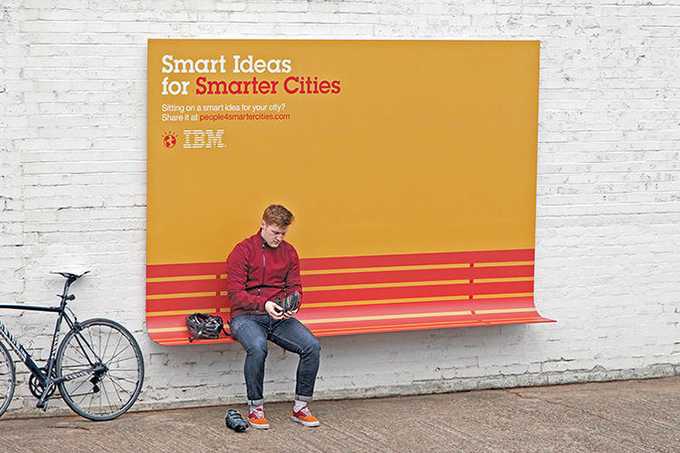
The first was a two-toned billboard with an orange background and red outlines of a bench at the bottom.  But, the clever part was that it actually curved outward where the bottom part of a seat should be, and pedestrians could physically sit on it.  In other words, they did the opposite of a standard advertising practice, and they allowed a bench to connect itself to their billboard.

The Rain Cover

IBM Start Cities Rain Cover

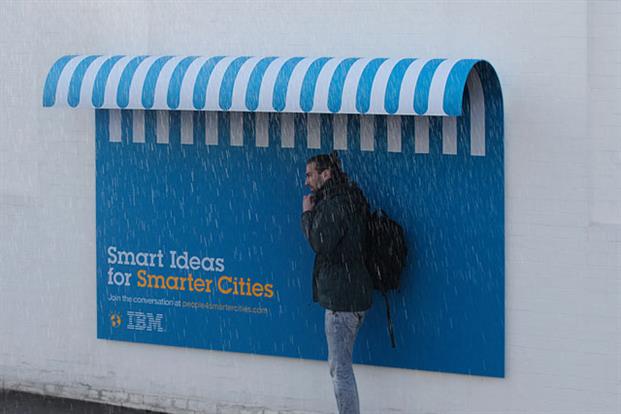
The next billboard wasn’t extremely different from the bench, except it was blue, white, and upside down.  This one provided what looked like an awning, but it saved many people from getting soaked while out walking on a rainy day.

The Ramp

IBM Smarter Cities Ramp

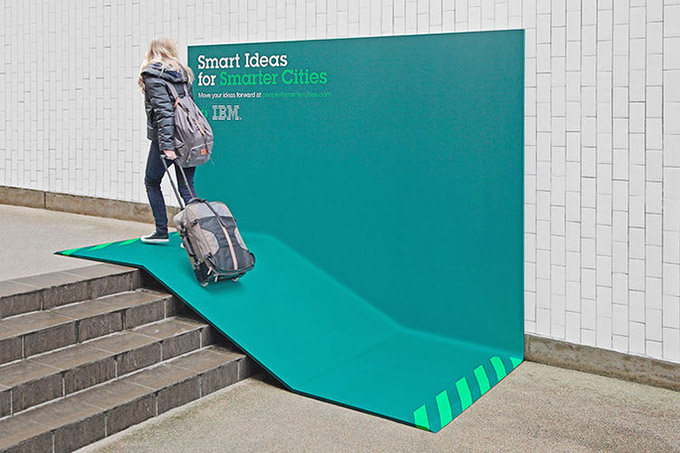
In order to make the third billboard, the designers had to break the mold and start over.  This one was green and much larger, and it was positioned next to a few stairs.  Obviously, it made sense to extend the bottom of the sign in a way that would create a little ramp up the staircase.  It worked for bikes, wheelchairs, suitcases, and anyone else looking for an innovative way to get around.

What Was It Advertising?

These signs are incredibly creative and impressive, but the actual purpose behind them is more mysterious.  They were advertising the People 4 Smarter Cities Program, and this is one which has the goal of providing a platform for the spread of smart ideas.  The aim is to create an easier and more efficient way for city leaders to hear the creative solutions that citizens and other cities have to the various problems of running a metropolis.

Thinking Outside of the Box

The whole concept shows the advantages of thinking outside the box, and the People 4 Smarter Cities project is the type that can be difficult to educate the public about.  Companies often try to push these ideas, but they get brushed off by the average person because they simply look like corporate propaganda. However, it’s hard to ignore a billboard that solves a problem, so people started paying attention.

The Results in the Advertising World

The People for Smarter Cities campaign was orchestrated by Ogilvy and Mather, and the advertising agency received a lot of praise in the creative world.  At the Cannes Lions International Film Festival of Creativity in 2013, they won one of the most coveted prizes in the advertising industry, the Outdoor Lion Grand Prix award.  The campaign was the top of 5,610 entries, and some of the reasons for winning included that they were such simple ideas presented in a new and innovative way.

All It Took Was a Curve

One of the most spectacular parts of this advertising campaign was how a very simple concept demonstrated the whole purpose of the program.  The only physical difference between these and the millions of other signs on the street was a curve or a bend.  Without those, it would just be a flat board trying to push an idea, but the presentation was an actual example of the kind of intelligent thinking that they hope to achieve.

Video of the ‘People For Smarter Cities’ Campaign

How Can Your Business Be Smarter?

Many companies think that the product or service that they offer could limit having a fun, engaging ad campaign, but this just goes to show that even the most traditional businesses can still have a little fun with their creative power.

If you’re not convinced, go ahead and reach out to us.  We can certainly come up with some ideas to help your billboards turn heads.

bMedia Group Acquires Showtime Outdoor Media

On December 18th, 2015 we acquired Showtime Outdoor Media, a local outdoor media company serving the Puerto Rico market. This acquisition makes bMedia Group the #1 local billboard media company in the industry.

This announcement was made by our founding partner Juanchi Casillas, who said “through the consolidation of these companies, bMedia will offer the most comprehensive and valuable billboard circuit in Puerto Rico due its strategic and unique locations. This acquisition reaffirms our commitment to the market to continue to add value to our customers providing them with high impact top of the line quality billboards coupled with excellent service.”

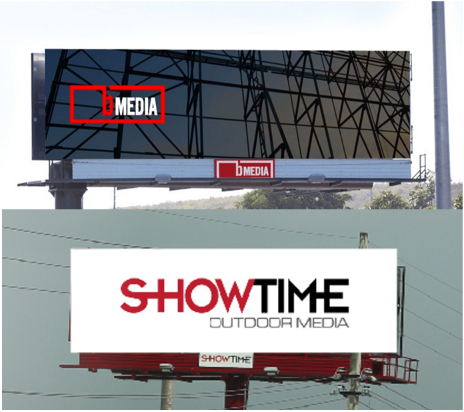
bMedia Showtime Merger

“During the past years, we have been working on making contributions to the market through strategic consolidations that help the local economy and improve the dynamics between clients and billboard advertising. The acquisition of Showtime is another key step in achieving our objective”, said Héctor Horta, who is also a founding partner of bMedia.

As part of this consolidation agreement, bMedia Group will have the support of well-known producer, Jose “Pepe” Dueño, who was the founder of Showtime Outdoor Media. He will join the team to facilitate the continuity of “both Showtime and bMedia are distinguished for the passion and the personal attention we provide to our customers. We are proud to be Puerto Rican entrepreneurs whose goals and achievements continue to contribute to our country’s growth”, said Dueño.

Founded in 2009, bMedia Group provides first in class billboards in digital and static formats. The company offers strategic outdoor media advertising services, flexible solutions, and personalized services through a team of marketing professionals.