
If you are comparing types of outdoor advertising, you are probably trying to understand what each format actually does for a brand, and why some placements feel “everywhere” while others feel more targeted. Outdoor advertising, also called out of home or OOH, reaches people when they are away from home, moving through daily routes across Puerto Rico.
In Puerto Rico, scale matters.bMedia Group supports island-wide campaigns with 500+ locations and a technology-forward approach designed to help brands plan for reach, CPM efficiency, and measurable performance without overpromising outcomes.
What People Mean When They Say “Outdoor Advertising”
Outdoor advertising is a broad category. Some formats are built for fast impressions at driving speed, while others work because people spend more time near them. When you look at types of outdoor advertising, it helps to separate them into two families:
- OOH: traditional outdoor placements like static billboards and high-impact large formats
- DOOH: digital screens that rotate messages and allow faster creative updates
If a media plan feels modern, it usually includes both, because the mix balances consistency with flexibility.
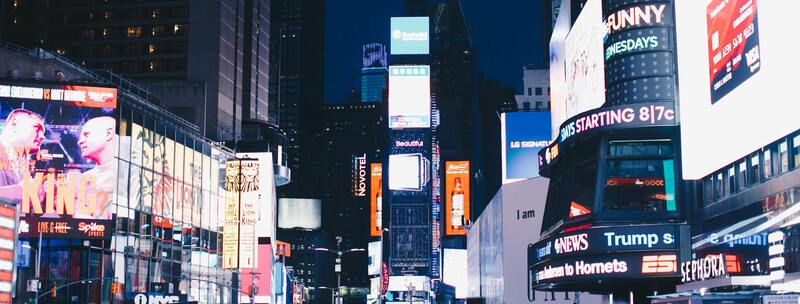
Billboard Advertising: The Format Built For Scale
Billboards are the most recognized form of outdoor media because they can build broad awareness quickly.
Brands use billboards when they want:
- Island-wide visibility across multiple regions
- High frequency on repeat routes
- A clear brand message that sticks after a few exposures
Billboards reward simplicity. The strongest campaigns use short copy, high contrast, and a single takeaway.
Digital Billboards And DOOH: Flexible Reach With Modern Controls
Digital billboards and DOOH placements give you rotation and agility. Instead of committing to one message for the full run, digital allows multiple messages and faster updates.
Brands use DOOH when they want:
- Creative that changes by daypart, weekday, or promotion cycle
- Room for multiple offers without squeezing everything into one design
- The ability to refresh creative without a full reprint process
When you see brands running different messages for the same campaign, DOOH is often the reason.
Static Billboards: Consistency That Builds Recall
Static placements keep the message constant. That consistency is a feature, not a limitation.
Brands choose static when they want:
- A clean brand statement that stays relevant for weeks
- Simple recall and recognition
- A steady presence in a market that does not require frequent updates
Static works especially well when the job is to make a brand feel established, familiar, and easy to remember.
Spectaculars And Landmark Screens: When The Goal Is Dominance
Spectaculars are oversized placements designed to stand out. They are less about subtle targeting and more about category leadership.
Brands use spectaculars when they want:
- A flagship presence tied to a recognizable setting
- Launch visibility that signals scale and confidence
- Creative that is mostly visual, with heavy branding
bMedia highlights spectaculars as landmark locations and some of the largest screens in the Caribbean.

Place-Based OOH: Where Dwell Time Changes What People Notice
Not every campaign needs a highway presence. Some brands care more about proximity and context than speed.
This is where place-based formats show up, including:
- Gas station ads where people pause and spend time on site
- Restroom ads in high-traffic venues
- Medical office ads that reach local communities in a calmer environment
Brands use these types of outdoor advertising when they want:
- Local targeting by neighborhood or service area
- Repetition in everyday routines
- Visibility closer to decision points, not only on commutes
Street-Level Formats: Closer To Stores And Daily Life
Street-level placements can include shelters, panels, and other units designed for pedestrian-heavy areas. They typically allow a bit more reading time than billboards.
Brands use these formats when they want:
- Reinforcement near retail corridors
- A presence where people walk, wait, or slow down
- A complement to larger units that do the heavy lifting for reach
How Brands Decide Between These Types Of Outdoor Advertising
Most decisions come down to three tradeoffs:
Reach Versus Precision
Billboards and large formats typically maximize reach. Place-based and street-level formats often support tighter geographic intent.
Consistency Versus Flexibility
Static is consistent. Digital is flexible. Many of the strongest campaigns use both, with static anchoring the message and digital rotating variations.
Speed Versus Dwell Time
Highway placements win at speed, so the creative must be extremely clear. Place-based placements benefit from longer viewing windows, so they can support slightly more information, but still need strong design discipline.
Creative That Performs In Outdoor Media
Outdoor creative is not judged the same way as social or web ads. People are moving, distracted, and not looking for a long message.
The creative basics that consistently matter:
- High contrast and clean typography for distance
- One message per unit, no stacked ideas
- Visual-first layouts that communicate fast
- Location awareness when it helps the message, but never at the expense of readability
If the message cannot be understood quickly, the placement is doing work the creative is not supporting.
Measurement And Performance Language That Stays Realistic
Outdoor measurement often starts with planning metrics like impressions, reach, and frequency, then connects to outcome signals depending on tracking setup.
Industry guidance encourages consistent standards for OOH measurement and analysis.
bMedia positions its approach around technology, analytics, and CPM efficiency framing, supporting brands that want performance language without unrealistic promises.
Where bMedia Fits In Puerto Rico
There are many types of outdoor advertising, but what separates one plan from another is inventory scale, placement strategy, and how clearly the campaign is designed to perform.
bMedia Group emphasizes island-wide reach with 500+ locations and a technology-forward approach for planning and measurement in Puerto Rico.